作者姓名:Emma Yang

Emma Yang
Lowboy trailer with green tarp and yellow straps parked outside a factory, labeled SEGU 760226, ready for long-haul mold shipping.
blog

Why Center-of-Gravity Analysis Matters in Large Mold Transport

Center-of-gravity analysis plays a critical role in transporting large industrial molds safely. This article explains why visual balance assumptions often fail, how uneven load distribution creates hidden structural risk, and why engineering-based center-of-gravity analysis is essential to preventing deformation, alignment issues, and transport-related mold damage.

Three workers in high-visibility vests and yellow hard hats are securing a large industrial mold wrapped in protective plastic onto a red flatbed trailer inside a warehouse. One worker stands on a ladder adjusting the load, while two others monitor the process. The scene highlights proper handling procedures during mold transportation to prevent damage.
blog

Common Risks in Large Mold Transportation (And How to Prevent Them)

Large industrial molds face predictable risks during transportation, including structural stress, vibration damage, moisture exposure, and compliance failures. This article outlines the most common risks in large mold transportation and explains how engineering-led planning and execution discipline can significantly reduce mold damage and production disruption.

A large injection mold securely suspended by custom-fabricated lifting beams and slings aligned with its engineered lift points, mounted on a lowboy trailer.
blog

How to Transport Large Injection Molds Safely and Without Damage

Transporting large injection molds requires more than heavy equipment—it demands precision planning, risk control, and protective handling. This article explains how improper transport leads to damage and downtime, and outlines the technical, procedural, and protective measures required to move large injection molds safely and without production risk.

Worker securing a large industrial mold wrapped in plastic with orange straps on a flatbed trailer, preparing for oversize transport.
blog

Permit and Compliance Requirements for Transporting Large Industrial Molds

Transporting large industrial molds involves more than weight and dimensions—it requires strict compliance with permit and regulatory requirements. This article explains the key compliance considerations that affect mold transportation, how permit-related decisions influence routing and handling, and why regulatory planning is essential to avoiding delays and transport-related risk

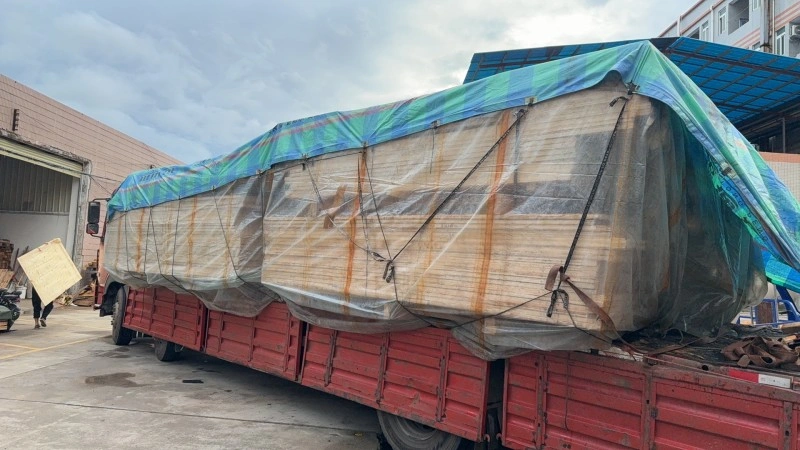
Flatbed trailer carrying a large mold covered with green tarpaulin and secured with netting, parked outdoors before shipment.
blog

How Vibration and Shock Affect Precision Molds During Transportation

Vibration and shock during transportation can cause cumulative damage to precision molds, even when no visible issues appear on delivery. This article explains how dynamic forces act on mold structures, which components are most vulnerable, and why transport-induced vibration often leads to alignment errors and production instability after installation.

Large industrial mold covered with green tarp and secured with yellow straps on a flatbed trailer, ready for transport. Workers inspecting before departure.
blog

How to Prepare Large Molds for Domestic and International Transport

Proper preparation is the most critical factor in successful large mold transportation. This article explains how to prepare large industrial molds for both domestic and international transport, covering inspection, protection, securing strategy, and planning considerations that help reduce damage risk, delays, and production disruption.

滚动至顶部