
Among the most widely used solutions of transporting oversized cargo, there are flat rack containers and top container with open top. Their structural design, loading means as well as their operation demands however differ greatly. Flat racks have collapsible side and ends and allow flexibility in loading them via either side or on top making them effective in carrying cargo that is above the usual width capacity. On the contrary, the open top containers are designed to be loaded vertically with their roof being removable, therefore, containing their sides more solidly. Most companies presume that the two types of containers are equally expensive but in fact the overall cost of shipping may fluctuate due to the size of the cargo, the complexity of loading and even the routes. The choice of the type of container to be used in the case of oversized cargo can greatly enhance efficiency in transport and regulate logistics costs.
The issue whether to use flat rack or open top container might have a substantial impact on costs and operational efficiency of oversized cargo transportation. This comparison has been based on the years of experience in the management of project cargo shipments, when the incorrect decision has resulted in time loss, increased costs, or even damage to the cargo. As an example, in routes where strict protocols have been implemented regarding the handling of port, the crane requirement by itself can increase the bill by thousands.
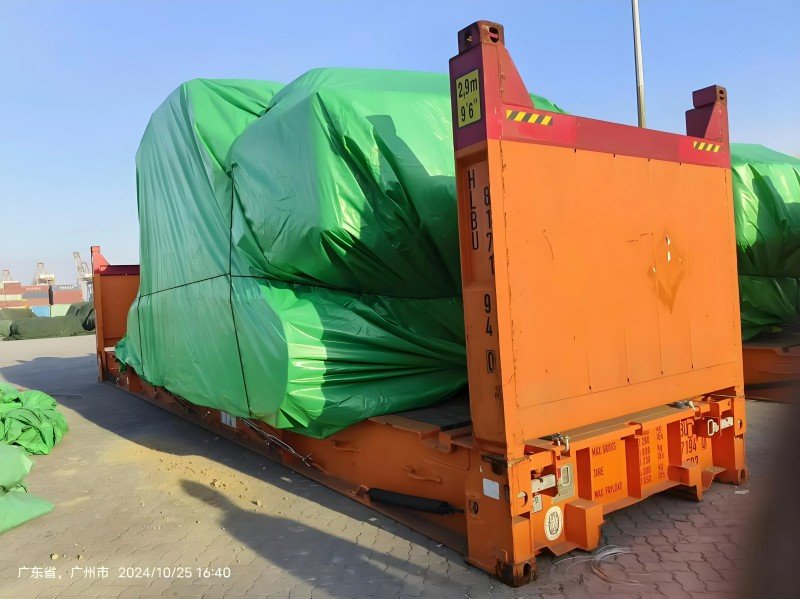
Quick Comparison: Flat Rack vs Open Top Containers
The fundamental differences between flat rack and open top containers as per my experience in the advisory of heavy machinery export, basically boil down to the shape and size of the cargo that can be accommodated in either of the two vessels, which directly affects the setup time and freight costs.
| Feature | Flat Rack Container | Open Top Container |
| Container structure | Open sides | Solid sides |
| Loading method | Side or top loading | Top loading |
| Suitable cargo width | Very wide cargo | Limited width |
| Suitable cargo height | Unlimited height | Limited height |
| Cargo securing | External lashing | Internal securing |
The containers have various cargo needs. Flat racks are more flexible with irregularly shaped loads which stick out on the sides whilst the open tops are more used in cases where vertical extensions are required and the side containment is required. Firms looking to ship large equipment most times have to use oversize cargo transportation to decide the most appropriate between flat rack and open top containers whereby the containers fit to fit within certain dimensions and other regulatory measures.
Flat Rack Container Cost Structure
Practically, flat rack container costs are expected to be more expensive since they are designed in a specialized manner as well as have to be orchestrated with extra work on over-sized loads.
| Cost Component | Cost Impact |
| Container rental | Higher than standard containers |
| Heavy lifting equipment | Required for large cargo |
| Cargo lashing | Additional securing cost |
| Port handling | Specialized crane usage |
Flat racks are commonly applied in very wide or shape irregular cargo, like beams or vehicles that do not fit through the normal doors. The premium charged by the rental company is usually 20-30 percent higher than that of a dry van, as a result of its collapsible characteristics, which require increased maintenance. Combine the necessity of side-loading cranes and the cost of port fees may become high particularly in the facilities that lack special heavy-lift equipment. I have observed as the manager of factory moves that poor lashing of the flat racks results in a surcharge of relashing, and that it is necessary to consider these factors at an earlier stage of planning.
Open Top Container Cost Structure
The open top container shipping prices are usually more moderate, due to their easier adaptation of the common boxes to height-sensitive shipments.
| Cost Component | Cost Impact |
| Container rental | Moderate |
| Top loading crane | Required |
| Tarpaulin covering | Weather protection |
| Port handling | Standard heavy cargo handling |
Open top containers are usually more cost effective when the cargo is tall and not excessively wide such as turbines or silos which require access above. The rental price is nearer to the price of an ordinary container, and the main features of it are the removable top and weatherproof tarps. The use of cranes is direct and normally incorporates the use of standard gantry systems, which keeps the cost of handling ports in check with specialized equipment to handle flat racks. This arrangement has been cost effective with equipment manufacturers when the routes are frequently hit in rainy seasons since exposure is minimized by the internal securing without additional reinforcement.
Best Cargo Types for Flat Rack Containers
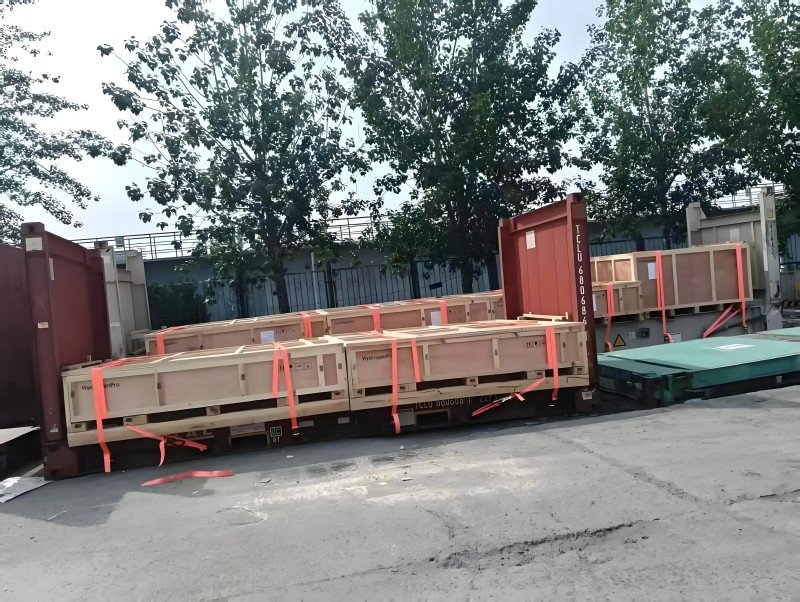
Flat rack containers perform well, based on a great number of deliveries of industrial equipment, when the shipments require free side loading and strong support of the base.
| Cargo Type | Reason Flat Rack Is Suitable |
| Excavators | Wide structure |
| Industrial machinery | Irregular shapes |
| Construction equipment | Heavy weight |
| Steel structures | Oversized dimensions |
Flat racks are popular where very large cargo is to be transported since it can be placed securely in the open racks which have been designed to hold items that otherwise need to have been assembled. In one instance, the wide tracked excavators enjoy the advantages of side loading instead of having the height restriction which will necessitate expensive changes. This is making them a favorite in construction exportation where equipment integrity is a vital determinant of project schedules.
Best Cargo Types for Open Top Containers
Based on the experience of organizing the movement of boilers, open top containers should be used in cases when height will be the main over-size factor and the side will be used to give the object its natural stability.
| Cargo Type | Reason Open Top Is Suitable |
| Tall machinery | Vertical loading |
| Boilers | Height clearance |
| Industrial tanks | Top loading |
| Manufacturing equipment | Controlled width |
The open top containers are suitable in cases where the cargo will surpassed the normal container height as it happens in vertical silos or stacked material. The concrete walls provide an inbuilt reinforcement, and a huge amount of external reinforcement is not necessary. It comes in handy especially when doing manufacturing shipments where the top loading is to be precise to minimize the damage that is caused during handling.
Operational Considerations That Affect Costs
The key element in ensuring that flat rack or open top choices will enable the check of oversized cargo container costs is based on operational reasons.
| Operational Factor | Flat Rack | Open Top |
| Cargo securing | External lashing | Internal securing |
| Weather exposure | Higher | Moderate |
| Loading complexity | Higher | Moderate |
| Transport flexibility | Higher | Moderate |
The cost of logistics is directly dependent on the complexity of operation. Their open exposure in flat racks requires weatherproofing and lashing that may require additional labor hours in ports of origin. Open tops are, in contrast, easier to secure with internal points, but do not provide much flexibility when there is movement of the cargo during transit. When examining historical paths, I have discovered that such factors, which experience a lot of exposure, as in the ocean voyages, tend to weight these differences, so as to one kind of path more than the other, depending upon seasonal weather conditions.
When Flat Rack Containers Are More Cost-Effective
Flat rack containers are more cost-effective in those situations when the structural benefits of the containers are more than the additional handling costs.
- Cargo that is not within the container width: Side loading does not require the disking of wide items eliminating the cost of disassembly.
- Cargo needs to be loaded on the side: This process has been used with irregular profiles which cut down the crane time to the time taken to forcibly fit into a closed shape.
- The shapes of cargo are not regular: The open design handles protrusions without any special tailoring.
- Heavy machine equipment requires good structural support: reinforced floors are better in terms of extreme weight, reducing the risk of damage.
Fitting wide cargo in the other types of containers can cause risk and cost increase either with insurance premiums or by work re-do. This option has been used in heavy machinery export to save clients who have discovered that it is a stable flat rack that is favored in vessel stacking.
When Open Top Containers Are the Better Choice
The open top containers become the ideal option when simplicity and containment reduce the total costs.
- Cargo is high but is not excessively wide: Vertical access considers height and not side.
- Vertical loading is needed: Overhead cranes are established quickly on stacked products or long products.
- It must also be weatherproofed: Tarps and walls cover vulnerable parts.
- Cargo size is within the limits of side walls: This guarantees the use of normal handling procedures.
The selection of open top containers has the potential to lower the complexity of logistics especially on routes where there are well-developed top-loading facilities. This has been proven to be streamlining operations with less ports dwell and less port charges as a result of experience with tank shipments.
Conclusion — Container Selection Affects Oversized Cargo Transport Costs
Flat rack containers and open top containers can be used to address various oversized cargo requirements and each one of these requirements has its own implications to efficiency and budgeting. The proper selection of the type of container depending on the size of the cargo, loading, and transports is the key to reducing the cost and the efficiency of transporting oversized cargo. The assessment of these factors initially, including the priorities of width versus height or operational exposures, helps the logistics teams to circumvent the pitfalls that many often fall into, namely mismatched fees on the handling or delays. Ultimately, a critical evaluation based on the details of the shipments allows to choose the most acceptable course with references to the proven experience of freight planning to make a compromise between the price and the performance.