
Unlike standard wooden boxes which are designed as a container, engineered wooden crates are designed to accommodate high value, heavy, oversized or sensitive cargo due to the different factors involved: cargo weight, dimensions, center of gravity, fragility, route conditions, handling method, and export requirements. This customized solution significantly diminishes risks which are not easily controllable by standard wooden boxes for exporters, logistics managers and project cargo teams responsible for the transport of machinery or industrial equipment.
Some buyers think that the thicker the wooden box, the more they are protected. In fact, the true difference between a designed engineered wooden case and a regular box is that the case is professionally designed to control the movement of the goods, the stresses on the load, the moisture exposure, the shock, vibration and the risk of handling. If you have handled Out-of-Gauge (OOG) and project cargo, you’ll know how important this distinction is at Bentlee, where we see it happen every day.
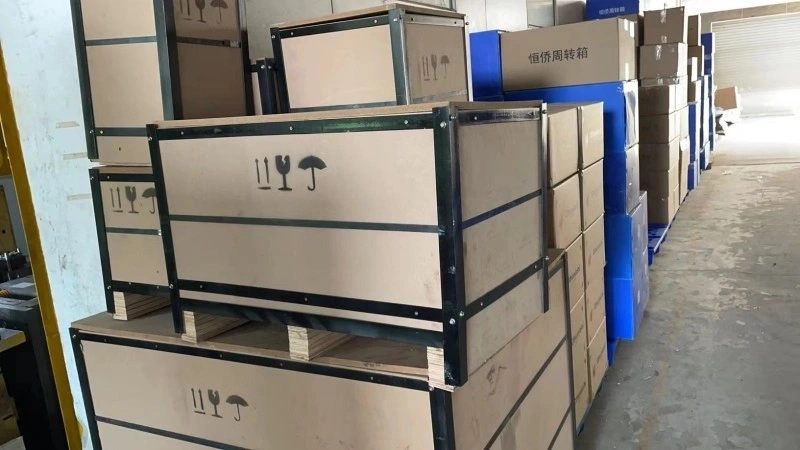
What Is an Engineered Wooden Crate?
An engineered wooden box or crate is a packing structure created specifically using exact data about the cargo and transport conditions, which are not just the standard size and package. Engineered wooden crate & case packing is a more controlled protection system than the standard crate packing system when one is using it with an exporter of machinery or a project cargo team because the crate is designed around the weight of the cargo being protected, the handling method, route conditions and export requirements.
It starts with an in-depth cargo measurement and analysis:
| Engineering Element | Practical Purpose |
| Cargo measurement | Ensures the crate fits the cargo and avoids excessive empty space |
| Weight assessment | Determines base frame, skid, and fastener strength |
| Center-of-gravity review | Reduces tipping and unstable handling risk |
| Reinforced base | Supports heavy cargo during lifting and transport |
| Internal blocking | Prevents cargo movement inside the crate |
| Bracing | Controls lateral, vertical, and vibration-related movement |
| Cushioning | Reduces impact and surface damage |
| Moisture protection | Helps reduce rust, mold, condensation, and corrosion risk |
| Handling design | Supports forklift, crane, or palletized movement |
| Compliance planning | Supports ISPM 15 and export packing requirements |
This systematic approach is particularly useful for big and heavy industrial shipments that are a specialty of Bentlee’s OOG logistics.
Standard Wooden Boxes: What They Can and Cannot Do
While they work fine for lightweight and low-value shipments, they simply don’t cut it for bulky, valuable shipments, fragile products and odd-shaped cargo on long, international trips.
| Standard Box Feature | Practical Limitation |
| Basic wooden panels | May protect from light external contact but not heavy impact |
| Simple bottom structure | May not support heavy machinery or forklift handling |
| Limited internal support | Cargo may shift during road or sea transport |
| General-purpose sizing | May leave too much empty space or poor cargo fit |
| Minimal reinforcement | Higher risk of joint loosening or panel deformation |
| Basic weather protection | May not control humidity, condensation, or corrosion |
| Limited handling design | Forklift or crane movement may create damage risk |
These restrictions and limitations make it the case that many boxes are not able to be exported for industrial equipment in normal shipping conditions.
Engineered Wooden Crates vs Standard Boxes: Key Differences
It is not so much the thickness of the material as it is the design logic that makes engineered wooden crates different from standard boxes. Engineered crates are designed for specific uses while standard boxes are used for general purposes.
| Factor | Engineered Wooden Crates | Standard Boxes |
| Design basis | Built around cargo size, weight, sensitivity, and route | Usually based on general dimensions |
| Base structure | Reinforced skids and load-bearing frame | Basic bottom support |
| Cargo movement control | Blocking, bracing, cushioning, and restraints | Limited or no internal securing |
| Shock and vibration protection | Designed with cushioning and support points | Often minimal protection |
| Moisture protection | Can include barrier bags, desiccants, VCI, and covers | Usually basic external protection |
| Handling safety | Forklift points, lifting marks, center-of-gravity planning | Limited handling guidance |
| Export compliance | Can include ISPM 15 planning and documentation | May not meet all export requirements |
| Suitable cargo | Heavy, sensitive, high-value, irregular, or export cargo | Simple, low-risk, regular cargo |
Why Engineered Crates Offer Better Load Distribution
Engineered wood crates are not only easier to handle than regular crates, but they offer a number of benefits, including load distribution. Stress is avoided by proper distribution, which helps avoid damage to the load and to the crate when lifting, moving, and stacking.
| Load Distribution Feature | Why It Matters |
| Reinforced skid base | Supports cargo weight during forklift handling |
| Load-bearing beams | Spread weight across the crate base |
| Support under machine feet | Prevents bending, tipping, or concentrated stress |
| Center-of-gravity planning | Reduces lifting and transport instability |
| Anti-slip contact layers | Helps reduce movement during transport |
| Custom base layout | Matches irregular cargo structures |
This is important for OOG shipments and heavy machines.
Internal Blocking and Bracing: The Hidden Advantage of Engineered Crates
The outer crate only provides part of the protection. The difference between safe arrival and hidden damage is often by using internal blocking and bracing.
| Internal Securing Method | Function | Practical Example |
| Base blocking | Prevents sliding at floor level | Heavy machinery base fixed against blocks |
| Side bracing | Controls lateral movement | Tall equipment stabilized inside the crate |
| Cross bracing | Improves crate rigidity | Large crates used for sea freight |
| Soft contact pads | Prevents scratches or dents | Painted panels and machined surfaces |
| Custom supports | Fit irregular cargo shapes | Equipment with protruding components |
| Top restraint | Reduces vertical movement | Cargo affected by vessel motion or vibration |
Better Shock, Vibration, and Impact Protection
Engineered crates are designed to provide a balance of structural strength and cushioning to reduce shock and vibration damage that is often neglected in traditional crates.
| Protection Method | How It Improves Safety |
| Cushioning pads | Reduce impact at selected contact points |
| Rubber pads | Help reduce vibration and sliding |
| Shock-absorbing blocks | Support heavier or sensitive cargo |
| Reinforced corners | Protect impact-prone crate areas |
| Anti-slip materials | Reduce cargo movement inside the crate |
| Strong fasteners | Prevent joints from loosening under vibration |
| Shock or tilt indicators | Help monitor rough handling events |
Moisture, Corrosion, and Sea Freight Protection
Long sea voyages are susceptible to humidity, condensation and salt air. Engineered wooden crates can contain multiple layers of environmental protection more than just wooden panels.
| Environmental Risk | Engineered Crate Response |
| Container condensation | Barrier bags, desiccants, and humidity control |
| Sea air exposure | VCI protection and anti-rust measures |
| Rain during handling | Waterproof covers and protected seams |
| Wet ground contact | Raised skid base and bottom clearance |
| Long storage time | Desiccants, humidity indicators, and sealed protection |
| Metal corrosion | Anti-rust oil, VCI film, or sealed packing |
When Standard Boxes May Be Acceptable
There’s nothing wrong with standard wooden boxes, they can be used for a shipments with low risk perfectly.
| Standard Box May Be Acceptable When | Why Risk Is Lower |
| Cargo is lightweight | Less structural load on the box |
| Cargo is not fragile | Lower risk from minor vibration or impact |
| Transport distance is short | Less exposure to handling and environmental risk |
| Cargo has regular shape | Easier to fit and restrain |
| Moisture sensitivity is low | Basic protection may be enough |
| Cargo value is low | Lower consequence if minor damage occurs |
When Engineered Wooden Crates Are Necessary
When damage costs are significant or when costs are high, engineered wooden crates are a must.
| Cargo or Shipment Condition | Why Engineered Crating Is Recommended |
| Heavy machinery | Requires reinforced base and weight distribution |
| Precision equipment | Needs vibration, shock, and alignment protection |
| Electrical cabinets | Requires moisture and internal bracing control |
| Industrial molds | Needs surface protection, anti-rust measures, and stable support |
| High-value cargo | Damage cost is much higher than packing cost |
| Long sea freight route | Higher exposure to humidity and handling risk |
| Top-heavy cargo | Requires center-of-gravity planning and side bracing |
| Irregular cargo shape | Needs custom supports and fitted protection |
| Export shipment | May require ISPM 15 planning and documentation |
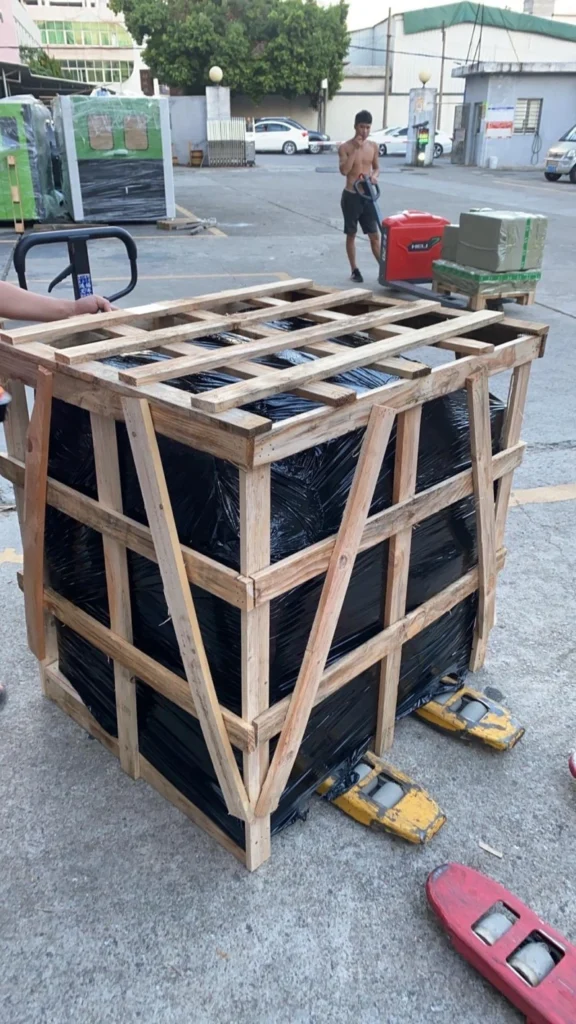
Common Mistakes When Choosing Between Crates and Boxes
It’s common for even seasoned procurement teams to make decisions which add needless risk.
| Common Mistake | Possible Consequence |
| Choosing by lowest price | Higher risk of damage, repacking, or claims |
| Focusing only on wood thickness | Base, joints, and internal support may still fail |
| No internal blocking | Cargo may shift during road or sea transport |
| Ignoring center of gravity | Increased tipping or lifting risk |
| Using boxes for sensitive cargo | Hidden damage may appear after installation |
| Skipping moisture control | Rust, mold, or electrical damage may occur |
| No ISPM 15 review | Customs delay or repacking risk |
| Missing handling marks | Higher risk of incorrect forklift or crane handling |
Buyer Checklist: How to Decide Which Packing Option Is Right
The best choice is the one that takes into account real risk, not just the cost.
| Question to Ask | Why It Matters |
| How heavy is the cargo? | Determines whether reinforced base design is required |
| Is the cargo sensitive to shock or vibration? | Helps decide cushioning and bracing needs |
| Does the cargo have a high center of gravity? | Indicates tipping and lifting risks |
| Will the cargo travel by sea freight? | Increases moisture, vibration, and handling exposure |
| Is the cargo high-value or difficult to replace? | Justifies stronger engineered protection |
| Are there exposed metal surfaces? | Indicates anti-rust and moisture protection needs |
| Does the shipment need ISPM 15 compliance? | Affects material and marking requirements |
| Will forklifts or cranes handle the crate? | Requires proper handling design |
Conclusion — Engineered Wooden Crates Provide Risk-Based Protection
Real value is provided by engineered wooden crates which are designed around actual transport conditions. They take into account how the cargo is weighed, the centre of gravity, support points, dangers for the route, exposure to moisture and how it is handled, which makes them lessen the issues that standard wooden boxes cannot manage.
When transporting heavy machinery, precision equipment, electrical systems, or project cargo across complex international routes, it’s important to not only consider the aesthetics and cost of the packing – but also the protection it can provide. With the help of experienced partners, who are aware of both OOG logistics and the proper packing for exports, you can enjoy peace of mind knowing that your valuable cargo will reach the destination without any problems and within the specified time.