
Packing up large wooden crates for sea freight is more than a packing job – it’s a process of export preparation, which includes cargo assessment, crate design, crate materials, base reinforcement, securing it internally, protecting it from moisture, labeling and documentation and shipping preparations. For a big wooden crate, which is ready for sea freight, it is not enough to be a wooden box for the cargo, but it must be a total protection system.
A lot of shippers think that the thicker the wood the better it will protect for sea freight, but there are more factors that come into play than that, such as load distribution, base design, internal securing, moisture control, fastener strength, handling access and lastly, final inspection. It helps minimize risks, like cargo shifting, rust, condensation damage, customs delays and handling incidents involved in long ocean voyages, when a lot of information is correct from the onset.
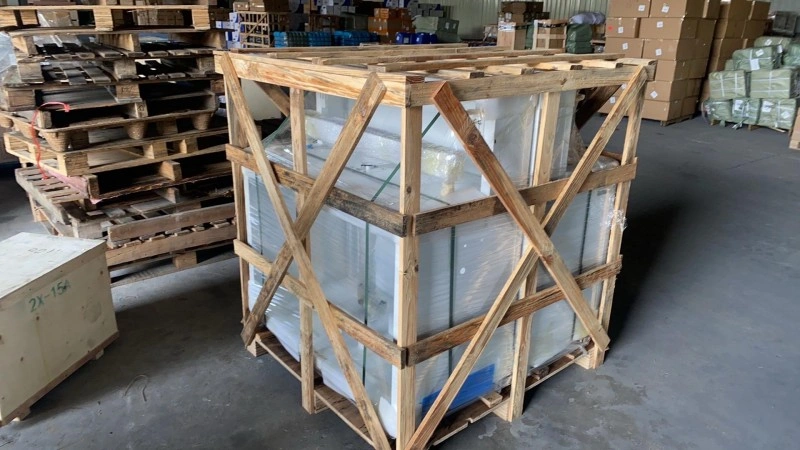
Why Large Wooden Crates Need Special Preparation for Sea Freight
Because of the extended risks and longer, more involved, nature of sea freight, it is essential that a dedicated preparation process is used. When it comes to ocean transport, it is different from domestic transport, as it takes a longer time to complete and there are various handling points that can lead to stress on even the strongest crates, along with exposure to different climates.
| Sea Freight Risk | How It Affects Large Wooden Crates and Cargo |
| Long transit time | Increases exposure to humidity, vibration, and handling risk |
| Container condensation | May cause rust, mold, or electrical damage |
| Vessel movement | Can create shifting, vibration, and load stress |
| Port handling | Increases risk of crate impact or forklift damage |
| Outdoor storage | May expose crates to rain, sun, or temperature changes |
| Stacking pressure | Requires stronger top frame and vertical support planning |
| Customs inspection | Crates may need visible markings and accessible documentation |
| Multi-modal transport | Crates must withstand road, port, sea, and destination handling |
If you know these risks from the start you can design the crate as a protective system and not just a box.
Step 1: Assess the Cargo Before Designing the Crate
The first step in making large wood crates for sea cargo is not to start cutting wood, but to use accurate cargo information. Even the best-designed crate can prove to be ineffective if they are not fully informed.
For exporters preparing machinery or industrial equipment for ocean transport, following a step-by-step wooden crate packing process helps align cargo assessment, crate design, internal securing, moisture protection, and final inspection before shipment.
| Cargo Information | Why It Matters for Sea Freight Crate Preparation |
| Length, width, and height | Determines crate size and clearance requirements |
| Gross weight | Guides base frame, skid, and fastener strength |
| Center of gravity | Helps prevent tipping and uneven load stress |
| Lifting points | Supports safe forklift or crane handling design |
| Base structure | Determines where load-bearing supports should be placed |
| Fragile components | Guides cushioning, clearance, and bracing decisions |
| Moisture sensitivity | Determines desiccants, barrier bags, or VCI protection |
| Shipping method | Affects crate strength, dimensions, and securing plan |
| Destination country | Helps plan ISPM 15 and documentation requirements |
Measure on-site and double check with scales, and photograph any areas of the product that stick out or sensitive finishes. This initial evaluation saves costly re-designs later on.
Step 2: Choose Suitable Wood, Panels, and Fasteners
If you want the crate to make it to the export intact, the material selection needs to be appropriate for the cargo, risks associated with the route and export regulations. The correct selection of plywood, framing and fasteners is what makes a simple wooden box a reliable sea freight option.
| Material or Component | Main Purpose | Selection Consideration |
| Plywood panels | Forms crate walls and covers | Thickness should match crate size and handling risk |
| Solid wood frame | Provides structural support | Must support weight and comply with export rules |
| Reinforced skids | Support lifting and forklift handling | Must match cargo weight and lifting points |
| Screws or bolts | Secure frame and panels | Should resist loosening under vibration |
| Corner brackets | Strengthen impact-prone areas | Useful for large or heavy crates |
| Steel straps | Add external reinforcement | Useful for long-haul or high-risk shipments |
| Moisture-resistant materials | Reduce humidity exposure | Important for sea freight and long storage |
| Treated wood | Supports export compliance | ISPM 15 markings may be required |
The most frequent cause that cracks are undetected is because of weak fasteners – no matter how strong the wood is, joints that become loose over the course of weeks of vessel movement are a major problem. .
Step 3: Design a Reinforced Base for Heavy and Large Cargo
Internal securing is used to prevent cargo from moving in the crate during road, port and sea transport. The load cannot be protected even by the best of the outer structure if it moves freely in rough seas or sudden stops.
| Base Design Element | Why It Matters |
| Reinforced skids | Support heavy cargo during forklift handling |
| Load-bearing beams | Distribute weight across the crate base |
| Support under machine feet | Prevents bending, tipping, or concentrated stress |
| Forklift pockets | Reduces handling damage and wrong lifting positions |
| Crane lifting zones | Supports safe lifting when forklifts are not suitable |
| Anti-slip contact layer | Reduces movement between cargo and base |
| Base anchoring | Helps secure cargo to the crate structure |
| Bottom clearance | Helps avoid water contact during handling or storage |
Provide soft surfaces with painted or precision surfaces and always make sure that nothing can vibrate just a few millimeters.
Step 4: Secure Cargo With Blocking, Bracing, and Internal Supports
Humidity, condensation, exposure to rain and salt air are all factors that can affect crates during sea freight transportation and moisture protection is essential. The internal protection can be inadequate in a well-sealed crate, which may end up with rusted parts or mold.
| Securing Method | Function | Common Application |
| Base blocking | Prevents sliding at floor level | Heavy machinery and equipment bases |
| Side bracing | Controls lateral movement | Tall or unstable equipment |
| Cross bracing | Improves crate rigidity | Large crates for long-haul transport |
| Top restraint | Reduces vertical movement | Cargo affected by vessel motion |
| Soft contact pads | Prevents surface scratches or dents | Painted or sensitive equipment surfaces |
| Custom supports | Fit irregular cargo shapes | Machinery with protruding components |
| Tie-down points | Add controlled restraint | Heavy cargo requiring additional stability |
Do not pack moist goods or damp goods; always make a humidity indicator visible on the goods to check conditions when they arrive.
Step 5: Add Moisture, Corrosion, and Sea Freight Protection
When preparing export wooden crates, it’s important to make sure that they meet the requirements to prevent delays at customs. Most international shipments are covered by ISPM 15 and the main panels as well as skids, dunnage, blocking and bracing.
| Protection Method | Main Function | Best Used For |
| Barrier bag | Reduces contact with humid air | Sensitive machinery and electrical equipment |
| Desiccants | Absorb moisture inside sealed spaces | Long sea freight routes and storage |
| VCI film or paper | Helps reduce corrosion risk | Metal parts, molds, and machined components |
| Anti-rust oil | Protects exposed metal surfaces | Machinery, steel parts, and tooling |
| Waterproof cover | Protects crate during outdoor handling | Port loading, unloading, and rain exposure |
| Moisture-resistant panels | Reduce water absorption | Long-haul and humid-route shipments |
| Humidity indicator | Monitors internal moisture condition | High-value or moisture-sensitive cargo |
Before closing the crate, be sure that the heat-treatment stamps are legible and properly positioned.
Step 6: Check ISPM 15 and Export Compliance Requirements
The use of labelling and documentation enables those who handle, inspect and receive the crate to manage it appropriately for the whole supply chain. With clear marking, there will be fewer mistakes at ports and warehouses where language barriers or time constraints can be issues.
| Compliance Check | Why It Matters |
| ISPM 15 marking | Helps reduce customs and quarantine delays |
| Treated wood verification | Confirms regulated wood is export-ready |
| Skids and dunnage review | Ensures supporting wood is not overlooked |
| Destination requirement check | Avoids country-specific compliance issues |
| Visible markings | Allows inspection without unnecessary crate disruption |
| Packing records | Supports shipment documentation and dispute handling |
| Pre-sealing review | Prevents costly repacking after final preparation |
Use both English and destination-language labels, if necessary, and have digital copies of all photos and records available.
Step 7: Label the Crate and Prepare Documentation
Once the problems are identified through final inspection, they do not make their way into the transport chain. An initial quick but thorough review at this time can forestall costly problems thousands of miles down the road.
| Label or Document | Practical Purpose |
| Gross weight and dimensions | Helps handlers plan lifting and storage |
| Center of gravity mark | Reduces lifting and tipping risk |
| Forklift entry mark | Reduces wrong lifting positions |
| Keep Dry label | Alerts handlers to moisture sensitivity |
| This Side Up mark | Helps prevent orientation errors |
| Packing list | Supports customs and receiver checking |
| Packing photos | Provides proof of packing condition |
| Handling instructions | Guides forklift, crane, or warehouse teams |
Take pictures of the finished crate so that the labels are visible; this is helpful if there are any problems during transportation in the future.
Step 8: Conduct a Final Inspection Before Sea Freight Shipment
Even the most expert teams can miss things that will cause issues during sea freight. These are the most common errors we see, and their common outcomes.
| Inspection Item | What to Check |
| Crate structure | No loose panels, cracks, weak joints, or visible deformation |
| Fasteners | Screws, bolts, straps, and brackets are secure |
| Base and skids | Strong enough for lifting and cargo weight |
| Internal securing | Cargo cannot shift during handling or vessel movement |
| Moisture protection | Barrier, desiccants, VCI, or covers are properly installed |
| Labels and marks | Handling marks are visible and correct |
| ISPM 15 marking | Stamp is legible and accessible if required |
| Documentation | Packing photos, list, and records are complete |
| Loading compatibility | Crate dimensions and handling points match transport plan |
The keys to avoiding these pitfalls is to stick to a disciplined and documented procedure, not to hurry to meet sailing schedules.
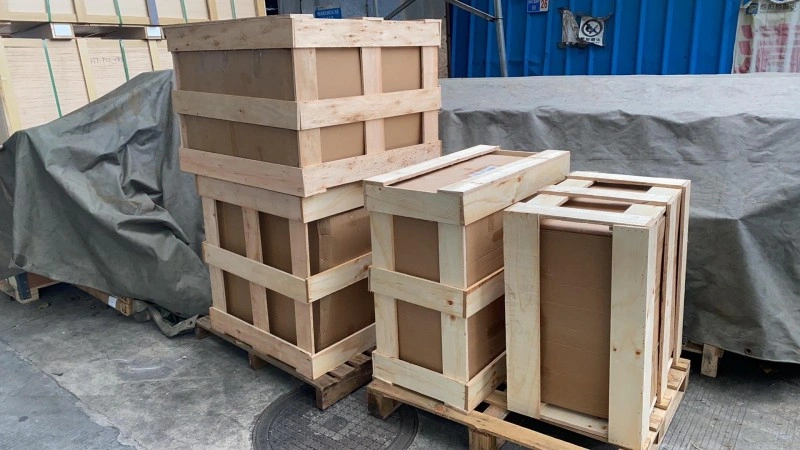
Common Mistakes When Preparing Large Wooden Crates for Sea Freight
By making sure that all necessary information is ready and available to the buyer before they call a packing supplier, they can obtain a more accurate quote and packing quality. These details help to create more accurate designs, and reduce change orders.
| Common Mistake | Possible Consequence |
| Inaccurate cargo dimensions | Oversized or poorly fitted crate |
| Weak base structure | Forklift damage, base failure, or cargo instability |
| No internal bracing | Cargo may shift during road or sea transport |
| Ignoring moisture risk | Rust, mold, or electrical damage may occur |
| Missing ISPM 15 check | Customs delay, repacking, or shipment disruption |
| Poor fastener selection | Crate may loosen under vibration |
| No handling marks | Increased risk of incorrect lifting or tilting |
| No final inspection | Defects may enter the transport chain unnoticed |
| Poor container fit | Higher freight cost or loading difficulty |
Avoiding these pitfalls comes down to following a disciplined, documented process rather than rushing to meet sailing schedules.
Buyer Checklist Before Requesting Large Wooden Crate Packing
Buyers can improve quote accuracy and packing quality by preparing the right information before contacting a packing provider. Having these details ready leads to more precise designs and fewer change orders.
| Information to Prepare | Why It Helps |
| Cargo dimensions | Determines crate size, material use, and loading plan |
| Gross weight | Guides base frame, skid, and fastener strength |
| Cargo photos or drawings | Helps identify shape, protrusions, and fragile areas |
| Center of gravity | Supports stable crate design and lifting planning |
| Sensitive components | Guides cushioning and internal support decisions |
| Moisture sensitivity | Determines barrier, desiccant, or VCI requirements |
| Shipping mode | Affects crate strength and handling design |
| Destination country | Helps plan ISPM 15 and customs requirements |
| Storage duration | Determines moisture protection level |
| Handling method | Supports forklift, crane, or lowbed transfer planning |
| Delivery schedule | Helps avoid rushed packing and last-minute redesign |
This enables the entire preparation process to go smoothly when shared early.
Conclusion — Preparing Large Wooden Crates Requires a Controlled Process
It is best to plan all the steps in advance before packing begins, if large wooden crates are to be prepared for shipment by sea. These activities all contribute to lower transportation hazards: cargo assessment, reinforced crate construction, internal securing, moisture control, compliance review, and final inspection. Large machinery and industrial equipment are protected better during long distance export shipping when it is controlled from measurement to shipment.
While there is no way to prevent all of these risks to sea freight, they can be controlled with careful engineering and execution. Rather than seeing the wooden crate as an enclosure, consider it as a complete cargo protection system, and your shipment will have the best chance of arriving as it did when it left the factory.