
Large machinery vacuum packing for sea transport helps to save valuable equipment from the difficulties of sea transportation including high humidity, salt wind, condensation in the container, dust and long-term transportation delays. Sea freight allows goods to be transported for several weeks or months, and although a wooden crate can do much to protect them, it does not provide the same level of protection as when they are moving within a country’s borders. A correct vacuum packing process opens a sealing window that allows for proper control of internal environment, and it is compatible with lifting, crating and loading containers’ plan.
For exporters, machinery manufacturers or project cargo teams, the key is to consider vacuum packing as an export plan element instead of an after-thought to ensure that the equipment arrives intact and ready for use, avoiding additional rework or disputes. Many shippers think that just a robust crate is enough, but the lack of moisture control packaging can still result in the interior condensation and salt air damaging the metal surfaces.
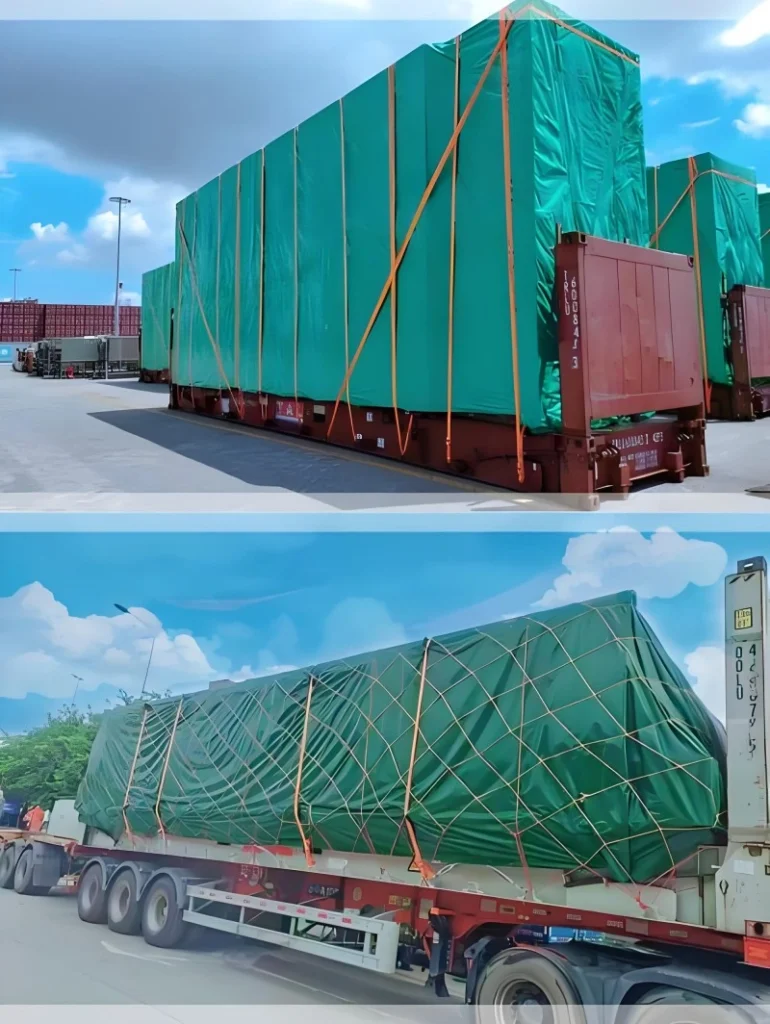
Why Large Machinery Needs Vacuum Packing Before Sea Freight
Sea freight poses significantly greater challenges than land freight (road or rail) and necessitates large pieces of machinery to ensure a reliable delivery service that can utilize vacuum packing. Sea travel also results in additional exposure to humidity, salty air near ports, temperature fluctuations that can cause condensation to form within the containers and delays at customs or terminals that are outside of anyone’s control. All these contribute to the corrosion of exposed metals; dust gets deposited on sensitive parts; and the risk of water infiltration during the handling during rainy days increases.
For exporters handling oversized machinery, fragile equipment, or long ocean routes, professional vacuum packaging for large equipment helps reduce moisture, dust, corrosion, and storage-related risks before cargo reaches its destination.
| Sea Freight Risk | How It Affects Large Machinery | Why Vacuum Packing Helps |
| High humidity | Causes rust and surface oxidation | Reduces exposure to moisture vapor |
| Salt air | Accelerates corrosion on metal surfaces | Creates a protective barrier layer |
| Container condensation | Water droplets may form during temperature changes | Helps keep cargo isolated from humid air |
| Port delays | Extends exposure time before delivery | Supports longer-term protection |
| Dust and contamination | Affects exposed components and surfaces | Keeps machinery sealed and clean |
| Rain during handling | May wet packaging or exposed parts | Reduces direct contact with water and moisture |
Step 1: Inspect the Machinery and Identify Protection Needs
Applying film to large machinery for sea freight is not the first step in an effective vacuum packing program; it starts with a detailed technical evaluation. This early inspection ensures there are no surprises and the packaging aligns with the particular vulnerability of the equipment.
Sensitive areas that require additional attention are first analyzed by experienced teams for dimensions, weight, center of gravity and lifting points.
| Inspection Item | What to Check | Why It Matters |
| Dimensions and weight | Length, width, height, gross weight | Determines packaging size and handling method |
| Sensitive surfaces | Painted, polished, machined, or coated areas | Helps prevent scratches and corrosion |
| Electrical parts | Control panels, sensors, wiring, cabinets | Requires moisture and dust protection |
| Exposed openings | Ports, holes, covers, and interfaces | Prevents dust or moisture entry |
| Lifting points | Forklift pockets, lifting lugs, sling points | Avoids damage during handling |
| Storage duration | Days, weeks, or months before installation | Affects desiccant and barrier material selection |
Step 2: Clean, Dry, and Prepare the Machinery Surface
Never trap existing moisture, dust, or residues inside the sealed package—proper surface preparation is critical for vacuum packing large machinery. Even small amounts of trapped humidity can lead to hidden corrosion during long voyages.
Start by removing loose debris, thoroughly drying all surfaces (including joints and cavities), applying appropriate anti-rust treatments, and protecting sharp edges or loose parts.
| Preparation Task | Purpose | Risk If Ignored |
| Surface cleaning | Removes dust, dirt, and loose particles | Contamination may remain sealed inside |
| Drying | Removes existing moisture | Moisture may be trapped inside the package |
| Anti-rust treatment | Protects exposed metal surfaces | Corrosion may develop during transit |
| Edge protection | Covers sharp corners and contact points | Film may puncture or tear |
| Loose part securing | Prevents movement inside packaging | Parts may damage the film or machinery |
| Open port sealing | Blocks dust and moisture entry | Internal contamination may occur |
Step 3: Select the Right Barrier Film and Vacuum Bag
When using industrial-grade barrier films to vacuum pack large machines, consider the size of the machine, the weight of the film, the time to travel the route and the handling intensity. Domestic films are typically too thin for sea freight, but heavy-duty films are properly specified for the trip.
Some factors that are important to consider are the thickness of the film, moisture vapour transmission rate, puncture resistance, and the ability to make bags of different sizes without over-folding to fit into irregularly shaped spaces.
| Material Factor | What to Consider | Why It Matters |
| Film thickness | Machinery size, weight, and handling risk | Reduces tearing and puncture risk |
| Moisture resistance | Sea freight route and storage duration | Helps control humidity exposure |
| Sealability | Heat sealing quality and edge closure | Prevents air leakage |
| Puncture resistance | Sharp edges, bolts, brackets, and corners | Protects packaging integrity |
| Bag size | Custom fit around machinery | Avoids excess folds and weak points |
| Inspection access | Labels or viewing areas if needed | Supports checking without opening packaging |
Step 4: Place Desiccants and Moisture-Control Materials Correctly
Once the packages are dry and vacuum sealed, some moisture may still be left inside the large packages, hence the use of calculated desiccant to erect a very critical layer of protection in vacuum packing for sea freight.
Use desiccants according to internal volume and expected duration of transit, mix desiccants with VCI materials close to metals, and use humidity indicator cards for quick verification.
| Moisture-Control Item | Function | Placement Consideration |
| Desiccant bags | Absorb residual moisture | Distribute around cargo, not only in one corner |
| VCI materials | Help protect metal surfaces from corrosion | Place near exposed metal components |
| Humidity indicator | Shows moisture condition inside packaging | Position where it can be checked if possible |
| Inner liner | Separates cargo from film or crate | Prevents rubbing and contamination |
| Protective covers | Shield control panels or sensors | Use around sensitive components |
Step 5: Vacuum Seal the Machinery Package
For big, irregularly shaped machinery, it is essential to use the right technique to ensure that the film is not over-stretched, and that there are no weak points at the corners. The barrier is tight and durable, with the gradual air extraction and high quality heat sealing.
Place, deflate the bag in small increments, seal all edges carefully, strengthen stress points, and test for leaks immediately.
| Sealing Step | What Happens | Quality Check |
| Bag positioning | Film is arranged around the machinery | No sharp points pressing directly into film |
| Air extraction | Air is removed from the package | Film fits closely without overstretching |
| Heat sealing | Open edges are sealed | Seal line is continuous and clean |
| Seam reinforcement | Weak areas are reinforced if needed | Corners and edges are protected |
| Leak check | Package is inspected after sealing | No visible air return or loose seals |
| Labeling | Handling and unpacking marks are applied | Cargo can be handled correctly |
Step 6: Add Outer Protection for Sea Freight Handling
Vacuum packing is very good in terms of moisture and dust retention but for large machines, strong physical protection against lifting, stacking and transportation is still needed. This step combines vacuum-sealed packages with wooden crates, skid bases or reinforcements for the container.
| Outer Protection Method | Best Used For | Added Protection |
| Wooden crate | High-value machinery and sensitive equipment | Impact and stacking protection |
| Steel base or skid | Heavy machinery | Stable lifting and load transfer |
| Shock pads | Precision machinery | Vibration and impact reduction |
| Corner protection | Irregular equipment shapes | Prevents film damage |
| Waterproof cover | Outdoor handling or temporary storage | Adds weather protection |
| Lashing coordination | Flat rack or open top shipments | Prevents cargo movement during transport |
Step 7: Inspect, Label, and Prepare for Loading
A comprehensive inspection prior to loading guarantees that the whole vacuum packing of big machinery process is in accordance with the export requirements and smooth handling at destination.
Take photographs of the conditions, check all seals and labelling, check lifting marks and centre of gravity markers, and match up with loading plan and package.
| Final Check | What to Confirm | Why It Matters |
| Seal condition | No gaps, tears, or weak seams | Prevents air and moisture leakage |
| Film surface | No punctures or overstressed areas | Maintains packaging integrity |
| Desiccants | Correct quantity and placement | Supports moisture control |
| Labels | Handling, lifting, and unpacking marks | Reduces handling mistakes |
| Photos | Condition recorded before shipment | Helps with traceability and claims |
| Loading plan | Matches packaging and cargo dimensions | Avoids damage during loading |
Common Mistakes When Vacuum Packing Large Machinery
Many vacuum pack failures are due to omissions or underestimation of sea freight stresses. These are the mistakes that can be avoided, resulting in an altogether better outcome.
| Mistake | Possible Result | Better Practice |
| Packing damp machinery | Moisture trapped inside | Dry and inspect surfaces first |
| Thin barrier film | Tears or punctures during handling | Use industrial-grade material |
| Unprotected sharp edges | Film damage and seal failure | Add edge and corner protection |
| Too few desiccants | Humidity remains active | Calculate based on volume and transit time |
| Poor seal quality | Air leakage during transport | Inspect all seal lines |
| No loading coordination | Packaging damaged during lifting | Align packing with loading method |
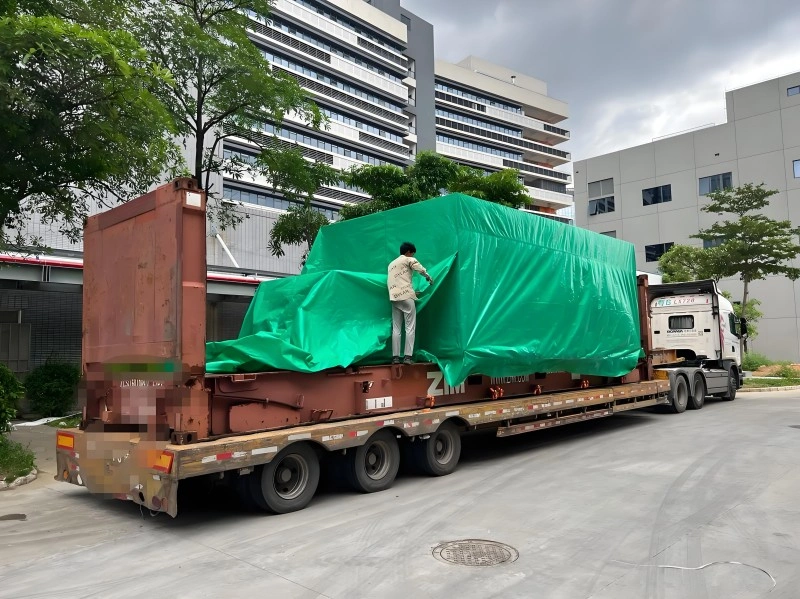
When Vacuum Packing Should Be Combined with Crating or OOG Transport Planning
For large or oversized equipment, it may be necessary to use a combination of protection measures. Vacuum packing controls moisture and crating or specialized container plans controls physical risks.
| Transport Situation | Recommended Protection Plan |
| Standard container machinery | Vacuum packing + pallet or crate |
| Precision machinery | Vacuum packing + crate + shock protection |
| Oversized machinery | Vacuum packing + flat rack loading plan |
| Tall machinery | Vacuum packing + open top container planning |
| Heavy machinery | Vacuum packing + skid base + lifting plan |
| Long-term storage before installation | Vacuum packing + desiccants + protective outer cover |
Buyer Checklist Before Requesting Vacuum Packing for Large Machinery
A clear technical brief helps packaging specialists to provide the optimal solution in a timely fashion with minimal revisions.
| Information to Prepare | Why It Helps |
| Machinery dimensions | Determines packaging size and material usage |
| Gross weight | Supports handling and base design |
| Photos or drawings | Helps identify sensitive areas and sharp edges |
| Shipping route | Helps evaluate sea freight moisture risk |
| Storage duration | Determines moisture-control requirements |
| Loading method | Affects outer protection and lifting design |
| Surface sensitivity | Helps decide anti-rust and scratch protection |
| Electrical components | Requires extra moisture and dust protection |
| Destination handling conditions | Helps plan labels and unpacking instructions |
Conclusion — Successful Vacuum Packing Starts Before the Cargo Is Loaded
Vacuum packing large machinery for sea transport is a systematic procedure, not a procedure which takes place in the port at the last moment. Assessment, cleaning/drying, selection of barriers, placement of desiccants, controlled sealing, outer reinforcement and final verification, are just some of the steps undertaken by exporters to minimise risk of moisture damage, corrosion, dust contamination and handling incidents during ocean transport.
Replacing large machinery can be a big capital investment and long lead time. With a properly designed export packing plan, that value is maintained from leaving the site until the end of the installation, providing project teams with peace of mind that the equipment will be ready for use. Completing lifting plans, crating, lashing and selecting containers, vacuum packing is a very effective and reliable tool for international machinery logistics.