
Rust and corrosion on machinery, moulds, metal parts and industrial equipment is greatly increased in long term storage. If stored indoors, exposure to varying humidity, condensation, oxygen, dust and salt air can cause oxidation within weeks or months. By vacuum packing to protect from rust and corrosion, you create a sealed and moisture controlled barrier which reduces the damaging effect until installation or shipping and helps to ensure the condition of the cargo.
By incorporating proper cleaning, drying, anti-rust treatments, desiccants and VCI materials, vacuum packing can be used as a dependable corrosion prevention system. Matching the packaging technique to the type of cargo, the duration of storage, the climate and transport route is the key, not just using simple covering or standard wrapping which is not always adequate.
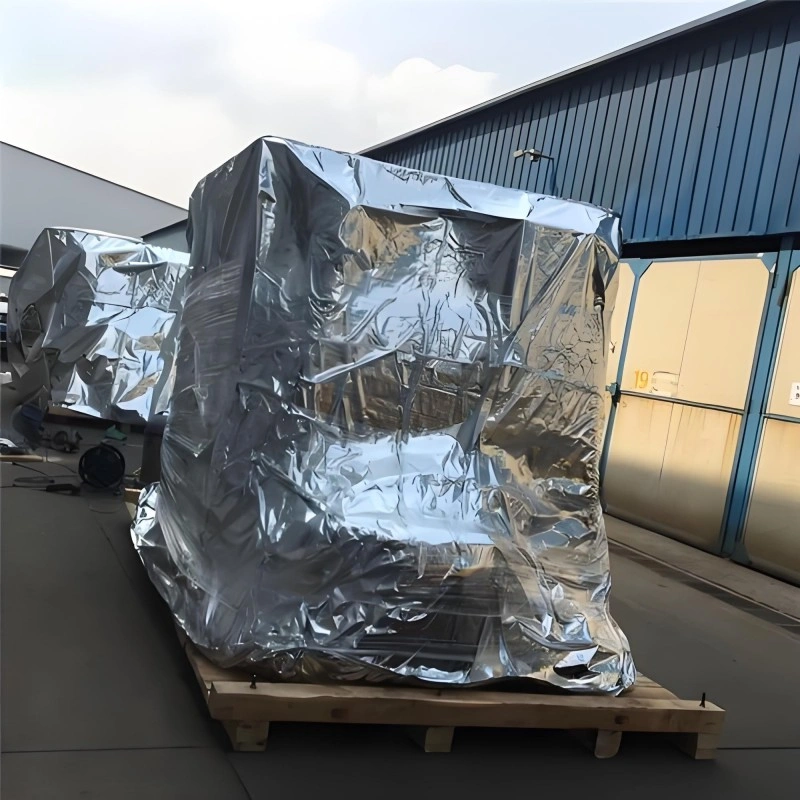
Why Long-Term Storage Increases Rust and Corrosion Risk
Long-term storage increases the likelihood of corrosion as the metal surface is exposed to unstable environmental conditions for extended periods of time compared to when it is in use and/or short term transport.
In high humidity, moisture can settle on metal and temperature fluctuations can cause condensation in warehouses or containers. Salt air causes rapid oxidation near ports. Dust and inadequate ventilation allow for a buildup of contaminants on surfaces, while project delays and factory relocations increase exposure time. The result is progressive surface rust, staining or undetected damage that may affect precision components or result in expensive rework prior to installation.
| Storage Risk Factor | How It Causes Rust or Corrosion | Common Result |
| High humidity | Moisture settles on metal surfaces | Surface rust and oxidation |
| Temperature changes | Condensation forms on cold surfaces | Hidden corrosion under covers |
| Salt air | Accelerates metal oxidation | Faster corrosion on exposed parts |
| Dust and contaminants | Trap moisture against surfaces | Staining and localized corrosion |
| Poor ventilation | Keeps moisture inside storage areas | Slow but continuous rust development |
| Long storage duration | Extends exposure time | Progressive corrosion and quality loss |
| Project delays | Cargo remains packed or stored longer than planned | Higher risk if packaging is not designed for storage |
How Vacuum Packing Helps Prevent Rust and Corrosion
By eliminating excess air and sealing cargo in a high-performance moisture-resistant barrier film, vacuum packing forms a controlled micro-environment which minimizes the risk of corrosion.
This method limits ongoing contact with humid air, oxygen, and airborne contaminants while allowing integration of desiccants and VCI materials for added protection. For equipment that may remain in storage before installation, vacuum packaging to protect machinery from corrosion can help reduce moisture exposure and preserve the condition of critical metal surfaces. It proves especially effective for sea freight and warehouse storage where traditional methods leave gaps for humidity ingress.
| Protection Method | How It Works | Why It Matters |
| Barrier film | Blocks moisture vapor and dust | Reduces external humidity exposure |
| Vacuum sealing | Removes excess air from the package | Limits oxygen and moisture around cargo |
| Desiccants | Absorb residual moisture inside packaging | Helps maintain a drier internal environment |
| VCI materials | Release corrosion-inhibiting protection for metal | Helps protect hard-to-coat surfaces |
| Anti-rust oil | Adds a protective layer on exposed metal | Reduces direct oxidation risk |
| Seal inspection | Confirms packaging integrity | Prevents air and moisture leakage |
Which Cargo Needs Vacuum Packing for Long-Term Storage?
Vacuum packing can be most useful for items that can deteriorate in function, accuracy, or resale value from any surface corrosion or oxidation, especially when very little.
High value pieces like CNC Machines, Injection Molds, Precision Machined Parts, Bearings, Gears, Motors, Generators, and Fabricated Steel Structures are best suited. The surfaces on these components are typically polished or machined surfaces, which can be susceptible to humidity and dust in long storage or in a project for long periods.
| Cargo Type | Corrosion Risk | Why Vacuum Packing Helps |
| Industrial machinery | Rust on exposed metal and moving parts | Reduces humidity and dust exposure |
| Injection molds | Corrosion on polished cavity surfaces | Helps preserve surface finish and accuracy |
| Precision machined parts | Oxidation, staining, dimensional surface damage | Protects critical surfaces during storage |
| Bearings and gears | Rust and lubricant contamination | Helps maintain mechanical condition |
| Motors and generators | Moisture inside housings or windings | Reduces humidity exposure before installation |
| Spare parts | Long storage and delayed use | Keeps parts cleaner and better protected |
| Fabricated steel parts | Surface rust and coating damage | Adds moisture-control protection before shipment |
Vacuum Packing vs Other Long-Term Storage Protection Methods
The traditional protection techniques, such as tarpaulins or simple plastic wrapping, do not offer sufficient protection from corrosion as they do not make a moisture barrier.
When done correctly, vacuum packing provides superior control; however, it’s best used with physical protection against risks on the outside.
| Protection Method | Moisture Control | Corrosion Protection | Best Used For | Limitation |
| Vacuum packing | High | High when properly prepared | Machinery, molds, metal parts, export cargo | Requires correct sealing and materials |
| Tarpaulin cover | Low to medium | Low | Temporary dust or rain protection | Gaps allow humid air movement |
| Plastic wrapping | Low | Low | Short-term indoor storage | May trap moisture if cargo is damp |
| Wooden crate only | Low to medium | Low | Physical protection | Does not fully block humidity |
| Anti-rust oil only | Medium | Medium | Exposed metal surfaces | Does not prevent dust or moisture exposure |
| Warehouse storage only | Depends on environment | Depends on environment | Low-risk cargo | Humidity and condensation may still occur |
| Vacuum packing + crate | Very high | Very high | High-value or sensitive cargo | Higher upfront preparation cost |
Step-by-Step Process for Vacuum Packing Cargo Before Long-Term Storage
Vacuum packing for long term storage starts long before you are packing. It’s up to correct preparation if the package is to be effective against corrosion.
- Cargo inspection — Inspect material, surface finish and sensitive areas for protection requirements.
- Cleaning — Clean up any dust, dirt and contaminants that may collect in them.
- Drying – Make sure that there is no water present on any surfaces and in any internal cavity.
- Anti-rust treatment — Oil, VCI or protective coating as appropriate.
- Desiccant placement – Add moisture absorbers to the package according to the package size and storage time.
- Edge protection — Change sharp corners and protruding parts with protective film to avoid damage to the film.
- Vacuum sealing – Use industrial grade barrier film, and remove all air.
- Finish checking and verifying seals, punctures, labels and integrity.
| Step | What Happens | Why It Matters |
| Cargo inspection | Check material, surface finish, and sensitive areas | Determines corrosion protection needs |
| Cleaning | Remove dust, dirt, and contaminants | Prevents contamination being sealed inside |
| Drying | Ensure surfaces and cavities are moisture-free | Avoids trapping moisture inside packaging |
| Anti-rust treatment | Apply oil, VCI, or protective coating if needed | Adds corrosion resistance for metal surfaces |
| Desiccant placement | Add moisture absorbers inside the package | Helps control internal humidity |
| Edge protection | Cover sharp corners and protruding parts | Prevents barrier film damage |
| Vacuum sealing | Seal cargo inside barrier material | Reduces air and moisture exposure |
| Final inspection | Check seals, punctures, and labels | Confirms storage readiness |
The Role of Desiccants, VCI Materials, and Anti-Rust Oil
The effect of a vacuum pack is best achieved with a complementary material that will assist in corrosion prevention based on the nature of the cargo and its intended storage period.
Residual moisture can be removed by desiccant, vapor-phase protection can be provided by VCI material for complex geometries and an anti-rust oil can be used for direct protection on exposed surfaces. Humidity indicators enable monitoring, without compromise of the seal.
| Material | Main Function | Best Used For | Important Consideration |
| Desiccants | Absorb moisture inside packaging | Most long-term sealed packages | Quantity must match volume and storage time |
| VCI materials | Help prevent corrosion on metal | Molds, machined parts, bearings, tools | Must be compatible with cargo material |
| Anti-rust oil | Forms protective surface layer | Bare metal, shafts, machined surfaces | May require cleaning before installation |
| Humidity indicator | Shows internal moisture condition | High-value or long-storage cargo | Should be visible or accessible if possible |
| Barrier film | Blocks moisture vapor | Sea freight and warehouse storage | Must resist puncture and sealing failure |
Common Mistakes That Cause Rust Even After Packing
Even expert teams can have corrosion problems if they take short cuts in preparation and it affects the vacuum sealing or inside environment.
Typical mistakes include packing “wet” goods, not using enough desiccants, packing with the wrong film or type of barrier material, or covering sharp edges. Extended delays can also allow moisture to enter if the packages are not properly sealed or the checks are not made on a regular basis.
| Mistake | Possible Consequence | Better Practice |
| Packing damp cargo | Moisture is trapped inside | Dry and inspect before sealing |
| No desiccants | Humidity remains active | Use desiccants based on package volume |
| Wrong film material | Moisture vapor enters over time | Use industrial-grade barrier film |
| Sharp edges exposed | Punctures and air leakage | Add edge and corner protection |
| No anti-rust treatment | Bare metal oxidizes faster | Apply oil or VCI where appropriate |
| Damp crate or pallet | Moisture migrates into packaging area | Use dry, export-ready outer packaging |
| No storage review | Packaging may fail during extended storage | Inspect periodically if storage is prolonged |
How Storage Duration and Environment Affect Packaging Choice
The degree of protection increases as a function of storage conditions and anticipated storage time. Simple vacuum systems and external protection can be sufficient for short duration of storage on the indoor holds, while the tropical port-side storage or multi-month storage would require the use of robust vacuum systems and outer protection.
| Storage Condition | Risk Level | Recommended Protection |
| Short-term indoor storage | Low to medium | Basic wrapping or vacuum packing for sensitive cargo |
| Long-term warehouse storage | Medium to high | Vacuum packing + desiccants |
| Port-side storage | High | Vacuum packing + outer weather protection |
| Tropical climate storage | High | Strong barrier film + desiccants + seal inspection |
| Outdoor temporary storage | High | Vacuum packing + crate/cover + elevated base |
| Delayed installation | Medium to high | Vacuum packing + humidity monitoring |
| Factory relocation storage | Medium to high | Vacuum packing + handling protection |
Buyer Checklist Before Choosing Long-Term Storage Packaging
When packaging specialists know what is going on the package, they can craft a solution, not just a generic one.
Provide information about cargo material, surface finish, dimensions, weight, storage time, climate, transport route, and installation time, as well as photos of exposed spaces. This information is used to determine the thickness of barrier film, quantity of desiccant, VCI requirements and specifications for the outer crate.
| Information to Prepare | Why It Helps |
| Cargo material | Determines corrosion sensitivity |
| Surface finish | Polished or machined surfaces may need stronger protection |
| Dimensions and weight | Affects bag size, material strength, and handling method |
| Storage duration | Determines desiccant quantity and barrier requirements |
| Storage location | Helps assess humidity, temperature, and salt air risk |
| Transport route | Sea freight and port storage increase corrosion risk |
| Installation schedule | Determines how long protection must last |
| Photos or drawings | Helps identify exposed metal, sharp edges, and sensitive areas |
| Outer packaging needs | Supports crate, pallet, or weather-protection planning |
When Vacuum Packing Should Be Combined with Wooden Crates or OOG Protection
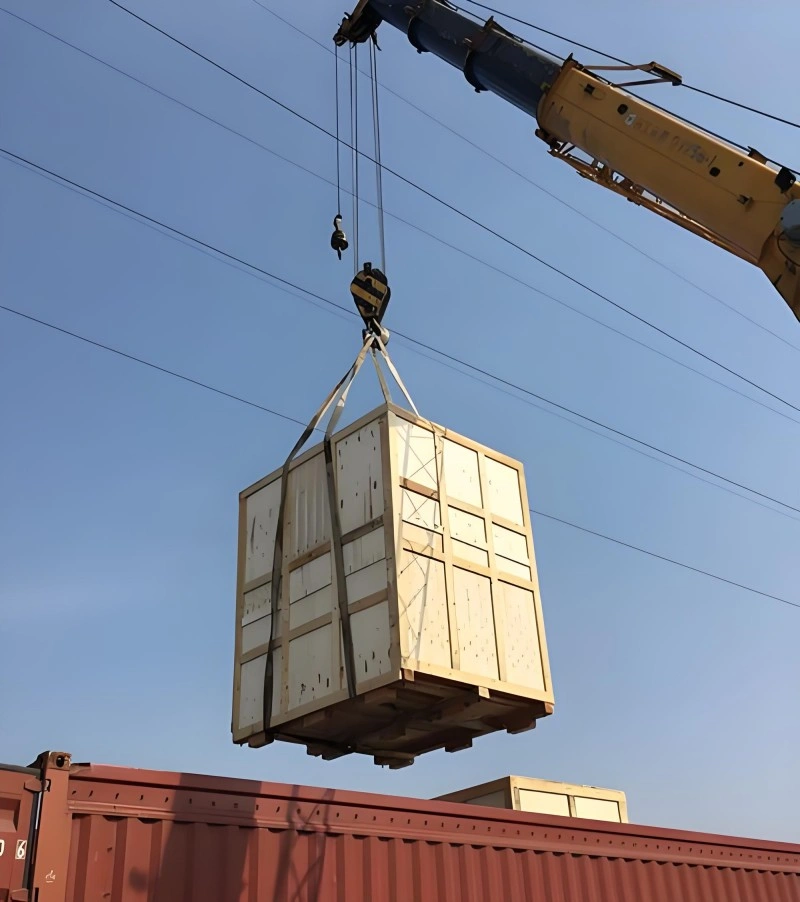
Many materials are used for securing in order to protect from physical stress when handling, stacking, and transporting, with vacuum packing being best at keeping moisture and corrosion at bay.
Combined methods are best for oversized and/or high value equipment, moisture barrier in, impact and weather barrier out. This is the usual method used in project cargo and factory relocation OOG projects involving several handling cycles.
| Combined Protection Method | Best For | Added Value |
| Vacuum packing + wooden crate | High-value machinery, molds, precision components | Moisture plus impact protection |
| Vacuum packing + skid base | Heavy industrial equipment | Stable lifting and storage |
| Vacuum packing + shock padding | Precision equipment | Vibration and impact reduction |
| Vacuum packing + protective cover | Temporary outdoor or port storage | Extra weather protection |
| Vacuum packing + flat rack securing | Oversized cargo | Moisture protection plus transport stability |
| Vacuum packing + photo records | Long-term or high-value projects | Better traceability and claims support |
Conclusion — Rust Prevention Starts Before Storage Begins
Even if cargo is seemingly protected from rain or sea water, it still may be at risk of real corrosion during long-term storage. When done as part of a comprehensive approach (including good cleaning, drying, anti-rust treatments, desiccants, quality barrier film, and careful checking of seals), vacuum packing is effective in preventing the rust and corrosion of stainless steel.
Evaluating the properties of the cargo material, storage time, climate conditions, transport route, and installation time at an early stage helps to minimize the risk of expensive surprises for machinery exporters and the project team. With careful moisture control packaging, the equipment will be kept in the same condition it left the factory in, and the precision surfaces will be preserved, as will the installation of the equipment, whether after several weeks in a warehouse or several months in a port.