
When it comes to OOG cargo transport, one key difference between ultra-low flatbeds and standard trailers is the fit of the trailer to the cargo’s specific height, weight distribution and route requirements. For OOG loads that are over-height, heavy and/or high center of gravity, ultra-low flatbeds may be the better choice to help clear the road and provide greater stability with lower overall transport height. But, the best trailer is the one which has been checked with regard to verified cargo dimensions, gross weight, center of gravity, loading method, route conditions, permit requirements etc.
Many shippers think that the bigger the standard trailer, the better, however, the higher the deck on an actual OOG shipment, the higher the center of gravity, the more difficult loading, the more difficult permit approval. Heavy machinery manufacturers, project cargo managers, and industrial exporters will avoid delays, damage, and unnecessary expenses with the correct decision up front.
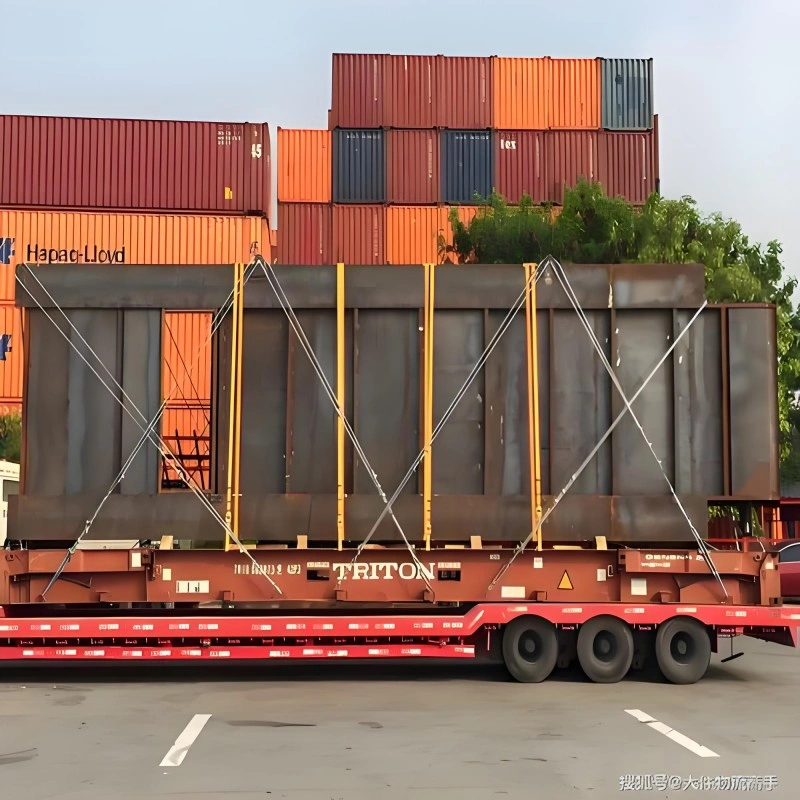
What Is an Ultra-Low Flatbed Trailer?
An ultra-low flatbed is a special type of trailer that has a very low deck height, which is suitable for transporting tall, heavy or oversized equipment without increasing the overall height of the load.
It can facilitate the passage of routes under bridges, tunnels, cables, port gates, etc. It can also improve the stability of cargo with a high centre of gravity. It has been widely used in OOG heavy equipment transport and project cargo movement.
| Feature | What It Means for OOG Cargo |
| Low Deck Height | Reduces total loaded height and improves clearance |
| Heavy-Duty Structure | Supports large industrial machinery and heavy equipment |
| Multi-Axle Options | Helps distribute weight and meet road limits |
| Strong Lashing Points | Supports safer cargo securing |
| Lower Center of Gravity | Improves stability for tall or heavy cargo |
| Specialized Loading Design | May support crane loading, ramp loading, or customized support |
What Is a Standard Trailer?
Standard trailers are a reliable and proven workhorse for many freight applications, but they do not provide a solution for all OOG cargo applications.
These flatbed/general purpose trailers have a deck height higher than ultra-low flatbeds. They can be used for normal loads, small equipment, and loads that are within standard legal loads. They do have drawbacks, however, for cargo that is too tall, too heavy, and/or too high. Always verify cargo size and route prior to selecting an “average” trailer.
| Feature | Standard Trailer Consideration |
| Deck Height | Usually higher than ultra-low flatbeds |
| Load Capacity | Suitable for many general cargoes but may not support extremely heavy loads |
| Axle Configuration | May offer less flexibility for overweight cargo |
| Loading Method | May require ramps, forklifts, or crane access depending on cargo |
| Route Clearance | Higher loaded height may create bridge or gate restrictions |
| Best Use Case | Regular freight, smaller machinery, or cargo within standard height/weight limits |
Ultra-Low Flatbeds vs Standard Trailers: Key Safety Differences
Safety benefits of ultra-low flatbeds vs standard trailers extend beyond height to cargo stability, road compliance, load distribution and ease of operation.
To ensure safe OOG cargo transport, the height of the machinery, axle load, securing design, and route feasibility must be matched before the machinery is picked up, especially for over-height machinery or high-value industrial equipment which has to move through a restricted route.
| Safety Factor | Ultra-Low Flatbed | Standard Trailer |
| Total Loaded Height | Lower overall height, better for over-height cargo | Higher deck may create clearance risks |
| Cargo Stability | Lower center of gravity can improve stability | Higher cargo position may increase sway or rollover concern |
| Route Clearance | Better for bridges, tunnels, and overhead obstacles | May require more route restrictions or detours |
| Weight Distribution | Often designed for heavier and more complex cargo | May be limited for concentrated or very heavy loads |
| Permit Feasibility | Can improve approval chances for tall cargo | May face issues if loaded height exceeds limits |
| Loading Safety | Often better suited to heavy machinery loading | May require higher ramps or more complex lifting |
| Securing Options | Typically designed for heavy cargo lashing | Depends on trailer type and anchor strength |
| Cost | Usually higher but may reduce risk | Usually lower but may not fit complex OOG needs |
When Is an Ultra-Low Flatbed Safer for OOG Cargo?
At times, the only situations where ultra-low flatbeds are most useful is when cargo height and stability, as well as route clearance, pose significant risks that a standard trailer is not able to reduce.
They radiate with over-height cargo, high center-of-gravity loads, heavy machinery, construction and mining equipment, transformers and generators, industrial modules, and any cargo traveling under bridges, through tunnels, via port gates or through restricted routes! They are also useful in cases where a lower loading angle is required, or when routes have clearance and permit limits.
| Cargo / Route Situation | Why Ultra-Low Flatbed Is Safer |
| Over-Height Machinery | Reduces total transport height |
| High Center of Gravity | Lowers cargo position and improves stability |
| Bridge or Tunnel Routes | Improves clearance under overhead restrictions |
| Heavy Construction Equipment | Supports lower loading height and stable movement |
| Transformers or Generators | Helps manage weight and stability requirements |
| Port Gate Restrictions | Reduces risk of gate clearance problems |
| Long-Distance Road Transport | Improves stability over extended movement |
| Permit-Limited Routes | Helps meet height and axle load requirements |
When Can a Standard Trailer Still Be Suitable?
There is no reason that standard trailers are inherently wrong, they can be appropriate when the load is in legal and safe transport limits.
They are effective under conditions where post loading height remains acceptable; weight remains within the permissible limits of trailer and roadway; center gravity is low and stable; route has no significant clearance limitations; the cargo can be properly secured; and the loading and delivery point are reachable, and the risk and transport distance are within moderate limits.
| Suitable Condition | Why Standard Trailer May Work |
| Cargo Height Is Within Limit | No major bridge or gate clearance issue |
| Weight Is Moderate | Trailer capacity and axle load remain acceptable |
| Low Center of Gravity | Stability risk is manageable |
| Simple Cargo Shape | Easier to support and secure |
| Clear Road Route | No tight clearance or severe road restrictions |
| Proper Lashing Points | Cargo can be secured safely |
| Easy Loading Site | Forklift, ramp, or crane access is practical |
| Short or Controlled Route | Less exposure to route complexity |
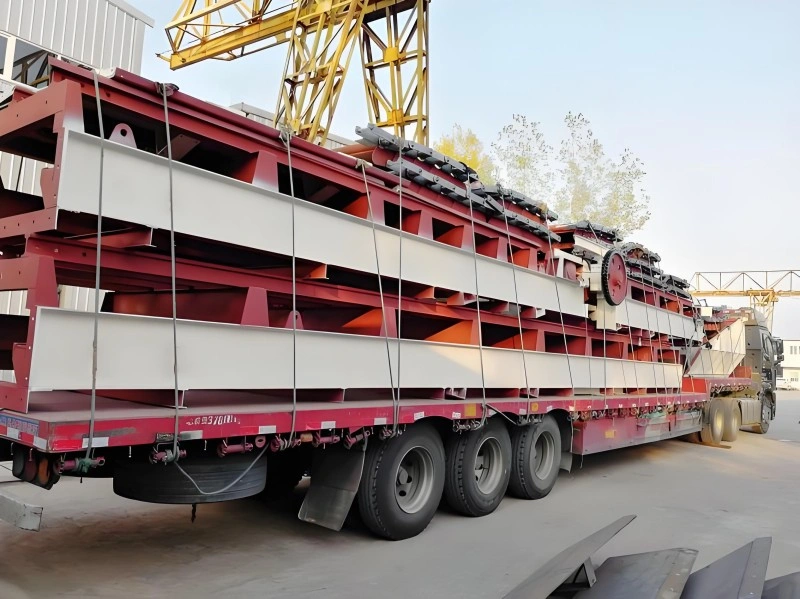
Height Clearance: Why Deck Height Matters So Much
If the cargo is above the deck plate on the trailer (OOG), the deck height can be the difference in whether the cargo is able to travel safely through a route.
The direct impact of total loaded height are bridge clearance, tunnel restrictions, overhead cables, port gates, factory exits and legal height limits. Permit issues or rerouting can occur even with a few inches of difference. It is always important to have a comprehensive route survey.
| Height Factor | Why It Matters |
| Trailer Deck Height | Directly affects total loaded height |
| Cargo Height | Determines whether standard trailer transport is possible |
| Bridge Clearance | Cargo may be blocked if total height exceeds clearance |
| Tunnel / Gate Limit | Restricted access may require lower trailer configuration |
| Overhead Cable Risk | Tall cargo may require route adjustment or special coordination |
| Legal Height Limit | Affects permit approval and escort requirements |
| Route Survey | Confirms actual clearance before cargo moves |
Center of Gravity and Stability Considerations
While having lower trailers may contribute to stability, it is still important to do center-of-gravity analysis for every OOG move.
These factors include cargo center of gravity, height versus weight, height of the trailer deck, turning and braking forces, road slope, uneven surfaces, wind exposure, the direction of lashing, support points, and the risk of rollover. A review by an engineer is required and not optional.
| Stability Factor | Why It Matters |
| Center of Gravity | Determines how cargo behaves during movement |
| Loaded Height | Higher cargo position can increase instability |
| Cargo Width | Wider cargo may need route and escort planning |
| Road Slope | Uneven roads can increase tipping risk |
| Turning Forces | High cargo may shift or lean during turns |
| Braking Forces | Heavy cargo needs strong forward restraint |
| Wind Exposure | Tall cargo may be affected by side wind |
| Lashing Design | Securing must match cargo weight and movement forces |
| Support Points | Proper bedding helps keep the cargo stable |
Weight Distribution and Axle Load Comparison
Factors that affect the safety of the trailer also include the distribution of cargo weight along the trailer and the road surface.
Gross weight, axle load, point load, deck strength, number of support points, multi-axle configurations all must match; bridge and road restrictions and permit requirements must all be met. When set up correctly, ultra-low flatbeds typically can manage heavier, more complicated loads.
| Weight Factor | Ultra-Low Flatbed Consideration | Standard Trailer Consideration |
| Gross Weight | Often better suited for heavier cargo when properly configured | Limited by trailer rating and road regulations |
| Axle Load | Multi-axle options may help distribute weight | May have fewer axle options |
| Point Load | May require engineered supports or bedding | Higher risk if deck is not designed for concentrated load |
| Bridge Limits | Better configuration can support route approval | May face restrictions with heavy cargo |
| Support Points | Can be designed for cargo footprint | May need additional support engineering |
| Permit Review | Trailer configuration affects approval | Standard setup may not pass for heavy OOG cargo |
Loading and Unloading Safety
The risk of loading and unloading is as significant as the risk for road movement.
This includes loading angle, ramp access, crane loading, removable gooseneck, site space, ground conditions, cargo movement during loading, equipment stability, lashing after loading, plus on site supervision. These are often easier to perform in a lower deck.
| Loading Factor | Safety Impact |
| Loading Angle | Lower angle reduces risk for wheeled or tracked equipment |
| Deck Height | Lower deck can make loading easier and safer |
| Crane Access | Cargo may require top lifting if drive-on loading is not possible |
| Site Space | Trailer must have enough room to position safely |
| Ground Condition | Soft or uneven ground can affect trailer and crane stability |
| Removable Gooseneck | Helps equipment drive on from the front |
| Post-Loading Inspection | Confirms cargo position, lashing, and support before movement |
| Supervision | Reduces errors during high-risk loading operations |
Route Planning and Permit Impact
More than most people realize, trailer selection impacts on route planning and permit approval.
Approved route, overall height, overall width, gross vehicle weight, axle load, escort vehicles, movement time windows, road restrictions, port access and destination site access all play a role. The right trailer setup can make approvals easier, and decrease escorts.
| Planning Area | Why Trailer Choice Matters |
| Route Clearance | Lower trailer height may allow safer passage |
| Permit Approval | Trailer dimensions and axle load affect permits |
| Escort Requirement | Cargo height, width, and route risk influence escort needs |
| Road Restrictions | Trailer configuration affects which roads can be used |
| Bridge Review | Axle load and total weight must be checked |
| Port Gate Access | Lower loaded height may reduce terminal entry risk |
| Site Delivery | Trailer maneuverability affects final access |
| Schedule Planning | Permit and escort arrangements affect delivery timing |
Cost and Risk Trade-Offs
While it may be more expensive up front to purchase an ultra-low flatbed, the cost should be calculated with the risk, delay, damage and the feasibility of permits.
The cost of hiring a trailer, availability, the cost to travel to the trip, permit fees, escort fees, lower risk of damage, lower risk of rerouting, lower risk for bridge clearance, and reliability in the schedule all are relevant. The lowest cost trailer may not be the safest for complex OOG moves.
| Factor | Ultra-Low Flatbed | Standard Trailer |
| Direct Transport Cost | Usually higher | Usually lower |
| Availability | May require advance booking | Often easier to find |
| Height Clearance Risk | Lower risk for tall cargo | Higher risk for over-height cargo |
| Stability | Often better for tall or heavy cargo | Acceptable for simpler cargo |
| Permit Feasibility | May improve approval for over-height cargo | May face more restrictions |
| Damage Risk | Lower when properly matched to cargo | Higher if cargo exceeds trailer suitability |
| Total Risk Cost | Can be lower for complex OOG moves | Can rise if delays or re-routing occur |
How to Decide Which Trailer Is Safer for Your OOG Cargo
The safest trailer is not necessarily the lowest deck or the lowest price, but the one that is the right match to the cargo and route.
Start with a full list such as cargo length, width, height, final packed dimensions, gross weight, center of gravity, loading and unloading method, route clearance, road width and turning radius, bridge restrictions, permit requirements, loading and unloading site conditions, weather and road conditions, and delivery date.
| Decision Factor | Question to Ask |
| Cargo Height | Will the total loaded height pass the route safely? |
| Cargo Weight | Can the trailer and axle configuration support the load? |
| Center of Gravity | Will the cargo remain stable during turns, braking, and slopes? |
| Cargo Footprint | Can the trailer support the cargo contact points? |
| Loading Method | Is crane, ramp, or drive-on loading required? |
| Route Clearance | Are bridges, tunnels, gates, or cables a concern? |
| Permit Requirements | Which trailer configuration improves approval feasibility? |
| Site Access | Can the trailer enter and maneuver at origin and destination? |
| Securing Method | Are suitable lashing points and support positions available? |
| Schedule | Is the safer trailer available within the required timeline? |
Common Mistakes When Comparing Ultra-Low Flatbeds and Standard Trailers
Familiar logistics groups sometimes miss information that causes issues down stream.
Typical mistakes are selecting the trailer due to price alone, not accounting for total loaded height, not considering center of gravity, using dimensions that are estimated, forgetting final packed dimensions, not considering axle load and permit, assuming that all heavy equipment can be placed in a regular trailer, not considering loading site conditions, failing to ensure route clearance, and not planning for proper lashing, blocking, and bracing.
| Mistake | Possible Consequence |
| Choosing by Price Only | Higher risk of delay, damage, or permit rejection |
| Ignoring Total Height | Cargo may fail bridge, tunnel, or gate clearance |
| No Center-of-Gravity Review | Increased rollover or instability risk |
| Estimated Dimensions | Wrong trailer selection or route planning error |
| No Axle Load Check | Road permit or bridge approval problems |
| No Loading Site Review | Trailer may not be able to position safely |
| Weak Securing Plan | Cargo may shift during road movement |
| No Route Survey | Unexpected clearance or turning restrictions may stop transport |
| No Backup Option | Trailer issue may cause schedule delay |
Common Misunderstandings About Trailer Safety for OOG Cargo
A number of misconceptions still crop up in the minds of exporters and project managers.
- In many cases where the load height is over the vehicle’s bed height, an ultra-low flatbed is safer, but not necessarily required for all OOG loads.
- Standard trailers may be safe if the cargo is not beyond size, weight and route limits.
- Strength is not enough to make a trailer safe.
- Low deck height is no excuse from conducting route surveys.
- Many factors affect cargo stability: center of gravity, points of support, lashing design, and road conditions.
- Loading and unloading conditions should also be taken into account when choosing a safety trailer.
- A less expensive trailer may lead to rerouting, permit issues, and/or damage to cargo—ultimately increasing the cost of ownership.
Conclusion — Trailer Safety Depends on Cargo, Route, and Engineering Review
There are certain situations (and loads) where an ultra-low flatbed or a standard flatbed is appropriate and safe, but not all of them. When it comes to complex OOG cargo, it’s not just about trailer availability or price; it’s about verified measurements, a review of the trailer’s capacity and center of gravity, route feasibility assessments, and the experience and knowledge of transport planning.
Ultra Low flatbeds are safer for over height, heavy or high center of gravity OOG loads due to lower overall loaded height and increased stability. Cargo in normal height, weight, route and securing may still be appropriate for standard trailers. Factors for consideration when selecting a trailer are cargo dimensions, gross weight, center of gravity, route clearance, axle load, loading method, permit requirements and site access. The right trailer is a component of an overall OOG transport plan, which involves route survey, lashing design, permits, tracking and on-site supervision.