
Heavy-duty transport platforms that can be configured to transport extremely heavy, wide, long, and/or irregular loads that they are unable to safely carry are called modular transport systems for heavy cargo. They enable logistics teams to combine the trailer modules, axle lines, steering systems, and platform layouts accurately, to match the cargo weight distribution, dimensions, centre of gravity, route restrictions and loading conditions.
Unfortunately, standard flatbeds, lowbeds, or multi-axle trailers are not always suitable for transporting extremely heavy or wide cargo. In the practical application of OOG logistics, the safety of extremely heavy loads is not just about the strength of the trailer but also depends on the distribution of axle loads, the ground pressure of the load, the ability of the wheels to turn, the ground clearance of the load, and the feasibility of the route. Modular transport systems are not just simply bigger trailers; they are configured transport systems that are designed to best fit the cargo’s weight, geometry, center of gravity, route restrictions and loading environments.
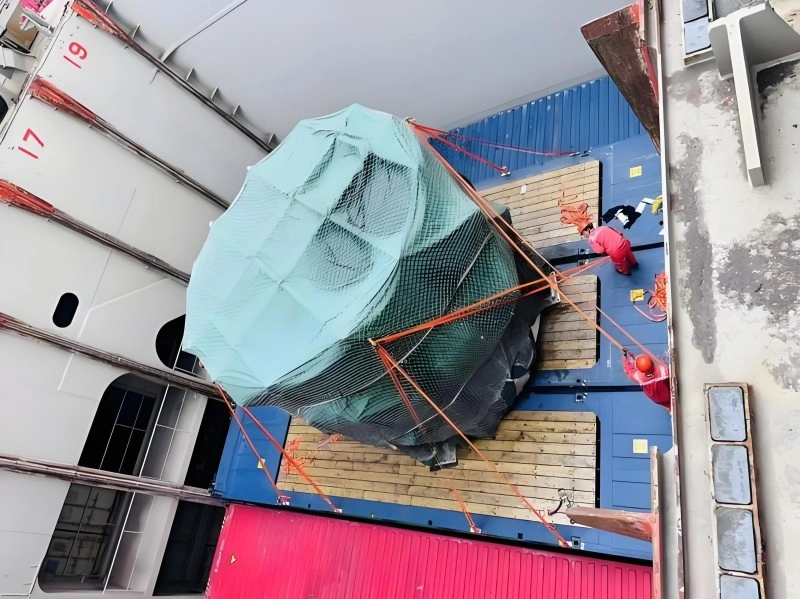
What Are Modular Transport Systems?
Modular transport systems consist of sets of standardised modules and/or axle lines that can be assembled side-by-side, end-to-end or in a custom-designed arrangement to carry a wide range of goods.
| Modular System Feature | What It Means for Heavy or Wide Cargo |
| Connectable Modules | Trailer sections can be combined to match cargo size and weight |
| Multiple Axle Lines | Distributes heavy loads across more contact points |
| Hydraulic Suspension | Helps balance load, adjust height, and manage uneven surfaces |
| Steering Capability | Improves turning through narrow roads, ports, and job sites |
| Custom Platform Layout | Supports wide, long, or irregular cargo footprints |
| High Load Capacity | Suitable for cargo beyond conventional trailer limits |
| Flexible Configuration | Allows side-by-side or end-to-end arrangements for complex cargo |
In many systems, hydraulic suspension provides the adjustment of height and even load distribution. Some modular systems have self-propulsion and others are towed. Most often, they are used for project cargo and OOG heavy equipment transport.
When Extremely Heavy or Wide Cargo Needs Modular Transport
Modular transport is generally employed when cargo size is too great for safe or legal limits of standard transport equipment.
For cargo that requires customized axle configuration, route feasibility review, and multi-stage coordination, flexible OOG logistics services can help match modular transport systems with the actual cargo and route conditions.
| Cargo / Route Condition | Why Modular Transport May Be Needed |
| Extremely Heavy Weight | Multiple axle lines help reduce axle load and road pressure |
| Excessive Width | Side-by-side module configuration can improve support and stability |
| Very Long Cargo | End-to-end modular layouts support longer cargo footprints |
| High Point Load | Load can be spread through engineered support positions |
| Irregular Cargo Shape | Custom platform layout helps match unusual cargo geometry |
| High Center of Gravity | Wider or lower configurations can improve stability |
| Weak Bridge or Road Limit | Axle configuration may help meet route approval requirements |
| Tight Turning Area | Steering modules improve maneuverability |
| Uneven Site Ground | Hydraulic suspension helps adjust platform height and balance |
Types of Modular Transport Systems Used in OOG Logistics
The modular transport isn’t a single type of equipment; each system is used for a particular type of cargo, a route and a site requirement.
| System Type | Best Used For | Key Planning Consideration |
| Hydraulic Modular Trailer | Heavy industrial cargo and project cargo | Requires axle load and route feasibility review |
| Self-Propelled Modular Transporter | Extremely heavy loads in plants, ports, or project sites | Requires skilled operators and site control |
| Multi-Axle Modular Trailer | Heavy cargo requiring weight distribution | Axle configuration affects permits and road limits |
| Girder Bridge Trailer | Very heavy cargo needing load transfer around weak structures | Requires detailed engineering review |
| Platform Modular System | Wide or irregular industrial modules | Cargo support points must be planned carefully |
| Side-by-Side Configuration | Extremely wide or unstable cargo | Improves platform width and stability |
| End-to-End Configuration | Long cargo or long support spans | Improves footprint support and load distribution |
Key Benefits of Modular Transport for OOG Cargo
When handling goods that are too large or complex to be transported using simpler equipment, modular transport can provide added value by enhancing the safety, feasibility, and control of transport.
| Benefit | Practical Value for OOG Cargo |
| Better Weight Distribution | Reduces stress on roads, bridges, and transport equipment |
| Lower Axle Load | Helps meet permit and route requirements |
| Flexible Configuration | Matches cargo width, length, and support points more accurately |
| Hydraulic Height Adjustment | Helps manage ground clearance, loading, and route obstacles |
| Improved Steering | Supports tight turns in factories, ports, and project sites |
| Higher Stability | Helps manage wide or high-center-of-gravity cargo |
| Greater Load Capacity | Supports cargo beyond standard trailer limits |
| Better Route Feasibility | Makes complex routes more practical with proper planning |
How Modular Transport Improves Load Distribution
One of the most significant benefits of using modular transport for extremely heavy loads is load distribution.
| Load Distribution Factor | Why It Matters |
| Gross Weight | Determines total transport capacity required |
| Axle Load | Affects road legality, bridge approval, and permit feasibility |
| Point Load | Concentrated weight may damage trailer deck or support structure |
| Ground Pressure | Critical for ports, factory yards, temporary roads, and job sites |
| Support Positions | Must match cargo structure to prevent deformation |
| Bridge Load Limit | Determines whether the planned route is feasible |
| Hydraulic Suspension | Helps equalize load across axle lines |
| Cargo Footprint | Determines module layout and support arrangement |
Steering and Maneuverability for Wide or Long Cargo
Cargo sometimes needs to be very wide or long, which can make turning or accessing very difficult, and use of modular transport systems can help with maneuverability.
| Maneuverability Challenge | How Modular Transport Helps |
| Tight Factory Exit | Steering modules allow more controlled turning |
| Narrow Port Roads | Better steering helps move cargo through restricted areas |
| Long Cargo Turns | Modular configurations reduce swing and turning difficulty |
| Wide Cargo Movement | Side-by-side layouts improve support and control |
| Urban Restrictions | Route survey and steering control reduce blockage risk |
| Project Site Access | Modular systems can adapt to complex site layouts |
| Limited Turning Radius | Steering axle lines improve movement precision |
| Escort Coordination | Controlled movement helps support traffic management |
Route Planning and Permit Requirements for Modular Transport
Route and permit planning is important for modular transport as the configuration of cargo and trailers may be larger than normal roadway restrictions.
| Route / Permit Factor | Planning Requirement |
| Cargo Width | Confirms road lane occupation and escort needs |
| Total Transport Length | Affects turns, intersections, and site access |
| Gross Vehicle Weight | Determines overweight permit requirements |
| Axle Load | Supports bridge and road approval review |
| Bridge Capacity | May require engineering assessment or alternative route |
| Road Width | Determines whether route can support safe movement |
| Turning Radius | Requires simulation or route survey for long cargo |
| Overhead Clearance | Checks bridges, cables, signs, and terminal gates |
| Escort Requirement | Supports traffic safety and legal movement |
| Movement Time Window | Some routes allow heavy transport only during specific hours |
Cargo Types Commonly Moved with Modular Transport Systems
Typically, modular transport is employed for goods in which size, weight or complexity is greater than that of conventional heavy-haul goods carriers.
| Cargo Type | Why Modular Transport May Be Used |
| Power Transformers | Extremely heavy weight and sensitive center of gravity |
| Turbines and Generators | High value, heavy weight, and precise handling needs |
| Pressure Vessels | Long or wide cylindrical cargo requiring support saddles |
| Industrial Modules | Large footprint and complex support requirements |
| Mining Equipment | Heavy structure and remote route challenges |
| Bridge Sections | Long length and large support span |
| Steel Structures | Wide or irregular shapes needing stable platform support |
| Oil and Gas Equipment | Heavy, high-value, and often route-restricted |
| Large Production Machinery | Fragile components and special loading requirements |
| Wind Power Components | Long or oversized cargo needing route and steering control |
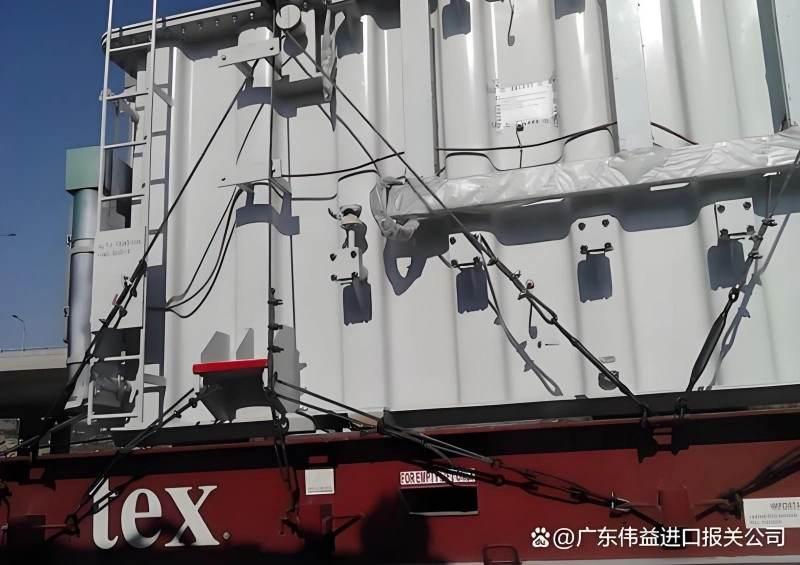
Loading and Unloading Considerations for Modular Transport
The distribution of goods onto and off the transport platform should be an integral part of modular transport planning.
| Loading / Unloading Factor | Why It Matters |
| Loading Method | Determines crane, jacking, skidding, or roll-on requirements |
| Cargo Support Points | Must align with cargo structure and modular platform |
| Ground Bearing Capacity | Heavy loads may require ground reinforcement |
| Trailer Positioning | Accurate positioning reduces handling risk |
| Hydraulic Height Adjustment | Helps align cargo with supports or loading platforms |
| Lifting Points | Supports safe crane or gantry lifting |
| Lashing Access | Securing points must remain reachable after loading |
| Site Space | Modular systems need room for setup, turning, and exit |
| Supervision | Ensures loading sequence and safety controls are followed |
Limitations and Trade-Offs of Modular Transport Systems
While modular transport can be very effective, it is not necessarily the most economical or easiest approach.
| Advantage | Trade-Off |
| Handles extremely heavy cargo | Higher transport and planning cost |
| Flexible axle configuration | Requires detailed engineering review |
| Better load distribution | Permit process may be more complex |
| Improved maneuverability | Needs skilled operators and route survey |
| Hydraulic height control | Equipment setup may take more time |
| Suitable for complex cargo | Not necessary for simpler oversized cargo |
| Better support for wide cargo | May require more site space for operation |
How to Decide Whether Modular Transport Is Needed
The choice of modular transport should not be made just on the basis of cargo size, but also on cargo and route conditions.
| Decision Factor | Question to Ask |
| Cargo Weight | Is the cargo too heavy for conventional trailers or lowbeds? |
| Cargo Width | Does the cargo need a wider support platform? |
| Cargo Length | Does it require end-to-end modular support? |
| Center of Gravity | Does stability require a wider or lower configuration? |
| Support Points | Can the cargo be supported without deformation? |
| Route Limits | Are bridge, road, or axle load limits restrictive? |
| Turning Radius | Can the cargo pass roads, gates, and site turns safely? |
| Ground Conditions | Can the site support the modular system and load? |
| Loading Method | Is crane, jacking, skidding, or hydraulic adjustment needed? |
| Alternative Options | Can a lowbed, multi-axle trailer, or breakbulk method work instead? |
What Shippers Should Provide Before Modular Transport Planning
Transport planning must be detailed and based on both cargo and site data, and route data, in order to be modular.
| Information to Provide | Why It Helps |
| Cargo Dimensions | Determines modular layout, route clearance, and platform configuration |
| Gross Weight | Defines axle lines, hydraulic system needs, and permit requirements |
| Center of Gravity | Supports stability and load distribution planning |
| Support Points | Helps prevent cargo deformation during transport |
| Lifting Points | Supports crane, gantry, or jacking planning |
| Technical Drawings | Helps engineers understand structure and handling limits |
| Photos / Videos | Reveals protrusions, weak points, and site conditions |
| Origin / Destination | Supports route and permit planning |
| Site Access Details | Confirms whether modular equipment can enter and maneuver |
| Ground Conditions | Helps assess need for ground reinforcement or mats |
| Loading Method | Determines equipment and sequence requirements |
| Delivery Schedule | Helps plan equipment availability and permits |
Common Mistakes in Modular Transport Planning
Even the very best teams can miss the obvious that leads to an issue downstream. In this article, I’ll point out the types of errors that we encounter most commonly in our OOG projects:
| Mistake | Possible Consequence |
| No Axle Load Review | Permit rejection or road/bridge safety issue |
| Estimated Cargo Data | Wrong module configuration or route plan |
| Ignoring Center of Gravity | Stability risk during movement or turning |
| No Support Point Review | Cargo deformation or structural damage |
| Weak Ground Assessment | Site failure or unsafe loading conditions |
| No Route Survey | Turns, bridges, or roads may block movement |
| Late Permit Planning | Project schedule delay |
| Poor Loading Coordination | Crane, jacking, or platform mismatch |
| Overusing Modular Transport | Unnecessary cost if simpler transport is suitable |
Common Misunderstandings About Modular Transport Systems
There are several misconceptions that can result in less-than-ideal options or delays:
- Not all oversized loads require modular transport.
- Having more axle lines doesn’t necessarily resolve all route issues.
- The volume of cargo alone is insufficient to determine the needs for modular transport.
- The center of gravity and points of support are as crucial as gross weight.
- Before equipment is dispatched it is necessary to determine route feasibility.
- Hydraulic suspension is a means of easing control but is not a substitute for engineering planning.
- Even modular transport has its own need for contingencies, permits, supervision, and lashing.
- The most appropriate transport system will be determined by the cargo, route, site, schedule and cost balance.
Conclusion — Modular Transport Systems Make Complex OOG Moves More Feasible
Modular transport systems increase load distribution, stability, steering, height adjustment and route feasibility to transport extremely heavy, wide, long or complex loads. They are particularly useful when standard trailers or lowbeds or traditional multi-axle trailers cannot safely or legally accommodate the load.
Modular transport planning must be done based on verified cargo data, center of gravity, support points, route restrictions, ground conditions, permits and method of loading. The most successful approaches are the use of modular equipment coupled with engineering review, route survey, experienced operators, lashing design, and on-site supervision. With proper execution, modular transport systems transform difficult OOG moves into safe and managed operations, ensuring the security of cargo and project schedules.