
Engineering-based logistics planning is required to safely move water treatment systems and industrial machinery, which involves linking cargo assessment, route feasibility, specialized transport equipment, lifting coordination, cargo protection, securing methods, documentation and final site delivery into one project plan. These projects require large, awkwardly shaped, off-the-standard and often damp gear that can be easily damaged by poor handling from start.
In most cases, water treatment plants and industrial machinery contain pumps, tanks, pressure vessels, filtration systems, RO membrane modules, skids, electrical cabinets, piping assemblies and control panels. Many think it’s done if an air carrier has available transport. But in practice, the safety of delivery depends on verified data, a well-thought-out plan and adapting the logistics solution to the distinct properties of the cargo. Oftentimes, the greatest dangers occur prior to shipment, when factors such as dimensions or lifting points or site conditions are not confirmed.
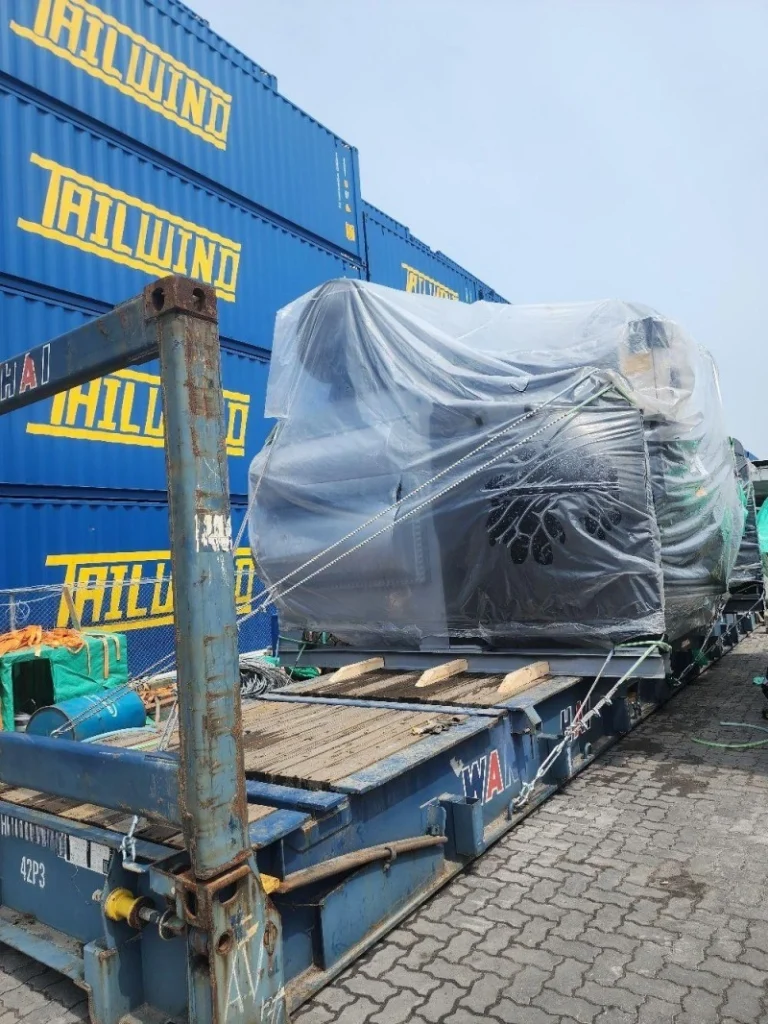
Why Water Treatment Plants and Industrial Machinery Need Specialized Transport Planning
Equipment such as water treatment equipment and industrial machinery is often large, heavy, sensitive or awkward to use for traditional transportation solutions. The components in these projects are often larger than roads or containers, need to be carefully protected from the environment, and need to be installed in a specific order.
For water treatment systems, processing machinery, pump skids, tanks, and electrical control equipment, professional industrial engineering logistics services help connect cargo survey, route planning, lifting coordination, securing design, and final site delivery into one practical transport plan. Failure to meet these specialised requirements can result in structural damage, project delays or expensive rework jobs when installing.
| Transport Challenge | Why It Matters |
| Oversized Dimensions | Equipment may exceed standard container, truck, or road transport limits |
| Heavy Weight | Trailer capacity, crane selection, and route load limits must be checked |
| Irregular Shape | Cargo may require custom supports, blocking, and bracing |
| Moisture Sensitivity | Electrical cabinets, control panels, and instruments need protection |
| Corrosion Risk | Tanks, frames, and machined surfaces may require anti-rust measures |
| Limited Lifting Points | Incorrect lifting may deform or damage equipment |
| Complex Site Access | Final delivery may require access road and unloading area review |
| Installation Sequencing | Equipment must arrive in the correct order for project assembly |
Common Equipment Types in Water Treatment and Industrial Projects
Handling, moving, and protecting equipment vary with types. By knowing these differences early on, logistics can customize all of the steps of the process, whether you are surveying or delivering, to the risks the individual piece poses.
| Equipment Type | Logistics Consideration |
| Water Treatment Tanks | Large volume, rolling risk, lifting and support point planning |
| Pressure Vessels | Cylindrical shape, heavy weight, blocking and bracing requirements |
| Filtration Units | Fragile internal components and moisture protection needs |
| RO Membrane Systems | Sensitive modules, vibration control, and clean handling |
| Pump Skids | Heavy base frame, center of gravity, lifting point verification |
| Pipe Racks | Long structures, bundling, deformation prevention |
| Chemical Dosing Systems | Possible hazardous components and documentation requirements |
| Electrical Control Cabinets | Moisture, vibration, and impact protection |
| Heat Exchangers | Heavy weight, sensitive tubes, lifting and support planning |
| Industrial Processing Machines | High value, irregular shape, and installation-critical delivery |
Cargo Survey and Technical Data Preparation
Safe transport of industrial machinery is built on accurate cargo information. The selection of trailers, lifting plans, route permits and lashing designs may all be incorrect without verified information.
The old pro actually always orders a complete technical survey before any movement is made. This removes the guesswork and provides all stakeholders, from manufacturers to EPC contractors to transport teams, with the accurate information they need to create a sound plan.
| Data to Confirm | Why It Matters |
| Length, Width, Height | Determines container choice, road clearance, and permit requirements |
| Gross Weight | Affects trailer selection, crane capacity, and bridge load assessment |
| Center of Gravity | Supports safe lifting, loading, and transport stability |
| Lifting Points | Prevents equipment deformation or unsafe crane operations |
| Tie-Down Points | Helps design safe lashing and securing methods |
| Support Points | Prevents base frame stress or structural damage |
| Sensitive Components | Guides vibration, moisture, and impact protection |
| Cargo Drawings | Helps logistics teams understand structure and handling limitations |
| Cargo Photos | Provides visual reference for planning and condition records |
| Handling Notes | Reduces risk during loading, unloading, and site movement |
Route Planning, Permits, and Site Access Control
Not all the time is the safest way to get to water treatment and industrial machinery the shortest? Routes will only be considered feasible prior to pickup.
A comprehensive route survey includes all of the factors which generic mapping tools cannot foresee. Planning now in this area will avoid any last minute detours, permits being denied and impossible site access that may stop the whole project.
| Route or Site Factor | Risk If Ignored | Control Measure |
| Bridge Load Limit | Cargo may exceed permitted road capacity | Verify bridge ratings and approved transport route |
| Overhead Clearance | Collision with wires, signs, bridges, or gates | Conduct route survey and measure critical points |
| Turning Radius | Lowbed or long cargo may not pass safely | Simulate turns or use alternative route |
| Road Surface | Vibration or instability may affect machinery | Select suitable trailer and adjust speed |
| Factory Access | Cargo may be difficult to load at origin | Check gate width, loading area, and crane position |
| Port Entry Rules | Cargo may be delayed or rejected | Confirm terminal requirements in advance |
| Final Site Access | Delivery may fail even after long-distance transport | Survey access roads, unloading zone, and site readiness |
| Permit Approval | Transport may be stopped or delayed | Apply early and track approval status |
Choosing the Right Transport Equipment
Choices should be made regarding the selection of transport equipment not just freight cost, but also the size and weight of the cargo, route restrictions, lifting methods and protection requirements.
The correct choice of trailer, container or support system allows the height and weight to be controlled for the cargo as well as for sensitive components, during the journey.
| Transport Option | Best For | Key Consideration |
| Lowbed Trailer | Heavy or tall machinery for inland transport | Helps reduce overall transport height |
| Ultra-Low Flatbed | Extra-tall or heavy industrial equipment | Useful when clearance is limited |
| Modular Trailer | Extremely heavy or oversized units | Requires detailed route and load distribution planning |
| Flat Rack Container | Heavy machinery that exceeds standard container width or height | Requires strong lashing and weather protection |
| Open Top Container | Tall equipment that can be loaded from above | Needs rain protection and lifting planning |
| Breakbulk Shipping | Very large equipment unsuitable for containers | Requires port handling and cargo securing coordination |
| Custom Support Frame | Tanks, vessels, or irregular machinery | Prevents rolling, deformation, or base damage |
Lifting, Loading, and Unloading Safety
There are far more incidents of equipment damage when lifting and loading, not when they are being transported long-distance.
With proper crane coordination, confirmed rigging, and communication between crane operators and supervisors, it can be a safe and repeatable process.
| Safety Area | What to Check | Why It Matters |
| Crane Capacity | Rated load, working radius, and lifting height | Prevents overload and unsafe lifting |
| Ground Condition | Surface strength and stability under crane outriggers | Reduces tipping or settlement risk |
| Lifting Points | Verified by drawings or manufacturer guidance | Prevents structural damage |
| Rigging Method | Slings, shackles, spreader beams, and lifting angles | Keeps cargo balanced during lifting |
| Trailer Position | Alignment with crane and cargo movement path | Reduces unnecessary handling |
| Load Balance | Center of gravity and weight distribution | Improves transport stability |
| Loading Inspection | Photos, securing checks, and supervisor approval | Confirms readiness before departure |
Lashing, Blocking, and Bracing for Industrial Machinery
These are the different ways to secure, which need to be appropriate to the cargo, its shape, base structure and the method of transport. But heavy and sensitive machinery requires generic lashing.
Blocking and bracing can transform potential movement into a secure, stable load that can withstand road vibration, sea swell or sudden stops.
| Securing Method | Application | Purpose |
| Lashing | Heavy machinery, skids, tanks, and frames | Prevents movement during road or sea transport |
| Blocking | Cylindrical cargo, base frames, and machinery supports | Stops sliding or rolling |
| Bracing | Irregular or tall cargo | Adds structural stability |
| Anti-Slip Mats | Machinery bases and skid-mounted units | Reduces friction-related movement |
| Custom Saddles | Tanks, pressure vessels, and cylindrical units | Supports curved surfaces and prevents deformation |
| Shock-Absorbing Pads | Sensitive machinery or instruments | Reduces vibration and impact exposure |
| Final Inspection | All secured cargo | Confirms cargo is ready for transport |
Moisture, Corrosion, and Vibration Protection
Industrial machinery, water treatment equipment, and other devices could be susceptible to moisture and rust, and also to vibration, dust and long storage times, particularly during international transport.
Specific protection strategies implemented at the appropriate time keep equipment in peak condition until it is installed.
| Protection Need | Recommended Measure | Practical Benefit |
| Rain Protection | Waterproof covering or sealed packaging | Reduces moisture exposure during handling |
| Corrosion Control | Anti-rust oil, VCI materials, or vacuum sealing | Protects metal surfaces during storage or ocean shipping |
| Electrical Protection | Sealed packaging and desiccants | Reduces moisture risk for control panels and cabinets |
| Vibration Control | Shock-absorbing pads and stable bracing | Protects sensitive instruments and internal components |
| Dust Protection | Protective wrapping or wooden crating | Keeps equipment clean before installation |
| Long-Term Storage | Moisture indicators and scheduled inspections | Helps detect problems before installation |
Documentation and Compliance for Safe Transport
Documentation serves many purposes related to transport safety, customs clearance, insurance and accountability.
Making full records helps to clarify all handoffs, making insurance claims more effective in case of the unexpected.
| Document | Why It Matters |
| Cargo Drawings | Helps confirm dimensions, lifting points, and support requirements |
| Packing List | Supports cargo identification and customs clearance |
| Commercial Invoice | Required for customs valuation and export/import records |
| HS Code | Helps classify equipment correctly for customs purposes |
| Transport Permit | Confirms legal road movement for oversized cargo |
| Lifting Plan | Reduces loading and unloading risk |
| Lashing Plan | Supports cargo safety during transport |
| Inspection Photos | Records cargo condition before, during, and after shipment |
| Insurance Documents | Supports risk coverage and claim handling |
| MSDS | Required when cargo includes chemicals or hazardous components |
Delivery Sequencing and Installation Readiness
Safe transportation is also the sequence of equipment deliveries and the readiness of the site for delivery in a water treatment plant or an industrial project.
By sequencing properly, equipment stays out of idle status on site or critical installation paths are not blocked.
| Delivery Planning Item | Why It Matters |
| Installation Sequence | Prevents equipment from arriving too early or blocking site work |
| Site Storage Space | Avoids overcrowding and accidental damage |
| Unloading Equipment | Ensures crane, forklift, or lifting equipment is ready |
| Access Road Condition | Confirms cargo can reach the installation area |
| Foundation Readiness | Prevents equipment from being stored unsafely |
| Receiving Team | Ensures inspection and handover can happen immediately |
| Temporary Protection | Protects cargo if installation is delayed |
| Final Inspection | Confirms condition before installation begins |
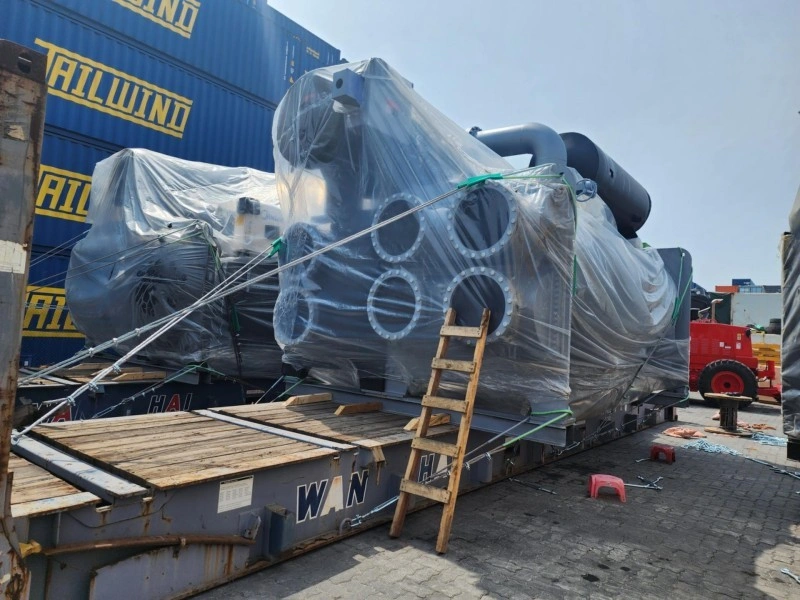
Common Mistakes When Transporting Water Treatment and Industrial Equipment
Professional teams can miss things that can cause issues to the rest of the river. A knowledge of these common mistakes enables project planners to steer clear of them.
| Mistake | Better Practice |
| Treating machinery as standard freight | Plan based on cargo size, weight, value, and sensitivity |
| Using estimated weight instead of verified weight | Verify dimensions, gross weight, lifting points, and center of gravity |
| Ignoring center of gravity and lifting points | Confirm route feasibility before transport dates are fixed |
| Choosing trailers before completing route assessment | Design securing based on cargo shape, weight, and transport mode |
| Leaving lashing design until loading day | Use waterproof packaging, desiccants, and sealed covers where needed |
| Not protecting electrical cabinets from moisture | Apply anti-rust measures for metal surfaces and ocean exposure |
| Ignoring corrosion risk during ocean shipping | Survey access roads, unloading zone, and crane position |
| Not checking final site access | Deliver equipment according to installation order |
| Poor delivery sequencing | Take photos before loading, after securing, and after delivery |
| Missing inspection photos and documents | Take photos before loading, after securing, and after delivery |
How to Choose a Logistics Partner for Water Treatment and Industrial Machinery Projects
Technical planning skills, project cargo experience, securing knowledge, site coordination, documentation management and risk management are all criteria to evaluate a logistics partner, in addition to price.
Search for a team that’s skilled with oversized and heavy freight instead of general cargo handling.
| Logistics Capability | Why It Matters |
| Cargo Survey Experience | Ensures accurate planning based on verified cargo data |
| Oversized Transport Planning | Supports heavy, tall, wide, or irregular machinery |
| Specialized Equipment Access | Helps match trailers, flat racks, cranes, and supports to cargo needs |
| Route and Permit Support | Reduces road movement and compliance risks |
| Lashing and Securing Knowledge | Prevents shifting, deformation, and transport damage |
| Protective Packaging Options | Helps control moisture, rust, vibration, and impact exposure |
| Documentation Control | Reduces customs, insurance, and handover problems |
| Site Delivery Coordination | Ensures cargo can be unloaded and received safely |
| Contingency Planning | Prepares for weather, delays, site restrictions, or equipment changes |
Conclusion — Safe Transport Starts Before the Equipment Moves
There is more to transporting water treatment plants and industrial equipment safely than just getting a truck or container. For the safest projects, the first step is to ensure that the cargo data is accurate, routes and site conditions are checked, appropriate equipment is selected, lifting and securing is done correctly, moisture and corrosion protection is provided, and delivery is coordinated. If these elements are coordinated in advance there is reduced risk and increased schedule control when the industrial equipment arrives at the project site.
Project teams that think about logistics as an integral part of the installation process, not just a shipping deliverable, have fewer delays, and lower overall risk to the project. In the early engineering logistics planning, what may seem like a dangerous operation becomes a controllable repeatable success.