
Engineering logistics solutions for renewable energy are solutions that help to move wind turbine and solar project equipment safely and on time, combining cargo assessment, route feasibility, specialized transport equipment, lifting coordination, cargo protection, permit planning and site delivery control. Logistics is more than just the transportation in renewable energy projects; it’s a project control aspect that impacts installation schedules, equipment safety, contractor coordination, and project costs.
The cargo for wind and solar energy projects is frequently oversized, high value, fragile, weather sensitive, and hard to deliver to remote project sites. The logistics planning methods are different for wind turbine blades, tower sections, nacelles, generators, solar panels, inverters and transformers, as well as for mounting structures. While many project teams are concerned with the production and installation dates for equipment, there are other key factors that can cause delays in delivery of renewable energy cargo, such as route feasibility, permits, site access, and unloading plans. The implementation of these factors from the planning stage provides early engineering logistics for renewable energy projects, which helps to prevent damage to the cargo, delay in installation, and cost overrun of the project.
Why Renewable Energy Projects Need Engineering Logistics
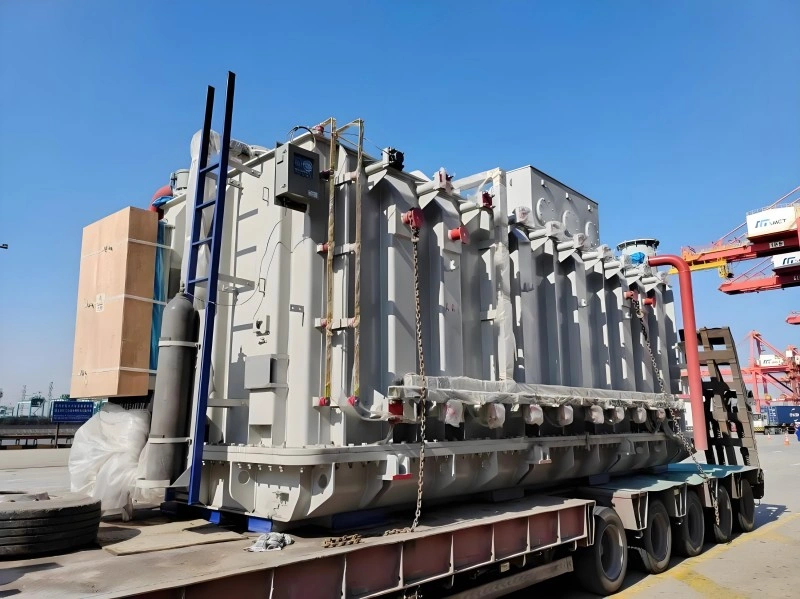
Typical renewable energy cargo often features large size, delicate components, limited delivery times, and complicated site conditions which are not easily met by standard cargo handling. Renewable project engineering logistics ensures that route coordination, permits, lifting coordination, effective renewable project engineering logistics helps align route planning, permits, lifting coordination, cargo protection, and final site delivery.
The blades of wind turbine can be very light and bendy yet still be 80 meters or more in length, requiring careful support to avoid bending stresses. Tower sections are heavy and cylindrical items which have an inclination to roll throughout transportation. Nacelles and generators are high value dense loads with specific centers of gravity. Adding the solar panels, inverters and transformers are layers of fragility and bulk that need to be sequenced. Narrow access roads, soft ground or low turning radii are often found at remote locations of wind or solar farms, and multi-batch deliveries need to be delivered during tight installation windows. Transport to the site can be affected by adverse weather conditions, which can impact structural integrity as well as electrical components.
| Renewable Energy Logistics Challenge | Why It Matters |
| Oversized Components | Wind blades, tower sections, and transformers may exceed standard transport limits |
| Fragile Equipment | Solar panels and electrical cabinets require careful handling and protection |
| Remote Site Access | Wind and solar farms may have narrow roads, weak surfaces, or limited turning space |
| Heavy Lifting Needs | Nacelles, transformers, and tower sections require crane planning and site preparation |
| Permit Requirements | Oversized road transport often requires route approval, escorts, and transport windows |
| Installation Sequencing | Equipment must arrive in the correct order to avoid site congestion and delays |
| Weather Exposure | Rain, wind, humidity, dust, and salt air may affect cargo condition and handling safety |
Main Cargo Types in Wind and Solar Energy Projects
Each type of renewable energy cargo has its own unique set of requirements for transport, securing and protection that ensure safety and project timelines. Recognizing these differences in the early stages leads to the selection of the right equipment and approach, not the generic approach.
Wind turbine parts are critical on the complexity scale and solar project cargo is critical on the volume and fragility scale. Every type has its own set of handling concerns, shock, moisture, size and load distribution issues.
| Cargo Type | Logistics Consideration |
| Wind Turbine Blades | Long length, bending sensitivity, turning radius, blade support design |
| Tower Sections | Large diameter, heavy weight, rolling prevention, lifting safety |
| Nacelles | High weight, high value, center of gravity, weather protection |
| Hubs | Heavy and irregular shape, lifting points, cargo securing design |
| Generators | Heavy equipment, vibration sensitivity, moisture protection |
| Solar Panels | Fragile surfaces, shock protection, pallet stability, careful stacking |
| Inverters / Control Cabinets | Moisture-sensitive electrical components, anti-vibration handling |
| Transformers | Heavy weight, oil or electrical components, route and lifting planning |
| Mounting Structures | Large volume, bundling, corrosion protection, loading efficiency |
| Cable Drums | Rolling risk, weight concentration, blocking and bracing requirements |
Wind Turbine Logistics: Key Planning Requirements
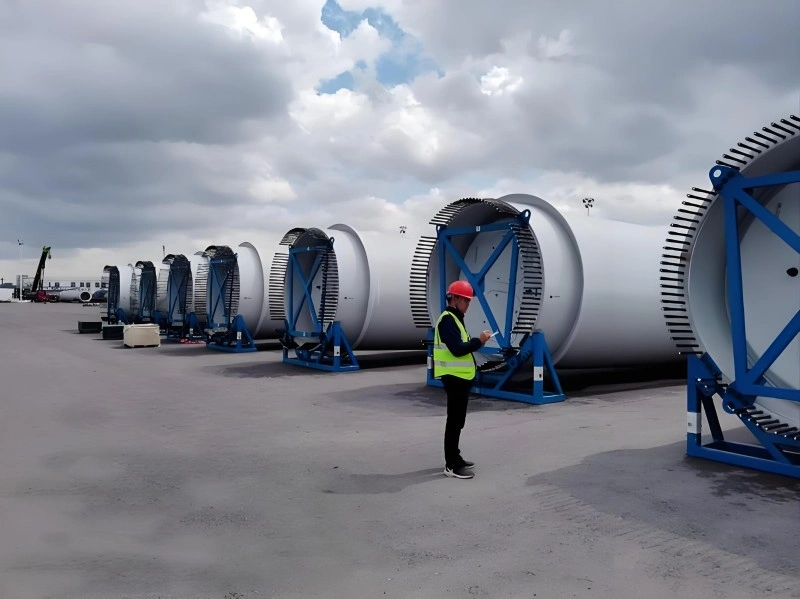
Wind turbine parts offer some of the most complex logistics problems for renewable energy due to their combined high length-to-width ratio, high weight-to-weight ratio and difficult access to the site. With appropriate planning, structural damage will be avoided and installation crews will stay on schedule.
Route selection is often determined by the length of the blades and their turning radius, and if a custom support is needed to prevent deformation, this will help control the route as well. Stable blocking is needed to prevent sections rolling down the tower and the nacelles need to be moved out of the lowbed or modular trailer and the exact positioning of the centre of gravity calculated. There is an increasing prevalence of special trailers, extendable platforms and escort procedures. Route Surveys should be made with consideration to bridge ratings, overhead clearances, and possible road modifications. There are additional layers of coordination in the crane’s coordination and the weather windows for loading and unloading.
| Wind Component | Main Transport Risk | Planning Requirement |
| Wind Blade | Excessive length and bending stress | Blade-specific support, route turning analysis, and specialized trailer |
| Tower Section | Large diameter and rolling risk | Blocking, bracing, lifting plan, and stable load distribution |
| Nacelle | Heavy weight and high value | Lowbed or modular trailer, center-of-gravity control, and moisture protection |
| Hub | Irregular shape and lifting complexity | Verified lifting points and custom securing method |
| Generator | Vibration and moisture sensitivity | Shock control, waterproof covering, and careful handling |
| Foundation Parts | Heavy and site-dependent | Route capacity check and unloading site preparation |
Solar Project Logistics: Key Planning Requirements
It does not take the same size and scale as wind cargo, but it involves high volume coordination, fragile cargo protection, and accurate cargo delivery sequencing in solar project logistics. The key to success is to ensure protection of glass surfaces and minimize electrical damage, while keeping the installation flow through a large array.
The solar panels are delivered on pallets that need to be vibration resistant, not break the edges, while being stacked. Inverters and control cabinets are still requiring moisture and shock protection, and for transformers, heavy-lift planning is still required. Structures are delivered in a ragtag assortment which is improved by clear labelling and sequenced delivery. Expansion of any open sites will further stress the need for protective coverings and site storage strategies as dust, rain and theft risks are greater.
| Solar Project Cargo | Main Logistics Risk | Planning Requirement |
| Solar Panels | Glass breakage, edge damage, pallet collapse | Shock protection, stable stacking, and careful handling |
| Inverters | Moisture and vibration damage | Waterproof protection and anti-vibration transport |
| Transformers | Heavy weight and site access constraints | Route survey, lifting plan, and suitable trailer |
| Mounting Structures | Mixed sizes and large quantity | Bundling, labeling, and delivery sequencing |
| Cable Drums | Rolling, weight concentration, and handling risk | Blocking, bracing, and lifting equipment planning |
| Control Cabinets | Electrical sensitivity | Moisture protection, sealed packaging, and inspection records |
Route Planning and Permit Control for Renewable Project Cargo
The process of routing, one of the most critical elements of renewable energy logistics, particularly in the case of long wind blades, heavy transformers and remote project locations. One overlooked restriction could stop an entire convoy or necessitate expensive changes at the last minute.
Some of the most important ones are the width of the road, the radius of turning, the load capacity of the bridge, overhead clearance, any tunnel restrictions, and surface conditions. Access roads to the site are frequently the final obstacle, as are escort vehicles, night movement restrictions, and local permits. Early field surveys and simulation modeling can be used to identify issues early before equipment leaves the factory or port.
| Route Factor | Risk If Ignored | Control Measure |
| Turning Radius | Wind blades or long cargo may not pass safely | Conduct route simulation and field survey |
| Bridge Capacity | Heavy transformers or nacelles may exceed limits | Verify bridge ratings and choose approved route |
| Road Width | Cargo may block traffic or become unstable | Plan escort vehicles and transport windows |
| Overhead Clearance | Collision with wires, signs, bridges, or gates | Measure clearance and remove obstacles if approved |
| Road Surface | Shock, vibration, or vehicle instability | Use suitable trailers and adjust travel speed |
| Site Access Road | Cargo may reach the region but not the installation site | Survey final access roads and unloading area |
| Permit Approval | Legal transport may be delayed | Start permit applications early and track status |
Cargo Securing and Protection for Wind and Solar Equipment
To secure renewable energy cargo, it is necessary to secure in accordance with the shape, weight, fragility and transport method. In some cases, such as long blades and sensitive electronics, standard cargo securing is not sufficient.
Custom blade supports spread tie-down force out into multiple points to prevent stress points. Blocking and bracing is an important consideration for tower sections to resist rolling forces. Reinforced pallets and shock absorbing materials are beneficial for solar panels. Waterproofing, desiccants and sealed packaging of the electrical equipment. Anti-rust treatments are used to preserve the condition of metal structures and pre-departure inspections and photographic records are used to maintain accountability and insurance records.
| Cargo Protection Need | Recommended Method | Why It Matters |
| Blade Deformation Prevention | Custom supports and controlled tie-down pressure | Prevents stress concentration and structural damage |
| Tower Section Stability | Blocking, bracing, and rolling prevention | Keeps cylindrical cargo stable during transport |
| Solar Panel Shock Protection | Pallet reinforcement and careful handling | Reduces glass breakage and microcrack risk |
| Electrical Equipment Moisture Control | Waterproof covering, desiccants, or sealed packaging | Protects inverters, cabinets, and transformers |
| Metal Structure Corrosion Control | Anti-rust treatment and protective wrapping | Reduces rust during storage or ocean shipping |
| Cargo Condition Evidence | Photos and inspection records | Supports accountability and insurance documentation |
Lifting, Loading, and Site Delivery Coordination
The logistic part of renewables does not stop once the cargo is delivered to the site. Installation teams and site readiness need to be taken into account in terms of lifting and site delivery to avoid bottlenecks or damage during the final handoff.
Capacity of crane, ground bearing pressure, confirmed lifting points and working radius are pre-requisites. Trailer should be positioned in a way that permits safe alignment with unloading zones. Delivering components in order and having temporary storage zones to maintain free flow of work is a key part of delivery sequencing. Real time communication with contractors and weather conditions complete the loop.
| Coordination Area | What to Check |
| Crane Selection | Capacity, working radius, lifting height, and ground support |
| Trailer Positioning | Whether the trailer can access and align with the unloading point |
| Ground Condition | Load-bearing capacity for cranes, trailers, and cargo storage |
| Lifting Points | Verified lifting points and rigging method |
| Delivery Sequence | Cargo arrives in the order required for installation |
| Site Storage | Safe space for temporary storage without blocking work areas |
| Weather Condition | Wind speed, rain, and visibility during lifting operations |
| Final Inspection | Cargo condition checked after unloading |
Managing Multi-Batch Deliveries for Renewable Energy Projects
For renewable energy projects, such as solar farms and wind farms with multiple turbines, the deliveries are likely to be repeated, often over several weeks or months. Effective batch management reduces site congestion and ensures installation is on track.
The use of labelling, batch numbers and standard documentation minimises the chances of confusion among similar components. Deliveries are scheduled to coincide with installation schedules and available storage capacity. Port/staging yard co-ordination means no demurrage charges and continuous communication with the contractors means schedule adjustments for weather or other delays.
| Multi-Batch Challenge | Planning Method |
| Many Similar Components | Use labeling, batch numbers, and delivery records |
| Limited Site Storage | Deliver according to installation sequence |
| Different Cargo Types | Separate planning for blades, towers, panels, inverters, and transformers |
| Port Storage Pressure | Coordinate pickup schedule and storage time limits |
| Installation Delays | Maintain schedule flexibility and communication with site team |
| Documentation Confusion | Standardize packing lists, cargo IDs, and inspection reports |
| Contractor Coordination | Use milestone tracking and daily delivery updates |
Common Mistakes in Renewable Energy Project Logistics
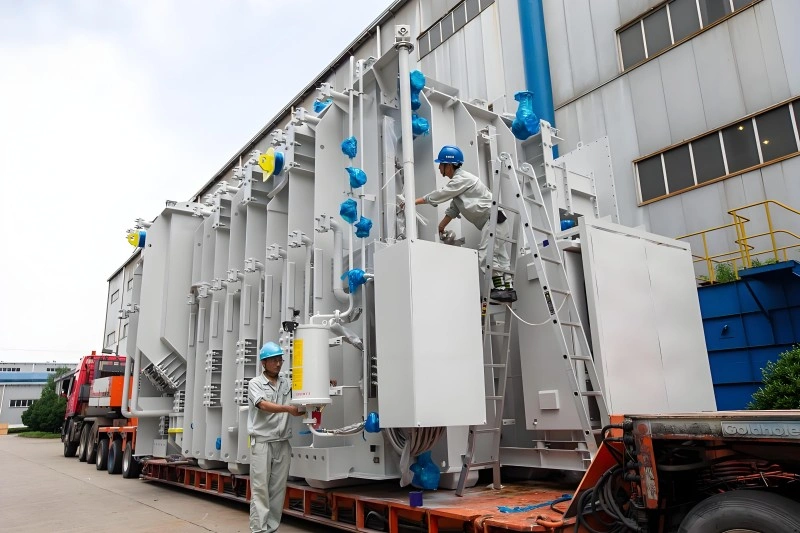
Even the more advanced teams can fall into setups when dealing with renewable energy cargo. It is important for project planners to be aware of these drawbacks so that a stronger project plan can be established from the beginning.
Typical mistakes include considering specialized equipment as regular freight, late start of route surveys, or overlooking restrictions for accessing sites. Lashing techniques are often generic and will not adequately protect blades or panels, and the sending of equipment before the site is ready will result in storage problems. These problems are further complicated by the absence of contingency plans for weather and/or delays in permits and lack of sequencing.
| Mistake | Better Practice |
| Treating renewable equipment as standard freight | Plan based on cargo size, weight, fragility, and site constraints |
| Late route survey | Confirm route feasibility before transport dates are fixed |
| Ignoring site access | Survey final access roads, unloading zones, and crane positions |
| Poor blade transport planning | Analyze turning radius, support points, and escort requirements |
| Generic cargo securing | Design lashing and bracing for each cargo type |
| Weak moisture protection | Use waterproof packaging, desiccants, and sealed covers where needed |
| Poor delivery sequencing | Align deliveries with installation schedule and site storage capacity |
| No contingency plan | Prepare alternatives for weather, permit, or equipment delays |
How to Choose a Logistics Partner for Renewable Energy Projects
Freight price should not be the only consideration when choosing renewable energy logistics. Project teams should assess the technical planning skills, experience with routes, knowledge of cargo securing, documentation control and the ability to coordinate contractors to guarantee effective project outcomes.
Seeking experience with oversized cargo, route survey expertise and handling experience with wind and solar equipment. Well-designed, specialised trailer fleets, lifting coordination knowledge and solid risk assessment procedures are more important than the cheapest quote. Multi-batch delivery management and communication protocols distinguish between reliable partners and box movers.
| Logistics Capability | Why It Matters for Renewable Projects |
| Oversized Cargo Experience | Supports wind blades, tower sections, transformers, and large structures |
| Route Survey Capability | Reduces access, clearance, and permit risks |
| Specialized Transport Equipment | Matches long, heavy, or irregular renewable cargo |
| Cargo Securing Knowledge | Prevents movement, stress damage, and vibration-related issues |
| Cargo Protection Options | Protects panels, electrical components, and metal structures |
| Site Delivery Coordination | Ensures cargo can be unloaded and staged correctly |
| Documentation Control | Reduces customs, permit, and port delays |
| Multi-Batch Planning | Supports large projects with repeated deliveries |
| Risk Management | Helps prepare for weather, route, equipment, and schedule disruptions |
Conclusion — Renewable Energy Logistics Requires Early Engineering Planning
Special logistics planning is required for wind and solar energy projects, as cargo can be oversized, fragile, high value or site-sensitive. Engineering logistics can assist in managing route feasibility, permits, cargo securing, lifting, site delivery, documentation and delivery sequencing. The best plans for renewable project logistics begin early, even before equipment is available for shipping.
Once the cargo characteristics, route limitations, permit needs, site access, lifting techniques and installation sequence are all considered side-by-side, renewable energy logistics becomes more predictable. From wind turbine blades to tower sections, to solar panels to inverters and transformers, early engineering logistics planning can minimise unnecessary delays, cargo damage and disruption on site. When logistics are considered a part of project execution, and not the last mile of transportation, the project teams consistently deliver smoother, safer and more cost-effective results.