
Transportation of heavy equipment across borders is a logistic exercise that requires expert planning, correct containerization and safe transportation of cargo to provide safe transportation and regulatory conformity.
Heavy machinery and industrial equipments are often bigger and heavier than normal-sized containers and they are considered as oversized cargo during international shipping. Owing to their bulk, weight, and irregularity, these cargoes need special containers, heavy lifting equipment, route planning and permits as well as expert methods of securing freight.
Most companies believe that it is easy to put heavy equipment in ordinary containers, whereas the truth is that most construction or industrial machineries need specific forms of transportation. Effective transportation of the heavy equipment requires proper cargo evaluation, special transportation gear and advanced logistics coordination of the whole shipping operation.
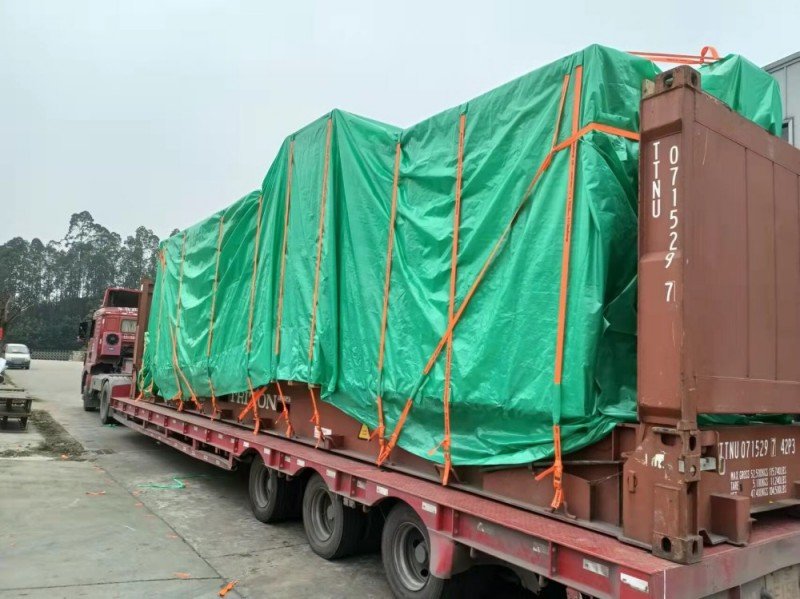
Why Heavy Equipment Often Qualifies as Oversized Cargo
Heavy equipment often surpasses container capacity, as it is too large and heavy, and it needs special transport solutions.
The common shipping containers in international logistics are 20 or 40 feet in length, with internal size of approximately 2.35 meters wide and 2.39 meters tall, and a mass capacity of approximately 28 metric tons. Nonetheless, such items as excavators or cranes frequently exceed such limits and are therefore regarded as oversized cargo. Not only does it influence the choice of containers, but also the way ports are handled, the stability of the vessel, as well as the adherence to either road or rail rules of transit countries.
As an example, the unusual form of machinery part like long booms or broad tracks can not be loaded easily, and the heavy weight may require a firm support in order to stop structural collapses during transportation. These variables must be examined early to find out whether the cargo is out-of-gauge (OOG), which will introduce the necessity to obtain the permits and other specific equipment.
| Equipment Type | Typical Industry | Oversized Reason |
| Excavators | Construction | Excess width and weight |
| Bulldozers | Infrastructure | Heavy and wide |
| Mining equipment | Mining | Extremely heavy |
| Industrial presses | Manufacturing | Oversized dimensions |
| Cranes | Construction | Long boom structures |
These features demand specialized cargo transport planning (dimensional surveys and weight distribution calculations) to reduce dangers such as tipping or movement. Frequently, the companies that ship construction machinery use the services of professional oversize cargo transportation in order to choose the containers and secure their cargo and route planning to the countries.
Common Shipping Methods for Heavy Equipment
The mode of shipment of heavy equipment is dependent on cargo size, weight, and shape and each mode has certain advantages to successful and safe transportation.
The proper choice of the method starts with the effective cargo assessment that allows matching the equipment profile with the capabilities of vessels and port infrastructure. In the case of oversized machinery shipping, the aim is to have fewer points of handling and minimize the risks of possible damages.
Flat rack containers such as those can be used where the product is wide as the side extends to allow the product to overhang and open top containers can be used where the product is tall since they can be loaded using a crane on the top. Where equipment is so large that it cannot fit into any container, breakbulk loading on general cargo ships is flexible but might be accompanied by more work in stowage planning. RoRo or roll-on / roll-off vehicles are especially effective in loading wheeled machinery, since it can be loaded by driving on board, which reduces the need to use cranes and reduces time.
| Shipping Method | Best For | Key Advantage |
| Flat Rack Containers | Wide or heavy machinery | Open sides for oversized cargo |
| Open Top Containers | Tall equipment | Top loading capability |
| Breakbulk Shipping | Extremely large equipment | No container size limitation |
| Roll-on/Roll-off (RoRo) | Wheeled machinery | Easy loading and unloading |
To explain the way the right choice of a method contributes to better transport safety and efficiency, one should take into account such aspects as stability of loads and transit time. In the case of heavy equipment that requires oversized cargo shipping, the methodology selected has a direct effect on the international maritime compliance standards, including that of the International Maritime Organization (IMO), in ensuring the cargo gets delivered without miscarriage, due to poor handling.
Preparing Heavy Equipment for International Shipping
Before transportation, preparing is essential to avoid casualties, follow the regulations, and ease the customs.
It begins with thorough inspection to determine any weaknesses, e.g., loose components or places where there is likely to be corroded. Washing eliminates the dirt, grease, or residues that may contravene biosecurity regulations in the destination nations, and evacuation of the fluids such as oil or fuel reduces the chances of spillage during turbulent waters. Straps or locks are applied to secure the moving parts to avoid any internal movements and a detailed follow-up (photos and condition reports) is a form of evidence to insurance and customs.
Practically, failure to pay attention to these steps may result in being put on holds in the ports or even the shipment being rejected, and thus a checklist-based system is necessary.
| Preparation Step | Purpose |
| Cleaning machinery | Meet customs requirements |
| Fluid management | Prevent leakage during transport |
| Component securing | Avoid movement or damage |
| Documentation | Support customs clearance |
Trade preparation minimizes risks of customs and cargo damage by eliminating the possible risks at the initial stages. Regarding how to organize shipping of heavy machinery interstate, this step may entail coordination with surveyors to approve preparation, so that the equipment will survive the challenges of ocean transportation or overland transportation.
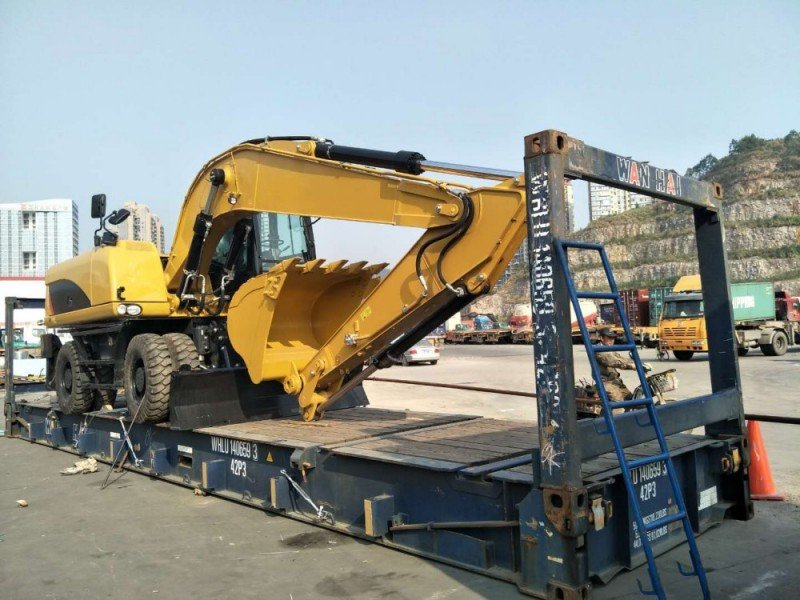
How Heavy Machinery Is Secured During Transport
Safe transportation is impossible without cargo securing because of the inappropriate practices it might cause sidelining, damage, or even instability of the vessel.
The process of securing starts with a lashing plan depending on the center of gravity of the machinery and anticipated forces to occur due to movements of the sea. Chain lashing is to furnish high tensile strength to heavy loads, whereas wooden blocking is to furnish a stable base against sliding. Rigid support is provided by steel brackets and frames to the decks or container floors; the anti-slip surface provided by rubber mats increases the friction of protruding parts.
Such methods have to be in accordance with such standards as IMO Code of Safe Practice of Cargo Stowage and Securing, which provides the calculations of acceleration forces.
| Securing Method | Purpose |
| Steel chains | Prevent movement |
| Wooden blocking | Stabilize cargo base |
| Steel frames | Support heavy loads |
| Protective covers | Protect against weather |
Securing of cargo in the sea transportation guarantees its stability especially when transporting oversized equipment as the vibrations and waves magnify the risks. The mature teams have tension gauges and frequent inspections to ensure integrity to avoid incidents such as cargo lost in the ocean that have been costly.
Transport Planning for Oversized Machinery
When transport planning, several logistics considerations have to be taken to prevent inconveniences and deliver on time.
This includes navigation to use paths that are not restricted in height and weight, like low overpasses or weak bridges along the inland portions. The choice of ports depends on the crane capacities, some facilities have up to 500-ton lifts, others are small. Oversized loads are issued as permits depending on country, will have to be applied to, and protection measures such as tarping are dependent on weather conditions.
The timelines of the work are merged with the delivery schedule, and it is common to have a tracking program that makes real-time amendments.
| Planning Factor | Importance |
| Route restrictions | Avoid low bridges and narrow roads |
| Port crane capacity | Ensure lifting capability |
| Permits | Regulatory compliance |
| Weather exposure | Cargo protection |
| Delivery schedule | Project coordination |
Proper planning reduces the transport delays and logistical risks in the transport of industrial machinery. Planners can manage costs and ensure safety in international supply chains by predicting bottlenecks, including congestion at ports during the seasons.
Industries That Frequently Ship Heavy Equipment Internationally
Different industries often export heavy equipment abroad and each has its own demands in the oversized cargo management.
Construction is dependent on the availability of excavators and cranes within the set time constraints in order to ensure that projects are completed within the set time, and mining activities carry drilling rigs to the remote areas. Power plants require transfers of turbines and generators in the energy sector, and bridge-building projects require machinery used to erect bridges. Production lines that require careful handling to maintain calibration are manufactured by exports.
| Industry | Typical Equipment |
| Construction | Excavators, cranes |
| Mining | Drilling machines |
| Energy | Power generation equipment |
| Infrastructure | Bridge construction machinery |
| Manufacturing | Industrial production machines |
These sectors have specialized oversized cargo logistics to handle the complexities of international relocation to have equipment delivered as operational and compliant.
Common Challenges in Heavy Equipment Shipping
Some typical difficulties during the transportation of heavy equipment are physical and regulatory limitations, which require a proactive approach.
The weight limitations may also constrain the route choice so that it must detour or use multimodal mode of transport. The problem with cargo stability is caused by irregular forms, which require custom securing. Handling of the ports can require special cranes and the custom laws require elaborate documentation to prevent delays. There is a complexity of coordination among carriers, agents and authorities.
| Challenge | Explanation |
| Weight restrictions | Infrastructure limitations |
| Cargo stability | Complex securing requirements |
| Port handling | Need for heavy lifting equipment |
| Customs regulations | Documentation complexity |
| Transport coordination | Multiple logistics stages |
The important part of this is experienced logistics planning to visit these and convert the potential challenges into manageable processes by knowledge and vision.
Conclusion — Heavy Equipment Shipping Requires Specialized Logistics Expertise
Shipment of heavy equipment is much more complicated than the usual freight transportation. It needs special containers, expert cargo fasteners, route and permit design, and expert logistics coordination. Oversized cargo is a specific type of logistics planning needed to transport heavy equipment internationally to be safe and efficient and meet all the regulatory requirements throughout the whole process of transportation.