
The use of both open top containers and flat rack containers is common when it comes to ferrying oversized cargo yet the two are used differently depending on the nature of the cargo. Simply put, the open top containers are created to take cargo which is height restricted whereas the flat rack containers are created to take cargo which is either width restricted or weight restricted. The decision on whether to use the open top container or the flat rack container is based on the size of the cargo, the need to load, and the mode of securing.
The open top containers and flat rack containers are assumed to be interchangeable by many shippers and in reality, they are best suited to various cargo sizes and loading needs. The choice of the type of container to be used must be critical in ensuring stability of cargo, ease of loading, and safety in international transportation of oversized cargo.
What Is an Open Top Container?
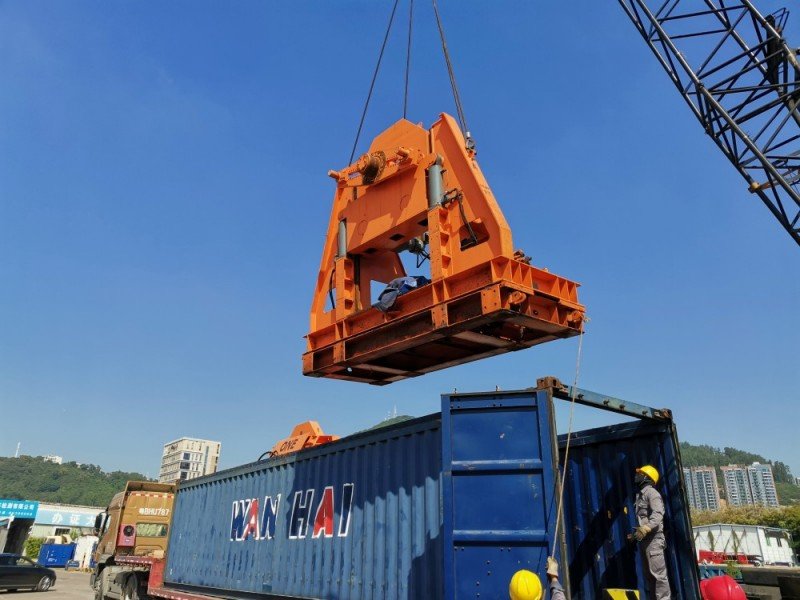
Open top containers offer a convenient solution to unloading of cargo that is not compressed in enclosed containers because of height restriction. These are like usual dry vans except they have a removable roof or covered by tarpaulin and that the overhead can be loaded by cranes.
| Feature | Description |
| Roof structure | Removable or tarpaulin-covered |
| Loading method | Cargo loaded from the top |
| Suitable cargo | Tall machinery or equipment |
| Protection | Covered with tarpaulin |
Open top containers come in handy in most logistics operations where cargo is larger than the standard container height of approximately 8 feet 6 inches. An example is the large generators, industry equipment and tall machinery such as the wind turbine components that will tend to need this kind of arrangement. The tarpaulin cover is also used in covering the cargo against weather factors on transit, but should be tied to avoid sliding. As my experience with project cargo shipment planning has shown, open top containers simplify the work of the ports where there is no vertical clearance, but overhead access is possible.
What Is a Flat Rack Container?
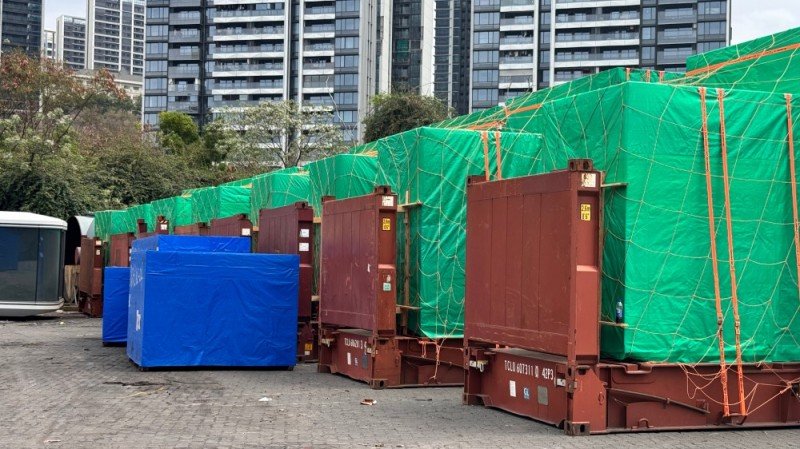
Flat rack containers are flexible and are needed in the heavy-duty logistics, where oversized cargo that needs to be approached by many sides is required. These containers do not have side walls or even end walls, and they have a flat base on which uneven loads are fixed.
| Feature | Description |
| Side walls | None |
| End walls | Fixed or collapsible |
| Loading method | Side or top loading |
| Cargo capacity | Very heavy or wide cargo |
Flat racks are widely used with construction equipment, industrial equipment, motor vehicles and structures of large steel which stick out due to excessive width. When a equipment like a bulldozer or excavator is involved, the open design will enable easier access of a forklift or a crane on its sides. After years of organizing the transportation of oversize cargo, I have observed that flat racks perform better in a situation where the weight of the cargo is not evenly distributed because their reinforced floors allow weight to be concentrated without affecting the stability.
Logistics providers offering oversize cargo transportation of over-size cargo transportation generally consider how safe and most efficient a shipment is with the help of flat rack or open top containers.
Key Differences Between Open Top and Flat Rack Containers
The structural differences between open top and flat rack containers have a direct impact on their applicability to particular oversized cargo profiles including the loading practicality and risk of transit. The following is a comparison side by side analysis to point out these differences:
| Feature | Open Top Container | Flat Rack Container |
| Roof | No fixed roof | No roof |
| Side walls | Yes | No |
| Best for | Tall cargo | Wide or heavy cargo |
| Loading method | Top loading | Side or top loading |
| Cargo protection | Tarpaulin cover | Often exposed |
The enclosed sides of the open top container are more supportive laterally, which is very important in ensuring cargo integrity in the event of the sea ship making sea trips that may involve rolling movements. Conversely, the flat rack has open sides that allow easier fitting of wide loads but an extra lashing method is needed to offset the missing walls. This difference between an open top and flat rack usually arise in the process of route planning, whereby the port handling equipment and vessel stacking requirements have to be factored.
When to Use an Open Top Container
The containers with an open top are the most popular in the situation when the main problem of the oversized cargo shipment is the vertical dimension, but they can be loaded efficiently without losing protection. The most common involve shipments where the height of the cargo is beyond the normal limits but the width and length is not an issue.
| Cargo Type | Reason |
| Tall machinery | Exceeds container height |
| Industrial generators | Requires crane loading |
| Heavy equipment components | Vertical clearance required |
Considering a case in point whereby tall silos or sections of a modular building have to be transported, the top-loading aspect fosters disassembly requirements and therefore less time is taken in the project. This approach is recommended to promote the use of open top container shipping by the logistics planners whenever there is a port with overhead cranes so that the safety of the cargo is not compromised through side strains on the cargo.
When to Use a Flat Rack Container
Flat rack containers are best in case the width or weight of the cargo needs to have an open space to act and become a good base to hold the complicated loads. This renders them suitable with freight that cannot be bounded using the walls.
| Cargo Type | Reason |
| Excavators | Excess width |
| Bulldozers | Heavy weight |
| Steel structures | Irregular shape |
| Industrial machinery | Wide cargo base |
Practically, oversized cargo using flat rack container is desired in such items as in pipe racks or heavy vehicles where loading on the sides is impossible and thus, forced loading can cause damages. This choice of land-sea multimodal transport is frequently used by project cargo managers because the collapsible ends are better to stack on vessels.
Advantages and Limitations of Each Container Type
Comparison of the advantages and disadvantages of open top and flat rack containers shows that each of them deals with certain logistical obstacles at the expense of trade-offs that should be considered.
| Container Type | Advantages | Limitations |
| Open Top | Protects cargo better; Easier to secure vertically | Limited width capacity; Requires precise tarpaulin sealing |
| Flat Rack | Supports wide and heavy cargo; Flexible loading options | Less protection from weather; Demands advanced lashing |
The decision is greatly impacted by the cargo properties, including sensitivity to environmental exposure. An example is open top containers that offer a semi-enclosed system that prevents the ingress of dust or rain, but is not adequate with ultra-wide loads. Flat racks, though very flexible, require extra precautionary measures such as shrink-wrapping that might pose an additional expense when not considered initially.
Key Factors When Choosing Between Open Top and Flat Rack
The choice of container is based on a careful evaluation of the variables of operations, in order to achieve maximum safety and efficiency during the work with oversized cargo.
| Factor | Impact |
| Cargo dimensions | Determines container type |
| Cargo weight | Affects load capacity |
| Loading method | Crane vs side loading |
| Weather exposure | Protection requirements |
| Port handling | Equipment availability |
Transport safety and cost efficiency are enhanced by proper planning (dimensional surveys and weight distribution calculations). Experience teaches that failure to consider port-specific handling abilities may cause delays hence it is important to incorporate these aspects at an early stage of logistics chain. When making a complex shipment, it is wise to consult with the specialists on the topic of flat rack and open top container shipping so that to avoid expensive rework.
Conclusion — Container Selection Is Critical for Oversized Cargo Transport
Containerized cargo logistics of oversized cargo includes both the open top container and the flat rack container. The best containers are open top containers, as they are capable of vertical loading tall cargo and flat rack containers, which offer the flexibility in case of wide or heavy cargo that does not fit the walls of the common container. By matching the decision with cargo details and operational limitations, the logistics professionals are capable of guaranteeing safe efficient transport with the extravagant risks and costs that are not required.