
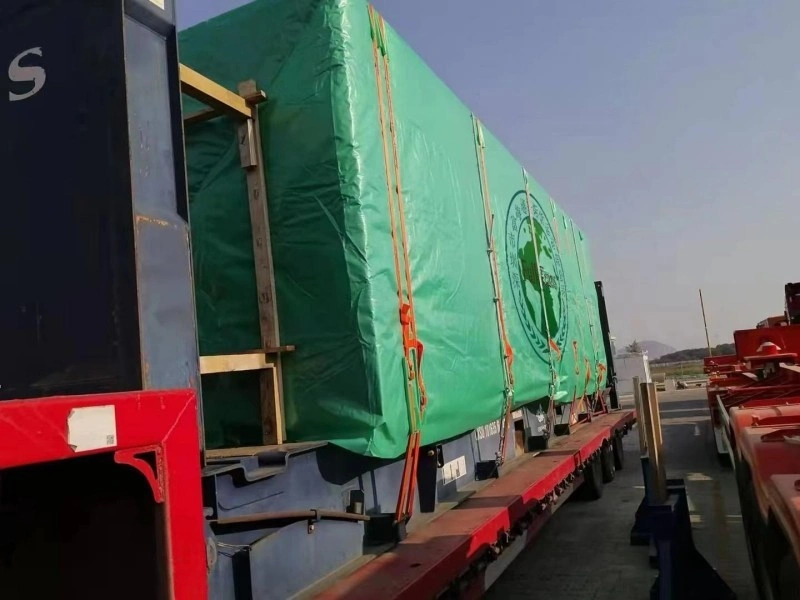
While project cargo teams can enjoy a level loading platform to accommodate oversized machinery and equipment, there are risks associated with flat rack containers: impact during handling, abrasion from handling chains, moisture from sea spray, and accidental contact at port. Wooden crates are often used with flat rack containers to provide a level of physical protection that is essential in many industrial applications while maintaining the flexibility of an open top product.
The essence of it all is to use the crate and the flat rack as a single system. The well engineered wooden crate protects sensitive surfaces, supports internal components and allows for lashing access and the flat rack is used for the heavy lift and route. When done properly, it can minimize damage claims as well as ensure the safe transport of high-value cargo from factory to final destination. A lot of shippers think that any box on a flat rack is automatically safe but if the box is poorly designed it can block lifting points, trap moisture, or fail when subjected to dynamic loads which can cause new issues rather than solving the problem.
Why Combine Wooden Crates with Flat Rack Containers?
The solutions to various aspects of the transport problem are provided by wooden crates and flat rack containers. Flat racks are ideal for the transportation of cargo that exceeds the dimensions of standard containers, and wooden crates offer protection and insulation for valuable or fragile equipment.
They can be used in combination for both open loading access and specific protection. Crates may also contain moisture control liners, VCI materials or desiccants and have strong frames that make them excellent lashing and lifting points. This method is particularly useful for cargo that are too big for dry containers but still need protection from stresses such as roads, ports and oceans.
| Protection Need | How Wooden Crates Help | How Flat Rack Containers Help |
| Oversized cargo movement | Protects surfaces and components | Allows open loading and OOG transport |
| Impact protection | Frame absorbs external contact | Provides stable transport platform |
| Moisture control | Liners, VCI, or desiccants inside crate | Handles cargo too large for enclosed containers |
| Handling safety | Includes forklift pockets and lifting marks | Supports crane and side loading |
| Surface protection | Prevents direct contact with rigging | Enables custom lashing around crate structure |
| Export readiness | ISPM 15-compliant wood | Carrier acceptance for oversized containerized cargo |
Cargo Types That Benefit from Wooden Crates on Flat Racks
Not all flat racked goods require crating, rugged steel goods or sealed modules can be safely flat packaged with tarps and lashing. High value or sensitive items, however, may warrant additional security benefit.
It’s ideal for precision machinery, injection moulds, industrial pumps, electrical control cabinets, and machined components. Such loads contain surfaces that require a high degree of polish, delicate valves, electrical components, or fragile projections that would wear out rapidly from vibration, dust or slight impacts.
| Cargo Type | Why Wooden Crating May Be Useful | Key Planning Concern |
| Precision machinery | Protects machined surfaces and sensitive components | Moisture control and vibration protection |
| Injection molds | Shields polished surfaces and tooling edges | Rust prevention and base support |
| Pumps and compressors | Guards valves, motors, flanges, and panels | Lashing access and vibration control |
| Control cabinets | Protects electrical components | Moisture and shock protection |
| Spare parts | Prevents loss, impact, and contamination | Proper labeling and internal fixing |
| Motors/generators | Safeguards heavy and sensitive assemblies | Load distribution and lifting access |
| Project cargo components | Handles irregular high-value parts | Custom crate structure and securing plan |
Wooden Crate Design Requirements for Flat Rack Shipping
Crate design is required to meet the needs of protecting the cargo as well as transport on a flat rack. Lift, lash and stack against the new outer surface of the crate – the carriers, stevedores and inland haulers.
Use accurate dimensions and cargo weight and design a robust base skid with load spreading evenly across the flat rack deck. The equipment does not move with shock absorbing internal blocking and cushioning, external framing absorbs handling forces. Lifting marks, forklift pockets (where possible) and clear lashing access points are essential.
| Crate Design Element | Why It Matters for Flat Rack Shipping |
| Strong base skid | Transfers cargo weight safely to the flat rack deck |
| Internal blocking | Prevents cargo movement inside the crate |
| External frame | Protects against handling impact and compression |
| Load-bearing structure | Prevents crate deformation under heavy cargo |
| Lifting access | Allows safe crane or forklift handling |
| Lashing access | Ensures the crate can be secured without damage |
| Moisture barrier | Reduces humidity and corrosion risk |
| ISPM 15 compliance | Supports international export acceptance |
| Clear markings | Guides safe handling, lifting, and orientation |
How Crate Design Affects Flat Rack Load Planning
The unit, when crated, then when on the flat rack the final dimensions, weight, and center of gravity will alter the way it sits on the flat rack. Overhang calculations, deck placement and lashing routes need to be re-thought. If the shipment is increased in height or width by the addition of a crate, it may escalate to a higher OOG category or necessitate a larger flat rack.
It’s not done before the crating is done, it’s done after, and the experienced teams provide the carrier with the updated numbers early. Appropriate load spreading over the base of the crate will insure against damage to the deck and stability.
For machinery, molds, pumps, control cabinets, and other sensitive oversized cargo, combining wooden crates with flat rack containers can improve protection while still allowing open loading access for OOG transport.
Lashing and Securing Wooden Crates on Flat Rack Containers
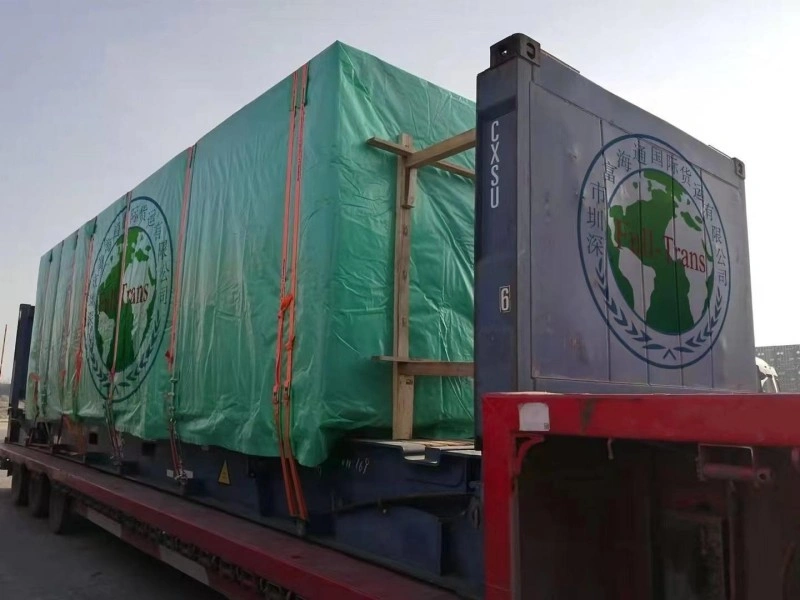
Lashing should be done so as to retain the entire crated unit and not crush wood panels or move cargo within the unit. Always reinforce frame points with heavy frames and install edge protectors under chains or webbing. Anti-slip mats between the base of the crate and deck stop movement, and blocking and bracing help to control lateral forces.
Check tension after 1st road leg (vibrations tend to loosen lashings). The best plans approach the securing interface through the crate frame.
| Securing Method | Best Used For | Key Caution |
| Chain lashing | Heavy crates with reinforced points | Avoid crushing weak crate sections |
| Webbing belts | Lighter or surface-sensitive areas | Must be rated and properly tensioned |
| Blocking | Preventing crate movement on deck | Should contact strong base areas |
| Bracing | Controlling lateral movement | Avoid pressure on weak side panels |
| Anti-slip mats | Reducing sliding under crate base | Deck and crate base must be clean and dry |
| Edge protection | Protecting crate corners and lashings | Prevents strap cuts and wood damage |
Moisture, Corrosion, and Weather Protection Inside Wooden Crates
Wooden crates provide physical protection; moisture control must be planned separately. Use humidity control, waterproof liners, spray proofing, desiccants and anti-rust treatments for sea voyages as these are all sources for moisture and/or spray. Do not seal wet cargo with wet timber.
| Moisture Protection Method | Best Used For | Important Note |
| Waterproof liner | Cargo exposed to rain or sea spray | Must be installed without trapping water |
| VCI film | Metal parts, molds, machinery | Works best in enclosed spaces |
| Desiccants | Sealed crate environments | Quantity should match crate volume |
| Moisture indicator | High-value or sensitive cargo | Helps monitor humidity exposure |
| Vacuum packing | Precision machinery | Requires careful sealing before crating |
| Anti-rust oil | Machined steel surfaces | Apply after cleaning and drying |
ISPM 15 and Export Compliance for Wooden Crates
International shipments of solid wood packaging must comply with ISPM 15 heat-treatment or fumigation requirements. Correct marking is crucial to facilitate goods importation and export. Engineered wood may be able to lower requirements; always check destination rules. Crates are cleaned and dried, ensuring they are free of bark and making inspection faster and reducing the risk of rejection.
Flat Rack vs Wooden Crate vs Both: When to Use Each Option
For heavy-duty products, a flat rack may be enough. Standard containers may be better suited to transport smaller sensitive loads. This is the best solution for large items that require handling and extra protection. Partial crating or vacuum packing plus flat rack may be cost effective compromise solutions.
Cost Considerations When Combining Crates and Flat Racks
While using a crate introduces material, engineering, treatment and weight costs, it can often recoup these expenses by avoiding costly damage, rework, or delay to projects. Assess the capacity and durability of crates against the risks and value of the cargoes.
Pre-Shipment Checklist for Wooden Crate + Flat Rack Cargo
Most problems are avoided with a well-established checklist:
| Checklist Item | Responsible Party | Why It Matters |
| Confirm final crated dimensions | Shipper / packaging team | Prevents booking and OOG errors |
| Confirm gross weight | Logistics / engineering | Supports lifting and flat rack selection |
| Verify crate base strength | Packaging team | Ensures cargo weight is safely supported |
| Fix cargo inside crate | Packaging team | Prevents internal movement |
| Check lifting access | Rigging team | Reduces handling damage risk |
| Confirm lashing access points | Securing team | Ensures crate can be secured properly |
| Apply moisture protection | Packaging team | Reduces corrosion and humidity risk |
| Check ISPM 15 compliance | Export team | Supports customs clearance |
| Inspect crate condition | Loading supervisor | Finds damage before shipment |
| Document final loading | Logistics coordinator | Supports communication and risk management |
Common Mistakes to Avoid
Even the pro teams make mistakes. Some common mistakes involve not designing a crate with flat rack lashing in mind, using the wrong size base for a heavy load or not checking measurements at the end of the crating. Sealing wet cargo or lashing over weak panels can make protection a liability. Always measure, test and record.
Conclusion — Crate Design and Flat Rack Planning Must Work Together
Flat rack shipments are safer in wooden crates when the crate is designed into the entire shipment plan, for sensitive or valuable industrial product. The crate should provide protection and maintain lifting points, lashing access, moisture control and correct load data for the flat rack.
A combined effort between packaging and logistics teams, including final crated dimensions, gross weight, support points and risk characteristics of the route, can provide an effective and reliable protection solution for oversized cargo on complex international journeys, whether with wooden crates or flat rack containers.