
When large skids, pumps, compressors, pressure vessels, pipe spools, drilling components, and modular units are all too big for standard container dimensions or open side and top loading is a necessity, flat rack oil & gas equipment shipping becomes a necessity. These shipments require much more than just simply placing heavy cargo on a platform; it is a requirement to have precise cargo measurement, a careful analysis of the center of gravity, engineered load support, secure lashing, corrosion protection, and complete routing coordination to ensure high value assets are protected during international transport.
Though many shippers only consider gross weight, other factors such as equipment shape, base frame design, lifting points, protruding parts, and sea spray exposure are also important considerations for real transport safety. For pump skids, compressor packages, pressure vessels, pipe racks, and modular process units, flat rack shipping for oil & gas equipment provides the open loading access and securing flexibility needed for large-scale international project cargo movement.
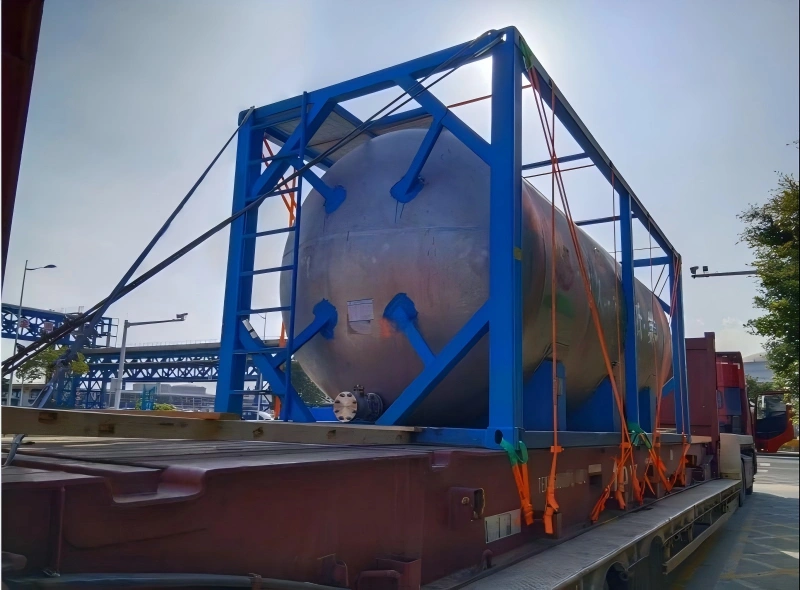
Why Oil & Gas Equipment Often Requires Flat Rack Shipping
Flat rack containers are the most practical when the oil & gas equipment is too large to fit inside of standard dry containers, or it requires full access to the crane for loading and securing. Closed containers are not recommended, as they may have oversized dimensions, heavy skid bases, irregular shapes, and sensitive protruding parts, which may make them unsafe to handle if they are not used properly.
| Reason for Flat Rack Use | Practical Meaning for Oil & Gas Equipment |
| Oversized dimensions | Cargo may exceed standard container door or internal limits |
| Heavy skid base | Requires strong platform support and load spreading |
| Crane loading access | Allows top loading when forklift loading is not practical |
| Irregular shape | Open sides support easier positioning and securing |
| Protruding components | Valves, flanges, pipes, or panels may need clearance |
| Custom securing needs | Lashing can be designed around structural points |
| Project cargo compatibility | Supports coordinated international transport for large equipment |
Older planners understand that with accurate data to start with, there will be no expensive rejections at the port or on inland movement.
Common Oil & Gas Equipment Shipped on Flat Rack Containers
Oil & Gas equipment transports come with a wide variety of challenges. Specific loading, protecting and securing methods are needed to ensure integrity from the factory to the site depending on the type.
| Equipment Type | Shipping Concern | Planning Focus |
| Pump skids | Heavy base, protruding piping, vibration risk | Base support, lashing access, and corrosion protection |
| Compressor skids | Sensitive alignment and high value | Vibration control and secure lifting |
| Pressure vessels | Cylindrical shape and rolling risk | Saddles, blocking, and surface protection |
| Heat exchangers | Fragile fins, tubes, or coated surfaces | Protective padding and careful lashing |
| Pipe spools | Long shape and surface coating | Bundling, support, and edge protection |
| Large valves | Heavy compact weight and machined surfaces | Anti-rust treatment and secure blocking |
| Separators | Large cylindrical body and high COG risk | COG review and engineered support |
| Modular process units | Multiple components on one skid | Load distribution and multi-point securing |
| Electrical/control modules | Moisture and vibration sensitivity | Weatherproofing and shock protection |
Avoiding generic approaches that can result in damage and project teams being prepared is aided by understanding these differences.
Cargo Data Required Before Booking Flat Rack Transport
The key to a successful flat rack booking is accurate cargo information. If not, the shipment may be refused by the carrier and/or loading plans may not work in actual sea and road conditions.
| Information to Prepare | Why It Matters |
| Final packed dimensions | Determines flat rack size, overhang, and OOG booking status |
| Gross weight | Confirms payload, crane capacity, and inland transport requirements |
| Center of gravity | Supports safe lifting, load positioning, and lashing design |
| Skid/base frame drawings | Shows how weight transfers to the flat rack deck |
| Lifting points | Helps plan safe crane loading and unloading |
| Securing points | Prevents lashing on weak or sensitive equipment parts |
| Cargo photos | Identifies protrusions, clearance issues, and protection needs |
| Material sensitivity | Guides corrosion and moisture protection planning |
The sooner this information is gathered, the better freight planners will be able to choose the appropriate type of flat rack and optimize load plans.
Load Planning for Oil & Gas Equipment on Flat Rack Containers
Good load planning not only means loading cargo onto the deck, but also considering transport forces, the allocation of cargo weight and the safe unloading at point of arrival. Positioning should be based on the equipment’s center of gravity and structural design and not just based on available space.
| Load Planning Factor | Risk If Ignored | Practical Recommendation |
| Center of gravity | Tipping or unstable handling | Review COG before loading |
| Skid/base support | Frame stress or uneven load transfer | Support structural base points |
| Concentrated weight | Deck damage or unsafe pressure | Use load spreading materials |
| Overhang | Carrier rejection or cargo stress | Confirm acceptable overhang before booking |
| Protruding components | Impact or lashing interference | Leave clearance and add protection |
| Lashing access | Weak securing arrangement | Confirm anchor access before final placement |
| Unloading access | Destination delays or damage | Plan lifting and removal sequence in advance |
Lifting and Loading Requirements for Oil & Gas Cargo
Lifting continues to be one of the most hazardous stages for heavy, irregular oil & gas equipment. The use of verified lifting points and appropriate rigging ensures the avoidance of frame distortion and damage to components.
| Loading Requirement | Why It Matters | Practical Control |
| Verified lifting points | Prevents frame distortion or lifting failure | Use manufacturer-approved lifting points |
| Crane capacity | Supports safe lifting under real site conditions | Match crane to cargo weight and radius |
| Level lifting | Protects alignment and prevents impact | Use proper rigging and spreader beam if needed |
| Component clearance | Prevents damage to valves, flanges, pipes, or panels | Plan lifting path and handling zone |
| Loading supervision | Reduces communication errors | Assign an experienced site coordinator |
| Post-loading inspection | Confirms cargo condition before securing | Check base, surface, fittings, and protection |
Lashing, Blocking, and Bracing for Oil & Gas Equipment
Securing must must ensure force transfer to strong structures to not harm sensitive parts like valves, instruments or coated surfaces.
| Securing Method | Best Used For | Key Caution |
| Chain lashing | Heavy skids, frames, and modular units | Avoid direct contact with sensitive components |
| Webbing belts | Protected or lower-risk surfaces | Must be rated and properly positioned |
| Blocking | Preventing forward/rear movement | Should contact structural areas only |
| Bracing | Controlling side movement | Avoid pressure on pipes, panels, or instruments |
| Saddles/chocks | Pressure vessels and cylindrical equipment | Prevents rolling and improves support |
| Anti-slip mats | Smooth skid contact areas | Deck and base must be clean and dry |
| Edge protection | Sharp edges and coated surfaces | Prevents lashing and surface damage |
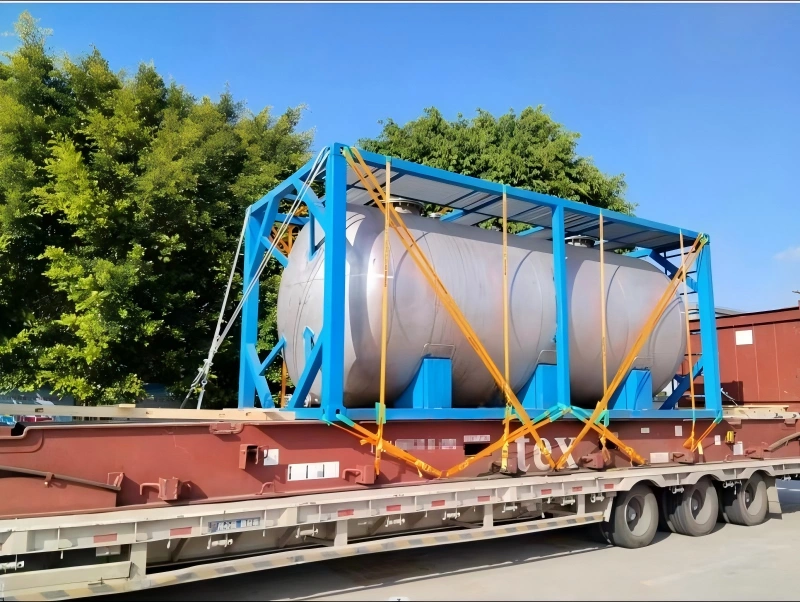
Corrosion, Moisture, and Weather Protection
Marine travel results in equipment being exposed to sea spray, sea water, and condensation. Machined surfaces, flanges, and electrical systems are especially susceptible to damage from oil & gas.
| Exposure Risk | Possible Impact | Recommended Protection |
| Salt air | Accelerated corrosion on steel and machined parts | Anti-rust coating and barrier protection |
| Rain and sea spray | Water entry, rust, and staining | Waterproof covers and sealed openings |
| Humidity | Condensation inside covers or panels | Desiccants, VCI, or sealed packaging |
| Open flanges/ports | Moisture or contamination inside equipment | Use caps, plugs, or sealed covers |
| Electrical cabinets | Moisture-related damage | Use sealed covers and moisture control |
| Coated surfaces | Scratches or coating damage | Padding, edge protection, and soft contact materials |
Documentation and Compliance Considerations
Oil & gas shipments with high value tend to be subjected to more rigorous checks. Full documentation enables seamless acceptance by carriers, customs clearance and claims for insurance.
| Document | Why It May Be Needed |
| Dimension and weight sheet | Confirms OOG status and flat rack suitability |
| Technical drawing | Helps plan loading, securing, and route review |
| Cargo photos | Supports carrier approval and risk assessment |
| Lifting diagram | Guides safe crane loading and unloading |
| Packing list | Supports customs and shipment coordination |
| Lashing plan | Shows how cargo will be secured |
| MSDS/hazardous declaration | Required if cargo includes regulated materials or residues |
| Insurance document | Supports risk management for high-value cargo |
Flat Rack vs Other Transport Options for Oil & Gas Equipment
Many oversized items can be transported using flat rack shipping, but other options might be more appropriate in certain situations.
| Transport Option | Best For | Limitation |
| Flat rack container | Wide, heavy, skid-mounted, or irregular oil & gas equipment | Requires lashing, protection, and OOG booking |
| Open top container | Tall cargo that fits within container width and length | Less suitable for very wide cargo |
| Standard container | Smaller packed parts, tools, valves, and spare parts | Limited for oversized or heavy equipment |
| Lowbed trailer | Inland oversized movement | Not a full ocean transport solution alone |
| Breakbulk shipping | Very large equipment or project batches | More handling and special vessel planning |
| Ro-Ro shipping | Wheeled or trailer-mounted units | Not suitable for many static skids or vessels |
| Heavy lift vessel | Extremely heavy or large project cargo | Higher planning complexity and cost |
Cost Factors in Flat Rack Shipping for Oil & Gas Equipment
It is not only the ocean freight rates that determine the total cost, it is the whole scope. By planning early, you can keep costs under control and stay safe.
| Cost Factor | How It Affects the Shipment |
| Cargo dimensions | Oversized cargo may increase OOG charges and route restrictions |
| Cargo weight | Heavy cargo may need stronger lifting and support equipment |
| Flat rack availability | Equipment shortage can affect price and lead time |
| Inland transport | Oversized road movement may require permits or escorts |
| Crane handling | Heavy or irregular equipment may require special lifting |
| Securing materials | Chains, bracing, saddles, and supports add cost but reduce risk |
| Corrosion protection | Covers, VCI, or vacuum packing reduce exposure risk |
Pre-Shipment Checklist for Oil & Gas Flat Rack Cargo
A systematic checklist guides manufacturers and logistics team to prevent any last minute issues.
| Checklist Item | Responsible Party | Why It Matters |
| Confirm final dimensions | Shipper / manufacturer | Prevents booking and OOG approval errors |
| Confirm weight and COG | Engineering / logistics team | Supports safe loading and securing |
| Verify lifting points | Manufacturer / rigging team | Reduces lifting damage risk |
| Prepare drawings/photos | Shipper | Supports load planning and carrier review |
| Identify sensitive parts | Equipment supplier | Prevents damage to valves, panels, and instruments |
| Select flat rack type | Freight planner | Matches cargo size, weight, and route |
| Plan lashing/support | Securing specialist | Prevents shifting and structural stress |
| Seal openings | Packing team | Prevents moisture and contamination |
| Apply corrosion protection | Packing team | Reduces rust risk during ocean transport |
| Review route | Transport provider | Avoids road, port, or carrier restrictions |
Common Mistakes to Avoid
Even a better team can miss a few things that can cause big problems when transporting the goods.
| Mistake | Possible Consequence | Better Practice |
| Using estimated dimensions | Rebooking, extra cost, or carrier rejection | Measure final packed cargo |
| Ignoring COG | Unsafe lifting or poor lashing design | Request COG information before loading |
| Lashing over components | Damage to valves, gauges, pipes, or panels | Secure from structural points only |
| Poor base support | Frame stress or cargo movement | Support load-bearing base areas |
| Weak corrosion protection | Rust during ocean transport | Use anti-rust, covers, VCI, or sealed packing |
| Missing compliance documents | Shipment delay or customs issue | Prepare documents before booking |
Conclusion — Oil & Gas Equipment Needs Cargo-Specific Flat Rack Planning
For oversized oil & gas equipment, flat rack shipping can be a viable option but the shipment must be planned in accordance to the actual structure, value and transport sensitivity of the equipment. Using appropriate measuring, supporting, securing, protecting and documenting techniques the handling of large scale project cargo can be made safer and more predictable.
Planning, engaging with the expertise of OOG specialists and ensuring effective communication throughout the entire process will make it less likely that damage, delays and compliance issues will be avoided. Everything from center of gravity to final loading photos is carefully considered, and high value oil & gas equipment arrives for installation.