
When goods are too large, too heavy or too awkward to fit into a standard shipping container, flat rack container solutions for extremely heavy or long equipment are an effective way to transport large, unwieldy loads. These open-platform containers offer flexible loading (open top and side) and customization of securing and overhang management, while maintaining cost-efficiency and the ability to fit into containerized shipping networks – if shippers provide accurate data and adhere to proper engineering practices.
Safe transport is more than just loading cargo on the deck. It calls for exact measurement, load distribution analysis, center-of-gravity review, overhang calculations, engineered lashing, blocking/bracing and a full route coordination. There is a common misconception among many shippers that if the cargo “fits” the job is done. The fact is, flat racks are suitable based on payload restrictions, deck pressure, support points, carrier approval and route restrictions. For long steel structures, heavy machinery skids, transformers, pressure vessels, molds, and other OOG cargo, flat rack container solutions for oversized equipment can provide the loading flexibility needed when standard containers are not suitable.
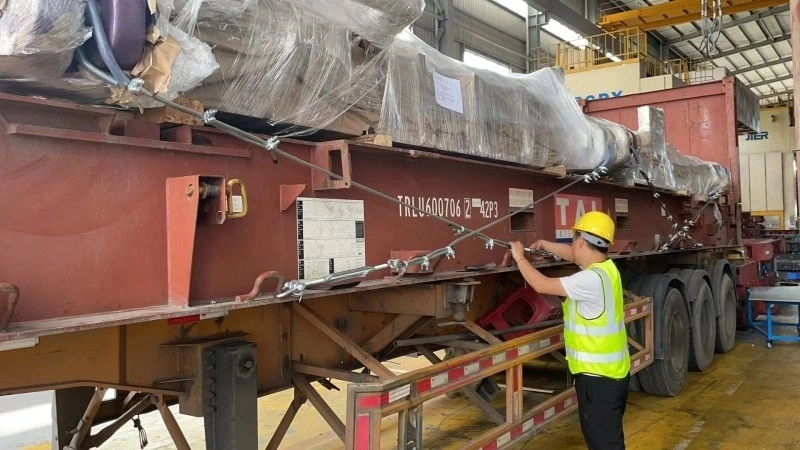
When Should You Use Flat Rack Containers for Heavy or Long Equipment?
In cases where the size, weight, shape, or handling needs of the cargo will not fit into standard dry containers, flat rack containers are the best choice. They also have an open deck which allows for crane loading, side access, and even specialized securing solutions that still leverage the advantages of container shipping rates and networks.
| Cargo Condition | Why Flat Rack May Be Needed |
| Excessive length | Cargo may require controlled overhang and open platform loading |
| Excessive width | Standard container doors and walls may not allow loading |
| Heavy weight | Requires stronger platform support and load distribution |
| High center of gravity | Needs special lashing and stability review |
| Irregular shape | Open sides allow better positioning and securing |
| Crane loading required | Top access supports heavy lifting operations |
| Protruding components | Flat rack layout allows clearance and protection planning |
| OOG classification | Flat rack containers support many approved out-of-gauge shipments |
Cargo Types Suitable for Flat Rack Container Solutions
Oversized, heavy, long cargo that is hard to enclose is often transported using flat rack containers. They are used by seasoned logistics crews when they require a product to be accessed by means of an open area for safe loading and securement.
| Cargo Type | Main Transport Challenge | Planning Focus |
| Long steel structures | Overlength and bending risk | Support spacing and overhang control |
| Heavy machinery skids | Concentrated weight | Deck pressure and load spreading |
| Construction equipment | Irregular shape and high weight | Loading access and securing points |
| Mining equipment | Heavy-duty structure and route limits | Lashing, route review, and protection |
| Transformers | Compact but heavy cargo | Load concentration and lifting safety |
| Large molds | High weight and precision surfaces | Support, anti-rust, and shock control |
| Pressure vessels and tanks | Cylindrical shape and rolling risk | Saddles, blocking, and bracing |
| Industrial pumps/compressors | Skid base and sensitive parts | Vibration and corrosion protection |
| Prefabricated modules | Large footprint and finished surfaces | Weather protection and route clearance |
Key Cargo Data Required Before Planning the Shipment
The viability and safety of a flat rack solution depends on cargo data accuracy. Carriers might refuse to book or make expensive changes if they lack all the details.
| Information to Prepare | Why It Matters |
| Final packed dimensions | Determines flat rack size, overhang, and OOG approval |
| Gross weight | Confirms payload, lifting, and inland transport requirements |
| Center of gravity | Supports safe lifting, positioning, and lashing design |
| Load-bearing points | Helps plan support and deck pressure control |
| Base frame drawing | Shows how weight transfers to the flat rack deck |
| Lifting points | Helps plan crane loading and unloading safely |
| Securing points | Prevents lashing from weak or sensitive areas |
| Cargo photos | Identifies protrusions, fragile surfaces, and access issues |
| Packaging method | Affects final size, weight, and lashing access |
| Route information | Helps evaluate road, port, and delivery restrictions |
Load Distribution for Extremely Heavy Equipment
The movement of heavy loads should be considered based on load concentration and not weight alone. While a flat rack may have adequate capacity, heavy concentrated loads may cause damage to the deck and/or unsafe load lifting conditions.
| Load Distribution Factor | Risk If Ignored | Practical Recommendation |
| Concentrated load points | Deck damage or unsafe pressure | Use load spreading plates or support frames |
| Payload limit | Overloaded flat rack or carrier rejection | Confirm weight against container specifications |
| Base contact area | Uneven pressure transfer | Support structural base points |
| Deck condition | Weak support under heavy cargo | Inspect flat rack before loading |
| Bedding material | Poor contact or instability | Use dry, strong, and suitable bedding |
| Heavy side imbalance | Poor handling or transport stability | Position cargo according to COG |
| Crane lifting plan | Unsafe loading operation | Match lifting method to cargo weight and COG |
Overhang Planning for Long Equipment
Even if the weight is not a concern, long cargo can be a problem. If overhang is planned properly, there is no risk of bending, there is enough clearance for the route and the carrier approves it.
| Overhang Factor | Possible Risk | Planning Requirement |
| Front/rear overhang | Carrier rejection or handling difficulty | Confirm acceptable limits before booking |
| Side overhang | Road or port clearance issue | Review route and terminal restrictions |
| Unsupported length | Bending or structural stress | Add support points or custom frames |
| Cargo end exposure | Impact or surface damage | Add end protection and markings |
| Lashing access | Weak securing arrangement | Keep anchor points reachable |
| Turning radius | Inland delivery difficulty | Review road movement early |
| Port handling clearance | Terminal delay or rejection | Submit drawings and dimensions for approval |
Lashing, Blocking, and Bracing for Heavy or Long Cargo
Securing must stop all types of movements and must have the correct shape, weight and resistance against the forces of transport as required by the cargo. Safe practices are used to safeguard cargo and crew.
| Securing Method | Best Used For | Key Caution |
| Chain lashing | Heavy machinery, skids, steel structures | Avoid direct contact with sensitive surfaces |
| Webbing belts | Protected or lighter contact areas | Must be rated and properly positioned |
| Blocking | Preventing forward/rear movement | Should contact structural areas |
| Bracing | Controlling side movement | Avoid pressure on fragile parts |
| Anti-slip mats | Smooth base contact points | Surfaces must be clean and dry |
| Saddles/chocks | Cylindrical cargo | Prevents rolling and improves support |
| Edge protection | Sharp corners or coated cargo | Prevents lashing and cargo damage |
Flat Rack vs Other Transport Options for Extremely Heavy or Long Cargo
There are many occasions when a flat rack container is the right choice for an oversized move, but in some instances other ways of moving may be more appropriate based on cargo characteristics.
| Transport Option | Best For | Limitation |
| Flat rack container | Heavy, wide, long, or irregular cargo within carrier acceptance limits | Requires securing, OOG approval, and route review |
| Open top container | Tall cargo that fits within container width and length | Less suitable for very wide or long cargo |
| Lowbed trailer | Inland movement of heavy or tall equipment | Not a complete ocean shipping solution |
| Breakbulk shipping | Very large cargo or multiple project items | More handling and vessel planning |
| Ro-Ro shipping | Wheeled or trailer-mounted equipment | Not suitable for all static cargo |
| Heavy lift vessel | Extremely heavy or oversized cargo beyond container limits | Higher complexity and cost |
| Modular trailer/SPMT | Extremely heavy inland movement | Requires specialized route and site planning |
Route Planning and Carrier Approval
Very large and/or heavy equipment should not just be questioned during the ocean leg of the transport trip, but throughout the whole transport chain.
| Route Stage | What to Check |
| Factory pickup | Crane access, loading space, road exit condition |
| Inland trucking | Permits, escorts, bridge limits, height/width restrictions |
| Origin port | OOG acceptance, terminal equipment, cut-off timing |
| Ocean transport | Carrier approval, vessel suitability, flat rack availability |
| Transshipment | Extra handling and exposure risk |
| Destination port | Unloading equipment and storage conditions |
| Final delivery | Site access, crane availability, turning radius, installation schedule |
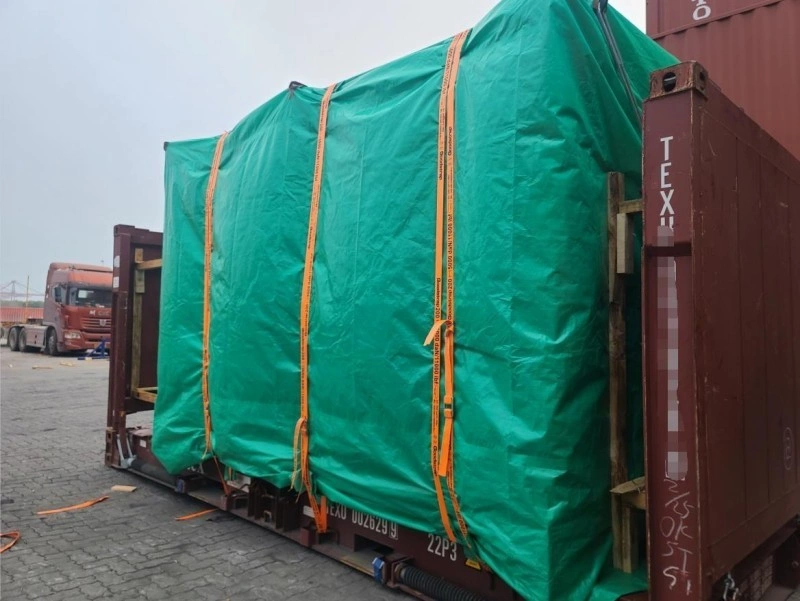
Protection Requirements for Heavy or Long Equipment
Structurally sound cargo can still be susceptible to corrosion, impacts, vibrations and the elements during ocean transport.
| Protection Need | Recommended Method | Why It Matters |
| Corrosion prevention | Anti-rust oil, VCI, covers | Reduces rust during ocean transport |
| Rain and sea spray | Waterproof tarpaulin or shrink wrap | Limits direct moisture exposure |
| Sensitive surfaces | Padding and protective film | Prevents scratches and dents |
| Lashing contact points | Edge protectors and sleeves | Prevents chain or belt damage |
| Long cargo ends | End guards or markings | Reduces impact risk |
| Protruding parts | Partial crate or padding | Protects valves, panels, and fittings |
| Moisture-sensitive cargo | Vacuum packing or desiccants | Controls humidity exposure |
Cost Factors for Extremely Heavy or Long Flat Rack Shipments
The total cost is the overall project cost, not just the ocean freight rate.
| Cost Factor | How It Affects the Shipment |
| Cargo length | Overhang may increase OOG charges |
| Cargo weight | Heavier cargo may require stronger lifting |
| Flat rack type | 20FR, 40FR, or heavy-duty options affect availability |
| Overhang approval | Route and carrier review may add time and cost |
| Inland permits | Long or wide cargo may require escorts |
| Crane handling | Heavy cargo may need higher-capacity equipment |
| Lashing/support | Custom frames add cost but reduce risk |
| Protection | Covers and crating protect cargo value |
| Insurance | High-value equipment may require stronger coverage |
| Urgency | Last-minute bookings may increase cost |
Pre-Shipment Checklist for Heavy or Long Flat Rack Cargo
An exhaustive checklist can prevent any unwanted surprises and ensure things go according to plan.
| Checklist Item | Responsible Party | Why It Matters |
| Confirm final dimensions | Shipper / manufacturer | Prevents OOG booking errors |
| Confirm gross weight | Engineering / logistics team | Supports payload and lifting planning |
| Identify COG | Manufacturer / engineer | Improves stability and lashing design |
| Prepare drawings/photos | Shipper | Helps carrier and logistics review |
| Confirm lifting points | Rigging team | Reduces handling damage |
| Identify support points | Engineering team | Prevents deck pressure and cargo base damage |
| Calculate overhang | Freight planner | Supports carrier approval and route review |
| Select flat rack type | Logistics team | Matches cargo size and weight |
| Plan securing | Securing specialist | Prevents shifting during transport |
| Apply protection | Packing team | Reduces weather and surface damage |
| Supervise loading | Site supervisor | Confirms plan is followed correctly |
| Document final loading | Logistics coordinator | Supports communication and risk management |
Common Mistakes to Avoid
Even a well-versed team will miss out on details that can cause delays or damage.
| Mistake | Possible Consequence | Better Practice |
| Assuming cargo fit is enough | Carrier rejection or unsafe transport | Review weight, overhang, COG, and securing |
| Using estimated dimensions | Rebooking or extra charges | Measure final packed cargo |
| Ignoring load points | Deck damage or cargo base stress | Plan support and load spreading |
| No overhang approval | Shipment delay or rejected booking | Confirm carrier limits early |
| Weak support under long cargo | Bending or deformation | Add supports at correct intervals |
| Poor lashing access | Unsafe securing layout | Confirm anchor access before loading |
| No route review | Road or port handling delays | Review full route before booking |
| No final photos | Harder communication and claims handling | Document loading and securing condition |
Conclusion — Heavy and Long Cargo Needs More Than an Open Platform
While the ability to transport many heavy or long equipment loads is possible with flat containers, more than deck space is required for a successful shipment. Best practice is to consider the final dimensions, weight, center of gravity, support points, overhang, lashing access, route restrictions and cargo protection prior to loading. The risks of heavy and long cargo are equally important and different, and must be carefully planned for from the outset.
With detailed cargo information, knowledgeable OOG partners, and engineering best practices, industrial exporters and project teams can reliably and cost effectively transport their oversized cargo over global routes.