
Open top containers that carry out-of-gauge (OOG) cargo requires much more than normal commercial paperwork. These deliveries/ shipments are usually made of oversized machinery, industrial equipment or project cargos which are larger than container sizes- they need accurate dimensional declarations, validations and carrier specific approvals. Over the years in my experience of managing OOG logistics I have witnessed the effects of minor errors in these documents leading to either booking rejection, slowing down of a ship or excessively high port detention expenses.
Most of the teams have a false assumption that basic export paperwork is sufficient in open top shipments. Practically, OOG cargo requires technical documentation that deals with dimension approval and safety compliance. Open top OOG shipments should be properly documented ensuring structural compliance that allows carrier acceptance, terminal handling hazard and regulatory compatibility. This initial hype will preclude most of the hiccups I have observed when international projects are being shifted.
Core Commercial Export Documents
Any international shipment is based on standard commercial documents, which are required but incomplete with open top OOG cargo.
These include customs valuation, cargo records, and the contract of carriage – but carriers and terminals continue to need OOG-technical submissions prior to being given space.
| Document | Purpose |
| Commercial Invoice | Customs valuation |
| Packing List | Cargo detail verification |
| Bill of Lading (Draft and Final) | Contract of carriage |
| Certificate of Origin (if required) | Trade compliance |
With no such basic in place operations of even perfect OOG technical files will not go forward. However the actual examination starts with OOG specialized paperwork.
OOG Declaration Documentation
Any open top OOG booking is dependent upon a valid OOG declaration form, which has to be lodged long before the vessel cutoff- monitored as being 7-14 days prior to the vessel, depending on the carrier.
This form captures important oversize information which directly determines the allocation of slots in the vessels, stowage, as well as the viability of the routes. The reasons behind misreported dimensions include rejection or re-rating (ex. open top to flat rack).
A checklist of some of the main OOG data elements and their significance to the carriers would look like this:
- Height (top rail and all protrusions planned to be made) — Vessel slot approval and stacking limitations.
- Width projection (so to side) – This influences the clearance in the ports and the compatibility with other containers.
- Length overhang (fore/aft extensions) -Important to road transport planning and lashing capability of the vessel.
- Gross weight -Assures structural integrity and satisfies axle load capacity.
- Center of gravity warning — This is particularly crucial in the case of tall/lumpy freight to avoid any danger of falling.
Enter these values just as they were measured in the field- do not go to the manufacturers specifications without checking. Carriers approve against photos and sketches.
Cargo Sketches and Technical Drawings
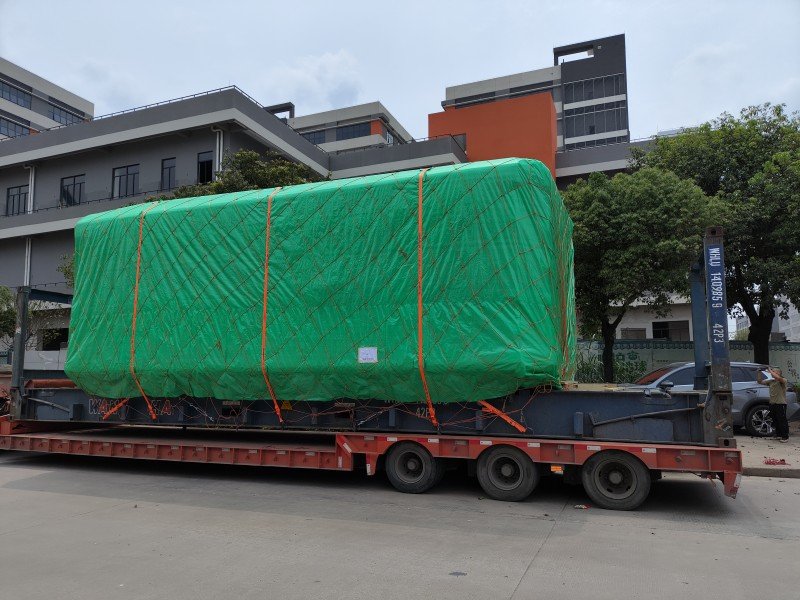
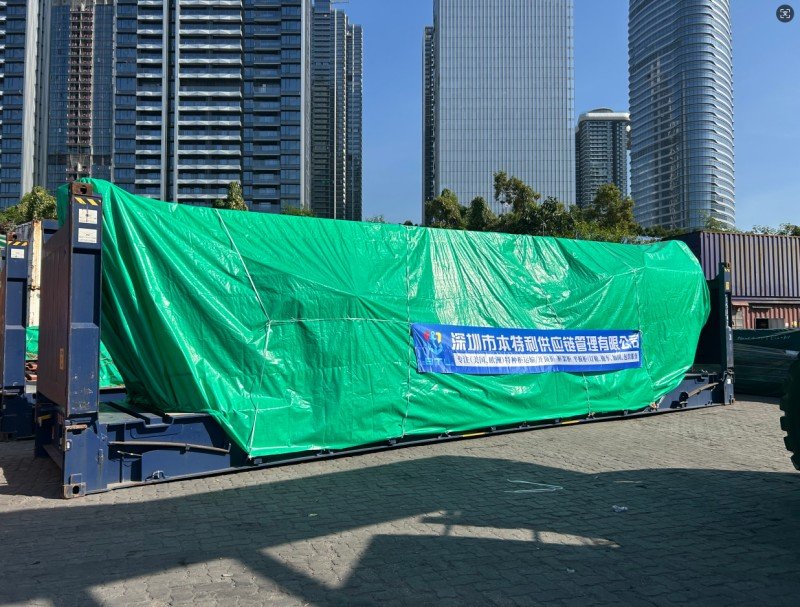
Carrier will not review scaled cargo sketches and technical drawings. They offer photographic evidence as to how the cargo is placed in (or sticks out of) the open top container.
A good sketch includes:
- Accurate identification of dimensions in millimeters or centimeters.
- Good example of OOG projections (height, width, length).
- Determination of securing/lashing points on the cargo itself.
- Instructions (lifting points, center of gravity markers) notes.
The images assist planners to determine the stability of the load, ensure that they use twist-lock, and project the needs of the crane or spreader. Then, it is slow progress to approvals, or complete refusal without them.
Securing and Lashing Plan Documentation
One of the most effective methods of getting carrier rejection on open top OOG deliveries is a sketchy or incomplete lashing plan.
The plan should explain how the cargo will sustain the sea forces, which are, longitudinal force, transverse force, and vertical force. This is closely examined by carriers and surveyors (as inspectors of National Cargo Bureau).
| Securing Detail | Compliance Purpose |
| Lashing type (chains, straps, wires) | Safety validation |
| Blocking layout (timber, dunnage) | Load distribution |
| Tension method and angles | Stability assurance |
| Inspection record | Liability protection |
Provide the force estimate where feasible, particularly of high value or dangerous goods. No proper plans can sometimes lead to re-lashing that is obligatory at the point of terminal–at the cost of shippers.
Weight Certificates and Structural Verification
Well reported weights avoid structural and coverage gaps.
Key requirements include:
- Verified Gross Mass (VGM) Verified Gross Mass (VGM) is required by SOLAS, and it could be evidence of method 1 (weighed) or method 2 (calculated).
- Calculation of load distribution — In order to ensure even distribution of floors and to prevent point loading.
- Floor load compatibility Confined tops are confined to PSN (per square meter) thresholds.
- Independent survey report – This is necessary in most cases when there is heavy or complex load.
Any apprehension of inaccuracy in weights may provide security issues or overlooked insurance coverage upon accidents.
Dangerous Goods Documentation (If Applicable)
In the case of OOG cargo carrying hazardous material, the IMDG Code provisions provide an additional dimension.
Mandatory documents:
- UN number and correct shipping name.
- Dangerous Goods Declaration (DGD) — Signed shipper declaration.
- IMDG classification and packing group
- Material Safety Data sheet (MSDS).
- Segregation declaration To ascertain compatibility with other cargoes.
| DG Document | Why Required |
| UN classification | Hazard identification |
| DGD | Carrier compliance |
| MSDS | Safety information |
| Packing certificate | Regulatory validation |
The cargo in open tops is more susceptible to elements and, therefore, additional efforts are placed on weatherproof packaging and segregation.
Terminal and Port-Specific Approval Forms
Ports and terminals have their own rules on OOG in addition to that of the carrier.
Common forms include:
- applications of Terminal OOG approval.
- Crane taking the certificates of clearance.
- Declarations of special handling.
- Port authority rightss (e.g. oversize road permits inland moves)
These differ widely between countries and ports, one country, such as Singapore, might require pre-approvals weeks before, and others, such as Rotterdam, might comply with carrier confirmation. Always consider destination specific instructions early.
Common Documentation Mistakes in Open Top OOG Shipping
Of experience, the errors which occasion most headaches are:
- Underreported OOG dimensions -Will result in mis-stowage or rejection.
- Weak weight information For example, between declaration, VGM and sketches.
- Lacking cargo sketch or securing information – Preventing visual approval.
- Failure to submit documents on time -Missing carrier cutoff deadline.
- Failure to declare DG fully — IMDG infractions.
Repercussions can be the booking rejection, compelled vessel rollover amendments, port detination, additional storage costs or even penalties. A single incorrect declaration of height turns into thousands of costs added.
Conclusion — Documentation Is a Structural Control Mechanism
The paperwork demanded in case of open top OOG shipping is far beyond what is needed with ordinary export paperwork. Dimensional reporting, validation, weight certification, and regulatory forms will assuring compliance, approval of the carrier, and safety international transport of oversized cargo.
Close Collaboration between shippers, forwarders and carriers is also imperative- their submission as well as extensive verification are done early enough and problems that occur are prevented before they get to boil over. Regarding project logistics, documentation is not a ship after a sale, but a structural control aspect that ensures that timelines, budgets and safety have been safeguarded.