
Oversized cargo is described as cargo that is larger than the norm or weight capacity of the normal shipping containers. The size of these cargoes does not accommodate the normal containers, hence they need expert transporting solutions like flat rack containers, open top containers, breakbulk vessels and heavy haul trailers.
Most individuals define oversized cargo as just the large cargo but in global logistics, the term is defined to refer to cargo that is larger than the container dimension and weight limits.
Transporting oversized cargo will demand specific logistics planning, correct choice of the container, methods of cargo securing, and qualified project coordination, which will allow the successful and safe delivery of cargo.
Cargo shipping in the form of oversized cargo shipping is more than merely transporting large products on the road, it needs special equipment, route management, choice of containers and cargo securing strategies to assure safe and efficient transportation.
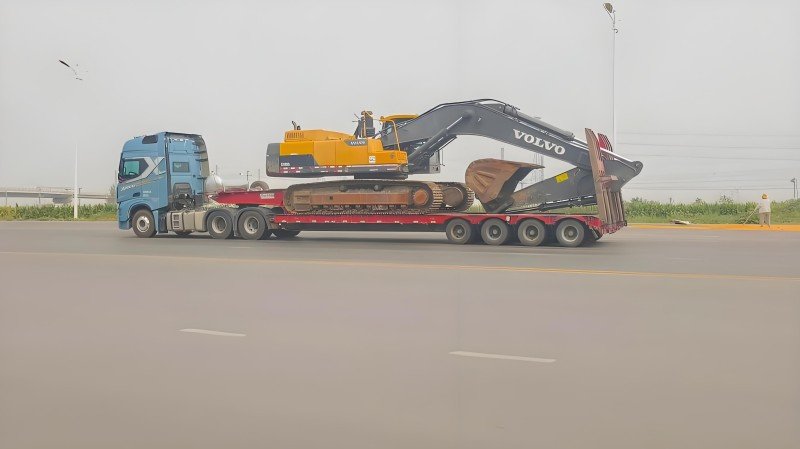
What Qualifies as Oversized Cargo in International Shipping
Excessive cargo refers to any shipment exceeding the allowable size of the standard ISO shipping containers in at least one of the three maximum dimensions, which are height, width, and length, or gross weight.
The ISO standards are quite strict in the boundaries of standard dry containers (20ft or 40ft). Anything that goes beyond these elicits Out-of-Gauge (OOG) classification and requires alternative treatment in the first place.
Here are some comparison of the common limits:
| Dimension Category | Standard Container Limit (approx.) | Oversized Cargo Condition |
| Height | ~2.59 m (8 ft 6 in) | Exceeds container roof or high-cube limit |
| Width | ~2.35 m internal (~2.44 m external) | Wider than container interior |
| Length | ~12 m (40 ft) | Too long for container floor |
| Weight | ~28–30 tons payload | Exceeds container maximum payload |
In most cases, cargo traversing such thresholds can be of one of three categories that overlap with each other: OOG (Out-of-Gauge), heavy lift, or project cargo. Practically, the vast majority of oversized shipments will be a combination of all three- and so, particularly in the energy, infrastructure, and heavy manufacturing industries in which a single unit may be very long and heavy at the same time.
Common Types of Oversized Cargo
In industrial, infrastructure, and energy projects, the most common oversized cargo are the equipment or parts that just cannot be further decreased or reduced due to their functionality.
Such deliveries are usually of irregular shape, very long or concentrated weights, and cannot be packed in a normal way.
The most common ones are the following:
| Cargo Type | Typical Industry | Transport Challenge |
| Excavators & bulldozers | Construction | Heavy weight, tracked or wheeled |
| Wind turbine blades | Renewable energy | Extreme length (up to 80+ m) |
| Industrial machinery | Manufacturing | Irregular shape, sensitive components |
| Transformers | Power industry | Heavy and fragile, high center of gravity |
| Steel structures | Infrastructure | Oversized dimensions, awkward profiles |
Each of them has to be carefully pre-planned: 3D modeling of the load placement, and the choice of the suitable securing locations and protective coverings. This is especially critical in industrial machinery and manufacturing logistics, where sensitive components demand expert handling.The decision to omit detailed evaluation at the front end nearly inevitably results in postponements, additional expenses or even accidental problems in the future.
Main Transport Methods for Oversized Cargo
Large cargo may not necessarily be moved in a normal container and therefore the logistics service providers have to choose a special mode of transport according to the size of the cargo, weight, shape and the route that the cargo will be under.
The decision directly influences loading capability, suitability of vessels and the project schedule in general.
A brief description of the main methods is as follows:
| Transport Method | When It Is Used | Key Advantages |
| Flat Rack Containers | Wide or heavy cargo | Open sides allow overwidth/overheight freight; secure lashing points |
| Open Top Containers | Tall cargo | Cargo loaded from the top with crane; removable roof bows |
| Breakbulk Shipping | Extremely large or irregular equipment | No container limitations; direct vessel stowage |
| Roll-on/Roll-off (RoRo) | Wheeled machinery | Easy loading and unloading by driving on/off; reduced handling |
Many companies rely on professional oversize cargo transportation to manage complicated logistics planning, choice of container and organizing routes- particularly where more than one mode of transportation is utilized within a single movement.
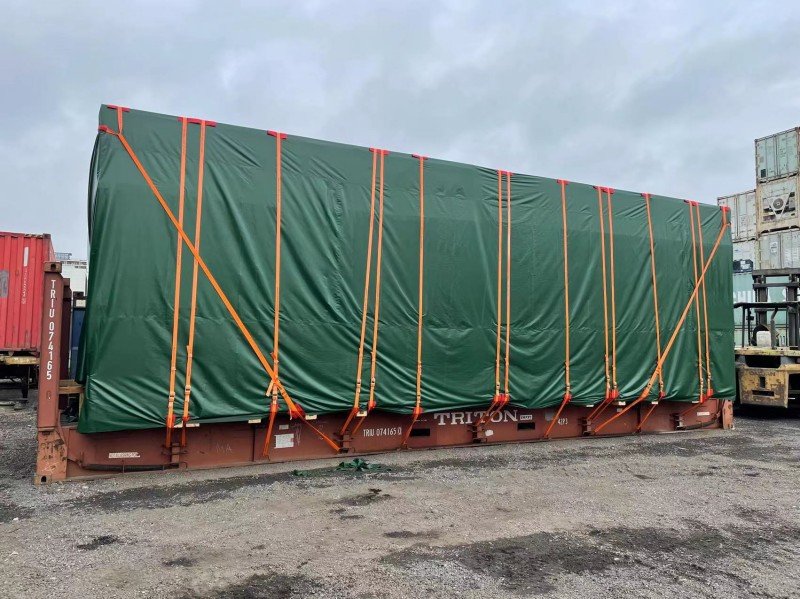
Containers Used for Oversized Cargo Shipping
Choosing the appropriate type of container is very important in over sized shipment as it influences factors such as loading safety, ultimate freight expenses and port turnaround.
The inappropriate decision might compel unnecessary transloading, additional permits or even turnover in the loading port.
The primary options of containers will be:
| Container Type | Best For | Key Benefit |
| Flat Rack | Wide or heavy cargo | No side walls; excellent for overwidth |
| Open Top | Tall machinery | Top loading with crane; tarpaulin cover |
| Platform Containers | Extreme cargo | Maximum flexibility; flat bed design |
| Standard Containers | Small OOG cargo | Lower cost when only slight overrun |
The choice of containers determines the handling costs of ports (crane lifts and side loading), the difficulty of lashing, and even insurance rates. In our case, we have to begin with precise on-site measurements and 3D load simulations to prevent expensive changes of the project within the process. Professional oversized cargo transportation services make this planning seamless.
How Oversized Cargo Is Secured During Transport
Oversized freight cannot be bargained on proper cargo securing since the loads are subject to extreme dynamic forces, which are acceleration, braking, rolling, pitching forces, at sea, on the road, or in the course of multimodal transfers.
Poor securing is among the highest causes of cargo losses claims and transit incidences.
Widely used and typical securing techniques are:
| Securing Method | Purpose |
| Lashing chains | Prevent cargo shifting under motion |
| Wooden blocking | Stabilize cargo base and fill voids |
| Steel brackets | Reinforce heavy cargo against tipping |
| Tarpaulins | Protect against weather exposure |
Other methods such as tension belts, special welding support frames, and vacuum sealing are frequently overlaid on high-value or sensitive works. The end is always redundancy: integrate approaches in such a way that when one of them cannot bear the burden under pressure, other methods will support it value.
Challenges in Oversized Cargo Transportation
Transportation of oversized cargo is associated with a distinctiveness of the challenges that are not commonly faced by standard freight.
Such obstacles require the early participation of seasoned coordinators who are conversant with regulatory realities as well as operational realities.
| Challenge | Explanation |
| Route restrictions | Bridges, tunnels, road limits |
| Permits | Government approvals required |
| Port handling | Special cranes or equipment needed |
| Cargo stability | Complex securing required |
| Logistics coordination | Multiple transport modes |
The process includes route surveys, permit applications (which may require weeks or months based on jurisdictions), and contingency planning of weather or delays. These issues can become a great headache should any of these be overlooked in a well-planned shipment.
Industries That Frequently Ship Oversized Cargo
There are industries that often have to handle oversized cargo due to their need to have heavy or large equipment or components as their basic elements.
| Industry | Typical Cargo |
| Construction | Excavators, cranes |
| Energy | Wind turbine components |
| Oil & Gas | Drilling equipment |
| Manufacturing | Industrial machinery |
| Infrastructure | Steel structures |
Such industries tend to have multi-leg projects across continents and therefore sound oversized cargo logistics planning models are a competitive edge rather than an after-thought.
Conclusion — Oversized Cargo Requires Specialized Logistics Planning
Shipment of over-sized cargo is highly complicated compared to a typical container shipping.
It occupies special containers, skilled organization of the logistics, planning of routes, permits and guarantees and appropriate securing and protection.
Effective transport of oversized cargo is based on proper planning, users of the right containers and efficient logistical implementation to achieve safety and efficiency during the shipping.
In cases where the dimensions or weight exceed the normal ranges, it is always the most intelligent to liaise with experts that have had experience in the same moves — especially for complex projects like factory relocation — and ensure that they can meet timelines, budgets, and above all keep the cargo in safe hands.