
Automotive stamping dies define the shape and quality of every body panel that reaches final assembly. These large, high-value tools often travel from specialized clusters in China to North American plants when new vehicle programs launch or when production is localized.
Many buyers choose DDP terms because the quoted price appears to cover freight, customs, duties, and final delivery in one number. In practice, china to usa automotive stamping die shipping ddp still requires precise data, correct classification, and experienced handling of oversized cargo. Missteps in measurement, documentation, or tariff assumptions can turn a predictable budget into unplanned costs and schedule slippage. This guide lays out the actual workflow, cost drivers, and compliance checkpoints that project teams use on these moves.
Understanding Automotive Stamping Dies and Why They Travel Between China and the USA
Automotive stamping dies are precision-engineered tools that press sheet metal into body-in-white components. A single large outer panel die can weigh 15 to 40 tons and carry tight geometric tolerances. Chinese manufacturers in tooling hubs have developed deep process knowledge and rapid modification capability, which is why many OEMs and Tier 1 suppliers continue to source dies from these clusters even when the final stamping line sits in the United States or Canada.
China’s Automotive Tooling Clusters (Including Dongguan)
Dongguan and nearby cities host dense networks of die shops, steel suppliers, and tryout presses. A body-side outer die built for a new EV platform in the U.S. Midwest may be designed, machined, and trialed in Dongguan before it ships. When multiple dies for the same program move together, load planning becomes critical because the pieces must arrive in sequence for die tryout and production ramp.
Why Buyers Choose DDP for Die Movements
Some purchasing teams accept DDP offers from Chinese toolmakers because internal resources for import compliance are limited and a single landed-cost number simplifies approvals. The trade-off is reduced visibility into routing, carrier selection, and how duties were calculated. When the die set is complex or the HS classification is borderline, the buyer can still face delays even though the seller nominally handles clearance.
What DDP Really Means for China–USA Stamping Die Shipments
Under DDP the seller is responsible for delivering the goods to the named place in the buyer’s country, cleared for import and with duties paid. This differs from DAP, where the buyer handles import clearance and duty payment, and from FOB, where responsibility ends once the cargo is loaded on the vessel at the Chinese port.
Role of the Importer of Record Under DDP
The importer of record is the party legally responsible for the customs entry. When a Chinese seller or its forwarder acts as importer of record on a DDP shipment, any error in classification, valuation, or documentation can trigger holds, additional duties, or penalties that still affect the buyer’s production timeline. Buyers should request copies of the customs entry summary and duty payment proof even on DDP moves.
Pros and Cons of DDP for Automotive Dies
Since shipping molds typically requires open-top or flat-rack containers, ocean freight rates are subject to extreme volatility—for instance, costs can spike to $10,000 per container, and securing space becomes difficult. Molds have long production cycles, and delivery deadlines are critical because vehicle market launches depend heavily on these schedules; any delay caused by an inability to book space or other issues results in massive financial losses. Consequently, U.S. buyers generally prefer that the Chinese manufacturing plant handle the entire logistics process on a DDP (Delivered Duty Paid) basis.
Pre-Shipment Preparation: Data, Packing Lists, and Factory Coordination
Accurate information gathered before booking prevents most downstream problems. For heavy dies, even small errors in reported dimensions or weight can force last-minute container changes or create safety issues during loading.
Packing List and Technical Data Collection
A complete packing list for stamping dies includes item name or tool ID, HS code, exact dimensions in three axes, gross and net weight, material notes, and any removable components. This document serves customs, truckers, crane operators, and the receiving plant. Cross-check the list against the die shop’s 3D model and actual measured weights before the quote is finalized.
Confirming Dimensions and Weight With the Factory
Drawings alone are not enough for OOG cargo. A logistics team should visit the factory or receive verified measurements that include center of gravity, lifting points, and base frame integrity. One outer panel die measured 50 mm over the flat-rack width on paper; on-site verification showed the actual width required a permit and special route, which changed both cost and transit time.
Early Quotation and Container/Route Planning
With confirmed data the forwarder can compare Open Top versus Flat Rack options, estimate inland trucking requirements, and identify the best port pair. This stage also produces realistic per-kilogram or per-container benchmarks that let the buyer compare a DDP quote against an FOB-plus-buyer-freight alternative.
Step-by-Step Logistics Workflow: From China Factory to U.S. Plant
The physical movement follows a predictable sequence, but each step has failure points that experienced teams anticipate.
Booking and Shipping Order (SO)
Once the factory confirms readiness and the packing list is locked, the logistics team books vessel space and issues the shipping order. Booking dates must align with die tryout schedules so the tooling does not sit idle in the yard or delay production validation in the U.S.
Container Loading: Lashing, Securing, and Protection
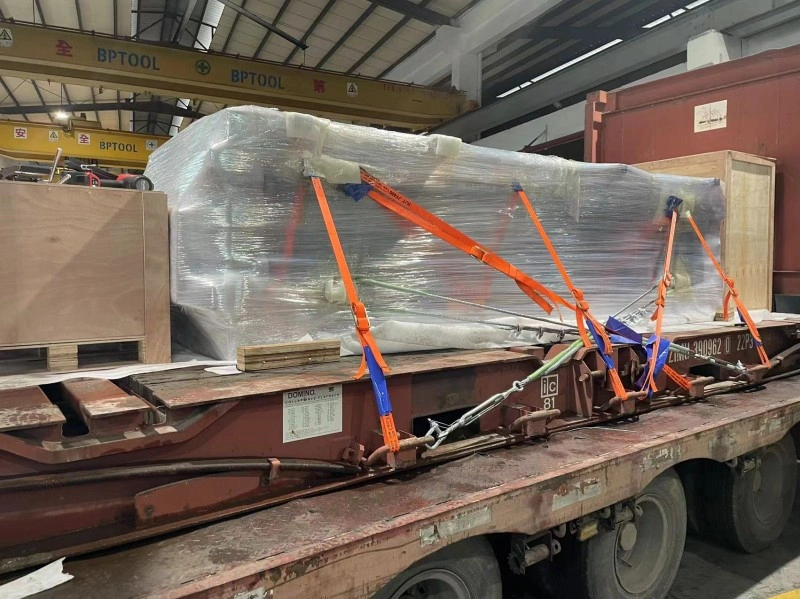
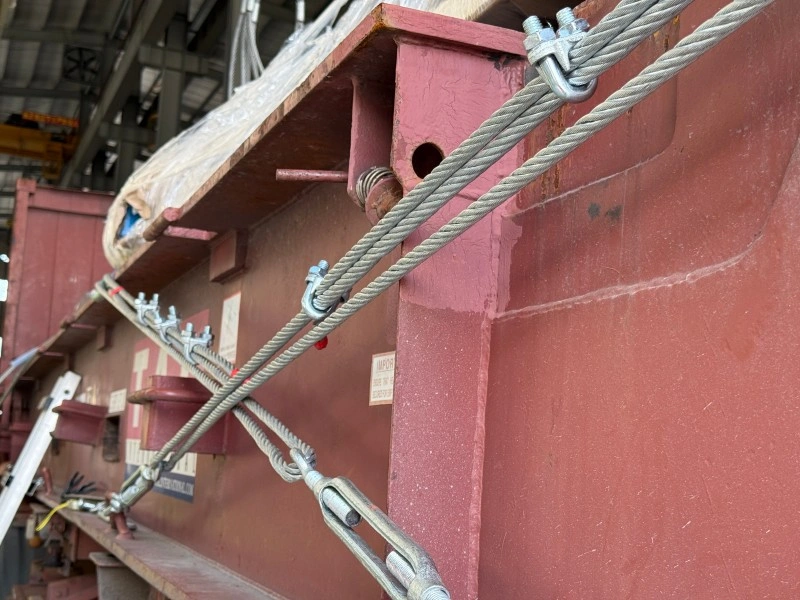
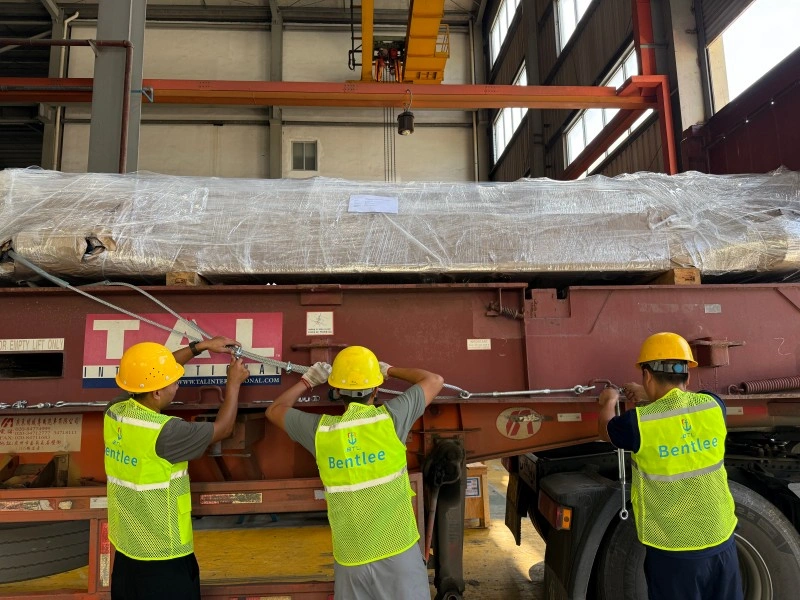
Dies require experienced handling. Crane or forklift placement on the flat rack or inside an open top must respect lifting points and center of gravity. Professional lashing patterns, wooden crating where needed, and rust-prevention measures protect precision surfaces during ocean transit. General cargo handlers without OOG experience have caused damage that required costly rework at the destination plant.
Trucking, Container Return, and Vessel Departure
Heavy-haul trailers or low-bed equipment move the loaded container from factory to port. Road permits may be required for over-width or over-weight moves. Missing the vessel cut-off creates demurrage and pushes the shipment to the next sailing, which can cascade into missed installation windows at the U.S. stamping line.
U.S. Customs Clearance, Duty Payment, and Final Delivery
Under DDP the seller’s agent typically manages arrival, entry filing, duty payment, and release. The buyer should still request the entry documents to confirm declared HS codes and values. Final trucking to the plant bay must be coordinated so installation crews are ready when the die arrives.
Project Information Checklist: What to Confirm Before You Ship
Project managers benefit from a structured checklist that aligns factory, buyer, and forwarder before any booking is made.
Project and Cargo Details
Record project name, shipper and consignee addresses, target shipping date, number of pieces, and total gross weight. These basics drive resource allocation on both sides of the Pacific.
Product Dimensions and Delivery Plan
Map every die or crate to its exact dimensions and note whether any pieces separate for transport. Link each item to its final plant location and installation priority so delivery can be staged correctly.
Logistics Details and Milestone Information
Confirm chosen carrier, container type, door-pickup requirements, and any special securing or escort needs. Share POL, POD, planned ETD, ETA, and final delivery address with the plant team early so trial and production schedules stay synchronized.
Cost Structure and Rate Benchmarks for Die Shipping
Cost for automotive stamping dies is driven by weight, volume, OOG status, route, and duties rather than a simple per-container rate.
Freight Cost Drivers for OOG Stamping Dies
Base ocean freight for a 40 ft flat rack from South China to the U.S. West Coast often falls in the $4,000–$8,000 range depending on season and space, before OOG surcharges and handling. Inland trucking for heavy loads adds $1,500–$4,000 or more. A single large die may occupy most of a flat rack; multiple smaller dies can sometimes share an open top and reduce unit cost.
China-Side Fees and Operational Charges
Yard handling, crane lifts, lashing labor, and documentation fees accumulate at origin. These charges vary by port and terminal but should be itemized in any serious quotation.
Comparing DDP Pricing With Other Incoterms
A DDP all-in quote bundles freight, duties, and service margin. Buyers who request a breakdown can compare it against an FOB quote plus their own freight and customs arrangement. The comparison often reveals whether the convenience of DDP justifies any embedded margin or routing limitations.
U.S. Duties and Tariff Considerations for Automotive Dies and Fixtures
Automotive tooling from China is subject to both base duty and additional tariffs that can materially affect landed cost.
Duty Treatment for Stamping Dies
Stamping dies are commonly classified under HTS headings such as 8207.30.60xx. Base duty rates for many of these classifications sit between 2.9 % and 5.8 % ad valorem. Chinese-origin goods in these categories typically attract an additional 25 % Section 301 tariff, producing an effective rate that can exceed 30 % in many cases. Accurate declared value and supporting contractual documentation matter because customs may review valuation on high-value tooling.
Duty Treatment for Checking Fixtures and Gauges
Inspection fixtures and gauges often fall under related headings and can carry similar or slightly different duty treatment. Because dies and fixtures frequently travel together for new model launches, classify the entire set consistently and plan duty exposure as one package.
Managing Tariff Risk and Compliance Under DDP
Even when the seller manages DDP, buyers should request HS code justification, duty calculation worksheets, and copies of the customs entry. Classification disputes or changes in tariff treatment can still surface after arrival. Professional logistics partners maintain current tariff data and can flag potential exposure before the quote is locked.
Material, Trial Runs, and Export Control Considerations
Trial materials and special alloys sometimes accompany dies and can change documentation or licensing requirements.
Handling Trial Materials and Return Shipments
When customers want sample stamped parts or test coils to travel with the die, the combined shipment may shift HS classification or trigger additional scrutiny. Clear separation of tooling from trial parts on all documents reduces the chance of misclassification.
Export Controls on Special Materials
Certain advanced alloys or rare-earth-related components may require export licensing from China. Early coordination with the toolmaker and logistics partner prevents holds at the Chinese port.
Aligning Material Notes With Customs Documentation
Engineering descriptions of die materials must match what appears on the commercial invoice and packing list. Inconsistencies invite questions from both Chinese export authorities and U.S. customs.
Required Documentation for China–USA Automotive Die Shipments
Complete, consistent documentation is the foundation of smooth clearance and transport.
Packing List and Commercial Invoice
Both documents must carry detailed item descriptions, HS codes, quantities, weights, dimensions, and clear per-item values. Vague or mismatched descriptions are a leading cause of holds and inspections.
Bills of Lading, Certificates, and Supporting Documents
The bill of lading, any certificate of origin, and contractual tooling documents travel with the shipment. Align data fields across the factory ERP, forwarder system, and customs broker to avoid transcription errors.
Document Flow and Communication Under DDP
Under DDP the seller controls most documents. Buyers should still request copies of the customs entry, duty payment records, and original commercial documents for internal traceability and future audit needs.
Market and Policy Context: U.S. Subsidies, Demand, and Tooling Strategy
U.S. policy support for domestic automotive and EV manufacturing influences where tooling is ultimately built or relocated.
U.S. Automotive Policy and Subsidy Environment
Incentives and tariff structures encourage some production localization while many programs still rely on imported tooling for speed and cost. Buyers weigh these factors when deciding whether to import dies from China or shift work to North American sources.
Main Destination Markets: USA and Canada
Most Chinese automotive dies under DDP head to U.S. or Canadian plants. Canada applies its own tariff and regulatory regime, so multi-country programs may need separate compliance strategies even for similar tooling.
Long-Term Tooling Strategy Under Changing Tariffs
Frequent tariff adjustments push OEMs and Tier 1s to maintain flexibility—backup tools, phased imports, or contingency relocation plans. A reliable OOG logistics partner becomes part of that strategy when cross-border movement remains necessary.
Why Professional OOG Logistics Partners Matter for Stamping Dies
Automotive stamping dies are not routine freight. Their value, precision surfaces, and tight installation windows demand specialized handling.
Technical Capabilities for Die Handling
Experienced partners perform on-site measurement, engineering-based 3D load plans, lashing force calculations, and customized protection. In one complex move these steps prevented shifting that would have damaged critical surfaces during a rough Pacific crossing.
End-to-End DDP Support and Visibility
Even on DDP shipments, professional partners provide clear cost breakdowns, proactive milestone communication, and final proof-of-delivery documentation. Buyers who demand this level of visibility retain control regardless of who pays the freight.
Risk Management and Continuous Improvement
Route selection that avoids known congestion, contingency plans for inspections, tailored insurance, and post-shipment reviews all reduce exposure on future programs. Project teams that treat each die move as a learning opportunity steadily improve both cost and reliability.
Practical Checklist for Buyers and Project Managers
Use this checklist to verify alignment before, during, and after each DDP die shipment.
Before You Accept a DDP Offer
- Confirm who will act as importer of record and how HS codes were selected.
- Request duty assumptions and a sample entry summary from a previous similar shipment.
- Ask for carrier options, route details, and what happens if damage or delay occurs.
- Compare the DDP number against an FOB-plus-buyer-arranged alternative with realistic duty estimates.
Before the Die Leaves the Factory
- Verify the final packing list against actual measured dimensions and weights.
- Inspect the lashing plan and protective packaging with the loading team.
- Confirm lifting points are clearly marked and structurally sound.
- Align the shipping date with plant readiness and installation windows.
Upon Arrival in the U.S.
- Compare physical condition against pre-shipment inspection reports.
- Review customs documentation and duty summary for accuracy.
- Position the die at the exact plant bay or staging area the installation team expects.
- Log any issues and feed them into the next project’s planning session.