
Shipping batteries and flammable liquids safely requires a structured hazardous cargo handling plan that covers cargo classification, compatibility review, packaging, segregation, documentation, loading supervision, route control, and emergency response preparation. In this realistic case study, industrial battery modules and drums of flammable solvents were prepared for long-distance export transport. The primary risks—fire potential, leakage, vapor release, short circuits, and incompatibility—were systematically addressed through early risk assessment, detailed planning, and on-site controls. The shipment arrived intact and on schedule, proving that careful execution reduces avoidable incidents and delays.
A successful hazardous cargo shipment depends on aligning technical cargo information with practical logistics execution. Many shippers assume that once hazardous cargo is labeled, it is ready for transport, but high-risk cargo such as industrial batteries and flammable liquids requires a full operational plan covering compatibility, packaging, segregation, securing, documentation, route exposure, and emergency readiness.
Project Background: What Needed to Be Shipped?
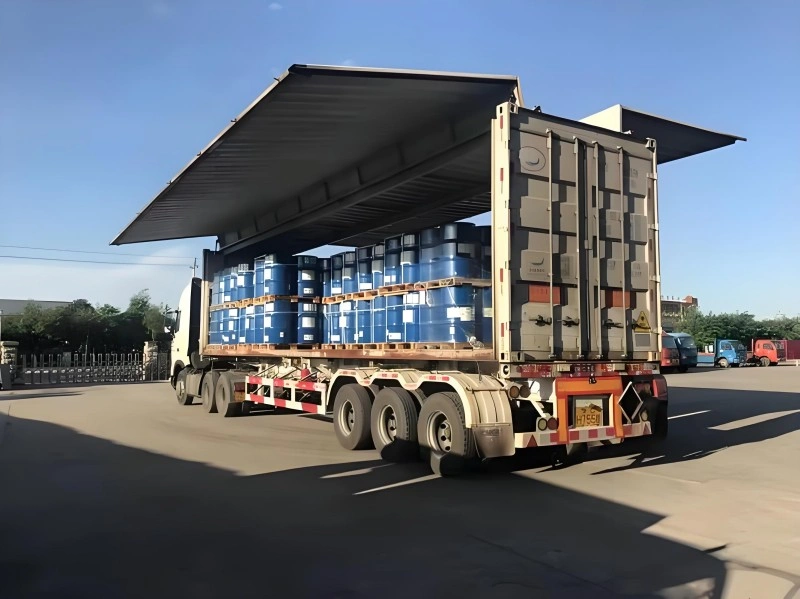
This shipment could not be treated as ordinary industrial freight because the combination of regulated battery units and flammable liquids introduced multiple layers of compliance and safety requirements from the outset. The cargo consisted of industrial battery modules destined for energy storage systems and several IBCs and drums containing flammable solvents and coatings used in manufacturing. The export route involved ocean and road segments, with the need for carrier acceptance and customs clearance adding further complexity. Packaging condition, shipment readiness, and documentation were all reviewed in advance to avoid last-minute rejections.
This case study in hazardous cargo handling shows why shippers must evaluate cargo classification, packaging integrity, segregation, labeling, documentation, and emergency response before moving batteries and flammable liquids together.
The mixed nature of the load meant that compatibility issues had to be addressed early rather than left to chance. Industrial battery shipping demands attention to short-circuit prevention and fire risks, while flammable liquid transport focuses on vapor control and leakage prevention. Without proper planning, even minor oversights could lead to carrier refusal or regulatory violations. The project team therefore began with a complete review of all cargo details to build a tailored transport strategy.
| Shipment Item | Transport Concern | Planning Requirement |
| Industrial Batteries | Fire risk, short circuit risk, handling sensitivity | Classification review, insulation, packaging, secure loading |
| Flammable Liquids | Vapor release, leakage, ignition risk | Compatible containers, closures, labels, segregation |
| Mixed Cargo Shipment | Compatibility and separation concerns | Segregation plan and clear load layout |
| Long-Distance Transport | Delay, vibration, temperature exposure | Route planning and monitoring where needed |
| Export Documentation | Carrier and customs acceptance | SDS/MSDS, DG documents, packing list, labels |
Main Risks Identified Before Shipment
Risk identification began well before packing or loading, allowing the team to focus controls where they would have the greatest impact rather than reacting to problems at the terminal.
The main risks identified included fire and ignition from the combined presence of batteries and flammable liquids, potential leakage leading to vapor clouds or contamination, short-circuit hazards from battery terminals, vapor release from liquids under temperature changes, incompatible cargo contact, packaging damage during handling, cargo shifting in transit, label or document mismatches that could cause rejection, port or carrier refusal, and difficulties in mounting an effective emergency response if issues arose en route.
| Risk Identified | Why It Mattered | Control Focus |
| Fire Risk | Batteries and flammable liquids may create serious safety concerns | Segregation, ignition control, emergency planning |
| Leakage Risk | Flammable liquid leakage may create vapor and contamination hazards | Packaging inspection and closure checks |
| Short Circuit Risk | Battery terminals or damaged units may increase incident risk | Insulation, packaging, and handling control |
| Cargo Shifting | Movement can damage containers or packaging | Lashing, blocking, and bracing |
| Documentation Mismatch | Errors may cause rejection or delay | Document-label consistency review |
| Route Delay | Longer dwell time may increase exposure | Route and carrier coordination |
Early recognition of these risks shaped every subsequent decision and helped maintain focus on hazardous cargo safety throughout the project.
Step 1: Cargo Classification and SDS/MSDS Review
Cargo classification and SDS/MSDS review formed the non-negotiable foundation for the entire operation because product descriptions alone were never sufficient for dangerous goods shipping compliance.
The team verified UN numbers, proper shipping names, hazard classes, and packing groups where applicable for both the industrial batteries and the flammable liquids. Battery type and specific handling notes were checked against transport requirements, while flash point data and vapor risk details for the liquids helped determine segregation needs. Stability, reactivity, storage temperature limits, and emergency response information were all extracted from the latest SDS/MSDS documents. This step ensured that every label, document, and loading decision aligned with official regulations.
| Information Reviewed | Why It Was Important |
| SDS/MSDS | Confirmed hazards, handling, storage, spill, and emergency guidance |
| UN Number | Identified regulated dangerous goods for transport |
| Proper Shipping Name | Ensured correct official transport description |
| Hazard Class | Guided labeling, segregation, and carrier review |
| Packing Group | Indicated danger level where applicable |
| Flash Point | Helped assess flammable liquid risk |
| Battery Handling Notes | Supported short circuit prevention and safe loading |
| Emergency Measures | Guided spill, fire, and exposure preparation |
Step 2: Packaging Inspection and Preparation
Packaging inspection and preparation were completed before any loading began to reduce the chance of leakage, fire, or handling damage during the journey.
Battery packaging was examined for visible damage, stable support, and proper terminal protection to prevent short circuits. Liquid containers underwent checks for material compatibility, dents, cracks, corrosion, or signs of leakage. Closures, caps, valves, gaskets, and seals received special attention, with secondary containment added where spill risk warranted it. Pallets and crates were confirmed load-rated and suitable for the planned handling methods. Labels were verified for visibility and accuracy, and moisture or impact protection was applied as needed.
| Packaging Check | What Was Verified |
| Battery Packaging | No visible damage, stable support, protected terminals where required |
| Liquid Containers | Compatible material, no dents, cracks, leakage, or corrosion |
| Closures and Seals | Caps, valves, gaskets, and bungs properly secured |
| Secondary Containment | Added where spill risk required additional control |
| Pallets / Crates | Stable, load-rated, and suitable for handling |
| Labels | Visible, durable, and matched to cargo documents |
| Moisture Protection | Packaging protected from rain or humidity where needed |
Step 3: Segregation and Load Planning
Segregation and load planning ensured that batteries and flammable liquids were never placed together for mere convenience; instead, compatibility and safety dictated the entire layout.
Separation distances were maintained between battery units and flammable liquid containers to avoid direct contact or interaction risks. Weight distribution was calculated to prevent tipping or crushing, while cargo orientation protected liquids from leakage and batteries from impact. Hazard labels remained fully visible, and clearance space allowed for inspection and emergency access. The plan was finalized on paper before any cargo entered the container or vehicle.
| Load Planning Factor | Practical Purpose |
| Segregation | Reduces risk of incompatible cargo interaction |
| Weight Distribution | Prevents tipping, collapse, or uneven load stress |
| Cargo Orientation | Helps protect liquids from leakage and batteries from impact |
| Label Visibility | Supports handling and emergency identification |
| Clearance Space | Allows safer inspection and unloading |
| Protection From Impact | Reduces risk of packaging damage during transport |
| Emergency Access | Helps responders identify and isolate cargo if needed |
Step 4: Lashing, Blocking, and Bracing
Lashing, blocking, and bracing were designed specifically to prevent movement without compromising the integrity of the packaging itself.
Suitable restraints, blocking materials, and anti-slip pads were positioned to control forward, backward, and side forces. Edge protectors prevented straps from cutting into drums or crates. Care was taken not to over-tighten restraints on sensitive battery crates or liquid containers. A final stability check confirmed that vibration and road or sea movement would not cause shifting.
| Securing Method | Why It Was Used | Risk Controlled |
| Lashing | Held cargo in position during movement | Shifting and tipping |
| Blocking | Prevented sliding at cargo base | Collision and package damage |
| Bracing | Supported cargo against movement | Load instability |
| Anti-Slip Material | Increased friction under cargo | Sliding during transport |
| Edge Protection | Prevented straps from damaging packaging | Package deformation or leakage |
| Final Securing Check | Verified stability before dispatch | Missed restraint defects |
Step 5: Documentation, Labels, and Carrier Acceptance
Documentation, labels, and carrier acceptance required exact matching between the physical cargo and all paperwork to prevent delays or refusals.
SDS/MSDS, the dangerous goods declaration, UN numbers, proper shipping names, hazard labels, packing list, commercial invoice, and emergency contact details were all prepared and cross-checked. Labels remained visible after loading. Documents were submitted to the carrier in advance for acceptance confirmation.
| Document / Label Item | Why It Was Needed |
| SDS/MSDS | Provided hazard and emergency response information |
| Dangerous Goods Declaration | Confirmed regulated transport details |
| UN Number | Identified the hazardous cargo |
| Proper Shipping Name | Matched official transport description |
| Hazard Labels | Communicated cargo risks visually |
| Packing List | Confirmed package count and cargo breakdown |
| Emergency Contact | Supported incident response communication |
| Carrier Acceptance | Confirmed cargo could be transported on the selected route |
Step 6: Route Planning and Emergency Preparedness
Route planning and emergency preparedness extended beyond simple transit time calculations to include every potential exposure point along the journey.
The chosen route was reviewed for hazardous cargo restrictions, transfer point requirements, weather exposure, and dwell-time risks. Emergency contacts for shipper, carrier, consignee, and response teams were confirmed, spill kits and PPE were verified as ready, and cargo tracking was arranged where feasible. Temperature and handling concerns were addressed in the plan.
| Planning Area | What Was Checked |
| Route Suitability | Hazardous cargo restrictions and carrier capability |
| Transit Time | Exposure to delay, heat, humidity, or handling events |
| Transfer Points | Additional handling and storage risk |
| Weather Exposure | Rain, heat, storms, or seasonal conditions |
| Emergency Contacts | Shipper, carrier, consignee, and response contacts |
| Spill Preparedness | PPE, spill materials, and response instructions |
| Fire Risk Response | Cargo information available for emergency teams |
| Tracking / Monitoring | Route visibility and delay awareness where needed |
Challenges Faced During the Shipment
Even with thorough preparation, hazardous cargo shipments often require on-the-spot adjustments, and this project was no exception.
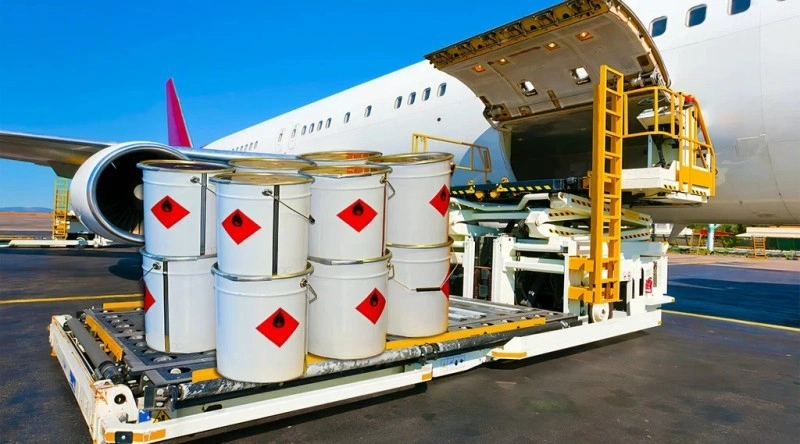
Document review revealed minor classification clarifications that needed quick resolution before release. The mixed cargo layout required a segregation adjustment after initial palletizing. Packaging inspection identified a few closures needing reinforcement, and label visibility was improved by reorienting several crates. Dwell-time concerns at one transfer point led to tighter coordination with the carrier. Protective covering was added to mitigate brief weather exposure during staging.
| Challenge | Response Taken |
| Document Review Required | Cargo documents were checked before shipment release |
| Mixed Cargo Layout | Segregation and load positioning were adjusted |
| Packaging Inspection Findings | Closures, pallets, and labels were reviewed before loading |
| Label Visibility Issue | Cargo orientation or label protection was improved |
| Dwell Time Concern | Timing was coordinated with carrier and terminal |
| Weather Exposure | Protective covering or controlled staging was considered |
Final Result and Key Lessons Learned
The shipment proceeded smoothly with all controls in place, resulting in safe arrival and no incidents or delays attributable to the hazardous nature of the cargo.
Cargo was prepared to minimize leakage, fire, shifting, and handling risks. Complete documentation supported carrier acceptance, and loading supervision prevented practical errors. The project reinforced several practical lessons for future industrial battery shipping and flammable liquid transport operations.
| Lesson Learned | Practical Meaning for Shippers |
| Classify Cargo Early | Prevents late document and carrier acceptance issues |
| Review SDS/MSDS Carefully | Helps identify packaging, storage, and emergency needs |
| Do Not Mix Cargo by Convenience | Segregation and compatibility must guide loading |
| Inspect Packaging Before Loading | Reduces leakage and damage risk |
| Keep Labels Visible | Supports handling and emergency response |
| Plan Securing Before Loading | Prevents movement and packaging stress |
| Prepare Emergency Information | Helps teams respond faster if an incident occurs |
Checklist for Similar Hazardous Cargo Shipments
Shippers moving batteries and flammable liquids benefit from using a structured checklist before transport to ensure nothing is overlooked.
| Checklist Item | Confirmed |
| Battery type and transport classification reviewed | Yes / No |
| Flammable liquid SDS/MSDS reviewed | Yes / No |
| UN numbers and proper shipping names confirmed | Yes / No |
| Packaging compatibility checked | Yes / No |
| Battery terminals or sensitive parts protected where required | Yes / No |
| Liquid containers inspected for leakage or damage | Yes / No |
| Segregation plan prepared | Yes / No |
| Labels and markings applied and visible | Yes / No |
| Dangerous goods documents prepared | Yes / No |
| Loading and securing plan reviewed | Yes / No |
| Carrier acceptance confirmed | Yes / No |
| Route and weather exposure reviewed | Yes / No |
| Emergency response information prepared | Yes / No |
| Loading photos or inspection records taken | Yes / No |
How Logistics Providers Support High-Risk Hazardous Cargo Case Projects
Experienced logistics providers help translate technical cargo requirements into reliable transport execution without promising the impossible.
They review cargo and SDS/MSDS information, coordinate documentation and carrier acceptance, advise on packaging and segregation, plan container or vehicle loading, support lashing, blocking, and bracing, check labels and emergency information, coordinate route and timing, and provide on-site supervision where needed. Communication between shipper, carrier, terminal, and consignee remains continuous throughout the process. This support turns complex requirements into practical, manageable steps while keeping safety and compliance at the center.
Conclusion — Case Studies Show Why Preparation Matters
This case shows that hazardous cargo transport is not a single-step booking process. When batteries and flammable liquids are involved, every detail—from cargo classification to load securing—can affect safety and transport reliability. Careful preparation helps reduce avoidable risks and supports a smoother, safer shipment process. Case-study thinking helps shippers identify practical risks that may be missed in generic shipping checklists. By treating each shipment as a complete operational plan rather than routine freight, industrial manufacturers and chemical exporters can consistently achieve better outcomes in battery transport safety and flammable cargo handling.