
Flat rack containers find application when the cargo does not fit into the side walls of the standard containers because of excess width, heavy weight or odd shape. The flat rack containers are open-sided and with powerful structural frames, which enable the large cargo to protrude outside container boundaries with the cargo being firmly attached. It is not always true that the flat rack containers are only deployed when the cargo is very large: some shippers believe that it only occurs under the conditions that the shipment does not fit the usual width or weight constraints of containers. Flat rack containers offer an affordable and safe method of movement of wide, heavy, or irregular shaped cargo that cannot be accommodated by the traditional container structures.
This is because flat rack containers are usually employed where cargo is broader or heavier than the usual container size or weight restrictions but can still be safely stacked on a container platform to be shipped internationally. In logistics planning, the choice of the type of container may eliminate delays, lower costs, and make sure that shipping rules are followed. Being a seasoned logistics planner, I have witnessed how these details can be overlooked and result in culminating into a rerouting or even a loss in the form of damaged cargo.
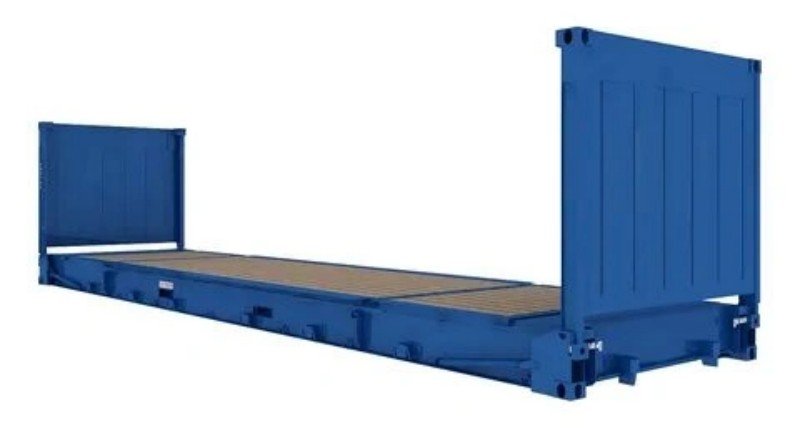
What Is a Flat Rack Container?
The flat rack containers are specific container platforms which are used in the transport of oversized cargo which needs flexibility in loading and secure transportation. The containers do not have conventional side walls hence an open platform is offered which allows to side or top load bulky items. They are a popular choice in industrial cargo logistics when it comes to shipments in which regular enclosures would constrain or impact the stability.
| Feature | Description |
| Side walls | None |
| End walls | Fixed or collapsible |
| Loading method | Side or top loading |
| Platform strength | Designed for heavy cargo |
The use of flat rack containers to carry the wide or heavy industrial equipments in the case of professional over-size cargo transportation services are usually safe. The design is durable whereby the floors and end frames have been reinforced to contain heavy weight distributions. This renders them appropriate in ocean shipping whereby ship stability is of high importance.
Types of Cargo That Require Flat Rack Containers
There are other categories of cargo which are particularly well transported in a flat rack because their size or weight distribution precludes the use of regular containers. As an example, heavy machinery can also stick out to the side of a normal 20-foot or 40-foot container, and in that case, to be safely fixed, the open-sided design of flat racks will be required.
| Cargo Type | Industry | Reason |
| Excavators | Construction | Excess width |
| Bulldozers | Infrastructure | Heavy weight |
| Industrial machinery | Manufacturing | Irregular shape |
| Steel structures | Infrastructure | Wide dimensions |
| Large vehicles | Transportation | Oversized footprint |
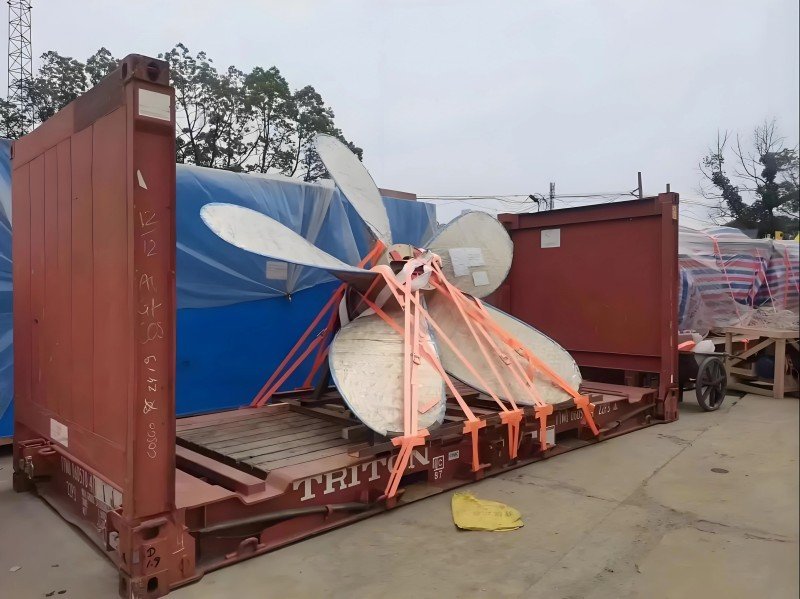
These cargos must be properly lashed and transport arrangements are to be done in a way that ensures that they remain stable throughout the handling and transit. The teams in logistics should also check on tie-down points and work with the right securing equipment, which can be chains or straps to avoid shifting. With project cargo, as it has been in my case, failure to pay attention to such factors may lead to failure of inspection at ports.
Situations Where Flat Rack Containers Are the Best Choice
Flat rack containers are the most appropriate in a situation that requires an open and strong platform due to the dimensions or handling requirements of the cargo. This is especially so when there would be side walls that would hinder loading or when heavy lifting machines are concerned.
| Situation | Explanation |
| Cargo exceeds container width | Side walls would prevent loading |
| Cargo weight is extremely high | Strong platform required |
| Irregular cargo shape | Open sides provide flexibility |
| Crane loading required | Top loading capability |
Flat racks are also more efficient in loading as it can be loaded directly by a crane either on the top or the side and eliminate the amount of time wasted on-site. They are also used to increase the stability of cargo by using numerous lashing points on the frame. In the process of coming up with flat rack container shipping, issues such as route limitations and port capability should be considered to prevent bottlenecks.
Advantages of Using Flat Rack Containers
The unique benefits of flat rack containers in dealing with oversized cargo are connected to the fact that the container has a flexible design that can facilitate various loading arrangements. This is very valuable in matters of logistics where time and safety is of the essence.
| Advantage | Explanation |
| Flexible loading | Cargo loaded from side or top |
| High load capacity | Designed for heavy freight |
| Oversized cargo support | Cargo can extend beyond container width |
| Strong securing points | Allows heavy lashing systems |
Such characteristics make flat racks common in the oversized cargo logistics. In the case of flat rack container over-size cargo, the capability to fit the protrusions without impairment of the structural integrity is priceless. Practically, it implies that fewer adjustments occur during the packing stage and the optimization of vessel space.
Limitations of Flat Rack Containers
Although flat rack containers have their strengths, there are limitations of the containers that the logistics planners should consider alongside cargo requirements. It is worth noting that the open design is exposed to environmental factors, and this may be of concern to the delicate shipments.
| Limitation | Explanation |
| Weather exposure | Cargo often uncovered |
| Limited height protection | No roof structure |
| Higher cost | Specialized equipment |
| Port handling requirements | Heavy lifting equipment needed |
Logistics planners will need to consider the needs of cargo protection, including the use of tarps or crates, to reduce the threats such as moisture damage. This can in flat rack shipping include further pre-shipment arrangements to make sure the guidelines by the carriers are met.
Flat Rack vs Other Container Types for Oversized Cargo
Compared with other types of containers in handling an oversized freight, flat racks can be considered as the best between openness and strength, though the decision will be limited to the peculiarities of a particular cargo. Flat racks are the best to use where the width is the major problem whereas other people are used where height or very large size is the problem.
| Container Type | Best For |
| Flat rack | Wide or heavy cargo |
| Open top | Tall cargo |
| Platform container | Extremely large cargo |
| Breakbulk | Cargo exceeding container limits |
The choice of container is determined by the nature of the cargo including whether the height limitation is present or full enclosure is required. In the case of flat rack containers, eliminating the need to purchase extra containers like breakbulk and providing cost-efficiencies in most situations, they fit the gap in between normal containers and more extreme ones.
Industries That Frequently Use Flat Rack Containers
Companies that handle heavy equipment commonly use flat rack containers to cope with the difficulties of the transportation of non-standardized goods. Such industries consider reliability in logistics to achieve the project schedule.
| Industry | Typical Cargo |
| Construction | Excavators and cranes |
| Energy | Wind turbine components |
| Oil & Gas | Drilling equipment |
| Infrastructure | Bridge components |
| Manufacturing | Industrial machinery |
The industries are dependent on the flat rack logistics solutions due to the fact that secure transportation of flat rack container of heavy equipment is required. Planning is the process of organizing the work with the carriers in terms of special handling, make sure that such equipment as spreader beams is on-site in the ports of loading.
Conclusion — Flat Rack Containers Are Essential for Wide and Heavy Cargo
The flat containerized racks are vital in the oversized cargo transportation. In case cargo is too wide or too heavy to fit in standard containers, flat rack containers offer a versatile and safe medium of transportation of international logistics of oversized freight. Being aware of the time to apply flat rack containers, logistics expert will be able to optimize the operations, avoid risks, and deliver efficiently. This decision-making procedure, which is a combination of cargo evaluation and regulatory expertise, highlights the relevance of specialized containers within the contemporary supply chains.