
The logistics planning in the transportation of wind turbine segments across borders is very specific due to the fact that most of the parts of a wind turbine are larger in size than what a regular freight transportation would be capable of. Throughout years of renewable energy development projects that I have managed, one fact becomes apparent, and that is the fact that wind turbine parts are among the bulkiest and the heaviest cargo dealt with in global logistics. On modern onshore designs, the blades may extend up to 80m or longer, and offshore models extend beyond 100m or even further on prototype designs (to extremes of 153m). Nacelles often have a scale of 70 to 150 tons or more, tower sections are 20 to 30 meters long with a large girth and another 15 to 40 tons are concentrated in the hubs.
There is a tendency to think that these segments could be transported using the help of usual container shipping, similar to general cargo. That’s rarely the case. Normal containers have limitations of approximately 12 meters long and much less in width or high space that these giants are permitted to occupy. Another way is to resort to special solutions: flat rack containers to handle manageable oversize items, breakbulk ships to carry irregular loads, heavy-lift vessels to carry very huge loads, and RoRo solutions when a wheeled transportation is suitable. The key to effective transportation of wind turbine components is excellent logistics planning, specific equipment, and close coordination of project cargo teams to ensure that everything is on schedule and not lost or damaged.
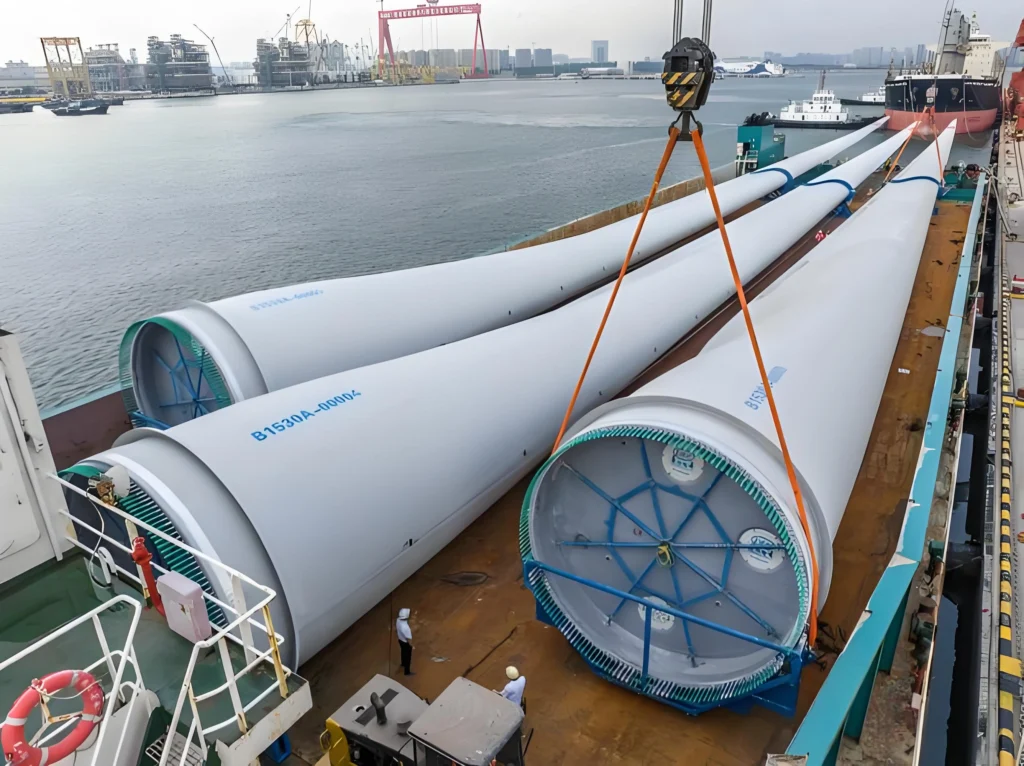
Major Wind Turbine Components Transported Internationally
The basis of all successful transport strategy begins with the knowledge of what it is that you are moving. In the logistics of wind turbines, its basic elements, i.e. blades, nacelles, tower parts and hubs, introduce their own magnitude and handling requirements.
| Component | Typical Size / Weight |
| Turbine blades | 60–120+ meters long (onshore up to 100m+, offshore prototypes 150m+) |
| Nacelle | 70–150+ tons |
| Tower sections | 20–40 meters long, large diameter |
| Hub assembly | 15–40 tons |
These can be registered as oversized cargo since they run way ahead of normal road, rail and sea freight envelopes. The length of a single blade can provoke the rerouting, special permits, and special carriers. The transfer points require heavy-lift capacity in the form of nacelles. Even segmented towers carry wide loads that put a strain on bridge clearances and turning radii. Hubs are smaller but the concentration of weight in them demands precise distribution of the loads. All this leads to the fact that wind turbine parts transportation is thrown into the sphere of actual project cargo, in which the use of generic strategies is not applicable.
Shipping Methods for Wind Turbine Components
The selection of the right ocean transport method is usually what keeps the project within the budget and the schedule. Based on practical experience of global deliveries, the choice puts the specifics of components against port facilities, sea conditions and access to the destination.
| Shipping Method | Suitable Components |
| Flat rack containers | Wide turbine parts (e.g., blades, sections) |
| Breakbulk vessels | Extremely large components |
| Heavy-lift vessels | Nacelles and heavy machinery |
| RoRo shipping | Transport vehicles and rollable units |
Flat racks are suitable in blades or pieces of towers that fit the platform but require securing by open sides- useful in most Asia-to-Europe or trans-Pacific operations. The really irregular or ultra-long objects are loaded separately by crane using breakbulk vessels, which provide the flexibility when there is no container alternative. Nacelles are glossed with heavy-lift vessels whose strong onboard cranes can handle up to 100+ ton safe in open seas. RoRo is applicable in a situation where the components come in pre-assembled on trailers or wheeled frames so that they can be used efficiently on drive-on in ports equipped. The dimensions of wind turbine blades and tower sections are extremely large, and thus the transportation of the wind turbine equipment may involve specialized oversize trucking services.
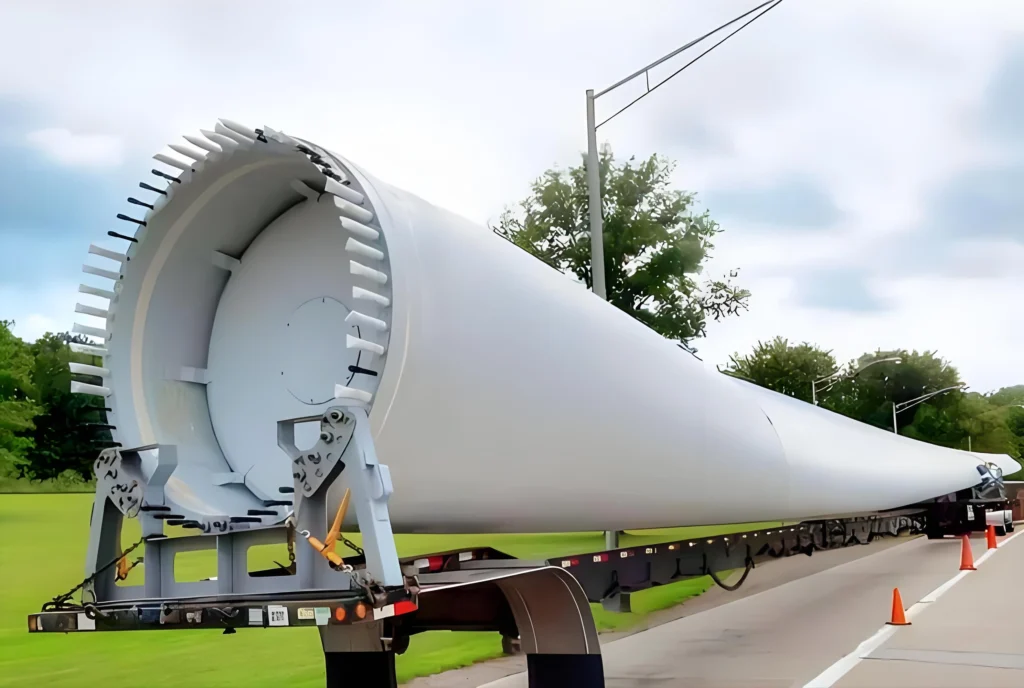
Preparing Wind Turbine Components for Transport
Preparation is not so much a checklist, but the defense on the front line against the destructive effects of the weather, vibration, or mishandling upon multi-modal journeys.
| Preparation Step | Purpose |
| Protective wrapping | Prevent environmental damage |
| Structural support frames | Maintain cargo stability |
| Component labeling | Logistics tracking |
| Load balancing | Safe lifting operations |
Wrapping- Covers or multi-layers films are used to protect salt spray, UV, and rain on long sea journeys and is particularly important with composite blades. Support frames resist flexing or compression and maintain structural integrity. Clearly and standardized labeling accelerates border customs and tracking. Several things such as balancing provide stability to crane picks and trailers. The issue of not taking the time to prepare increases risks; get it right, and the logistics of wind turbine blades shipping will run without problems.
Route Planning for Wind Turbine Logistics
There is no part of wind turbine logistics that tries the expertise more than route planning. With infrastructure, these loads are not easily accommodated without some modifications.
| Infrastructure Factor | Impact |
| Bridge clearance | Height limitations |
| Road width | Blade transport feasibility |
| Port infrastructure | Crane capacity |
| Transport distance | Logistics complexity |
Miniature bridges impose height limit which may involve dismantling of the tower or finding other routes. Narrow roads constrict the maneuverability of the blades to the extent that it will require an escort or night travel. Heavy lifts can be bottlenecked by ports that are not well served by cranes or have a sufficiently deep berth. Increased distances make cross-jurisdictional coordination difficult. The planning of the solid route prior to the commencement of the work is vital since it will reveal the limitations in the initial phases, and the question of how the pieces of the wind turbine can be brought into the country without any issues at the last moment will be resolved.
Cargo Securing and Transport Stability
The idea of securing is not a choice; it is projected to overcome all the dynamic forces that arise along the way.
| Securing Method | Purpose |
| Chain lashing | Stabilize heavy components |
| Blade transport cradles | Protect turbine blades |
| Steel support frames | Structural reinforcement |
| Shock absorption systems | Reduce vibration damage |
Roll and Pitch Nacelles are attached with chains and tensioners. Custom cradles hold the blades of the cradle to avoid bending stress. Towers are supported by frames against buckling. Impacts of roads and sea are dampened with absorbers. Adequate securing disperses loads, keeps them aligned and prevents fatigue- to ensure that oversized cargo transportation of wind turbines is ready to set up.
Challenges in Wind Turbine Logistics
The logistics of wind turbines presents some challenges that require vision and flexibility.
- Very long turbine blades: This is longer than 100 meters and will need special carriers, large turns and in many cases escorts by the police.
- Extensive crane strains, trailers, and ports with heavy nacelle weight, restricting options of facilities.
- Poor port infrastructures: There are few heavy-lift equipment in most of the terminals, which causes diversions to other hubs far away.
- Infrastructure road limitations: Bridges, tunnels and urban areas have size/weight limits.
- Complicated logistics schedules of projects: Multi-stakeholder time across continents poses the risk of cascading delays.
Good logistics planning will ensure these are overcome by risk mapping, contingencies, deliveries in stages and tracking in real-time- transforming the hurdles into systematic performance.
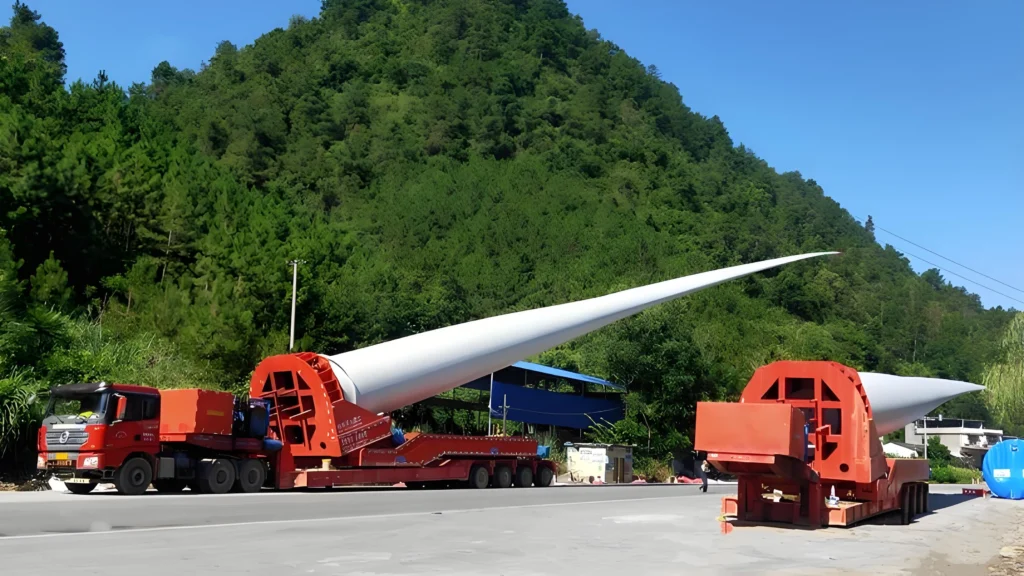
Wind Energy Projects That Require International Logistics
Renewable energy development is heavy on the acquisition of expert elements around the world.
| Project Type | Typical Equipment |
| Onshore wind farms | Standard turbine components |
| Offshore wind projects | Large turbine structures |
| Hybrid energy facilities | Turbine-generator systems |
| Renewable infrastructure projects | Energy generation equipment |
Onshore farms are usually characterised by cross-border hauls to achieve cost-optimal manufacturing. Offshore requires heavy maritime logistics of huge structures. Integration is complicated by hybrids. Global logistics also turns out to be the key to the development of renewable energy as it will be able to connect the producers of advanced tech with the locations of deployment that will allow creating larger and more efficient installations across the globe.
Conclusion — Wind Turbine Logistics Requires Specialized Oversized Cargo Planning
The transportation of the elements of wind turbines is one of the most complicated types of oversized cargo logistics. The selection of transport method, planning of route, securing of the cargo, and logistics coordination of the project are key to the success of the transport of wind turbine parts across the international borders. Through practical expertise, dealing with these aspects is likely to guarantee the delivery of components to the site in an intact state and on time to facilitate the larger initiative of sustainable energy infrastructure.