
Transporting modular prefabricated buildings often requires flat rack containers when modules, steel frames, wall panels, roof structures, or other oversized components exceed the size or loading limits of standard containers. Flat rack containers provide the open-side and top-loading access needed for these challenging loads, but safe transport depends on accurate measurement, load planning, lifting design, lashing, weather protection, and route coordination.
For oversized wall panels, steel frames, modular cabins, and assembled construction units, transporting prefabricated buildings with flat rack containers can provide the open loading access needed for safe international project cargo movement. Many project teams assume assembled modules are easy to ship, yet they can be more sensitive to lifting stress, frame distortion, surface damage, and water exposure than loose materials. Successful shipments start with detailed planning long before the cargo reaches the port.
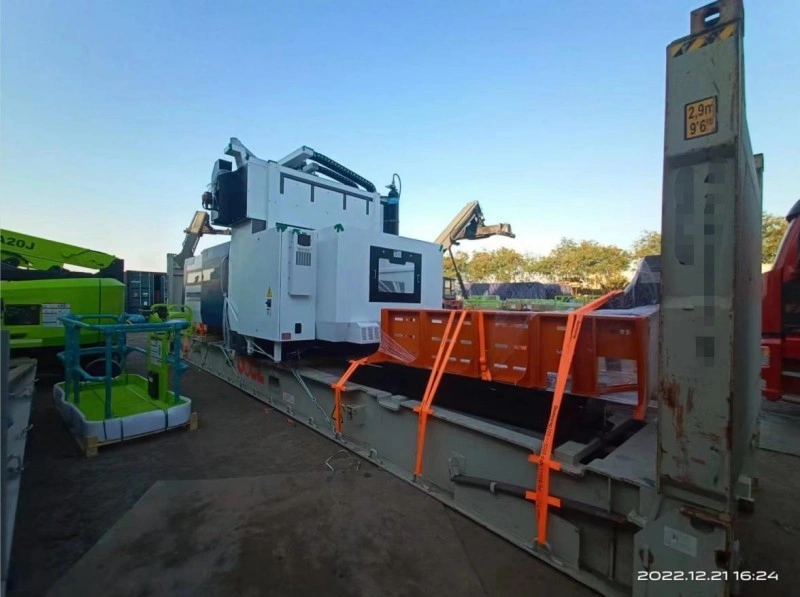
Why Flat Rack Containers Are Used for Prefabricated Building Transport
Flat rack containers become the practical choice when modular building cargo exceeds standard container door size, internal width, height, or loading restrictions. Their open design offers unmatched flexibility for construction project cargo that simply won’t fit inside a closed box.
Here’s why experienced logistics teams turn to flat racks for prefabricated building transport:
| Reason for Using Flat Rack Containers | Practical Value for Prefabricated Buildings |
| Open-side access | Allows wide wall panels, frames, or modules to be side-loaded |
| Top loading access | Supports crane loading for heavy or assembled structures |
| Strong platform base | Carries heavy modular units and construction frames |
| Flexible securing points | Allows customized lashing for irregular building components |
| OOG cargo compatibility | Supports cargo exceeding standard container dimensions |
| Multi-modal use | Helps coordinate sea, port, and inland delivery stages |
At Bentlee, we see flat rack container shipping solve problems that standard containers and even open-top units cannot handle, especially when modules combine both width and height.
Types of Modular Prefabricated Building Cargo Suitable for Flat Rack Shipping
Not every prefabricated component needs the same approach. Different elements present unique challenges that flat rack containers are well equipped to address when properly planned.
| Prefabricated Building Cargo | Why Flat Rack May Be Needed | Key Transport Concern |
| Steel frame structures | Long or wide frames may exceed limits | Frame support and coating protection |
| Wall panels | Large panel size limits standard loading | Surface protection and edge damage |
| Roof sections | Irregular shape and large footprint | Overhang and lifting stability |
| Modular cabins | Assembled units exceed width or height | Center of gravity and frame distortion |
| Bathroom pods | Finished surfaces and internal fittings | Vibration and moisture control |
| Utility modules | Heavy built-in systems create concentrated weight | Load distribution and securing points |
| Site office units | Large assembled shape requires open loading | Route clearance and weather protection |
Understanding the specific cargo type early helps logistics teams select the right flat rack configuration and protection strategy.
Key Cargo Data Needed Before Planning the Shipment
Accurate transport planning for modular prefabricated buildings depends on final packed dimensions and real-world conditions, not just design drawings. Guessing at this stage almost always leads to surprises.
| Information to Prepare | Why It Matters |
| Final dimensions | Determines flat rack size, overhang, and OOG status |
| Gross weight | Confirms container capacity and lifting requirements |
| Center of gravity | Supports safe lifting and lashing design |
| Lifting points | Helps avoid frame deformation during crane loading |
| Base frame structure | Shows where weight contacts the flat rack deck |
| Cargo photos & drawings | Identifies protrusions, fragile surfaces, and access points |
| Packaging method | Affects final size, protection, and lashing options |
| Destination site details | Helps plan unloading and final delivery access |
We always recommend on-site measurement once modules are fully packed and finished. This single step prevents most booking and handling issues.
Load Planning for Modular Buildings on Flat Rack Containers
Load planning must protect both transport safety and the structural integrity of the building module itself. Incorrect positioning can cause frame twisting, coating damage, or even rejection at the terminal.
| Load Planning Factor | Risk If Ignored | Practical Recommendation |
| Cargo orientation | Loading conflict or instability | Align module based on base frame and lifting direction |
| Weight distribution | Deck overload or poor stability | Keep heavy points supported across structural areas |
| Support points | Frame bending or deformation | Place supports under load-bearing beams |
| Overhang | Carrier rejection or cargo stress | Calculate overhang before booking |
| Center of gravity | Tipping risk | Review COG before finalizing lashing plan |
| Contact surface | Coating or base damage | Use suitable bedding, padding, or protective material |
Experienced planners treat the flat rack deck like a temporary foundation — every contact point matters.
Lifting, Loading, and Handling Requirements
Many problems in prefabricated building transport occur during lifting and loading rather than at sea. Proper rigging and supervision make the difference between a clean shipment and costly repairs.
| Handling Requirement | Why It Matters | Practical Control |
| Verified lifting points | Prevents structural stress | Follow manufacturer drawings or engineer guidance |
| Suitable crane capacity | Supports safe loading | Match crane capacity to cargo weight and radius |
| Spreader beam | Reduces angle stress on long modules | Use when lifting points are far apart |
| Corner protection | Prevents impact and coating damage | Add padding and edge protection |
| Loading supervision | Reduces miscommunication | Assign a responsible site coordinator |
| Post-loading inspection | Confirms cargo condition | Check frame, surface, lashing, and covers |
Clear communication between the rigging team, crane operator, and logistics supervisor is essential.
Lashing, Blocking, and Bracing for Prefabricated Building Modules
Securing prefabricated modules requires attention to structural points rather than just convenient surfaces. The goal is to restrain movement without damaging finished components.
| Securing Method | Best Used For | Key Caution |
| Chain lashing | Steel frames and heavy modules | Avoid damaging coated or finished surfaces |
| Webbing belts | Finished panels or sensitive surfaces | Use only rated belts with proper protection |
| Blocking | Preventing forward/backward movement | Must be fixed to suitable structural points |
| Bracing | Controlling lateral movement | Should not press against fragile walls |
| Anti-slip mats | Base frame contact points | Surfaces must be clean and dry |
| Edge protection | Corners and sharp contact areas | Prevents lashing and cover damage |
Re-checking tension after initial road movement is a habit that pays off.
Weather Protection for Prefabricated Buildings During Flat Rack Shipping
Prefabricated buildings on flat racks are exposed cargo. Finished surfaces, insulation, and interior fittings often need stronger protection than raw steel structures.
| Weather Risk | Possible Damage | Recommended Protection |
| Rain and sea spray | Water entry, rust, surface stains | Waterproof covers and sealed edges |
| Humidity | Condensation inside modules | Desiccants or moisture-control materials |
| Salt air | Corrosion on steel frames | Anti-rust treatment and barrier protection |
| UV exposure | Surface aging | UV-resistant covers where needed |
| Trapped water | Staining, rust, interior moisture | Plan drainage and avoid water pockets |
| Wind | Cover tearing or loosening | Reinforced fastening and edge protection |
Proper weather protection is not an afterthought — it must be integrated into the load plan from the beginning.
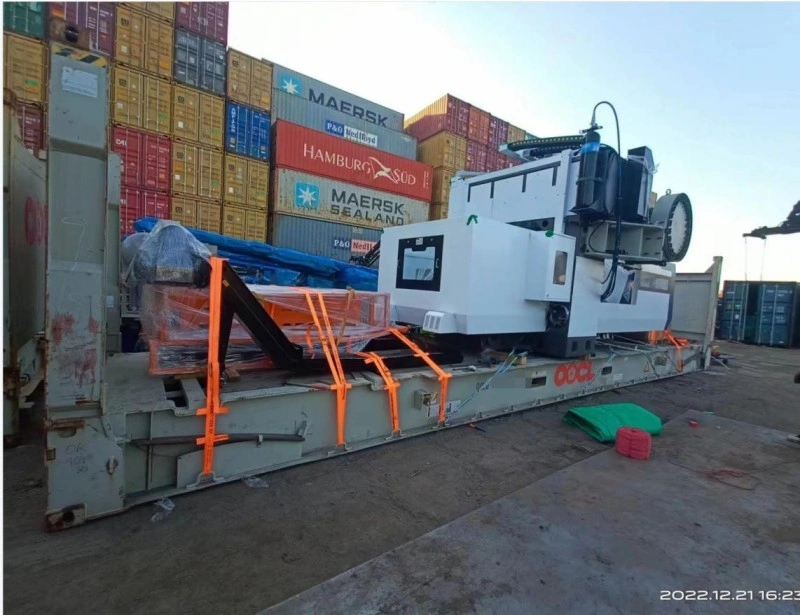
Route Planning and Multi-Modal Coordination
Modular building cargo typically travels through multiple stages: factory pickup, inland trucking, port handling, ocean shipping, destination port, and final site delivery. Each leg needs careful coordination.
| Transport Stage | Planning Focus |
| Factory pickup | Loading space, crane access, local roads |
| Inland trucking | Road permits, height/width limits |
| Port entry | Cargo dimension confirmation and handling rules |
| Ocean shipping | OOG booking, flat rack availability |
| Destination port | Unloading equipment and storage conditions |
| Final delivery | Site access, crane availability, installation schedule |
Early route review helps avoid costly detours or permit delays.
Flat Rack Containers vs Other Transport Options for Prefabricated Buildings
Flat rack shipping works well for many modular components, but project teams should compare options based on size, sensitivity, and route.
| Transport Option | Best For | Limitation |
| Flat rack container | Wide, tall, long, or irregular modules | Requires lashing, protection, and OOG booking |
| Open top container | Tall cargo within width/length limits | Limited side-loading flexibility |
| Standard container | Smaller panels and packed components | Not suitable for oversized modules |
| Lowbed trailer | Domestic or inland oversized delivery | Not a complete ocean solution |
| Breakbulk shipping | Very large modules or project batches | More handling and complex planning |
| Ro-Ro shipping | Wheeled or trailer-mounted units | Not suitable for all prefab structures |
Cost Factors in Prefabricated Building Flat Rack Transport
Total transport cost includes much more than the ocean freight rate. Understanding all elements helps projects budget accurately.
| Cost Factor | How It Affects the Shipment |
| Cargo dimensions | Wider/taller modules increase OOG complexity |
| Cargo weight | Heavy units require stronger lifting and support |
| Flat rack availability | Equipment shortages affect cost and lead time |
| Inland transport | Oversized road movement may need permits |
| Lashing & weather protection | Complex modules need custom solutions |
| Crane handling | Large units require special equipment |
| Route restrictions | Detours or permits increase project cost |
| Insurance | High-value cargo may need stronger coverage |
Pre-Shipment Checklist for Modular Prefabricated Building Transport
Use this practical checklist to reduce surprises:
| Checklist Item | Responsible Party | Why It Matters |
| Confirm final dimensions | Manufacturer / shipper | Prevents booking errors |
| Confirm weight and COG | Engineering / logistics | Supports safe loading and securing |
| Verify lifting points | Manufacturer / rigging | Reduces frame damage risk |
| Identify support points | Engineering team | Prevents deformation |
| Prepare cargo drawings & photos | Shipper | Supports load planning |
| Select flat rack type | Freight planner | Matches cargo size and route |
| Review route restrictions | Transport provider | Avoids road or port issues |
| Plan protection | Packing team | Prevents moisture and surface damage |
| Confirm unloading site | Project owner | Ensures delivery readiness |
Common Mistakes to Avoid
Even experienced teams encounter issues when transporting modular prefabricated buildings. Here are the most frequent pitfalls we help clients avoid:
| Mistake | Possible Consequence | Better Practice |
| Using estimated dimensions | Booking rejection or extra cost | Measure final packed cargo before booking |
| Ignoring lifting stress | Frame distortion or damage | Confirm lifting design before loading |
| Poor support placement | Structural stress | Support load-bearing frame areas |
| Lashing over fragile areas | Surface or component damage | Secure from structural points only |
| Weak weather protection | Water entry, rust, surface damage | Use reinforced covers and sealed edges |
| No route review | Road or port handling delays | Check full route before shipment |
| No destination plan | Delivery delay or unloading problem | Confirm site access and crane availability |
Conclusion — Flat Rack Containers Make Modular Building Transport More Practical When Properly Planned
Flat rack containers offer a practical solution for transporting modular prefabricated buildings and oversized construction modules. Success, however, depends on far more than simply choosing the right container. Cargo measurement, structural support, load distribution, lifting, lashing, weather protection, route planning, and destination readiness must all work together.
Project teams that begin logistics planning early — ideally before final production or packing — consistently experience fewer delays, less damage, and smoother delivery. By treating each shipment as coordinated project cargo rather than routine freight, manufacturers and contractors protect both their modules and their project timelines.