
An international factory move is more complicated than an ordinary equipment move. It includes engineering logistics, customs clearance, heavy equipment transport and production continuity planning. The risks increase when machinery is oversized, precision-based, high value, hazardous, or rust prone—and this can mean cargo damage, port delays, customs holds, unexpected costs, missed installation windows and longer periods of production downtime.
Often relocation is thought of as a straightforward freight shipping process, but the greatest risks are found before and after shipment, with incomplete documentation, lack of accurate equipment information, poor packing for export, unclear responsibilities, and unprepared destination locations. Best practice is to treat it as part of a full international relocation of factory work projects, with risk assessment and detailed planning prior to any dismantling works.
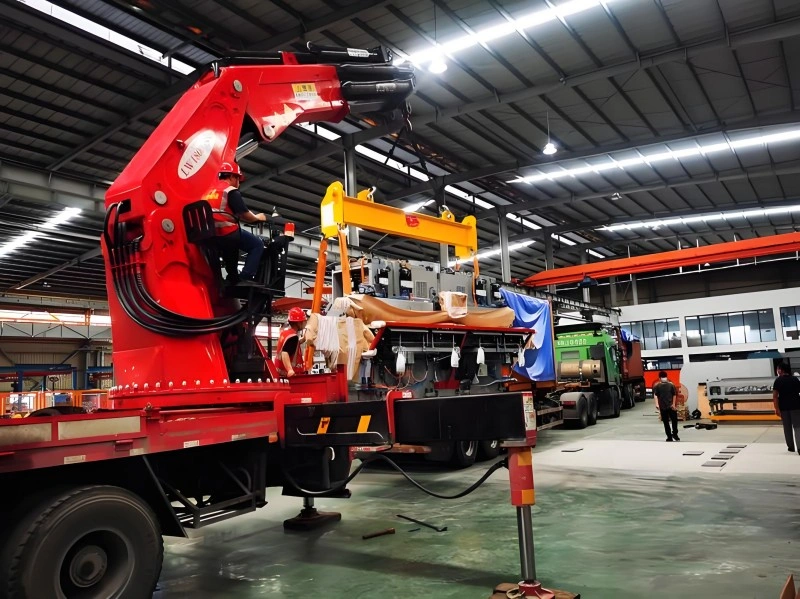
Why International Factory Relocation Is More Complex Than Domestic Moves
The complexity of relocating a factory overseas is often not faced in domestic moves. The combination of longer transit times, multi-modal coordination, dual customs processes, port handling and varying regulations add risk and time.
An overseas move is different to a local road move within the country as it involves equipment being brought into contact with ocean humidity, a number of handling stages, language challenges and tough import requirements. Additionally, new site conditions and compliance rules makes reinstallation and production restart more difficult.
| Factor | Domestic Factory Relocation | International Factory Relocation |
| Transport Scope | Usually road-based within one country | Inland transport, port handling, ocean/air freight, destination delivery |
| Documentation | Relatively simple | Export documents, customs declarations, packing list, permits, certificates |
| Risk Exposure | Shorter transit and fewer handling points | Longer transit, multiple transfers, sea exposure, customs delays |
| Compliance | Local rules only | Export, import, port, transport, and possibly hazardous goods regulations |
| Packaging Needs | Often basic protection may be enough | Export-grade protection, moisture control, rust prevention, shock protection |
| Coordination | Fewer parties involved | Factory, packers, truckers, freight forwarders, customs brokers, port operators, installers |
Challenge 1: Inaccurate Equipment Data Before Relocation
The first step in any successful international factory relocation is to have reliable cargo information. An excellent transport plan can only be ruined if it is not as detailed as the specifics.
Information such as exact dimensions, actual weight, center of gravity, lifting point, foundation requirements, electrical requirements, hydraulic requirements, dismantled parts lists, and HS codes are all important considerations. Another important thing to know is if there is oversized cargo (OOG), hazardous, fragile, rust sensitive or high value cargo.
| Data Needed | Why It Matters | Risk If Incorrect |
| Dimensions | Determines container, flat rack, trailer, and route feasibility | Wrong transport method or space booking failure |
| Weight | Affects lifting, trailer selection, and port handling | Overload risk or rejected cargo handling |
| Center of Gravity | Supports safe lifting and load securing | Tipping or unstable lifting |
| Equipment Description | Required for customs and insurance | Customs delays or incorrect declaration |
| Dismantled Parts List | Supports packing and reinstallation | Missing parts or installation confusion |
| Equipment Condition | Helps prove pre-move status | Disputes after delivery |
Challenge 2: Customs Clearance and Documentation Errors
An international factory relocation delay issue that is still prevalent is documentation errors. The slightest discrepancy can tie up ships at port for months at a time.
The commercial invoice, packing list, detailed equipment descriptions, correct HS code information, correct serial numbers, used machinery declarations, permits and inspection records are all important documents. Oils, batteries or chemicals, etc. that are hazardous require special declarations.
| Document or Requirement | Purpose | Common Problem |
| Commercial Invoice | Declares value and transaction details | Incorrect value or incomplete consignee details |
| Packing List | Shows cargo quantity, dimensions, and weight | Missing parts or inconsistent cargo data |
| HS Code | Determines customs classification | Wrong classification causing inspection or duties issue |
| Serial Number Record | Identifies used machinery | Missing equipment identity information |
| Used Equipment Declaration | Required in some markets | Delays due to unclear equipment status |
| Hazardous Component Declaration | Identifies batteries, oils, chemicals, or restricted items | Compliance problems or cargo rejection |
| Import Permit | Required for certain equipment or markets | Shipment arrives before permit approval |
Challenge 3: Choosing the Right Transport Method for Industrial Equipment
The choice of transport method plays a crucial role in the success of international factory relocation, affecting factors such as safety, cost, and time. It will depend on the equipment, the sensitivity, the route, the time and the infrastructure at the destination.
These include flat and open top containers for taller or wider machines, lowbed trailers for interland transfers, breakbulk or RoRo shipping for larger units and heavy lift vessels for extremely heavy cargo.
| Transport Method | Best For | Limitation |
| Standard Container | Small machines or packed components | Not suitable for oversized equipment |
| Open Top Container | Tall machinery that can be loaded by crane | Height and weight restrictions still apply |
| Flat Rack Container | Wide, heavy, or irregular equipment | Requires strong lashing and port approval |
| Lowbed Trailer | Inland transport of tall or heavy machinery | May require road permits and route survey |
| Breakbulk Shipping | Large equipment not suitable for containers | More handling exposure and planning complexity |
| RoRo Shipping | Wheeled or towable equipment | Not suitable for all factory machinery |
| Heavy Lift Vessel | Extremely large or heavy project cargo | Higher planning and booking requirements |
Challenge 4: Export Packaging and Equipment Protection
When shipping machinery to other countries with several handling and transport stages, sea conditions and the possibility of storage delays, export packing is necessary. Corrosion, impact damage and contamination are avoided with proper protection.
Some of the effective packaging methods include using strong wooden crates, vacuum packaging, moisture barrier packaging with desiccants, anti-rust materials (VCI), shock-absorbing packaging, edge protection and control cabinet wrapping. Proper photo documentation throughout enhances insurance claims.
| Protection Method | Recommended For | Risk Reduced |
| Wooden Crating | Components, accessories, precision parts | Impact and handling damage |
| Vacuum Sealing | Rust-sensitive machinery or metal equipment | Moisture and corrosion |
| Desiccants | Long-distance export shipments | Internal humidity buildup |
| VCI Materials | Exposed metal surfaces | Rust during ocean transport |
| Shock Protection | Precision equipment or control systems | Vibration and impact damage |
| Edge Protection | Painted or machined surfaces | Scratches and surface damage |
| Control Cabinet Wrapping | Electrical panels and displays | Dust, moisture, and collision damage |
Challenge 5: Oversized Cargo Permits, Route Planning, and Port Restrictions
Many industrial machines are too large to fit on road, bridge, or port standards and require detailed planning of the route and the preparation of permits; this is often the case for a relocation of a factory to an international location.
Some critical checks that are performed are: road permits, bridge load limits, turning radius, utility line heights, port crane capacity, terminal acceptance rules, and requirements for police escorts or pilot vehicles.
| Planning Item | What to Confirm | Possible Consequence If Ignored |
| Road Route | Bridges, tunnels, road width, turning radius | Cargo cannot pass safely |
| Height Clearance | Overpasses, gates, wires, container limits | Route changes or delays |
| Weight Limit | Road, bridge, trailer, and port limits | Permit rejection or safety risk |
| Port Handling | Crane capacity, lifting gear, terminal rules | Cargo handling delay or rejection |
| Container Approval | OOG dimensions and securing plan | Booking cancellation or extra charges |
| Escort Requirements | Pilot car or police escort rules | Legal and safety issues |
Challenge 6: Production Downtime and Schedule Coordination
One of the top priorities in any factory relocation is to minimize production downtime. Just bringing in equipment is not enough to get the system running quickly, there is also a need to be ready at the site and plan it in phases.
Successful projects include shutting down windows, critical machine prioritisation, buffer stock, destination preparation and built-in shutdown and installation buffers.
| Schedule Risk | Impact on Production | Prevention Method |
| Late Dismantling | Delays loading and export schedule | Confirm dismantling plan early |
| Customs Delay | Equipment cannot reach destination on time | Prepare documents before shipment |
| Site Not Ready | Machinery arrives but cannot be installed | Prepare foundation, power, and utilities in advance |
| Missing Parts | Reinstallation cannot proceed | Label and pack components systematically |
| No Testing Window | Production restarts with hidden issues | Reserve time for calibration and trial runs |
| Poor Sequence Planning | Critical machines arrive too late | Move priority equipment first |
Challenge 7: Communication Across Multiple Contractors and Countries
When relocating a factory internationally, there are usually many stakeholders involved in the process and effective communication helps to avoid expensive errors and double handling.
| Party Involved | Key Responsibility | Information They Need |
| Factory Team | Equipment access and shutdown planning | Production schedule, equipment details |
| Dismantling Team | Safe removal and labeling | Drawings, utilities, component list |
| Packing Team | Export-grade protection | Equipment sensitivity and packaging standard |
| Transport Provider | Inland movement | Size, weight, route, permit needs |
| Freight Forwarder | Booking and shipping coordination | Cargo data and documentation |
| Customs Broker | Export/import clearance | Invoice, packing list, HS code, permits |
| Installation Team | Reassembly and commissioning | Photos, labels, drawings, sequence plan |
Challenge 8: Insurance, Liability, and Risk Documentation
When it comes to high value machinery, it requires extensive coverage and detailed documentation during the moving process. Smooth claims if problems occur due to clear records of equipment condition, packaging, loading and lashing.
| Documentation Item | Why It Helps | When to Prepare |
| Equipment Condition Report | Records pre-move status | Before dismantling |
| Packing Photos | Shows protection method | During packaging |
| Loading Photos | Records handling and positioning | During loading |
| Lashing Report | Shows securing method | Before departure |
| Insurance Value | Supports coverage and claims | Before shipment |
| Handover Checklist | Confirms responsibility transfer | At each major handover point |
Challenge 9: Destination-Site Readiness and Post-Move Installation
After the arrival of the cargoes, many projects encounter delays due to the lack of full preparation of the new facility. All foundation strength, access routes, utility connections, lifting equipment and alignment tools need to be available beforehand.
| Destination-Site Requirement | Why It Matters | Risk If Not Ready |
| Foundation and Floor Strength | Supports stable machinery operation | Installation delay or unsafe setup |
| Access Route | Allows unloading and positioning | Equipment stuck at site entrance |
| Utilities | Provides power, air, water, or hydraulic support | Machine cannot be tested |
| Lifting Equipment | Enables safe unloading and positioning | Extra rental cost or schedule delay |
| Alignment and Leveling Tools | Supports precision operation | Poor production accuracy |
| Trial Run Plan | Confirms equipment performance | Hidden problems after restart |
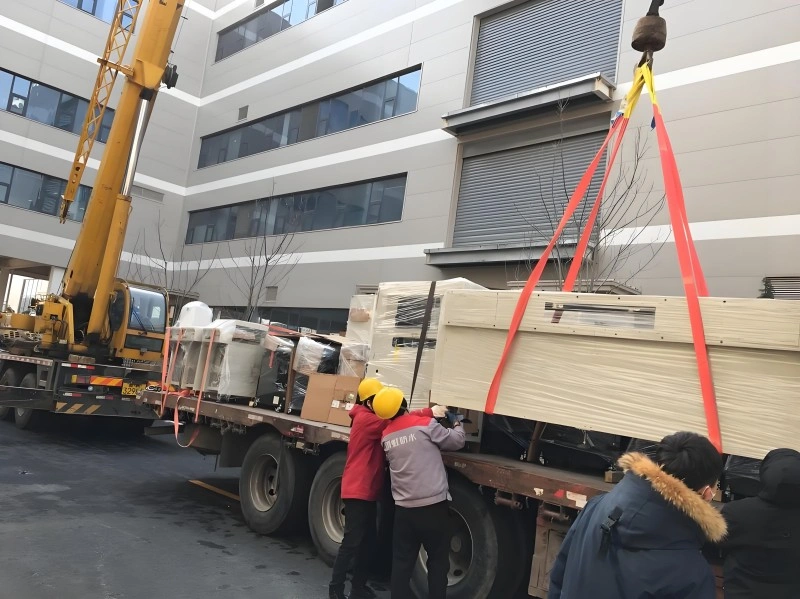
How to Reduce Risk in International Factory Relocation
Structured early planning and professional management is the most effective approach to risk management. Carry out two-site surveys; compile comprehensive equipment inventories; ensure that all customisation needs are identified early; decide on an appropriate matching of packages to transport conditions; have unambiguous responsibility matrices.
| Risk Control Step | Practical Action | Result |
| Early Planning | Begin before shutdown or dismantling | Fewer last-minute changes |
| Dual-Site Survey | Inspect origin and destination facilities | Better access and installation planning |
| Documentation Review | Check customs and import requirements early | Lower clearance delay risk |
| Export Packaging Plan | Match protection to route and cargo sensitivity | Reduced damage and corrosion risk |
| Schedule Buffer | Allow time for customs, weather, and port delays | More realistic relocation timeline |
| Central Coordination | Assign one project lead | Clearer communication and accountability |
| Post-Move Testing | Inspect and calibrate before production restart | Safer return to operation |
Conclusion — International Factory Relocation Requires Project-Level Control
The successful international factory relocation takes place when each step is seen as a component of a continuous project. The outcome is influenced by the accuracy of equipment data, the documentation that’s in compliance with the regulations, the method of transport, the type of packaging, route planning and installation of equipment after the move. When companies are able to identify the risk early and get each contractor under control, they can minimize the chance of delays, protect their valuable machinery, and get the production back on track without any/aggressive surprises.
By adopting factory relocation in the context of a professional engineering logistics project and not just a freight shipment, manufacturers can achieve better results in every relocation with consistency.