
Excavators and bulldozers are huge machines used in construction often commuted between two nations in case of infrastructure and industrial works. These machines are very important to the earth moving, site preparation and material handling in international job sites. These machines however, due to their mass, width, and height tend to surpass the container shipping capacity that is within the bounds of a standard container. The logistics of shipping excavators and bulldozers abroad is unique and depends on the specifics of the transport of these large machines as they usually surpass the usual container size and weight limit.
The belief of many companies is that construction equipment can be driven directly into containers to be shipped, however in many cases giant excavators and bulldozers may need special containers or breakbulk shipping option. This fallacy may result in delays, higher costs or even damage in transit when not handled at the outset of the planning process. Effective transportation of construction equipment abroad entails adequate logistical planning, use of proper transportation equipment, and effective safety precautions in the packing of the cargos. Starting with choosing how to ship the goods to the destination and ensuring it complies with the international standards, every step is to be considered depending on the peculiarities of the machinery and the destination.
In my practice of shipping logistics of heavy machinery involved in the work at different infrastructure projects, I have witnessed how such oversights can lead to serious delays. This guide dissects the most important points of shipping excavators abroad and dealing with bulldozer transport international shipping basing on the experiences in the sphere.
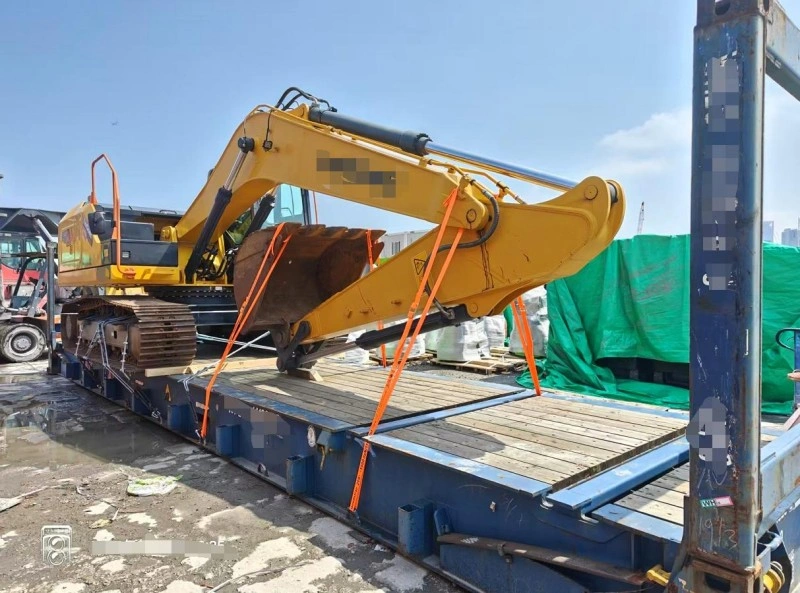
Typical Dimensions and Weight of Excavators and Bulldozers
The first step, which is of paramount importance in planning the international shipment of excavators and bulldozers, is to determine the precise dimensions and weights of these machines since they have a direct impact on the selection of the means and the equipment.
The excavators are available in small scale types of the excavator employed in urban development work, to the large scale excavator which is applied in mining. Bulldozers which are intended to push large amounts of material differ in the same way in terms of their purpose. The following is a breakdown of the common weights:
| Equipment Type | Typical Weight |
| Mini excavator | 2–8 tons |
| Medium excavator | 10–30 tons |
| Large excavator | 30–90 tons |
| Bulldozer | 15–100 tons |
These are merely estimated weights that may differ depending on the manufacturer and model. An example would be a typical medium excavator would be approximately 7-8 meters long, 2.5-3 meters wide and 3-4 meters high when all parts are installed, and a huge bulldozer could be over 5 meters wide with a blade on it. The choice of the means of transport is also dependant on the equipment size since the typical 40-foot containers measure approximately 12 meters long, 2.35 meters wide, and 2.39 meters high with weight capacity of approximately 25-30 tons. When machines exceed these parameters, large excavators and bulldozers often require specialized oversize cargo transportation solutions due to their dimensions and weight. This ensures compliance with carrier restrictions and prevents overloading, which could compromise vessel stability during ocean voyages.
Shipping Methods for Excavators and Bulldozers
Choosing the shipping method is crucial to the expedient and secure shipping of heavy equipment across the borders because it should consider the size, mass, and mobility of the equipment.
The two most popular shipping systems to use in the transportation of construction equipment are the containerized and the non-containerized shipping systems. Both approaches boast of particular applications that are influenced by the nature of the machine and the limitations of a route.
| Shipping Method | Best Use Case |
| Flat rack containers | Wide heavy equipment |
| Open top containers | Tall machinery |
| Breakbulk shipping | Extremely large equipment |
| Roll-on/roll-off vessels | Self-propelled machinery |
In the case of bulldozers, flat rack containers are preferable since they do not have side walls and thus the bulldozer can have overhangs; however, the containers do not lack stability at the bottom. The open top containers are compatible with tall excavators because they can be loaded on the top using cranes, which are only possible when the standard entry is not possible due to the presence of booms or other attachments. When extremely huge objects are involved and cannot fit in any container, breakbulk shipping is the only way of having the equipment transported and loaded to the deck or hold of the ship. Roll-on/roll-off (RoRo) vessels are used where machinery is to be driven on and off, since it is a lower risk of handling the equipment. It depends on the factors such as port facilities, transit time, and cost such as RoRo which is commonly faster in the short routes but not necessarily in all destinations.
Preparing Heavy Equipment for International Shipping
Heavy equipment should be fully prepared in order to evade the custom hustles, damages, or safety risks during intercontinental transportation.
There are a number of steps to follow in preparation which make the machinery compliant and safe to be transported to the ocean. Over a lifetime of organizing these kinds of shipments, I have discovered that missing any of them may result in an expensive rework on the dock.
| Preparation Step | Purpose |
| Cleaning equipment | Customs compliance |
| Removing attachments | Reduce dimensions |
| Securing moving parts | Prevent movement |
| Fuel draining | Transport safety |
Cleaning eliminates soil, debris or residue which may attract biosecurity inspections in some countries such as Australia or New Zealand. To fit within the transportation limitations, removing the attachments, be it buckets or blades, can be of help to compact the machine. Strap or lock-down of moving parts will help avoid imbalanced shifts that may occur because of them. Fuel cranage reduces the risk of fire and is in line with shipping laws. It is also necessary to prepare properly since this will enable the customs clearance to be more successful besides avoiding corrosion or mechanical stress of the equipment during extended journeys which will end up making sure that they are functioning at the do-site of the project.
Loading Excavators and Bulldozers onto Transport Equipment
The loading process should be performed accurately so as to avoid accidents and damage of equipment according to the condition of a machine and available infrastructure.
Depending on the equipments that are operational and the nature of the vessel or container, loading procedures differ.
| Loading Method | Use Case |
| Crane lifting | Non-operational equipment |
| Ramp loading | Drivable machinery |
| Heavy-lift cranes | Ultra-heavy equipment |
| Roll-on loading | RoRo vessel transport |
Disassembled/non-drivable units are normally crane lifted using certified slings and spreader bars to balance out the weight. Ramp loading is suitable with functional bulldozers that can be pushed on level racks. Massive excavators that are more than 50 tons are used by heavy-lift cranes, and are commonly found at dedicated ports. The loading of RoRo shipments by roll-on makes it easier to self propel. The loading process will be determined by the kind of machine used, tracked excavators may require the use of mats to cover the surfaces whereas wheeled bulldozers can move freely. Spotters and load calculations are all very important safety measures to prevent tipping or structural failures.
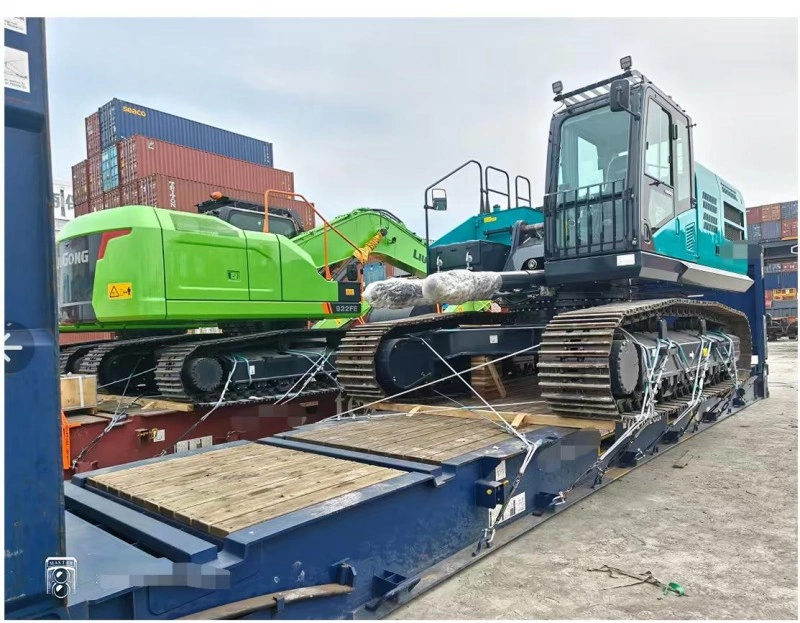
Securing Heavy Equipment During Ocean Transport
The warranty of heavy equipment is essential to survive the dynamic forces which meet the ocean voyages, including waves and movements of the vessels.
The means of cargo securing should be in accordance with international standards such as international maritime organization standards to avoid movement or loss at sea.
| Securing Method | Purpose |
| Chain lashing | Stabilize heavy machinery |
| Wheel chocking | Prevent rolling |
| Wooden blocking | Reinforce stability |
| Steel supports | Distribute weight |
Chain lashing is the use of high-tensile chains around the strong sections of the equipment in order to secure a good hold. Wheel chocking involves the use of wedges to fix tracks or wheels. Wood blocks offer tailored support against a sideways force whereas steel is used to boost and stabilize uneven loads. Such techniques offer protection to equipment throughout the transportation process by absorbing shocks and keeping center of gravity to ensure the equipment is not damaged by vibrations or sudden halts. In loading, regular checks are made on all securings to ensure that they have the calculated break strength that is dependent on the weight of the cargo and the anticipated sea conditions.
Challenges in International Construction Equipment Transport
The challenges involved in the international shipment of construction equipment have a number of inherent challenges that require proactive logistics solutions to ease.
- Very heavy cargo weight: A cargo weight of more than 50 tons may be too heavy to be lifted by equipment, and may need special permits, which are resolved by weight distribution planning and reinforced transport platforms.
- Large equipment dimensions: Equipment with dimensions larger than the standard size makes it difficult to route; possible solutions include partial disassembly and route surveys to find clearance.
- Inadequate port infrastructure: Not every port can process heavy lifts and it is important to choose equipped port and liaise with agents.
- Complicated customs paperwork: The different regulations in different countries require correct manifests and certificates to eliminate delays.
- Project time pressure: Strict deadlines increase the risks; planning buffers ease the unexpected problems (weather).
These are solved in the planning of logistics, which involves extensive risk analysis, the involvement of local specialists, and real-time changes to the digital tracking, which will ensure quality delivery.
Industries That Frequently Ship Excavators and Bulldozers
Some industries are also very dependent on the international transport of excavators and bulldozers to serve in their operations, which prompts the necessity of having a strong international logistics.
| Industry | Typical Use |
| Infrastructure development | Road and bridge construction |
| Mining operations | Earth moving |
| Energy projects | Wind and solar farm construction |
| Industrial construction | Factory site development |
These industries also demand international equipment logistics since projects might cut across continents with equipment supplied by manufacturers in Asia or Europe to work on an Africa or South American project. As an example, mining works transfer bulldozers to isolated locations to clear the site and energy projects transfer excavators to perform the foundation works. Logistics that are efficient reduce the downtime, and the arrival of equipment is synchronized to the phases of the project.
Conclusion — Heavy Equipment Shipping Requires Specialized Logistics Planning
The logistics of transportation of excavators and bulldozers abroad need elaborate logistics planning. The correct choice of shipping, equipment preparation, and machinery security during transportation are all necessary to ensure the safety of international transportation of heavy equipment. The comprehensive consideration of the dimensions, weights, and challenges at an early stage allows shippers to avoid the majority of pitfalls and have machinery come to its destination already prepared to use. This is the systematic method that has been shaped by the experience and has actualized success in the transportation of construction equipment across the globe.