
The logistics planning involved in transporting oversized industrial equipment is a special case since most industrial machines are too large and heavy to be transported using the normal freight transportation. I have personally experienced how failure to observe these limits in my years of project cargo transportation in manufacturing and energy industries resulted in delays, damage or regulatory barriers. The size and weight of industrial equipment applied in manufacturing, energy production systems, and infrastructural work are often so gigantic in size and in weight that they easily outweigh a typical 40-foot container. Several industrial machines surpass the size standards of the standard shipping containers and as such, need special transportation solutions.
One of the notorious myths is that big industrial machinery could be delivered with the help of a container ship. As a matter of fact, this is not always possible; specialized containers, breakbulk ships and heavy-lift machinery are needed to cope with the unusual dimensions and weights. The logistics planning of oversized industrial equipment, its transportation equipment, and organization of the project are the key to successful transportation. The guide provides the steps in breaking down the process based on the experience in international shipments.
What Types of Industrial Equipment Are Considered Oversized
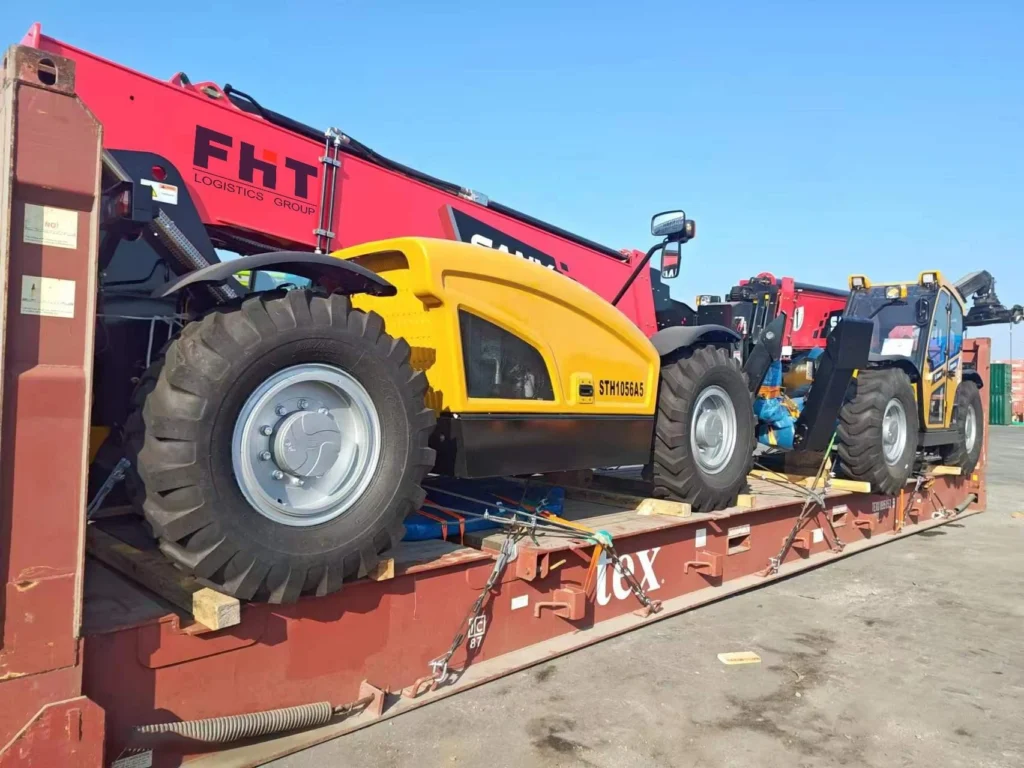
The first stage of any logistics plan is to define whether industrial equipment is oversized because it directly impacts the selection of transport options and preparing requirements. In my understanding as a consultant on factory relocations and EPCs, equipment is considered oversized when it cannot fit within the standard container size 8 feet by 8.5 feet and 40 feet or when it is too heavy approximately 20-25 tons per unit.
Examples include power generators, which can be cumbersome with their enclosures and their components; industrial presses used in metalworking, which have big bases in order to be stable; gas turbines used in energy plants, which have both heavy weight and a non-portable shape; and manufacturing machines such as CNC systems or assembly lines, which are made to be precise but not to be movable. These pieces are often pushed to the limits of containers due to their engineered forms being based on functionality rather than ease of transportation.
The following table has a summary of standard overweight industrial equipment:
| Equipment Type | Typical Weight |
| Power generators | 30–150 tons |
| Industrial presses | 20–200 tons |
| Gas turbines | 50–300 tons |
| Manufacturing machinery | 10–100 tons |
What is the reason why these machines usually go beyond the usual container specifications? It is embedded in their working needs: generators should have great frames to withstand vibrations, presses should have huge hydraulic systems, turbines should have complex blades sets that cannot be folded to avoid performance losses. This would be in logistics terms to assess not only size and weight, but also center of gravity and fragility to prevent mishandling.
Transport Methods Used for Industrial Equipment Shipping
When shipping industrial equipment it is essential to choose the appropriate transport method because incorrect decisions may lead to structural damages or ineffective routes. This strategy is determined by the size of the equipment, its weight, the infrastructure of the destination and the urgency of the goods based on many international shipments, which I have managed.
An example would be the flat rack containers that are used in wide or heavy machinery since the containers do not have side walls and this enables overhangs and yet retains a certain container-like stacking of the vessels. Tall objects fit in open top containers as the roof can be removed without being disassembled. Breakbulk shipping involves the transportation of very large machines that are loaded directly into the ship decks, which do not require containers at all. This is where heavy-lift vessels are involved whereby ultra-heavy cargo is involved and the onboard crane is able to handle hundreds of tons.
Costly industrial machinery is usually advanced oversize cargo delivery services because of weight and size. Below is a table of the most popular methods:
| Transport Method | Best Use Case |
| Flat rack containers | Wide or heavy machinery |
| Open top containers | Tall industrial equipment |
| Breakbulk shipping | Extremely large machines |
| Heavy-lift vessels | Ultra-heavy cargo |
The suitability of each approach depends on details: flat racks when the items weigh not more than 100 tons and moderate overhangs, open tops when the height is more than 8.5 feet, breakbulk when the shape of an item cannot be contained, and heavy-lifts when the port cranes are not enough. Practically, a combination of approaches, such as employing flat racks on a breakbulk ship, can be very cost-efficient and time-saving in terms of heavy machinery shipping.
Preparing Industrial Equipment for Transportation
Oversized industrial equipment logistics cannot be fully prepared, since the failure of the transit can result due to insufficient measures, or the rework is expensive. Since it’s part of a consulting firm that deals with energy project shipments, I have learned that the first step to prepare involves a site survey as a way of determining the status of equipment and its susceptibility.
The most significant processes are dismantling parts to make the whole smaller, wrapping delicate parts to protect against moisture or dust, support structures to act as load-bearing points and the documentation that must be prepared in order to have smooth customs procedures. They do not represent mere checkboxes; they are necessary to reduce the risks such as corrosion or misalignment during long-haul trips.
The following is a table of preparation steps:
| Preparation Step | Purpose |
| Equipment disassembly | Reduce transport size |
| Protective wrapping | Prevent environmental damage |
| Structural reinforcement | Maintain cargo stability |
| Documentation preparation | Customs compliance |
What is the reason why this minimizes transport risks? Disassembly reduces dimensional problems, wrapping covers weather damages during open transportation, reinforcement prevents dimensional movement during acceleration forces, and correct documentations eliminate border hold-ups. In shipping manuals of heavy machinery, omission of these can result in subsequent insurance claims or even missed deadlines by weeks.
Loading and Handling Oversized Industrial Machinery
The method of loading and unloading the industrial equipment of the nation into foreign countries is a critical part of the issue as any misstep can lead to the destruction of the equipment or the failure of the operations in the long term. Based on the field experience in transfers of mining equipments, loading should consider the distribution of the weight of the machinery as well as the infrastructure that is present in the various ports where they originate.
The usual procedures include crane-lifting (static heavy load) to ramp loading (wheel or mobile unit). The heaviest pieces are left to heavy-lift cranes, and the modular transport systems such as self-propelled trailers are used better on the oversized and irregularly shaped equipment that requires accurate maneuvering.
The following table shows a table of loading methods:
| Loading Method | Use Case |
| Crane lifting | Extremely heavy machines |
| Ramp loading | Mobile equipment |
| Heavy-lift cranes | Ultra-heavy cargo |
| Modular transport systems | Extremely large equipment |
Weight of equipment will dictate the strategy since lighter equipment (below 50 tons) may work with regular cranes but heavy equipment will require special equipment since it may topple down or cause structural pressure. Other factors such as ground pressure and lift height improve further with the selection such that selection is made to provide safe transfer of factory floor to vessel hold.
Cargo Securing and Stability During Transport
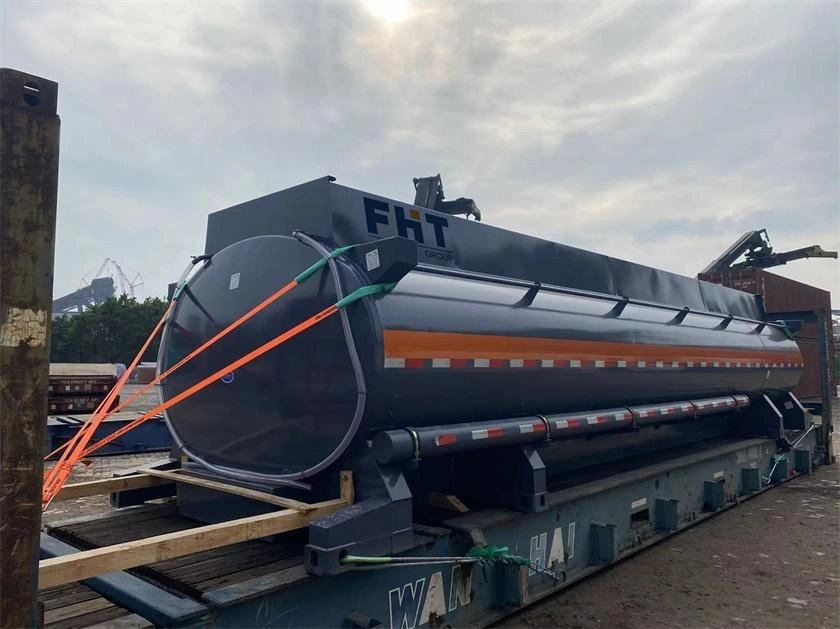
Proper cargo security is the key to safe industrial machinery transportation to avoid the shifts that may cause accident and equipment breakage. I have also given advisory work on infrastructural development and stressed that securing should not be subject to the effect of the sea swell, road vibration, or air turbulence.
Some of the techniques are chain lashing to restrain movement, steel frames to provide additional support, wooden blocks to evenly distribute loads, and shock absorbers to reduce the impacts. These are determined on the mass of equipment and its journey profile.
The following table gives securing methods:
| Securing Method | Purpose |
| Chain lashing | Prevent cargo movement |
| Steel support frames | Structural stability |
| Wooden blocking | Load distribution |
| Shock absorption systems | Reduce vibration damage |
Securing provides safeguards against dynamic forces- lashes against lateral movement, frame integrity, blocking pressure and by reducing wear on the delicate parts, absorber. In the absence of this, even a slight shock can cause precision machine to get out of shape, and a regular delivery will become a nightmare of repair.
Regulatory and Permit Requirements
Managing regulations is an underlying principle of oversized industrial equipment logistics because failure to comply may stop the shipments permanently. Through cross-border experience in factory moves, the requirements differ depending on the route, yet, they have safety and legality as priority.
Some of the necessary elements are oversized transport permits of road/rail legs, export documents of the customs, route permits to safeguard infrastructure, and insurance to defend against the liabilities. They make sure the operation is in accordance with the international standards such as IMDG or IATA where necessary.
The following table of requirements:
| Requirement | Purpose |
| Oversized transport permits | Legal transport approval |
| Export documentation | Customs clearance |
| Route permits | Infrastructure safety |
| Cargo insurance | Risk management |
Compliance with regulations will help to avoid financial penalties, seizure, or even accidents-permits confirm the appropriateness of vehicles, documents facilitate their inspection, approval of routes will ensure that bridges are not overloaded, and insurance will help to address financial problems in case of accidents.
Industries That Require Oversized Industrial Equipment Transport
There are some industries that are bound to make use of heavy equipment logistics because of the volume of their operations and equipment. To the extent that I am a consultant to EPC companies, these industries are often involved in transport problems related to project timelines and location inaccessibility.
Production lines shift to manufacturing, power plants in energy deal with turbines, remote location drilling is done by ships, and infrastructure construction employs construction machines to carry out large scale projects. Both of them require custom solutions to overweight luggage.
The following is a table of industries and equipment:
| Industry | Typical Equipment |
| Manufacturing | Production machinery |
| Energy | Turbines and generators |
| Mining | Drilling equipment |
| Infrastructure | Industrial construction machines |
Such logistics are necessitated by the fact that the equipment used in such industries is mission-critical, and an event like delay during the delivery of turbines can halt power project, and mining rigs should be delivered unbroken to continue the production. Their continuity of operation is based on efficient transport.
Conclusion — Industrial Equipment Logistics Requires Specialized Planning
The logistics operation of over-sized industrial equipment transportation is complicated, and requires accuracy throughout all the steps. The right choice of transport methods, the preparation of the cargo, the securing process, and the compliance with the rules and regulations are the keys to the successful transportation of the oversized industrial equipment across the international borders. By considering these factors in advance, the planners can reduce risks and will have the equipment ready to roll out, helping to run the project smooth.