
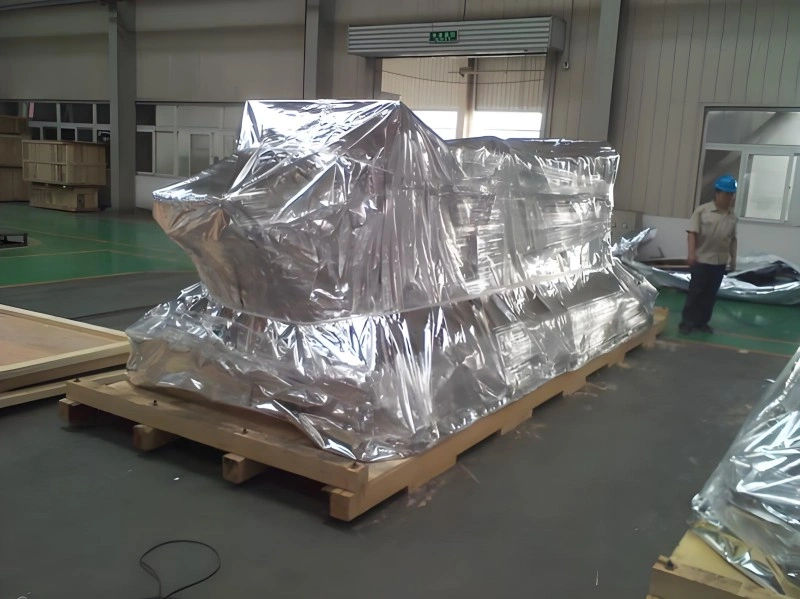
If goods are being transported by multi-modal, then damage is minimised during transit because they are protected and kept dry, dust-free, corrosion-free, salt-free and free of contamination between trucks, ports, ships, rail yards, warehouses and delivery points by being vacuum packed. When packaging products for international transport (particularly where road, sea and rail legs are involved) the product is handled and subjected to shifts over and over again that many packages are not able to resist. With exporters of machinery, molds, electronics, and oversized equipment, incorporating the process of vacuum packing into the plan helps to maintain the condition of the items from factory pickup through site installation.
Many shippers only think about the ocean freight aspect of the trip. In fact, repeated handling, warehouse storage, truck movement and weather can take their toll on cargo prior to or following the vessel, leading to damage of the packaging integrity. Vacuum packing is not intended to provide a substitute for correct loading, lashing or crating but rather a protection barrier against moisture, dust, corrosion and contamination for complex multi-modal transportation. Combined with outer package and route planning it is a feasible instrument for the safe transport of project cargo and OOG.
Why Multi-Modal Transport Increases Cargo Damage Risk
Because goods are transferred from one mode of transport to another and are changing handling environments several times, damage to the goods is likely to occur in multi-modal transport. Single-mode shipments rarely come across the stresses that each transfer brings.
| Transport Stage | Common Risk | Possible Cargo Damage |
| Factory pickup by truck | Road vibration and handling shock | Loose parts, surface scratches, packaging wear |
| Warehouse transfer | Forklift handling and stacking | Film tears, crate damage, impact marks |
| Port waiting area | Humidity, rain, salt air, dust | Rust, corrosion, contamination |
| Vessel transport | Sea humidity and container condensation | Moisture damage, mold, oxidation |
| Rail transport | Continuous vibration | Loosened components or packaging abrasion |
| Destination delivery | Final handling and unpacking risk | Seal damage, surface contamination |
These risks compound over long international routes, making proactive environmental protection essential.
How Vacuum Packing Protects Cargo Across Transport Stages
Vacuum packed products are safeguarded during all stages of transport.Products are protected in vacuum packing throughout the transport process.
For machinery, molds, and precision components moving through trucks, ports, vessels, and warehouses, safe vacuum packaging for multi-modal shipments helps reduce moisture, dust, corrosion, and storage-related exposure throughout the route.
| Protection Function | How Vacuum Packing Helps | Practical Benefit |
| Moisture control | Reduces exposure to humid air and water vapor | Lowers rust and corrosion risk |
| Dust prevention | Seals cargo from external particles | Keeps surfaces, ports, and components cleaner |
| Salt air protection | Adds a barrier during port and sea freight exposure | Reduces oxidation on metal surfaces |
| Storage protection | Maintains a controlled package during delays | Supports safer temporary warehousing |
| Handling exposure reduction | Cargo does not need repeated direct covering | Reduces contamination from transfers |
| Condition preservation | Keeps cargo sealed until destination | Helps maintain installation readiness |
Vacuum Packing vs Standard Wrapping in Multi-Modal Transport
While simply wrapping things is an effective way to cover the dust, it may not be enough to keep the dust protected through multiple transport phases and varying climates. However, a higher degree of environmental control is achieved by vacuum packing properly if used.
| Packaging Method | Protection Level in Multi-Modal Transport | Best Used For | Limitation |
| Vacuum packing | High environmental protection | Machinery, metal parts, electronics, precision cargo | Needs proper sealing and outer protection |
| Pallet wrapping | Low to medium | Short-distance palletized cargo | Limited moisture and corrosion control |
| Shrink film | Medium | Dust and light abrasion protection | Not always suitable as a moisture barrier |
| Tarpaulin cover | Low to medium | Temporary outdoor protection | Gaps can allow humidity and dust |
| Wooden crate | High physical protection | Heavy or fragile equipment | Does not control internal humidity alone |
| Vacuum packing + crate | Very high combined protection | High-value or sensitive export cargo | Higher upfront preparation effort |
Which Cargo Types Benefit Most from Vacuum Packing in Multi-Modal Transport
Vacuum packing is most effective with goods that are sensitive to moisture, corrosion, dust, surface contamination and/or delayed installation.
| Cargo Type | Multi-Modal Risk | Why Vacuum Packing Helps |
| Industrial machinery | Humidity, dust, handling delays | Preserves exposed surfaces and components |
| Precision molds | Corrosion on polished surfaces | Reduces moisture and contamination exposure |
| Electronics and control cabinets | Humidity, dust, terminal corrosion | Helps protect sensitive assemblies when combined with ESD packaging |
| CNC machined parts | Rust and surface scratches | Supports cleaner, drier storage and transit |
| Bearings and gears | Rust and lubricant contamination | Helps maintain mechanical condition |
| Motors and generators | Moisture inside housings | Reduces humidity exposure before installation |
| Oversized equipment | Port exposure and open transport risk | Adds environmental protection during OOG movements |
| Spare parts | Long storage before use | Keeps components protected until needed |
Damage Risks Vacuum Packing Can Reduce — and What It Cannot Replace
Vacuum packing will minimize environmental damage; however, it should be used in conjunction with other protection measures for mechanical damage.
| Risk Type | Can Vacuum Packing Help? | Additional Protection Needed |
| Moisture and humidity | Yes | Desiccants and barrier film |
| Rust and corrosion | Yes | VCI materials or anti-rust oil if needed |
| Dust and contamination | Yes | Proper sealing and outer cover |
| Salt air exposure | Yes | Strong barrier materials |
| Vibration | Partly, only indirectly | Shock pads, cushioning, stable securing |
| Impact damage | No, not by itself | Wooden crate, padding, handling control |
| Cargo shifting | No | Lashing, blocking, and bracing |
| Forklift damage | No | Skid base, crate, handling markings |
How Vacuum Packing Should Be Planned for Each Transport Mode
The route should be considered as a whole when designing a vacuum packing, the longest segment should not be the only one taken into account.
| Transport Mode | Packaging Concern | Vacuum Packing Consideration |
| Road transport | Vibration and handling | Add edge protection and stable outer packaging |
| Rail transport | Continuous vibration | Use cushioning and inspect seals before loading |
| Sea freight | Humidity and condensation | Use barrier film and desiccants |
| Port handling | Weather and salt air exposure | Add outer cover or crate where needed |
| Warehouse storage | Dust and long waiting time | Keep package sealed and labeled |
| Flat rack transport | Open exposure and securing points | Protect packaging from lashing abrasion |
| Final delivery | Unpacking and site handling | Provide clear handling and opening instructions |
Step-by-Step Process for Vacuum Packing Multi-Modal Shipments
Don’t begin sealing the process with a risk assessment for routes and cargo.
| Step | What Happens | Why It Matters |
| Route assessment | Identify road, sea, rail, port, and storage stages | Helps predict packaging risks |
| Cargo inspection | Check material, surface, electronics, and openings | Determines protection method |
| Cleaning and drying | Remove dust, moisture, and contaminants | Prevents sealing problems |
| Inner protection | Add VCI, ESD, separators, or cushioning | Protects cargo-specific risks |
| Desiccant placement | Add moisture absorbers | Supports humidity control |
| Vacuum sealing | Seal cargo inside barrier material | Reduces environmental exposure |
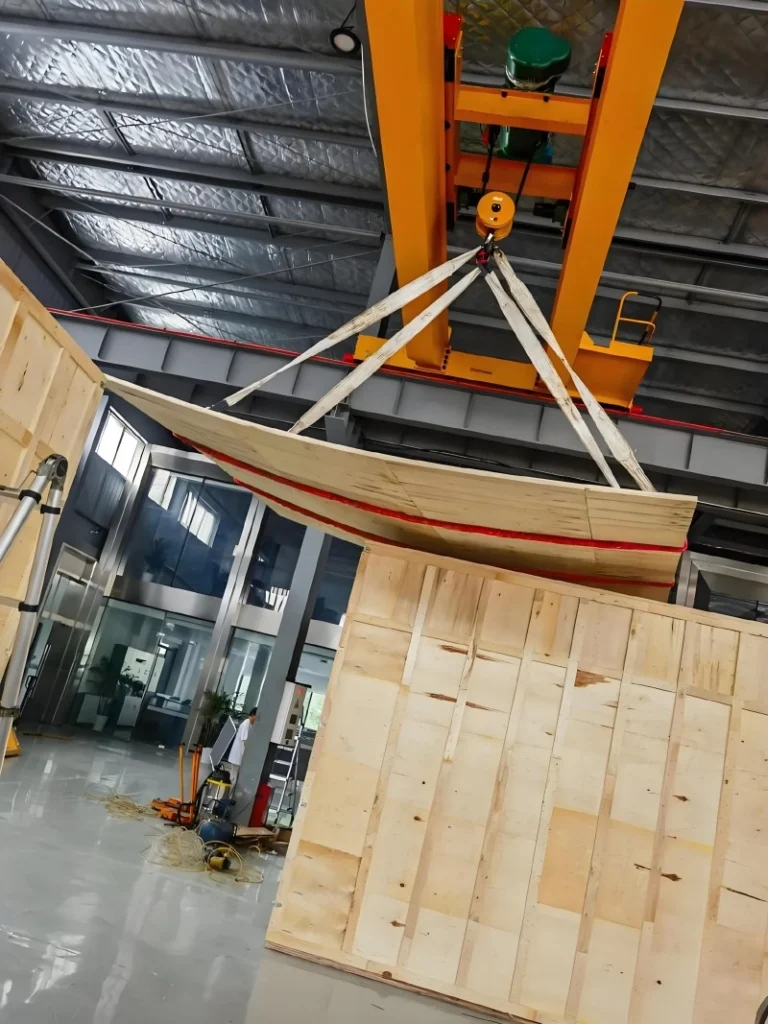
| Outer protection | Add crate, skid, or cover | Reduces impact and handling damage |
| Final inspection | Check seals, labels, and photos | Supports traceability and readiness |
Common Mistakes That Cause Damage During Multi-Modal Transport
A lot of failures occur because the packaging is only designed for one mode of transport, but not for the entire journey.
| Mistake | Possible Result | Better Practice |
| Only planning for ocean freight | Road or warehouse damage may be missed | Evaluate the full transport chain |
| No edge protection | Film punctures during handling | Cover corners and protrusions |
| Weak moisture control | Rust or corrosion during long transit | Use desiccants and barrier film |
| No outer protection | Impact or forklift damage | Add crate, skid, or padding |
| Blocked lashing points | Unsafe securing or packaging damage | Plan packaging around securing points |
| No post-handling inspection | Hidden seal failure | Check packaging after major transfers |
| Early unpacking | Exposure before installation | Keep sealed until cargo is ready for use |
When Vacuum Packing Should Be Combined with Crates, Skids, or Lashing Plans
Ideally, vacuum packing should be used in combination with other measures of protection.
| Combined Protection Method | Best For | Added Value |
| Vacuum packing + wooden crate | Sensitive machinery and precision cargo | Environmental + impact protection |
| Vacuum packing + skid base | Heavy machinery | Stable lifting and handling support |
| Vacuum packing + shock padding | Instruments or delicate assemblies | Reduces vibration and shock risk |
| Vacuum packing + flat rack lashing | Oversized cargo | Moisture protection with secure transport |
| Vacuum packing + open top planning | Tall machinery | Protection during crane loading and sea freight |
| Vacuum packing + container desiccants | Long sea routes | Additional humidity control |
| Vacuum packing + photo records | High-value shipments | Better condition tracking and claims support |
Buyer Checklist Before Choosing Vacuum Packing for Multi-Modal Transport
Buyers should provide complete cargo and route information so the packaging plan can match real transport conditions.
| Information to Prepare | Why It Helps |
| Cargo dimensions and weight | Determines packaging material and handling method |
| Cargo type and sensitivity | Guides moisture, corrosion, ESD, or shock protection |
| Full transport route | Identifies road, sea, rail, port, and storage risks |
| Expected storage duration | Determines desiccant and barrier requirements |
| Loading and unloading methods | Helps protect lifting and securing points |
| Photos or drawings | Identifies sharp edges and sensitive areas |
| Surface material | Helps decide VCI, anti-rust, or liners |
| Container type | Affects exposure and securing plan |
| Destination unpacking conditions | Reduces risk during final delivery and installation |
| Insurance or inspection needs | Supports documentation and traceability |
Conclusion — Multi-Modal Transport Needs Layered Cargo Protection
The risk of damage is higher in multi-modal transport due to the passage of the goods through several environments and through several handling stages. Exposure to moisture, dust, corrosion, salt air and contamination can be minimized with thoughtful integration of vacuum packing. It should not be used as an alternative to crating, lashing, cushioning or proper loading. The best protection is provided by using a combination of route planning, outer protection, securing, inspection, and documentation, and vacuum packing.
Vacuum packing can be used to a great degree to safeguard export cargo via complicated multi-modal transportation where machinery, molds, electronics, metal parts, or oversized equipment are required to traverse trucks, ports, vessels, warehouses and final delivery points. When implemented as part of an integrated logistics approach, it helps to maintain the condition and limit preventable damage risks for cargo.