
Protection from shock, vibration, moisture, static, dust, compression and handling is critical when packing sensitive electronics in wooden crates and a well designed protection system is required. An adequate outer crate alone often is not sufficient – circuit boards, sensors, displays and connectors may be damaged in an invisible way which becomes apparent only after installation. The best way to do this is to use a well-constructed crate, with multiple layers of internal solutions depending on the sensitivity of the equipment, transit route and storage location.
For exporters handling control cabinets, testing instruments, or automation systems, safe wooden crate packing for delicate equipment should combine crate engineering, internal restraint, moisture control, and anti-static protection before shipment. Planning these elements early prevents costly claims, delays, and equipment failures upon arrival.
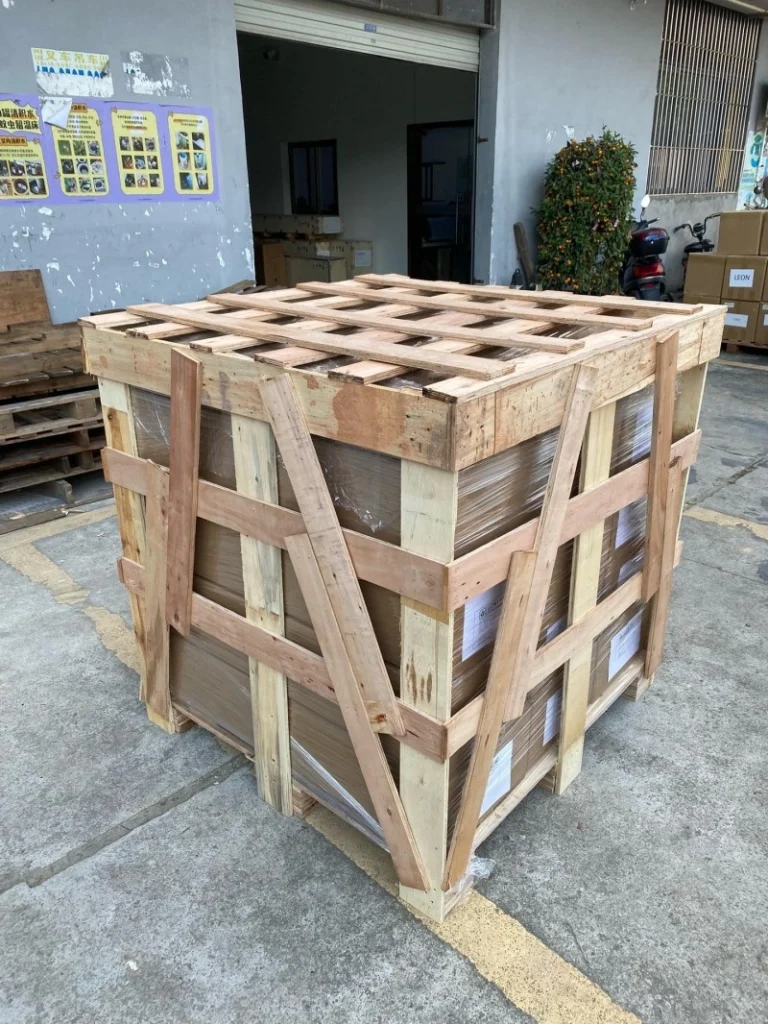
Why Sensitive Electronics Need Special Wooden Crate Packing
Sensitive electronics require special packing with wooden crates, as they can be damaged both by visible and invisible events, which may only present themselves during testing or commissioning. A slight amount of vibration or condensation can make a huge difference in performance and cause issues in the field and disputes.
| Risk Factor | How It Can Damage Sensitive Electronics |
| Shock impact | May crack housings, screens, boards, or solder joints |
| Continuous vibration | Can loosen connectors, screws, relays, and internal assemblies |
| Moisture or condensation | May cause corrosion, short circuits, or insulation problems |
| Static electricity | Can damage sensitive electronic components |
| Dust contamination | May affect sensors, contacts, fans, or optical parts |
| Compression pressure | Can deform panels, enclosures, or delicate assemblies |
| Incorrect handling | May cause tilting, dropping, or orientation-related damage |
| Poor internal restraint | Allows cargo movement inside the crate |
Veteran logistics managers recognize that electronics may be shipped long distances by sea or road, passing through several handling facilities where potential hazards will multiply. This is why export packing is a more professional process than just packing items in a box.
What Types of Electronic Equipment Are Commonly Packed in Wooden Crates?
Protective levels vary according the type of electronic cargo. Packing will vary according to the vulnerability of the electronics and not all pieces are vulnerable.
| Electronic Cargo Type | Main Packing Concern | Recommended Protection Focus |
| Control cabinets | Panel deformation and internal wiring movement | Rigid bracing, moisture control, orientation marks |
| Electrical panels | Shock, vibration, and condensation | Cushioning, sealed protection, anti-static care |
| Testing instruments | Calibration loss and internal damage | Vibration damping and shock indicators |
| Laboratory devices | Fragile components and contamination | Dust protection, cushioning, controlled handling |
| Telecom equipment | Connector damage and moisture exposure | Anti-static wrapping and humidity control |
| Power electronics | Heavy components and heat-sensitive parts | Strong support, shock control, moisture protection |
| Sensors and modules | Fragility and static sensitivity | Anti-static bags, foam inserts, careful labeling |
These differences can help procurement teams and logistics managers communicate what they need upfront to get the solution that is best.
Key Principles for Packing Sensitive Electronics in Wooden Crates
Proper packing for delicate electronics does not depend on any one material or procedure, but on a multi-layered protection strategy. All decisions need to take into account actual conditions that the shipment will encounter.
| Packing Principle | Practical Purpose |
| Cargo assessment | Identifies fragile parts, sensitive components, and handling risks |
| Internal bracing | Prevents electronic equipment from moving inside the crate |
| Cushioning | Absorbs shock and reduces vibration transfer |
| Anti-static protection | Reduces electrostatic discharge risk |
| Moisture control | Helps prevent corrosion, condensation, and circuit damage |
| Dust protection | Protects sensors, connectors, fans, and optical surfaces |
| Orientation control | Helps prevent incorrect handling or tilting |
| Documentation | Supports inspection, claims, and installation reference |
These are the basic rules to follow for high-quality crate packing for the export of electronics.
Shock and Vibration Protection for Electronic Equipment
Repeated low-level vibration can cause functional failure of electronics, even though the outer crate may be undamaged. The main principles of proper shock and vibration protection are to absorb the energy and stop the vibration from causing additional pressure points.
| Protection Method | Function | Best Used For |
| EVA foam inserts | Stable support and impact absorption | Instruments and control modules |
| EPE foam | Lightweight cushioning and surface protection | General electronic cargo |
| Rubber pads | Vibration damping and anti-slip support | Equipment bases and cabinets |
| Internal blocking | Prevents movement inside the crate | Larger cabinets and electronic assemblies |
| Soft contact pads | Protects painted, screened, or delicate surfaces | Panels, displays, and housings |
| Shock indicators | Helps monitor rough handling events | High-value or sensitive shipments |
| Tilt indicators | Helps identify excessive tilting | Orientation-sensitive equipment |
The aim is to achieve balance support: if it is too soft, the cargo will shift if it is too firm, the shock will be passed to sensitive parts.
Anti-Static Protection: Preventing ESD Damage During Shipping
Sensitive components can be destroyed or degraded by electrostatic discharge (ESD), and there may be no visible damage. Antistatic protection is critical for circuit boards, sensors and open electronics.
| Anti-Static Material or Method | Purpose | Suitable Use |
| Anti-static bag | Reduces electrostatic discharge risk | Modules, boards, sensors, spare electronics |
| ESD foam | Cushions and protects sensitive components | Circuit boards and small electronic parts |
| Dissipative wrapping | Helps reduce static buildup | Electronic assemblies and components |
| Conductive containers | Provides stronger ESD control | Highly sensitive electronic modules |
| ESD handling procedure | Reduces static risk during packing | Exposed electronics or open components |
| Avoid regular plastic contact | Prevents static buildup | Circuit boards and connectors |
Proper materials allow that components are received with the same performance as originally specified.
Moisture and Condensation Protection for Sensitive Electronics
Electronics are one of the most commonly vulnerable items in sea freight and over land transport and moisture is one of the greatest threats. Corrosion and short circuiting are caused by the condensation that occurs inside crates due to changes in temperature.
| Moisture Protection Method | Main Function | Best Used For |
| Barrier bag | Separates cargo from humid air | Sensitive electronics and instruments |
| Aluminum foil barrier | Strong vapor protection | High-value electronics and long-haul sea freight |
| Desiccants | Absorb moisture in sealed spaces | Crated electronics and electrical panels |
| Humidity indicator card | Monitors internal humidity exposure | Sensitive or high-value shipments |
| Vacuum sealing | Reduces air and moisture exposure | Selected sensitive equipment when suitable |
| Waterproof cover | Protects crate during outdoor handling | Loading, unloading, and port storage |
| VCI material | Helps reduce corrosion on metal components | Equipment with exposed metal or connectors |
Be sure to make sure that the cargo is dry before sealing to prevent moisture from being trapped in the cargo.
Internal Bracing and Support Without Damaging Components
Goodly bracing attaches the equipment to strong structural points and does not over-brace fragile points like doors, screens, connectors or panels.
| Bracing Area | Correct Approach | Risk If Done Poorly |
| Equipment base | Support at strong base or mounting points | Frame deformation or unstable loading |
| Side panels | Use padded contact and avoid excessive pressure | Panel dents or housing deformation |
| Doors and handles | Avoid using them as bracing points | Bent handles or misaligned doors |
| Screens and displays | Keep clearance and add surface protection | Cracks, scratches, or pressure damage |
| Connectors and ports | Protect protruding parts from contact | Broken connectors or cable damage |
| Top-heavy cabinets | Add side bracing and orientation control | Tilting or internal movement |
The design here is important so that the movement and any additional damage will be avoided during transit.
Labeling, Handling Marks, and Inspection Preparation
Easy labelling and documentation helps handlers and makes it easy for customs or insurance officers.
| Marking or Record | Why It Matters |
| Fragile label | Alerts handlers to sensitive cargo |
| This Side Up mark | Reduces orientation-related handling errors |
| Keep Dry mark | Helps reduce rain and moisture exposure |
| Center of gravity mark | Supports safer lifting and forklift handling |
| Forklift entry mark | Reduces impact and wrong lifting position |
| Shock indicator | Records rough handling events |
| Tilt indicator | Shows whether crate orientation was compromised |
| Packing photos | Provides reference for inspection and claims |
All of these information can play a determining role in the success of a claim.
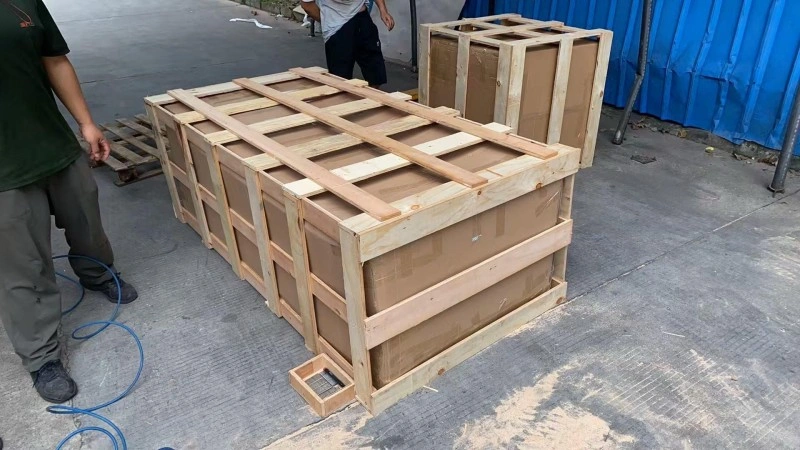
Common Mistakes When Packing Sensitive Electronics
Even top teams can miss important information that results in issues that can arise later.
| Common Mistake | Possible Consequence |
| Standard crate only | Electronics may still suffer internal shock or moisture damage |
| No anti-static protection | ESD-sensitive parts may fail after delivery |
| Ignoring condensation | Circuits and connectors may corrode |
| Bracing against fragile parts | Panels, screens, or connectors may be damaged |
| Too-soft cushioning | Cargo may sink, tilt, or lose support |
| Empty space in crate | Equipment may shift during transport |
| No handling marks | Crate may be tilted or lifted incorrectly |
| No packing photos | Harder to verify cargo condition after shipment |
By being aware of these potential problems, one can increase the likelihood of success in shipments.
Buyer Checklist Before Packing Sensitive Electronics
The packing crew can design the most effective solution by providing complete information up front.
| Information to Provide | Why It Helps |
| Equipment dimensions | Determines crate size, clearance, and support layout |
| Gross weight | Guides base reinforcement and cushioning selection |
| Center of gravity | Helps prevent tipping and unstable handling |
| Fragile components | Prevents bracing against sensitive areas |
| ESD sensitivity | Determines anti-static packaging requirements |
| Moisture sensitivity | Guides barrier, desiccant, and humidity control planning |
| Calibration sensitivity | Helps determine shock and vibration control level |
| Orientation requirements | Supports correct labeling and handling design |
| Lifting points | Helps plan forklift or crane handling safely |
| Transit and storage time | Determines moisture and vibration exposure risk |
Specifications result in greater protection and better operations.
Conclusion — Sensitive Electronics Need Layered Wooden Crate Protection
Packing sensitive electronics in wooden crates safely requires a layered protection strategy. While a robust crate will prevent external impact, a robust internal packing system will prevent movement, moisture, static electricity, vibration and pressure to sensitive parts. Provision of crate design, cushioning, anti-static protection, moisture control, and handling instructions in unison ensures a high probability of successful delivery of sensitive electronic equipment ready for installation or commissioning.
An early risk assessment, selection of suitable materials and the detailed documentation of the process can reduce hidden damage and help safeguard equipment value and project schedules for exporters and logistics managers. Collaboration between shipper and an experienced packing partner is the key to a successful outcome since these electronics pose unique challenges in delicate packing.