
Export goods can be indirectly affected by the changes in temperature due to condensation, moisture accumulation, corrosion, mold and contamination. Vacuum packing does its job by providing a barrier to moisture, preventing exposure to humid air, water vapor, dust and salt air while stored and transported. If you are an exporter, logistics manager or project team moving machinery, metal parts, electronics or precision components, it’s important to know this risk – particularly when shipping by multi-modal means from a hot port, cold nights through to humid seas.
Cargo that is kept away from the rain seems to be safe for many shippers. In practice, temperature fluctuations within the container, warehouses and trucks can create unexpected condensation resulting in corrosion, short circuits or even failure of the packaging before the package can reach the destination. Vacuum packing doesn’t regulate temperature; it is simply a method to minimize one of the most harmful problems: uncontrolled moisture exposure. If carefully designed using barrier films, desiccants and external protection, it provides effective and dependable temperature-sensitive industrial product security.
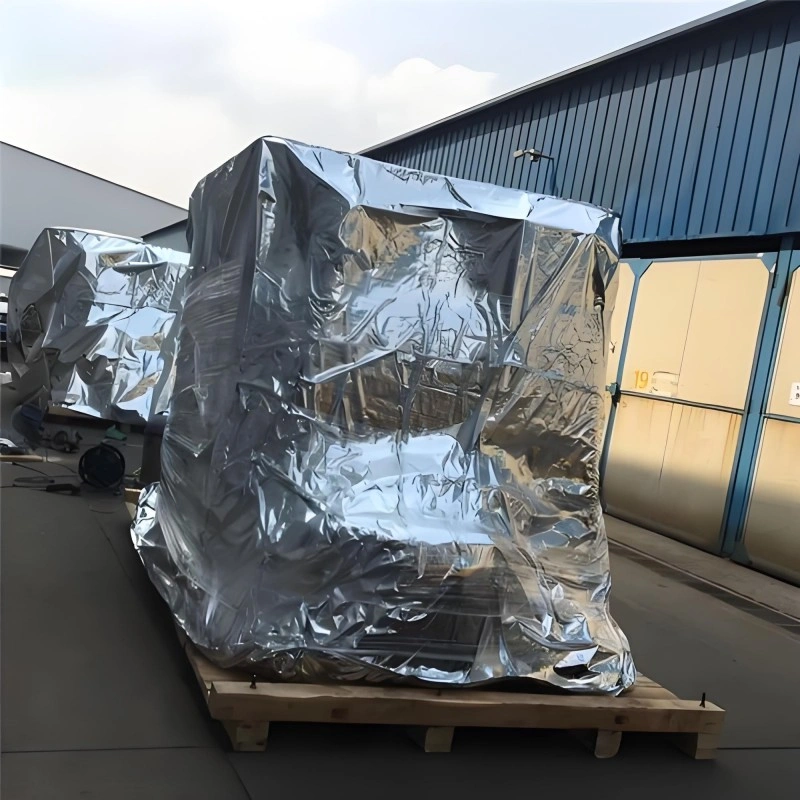
How Temperature Fluctuations Damage Export Cargo
When temperature changes begin to cause moisture movement and material stress, then temperature fluctuation is a significant potential cargo risk. Cold air can’t contain as much water vapor as warm air. As the temperature drops, that vapor turns into a droplet on cooler surfaces – which happens again and again with international shipping.
The temperature fluctuations inside a steel container during daytime and night can reach 15–20°C or even more. Cargo sweat occurs directly on metal surfaces and container sweat occurs on the inside walls and then drips on to the cargo. These cycles can cause rust to form on untreated steel, oxidation on the surface of precision-machined components, mould to grow on wood packaging or organic materials and invisible corrosion in electrical enclosures. Under continuous stress, films, cartons and some plastics are also weakened over long voyages or extended port storage.
| Temperature-Related Condition | What Happens | Possible Cargo Damage |
| Day-night temperature change | Moist air cools and condenses | Water droplets, rust, mold |
| Container sweat | Moisture forms on container walls or ceiling | Dripping onto cargo or packaging |
| Cargo sweat | Moisture forms on cargo surfaces | Corrosion, staining, electrical risk |
| Hot-to-cold route change | Materials contract and surfaces cool | Condensation on metal parts |
| Cold-to-hot route change | Humid air contacts cooler cargo | Surface moisture and rust risk |
| Long port storage | Cargo faces repeated heat and humidity cycles | Packaging degradation and corrosion |
Why Condensation Is Often More Dangerous Than Temperature Itself
Many industrial cargo failures are due to moisture produced by the temperature changes and not to the temperature itself. Condensation can occur within the packaging, under the packaging or within sealed containers without being obvious until weeks or months after the equipment has been unpacked at the project site.
Exposed metal gets rusty fast when moisture is present on the surface. Droplets form inside control panels and corrode contacts and sensors. Wet packaging promotes mould growth which lowers the strength of crates and brings in mould spores. Precision components may be sensitive to moisture, or even small quantities could cause problems with tolerances or calibration. The worst part? A lot of this damage is not seen until the time of installation, causing unnecessary delays and disagreements.
| Condensation Risk | Affected Cargo | Why It Matters |
| Surface moisture | Machinery, metal parts, molds | Causes rust and oxidation |
| Hidden droplets | Enclosed equipment or covered components | Damage may not be visible until unpacking |
| Damp packaging | Wooden crates, cartons, liners | Encourages mold and weakens packaging |
| Electrical corrosion | Control panels, electronics, sensors | Can cause unreliable performance |
| Moisture under wrapping | Plastic-covered cargo | Trapped moisture accelerates corrosion |
| Long-term dampness | Stored equipment and spare parts | Increases deterioration over time |
For machinery, electronics, molds, and precision parts moving through changing climates, vacuum packaging for temperature-sensitive cargo helps reduce moisture exposure caused by condensation and humidity fluctuations.
How Vacuum Packing Helps Reduce Temperature-Related Moisture Damage
Vacuum packing minimizes moisture damage at temperatures, by evacuating the air inside and preventing it from coming in contact with the cargo, which is then placed into a high barrier film. The amount of humid air in the airspace surrounding the product is much less, reducing the likelihood of condensation forming on surfaces.
The barrier film prevents any water vapour, dust and sea air from entering. The correct size desiccants will absorb any moisture that is left in the package. The seals need to be tight to keep the integrity even at sea pressure changes. This combination is particularly useful when spending long periods in the port area, transit or storage in the destination before installation.
| Vacuum Packing Function | How It Helps | Practical Benefit |
| Barrier film | Blocks moisture vapor and dust | Reduces external humidity exposure |
| Air reduction | Limits humid air around cargo | Lowers condensation-related risk |
| Desiccants | Absorb residual internal moisture | Helps maintain a drier package environment |
| Seal integrity | Keeps the protective system closed | Prevents humid air from entering |
| Salt air isolation | Reduces exposure near ports and sea routes | Helps control corrosion risk |
| Storage protection | Keeps cargo protected during delays | Supports safer long-term storage |
Vacuum Packing Is Not the Same as Temperature-Controlled Shipping
Vacuum packing prevents the cargo from being exposed to moisture, while temperature-controlled logistics actively controls the temperature environment of the cargo. The two methods are not interchangeable, and are often used in combination.
Vacuum packing is not capable of cooling, heating, or setting specific temperatures. It is aimed at maintaining the exclusion of humid air and contamination. Pharmaceuticals, some chemicals or sensitive electronics that cannot withstand any out-of-scope temperature excursions require temperature controlled (reefer) containers. However, most heavy machinery and metal parts require a strong moisture protection more than temperature control.
| Protection Method | Main Function | Best Used For | Limitation |
| Vacuum packing | Moisture, dust, and corrosion protection | Machinery, metal parts, electronics, molds | Does not regulate temperature |
| Temperature-controlled transport | Maintains a set temperature range | Pharmaceuticals, perishables, sensitive chemicals | Higher cost and not always needed for machinery |
| Desiccants | Absorb moisture inside packaging | Sealed export cargo | Must be correctly sized |
| Insulated covers | Slow temperature changes | Selected temperature-sensitive cargo | Limited without active temperature control |
| Wooden crates | Physical protection | Heavy or fragile cargo | Does not control humidity alone |
Which Cargo Types Are Most at Risk from Temperature Fluctuations?
The most metal sensitive cargo, such as electronic components, tight tolerances, or cargo that is to be stored for extended periods prior to installation presents the greatest danger. Such items are sensitive to even light surface rust or any moisture inside.
In this category is industrial machinery, CNC machines, precision molds, bearings, gears, motors, generators, and control cabinets. Care must also be taken with spare parts that are kept for future use, and measuring equipment in the laboratory – any degradation found later can cause large headaches.
| Cargo Type | Temperature-Related Risk | Why Vacuum Packing Helps |
| Industrial machinery | Condensation, rust, surface staining | Reduces moisture and dust exposure |
| Precision molds | Rust on polished cavity surfaces | Helps preserve surface finish |
| Electronics | Moisture, contact corrosion, dust contamination | Keeps humidity and particles away when combined with proper inner protection |
| Metal parts | Oxidation and corrosion | Supports dry, sealed storage |
| Bearings and gears | Rust and lubricant contamination | Helps maintain mechanical condition |
| Motors and generators | Moisture inside housings or windings | Reduces humidity exposure before installation |
| Spare parts | Long storage deterioration | Keeps components protected until use |
| Measuring equipment | Moisture and calibration sensitivity | Requires layered protection with cushioning |
Where Temperature Fluctuations Commonly Occur in Export Shipping
Changes in temperature do not occur just on the sea. They are found along the entire logistics chain, from manufacturing yard to final site.
These cycles of heating and cooling arise in the factory, in-land transport, at the port, during the loading of containers, when vessels sail, as they pass through the port for transshipment, at the destination port, and outside areas of the port. Every stage increases the likelihood of condensation if the packaging is unable to cope with the moisture.
| Logistics Stage | Temperature or Humidity Risk | Packaging Consideration |
| Factory storage | Indoor-outdoor temperature differences | Dry cargo before packing |
| Truck transport | Day-night temperature changes | Protect against condensation and dust |
| Port waiting area | Heat, humidity, salt air, rain | Use sealed packaging and outer cover |
| Container shipping | Container sweat and cargo sweat | Use barrier film and desiccants |
| Transshipment | Repeated exposure and handling | Inspect packaging condition |
| Destination warehouse | Humid or uncontrolled storage | Keep package sealed until installation |
| Outdoor temporary storage | Rain, sun, and temperature swings | Add weather-resistant outer protection |
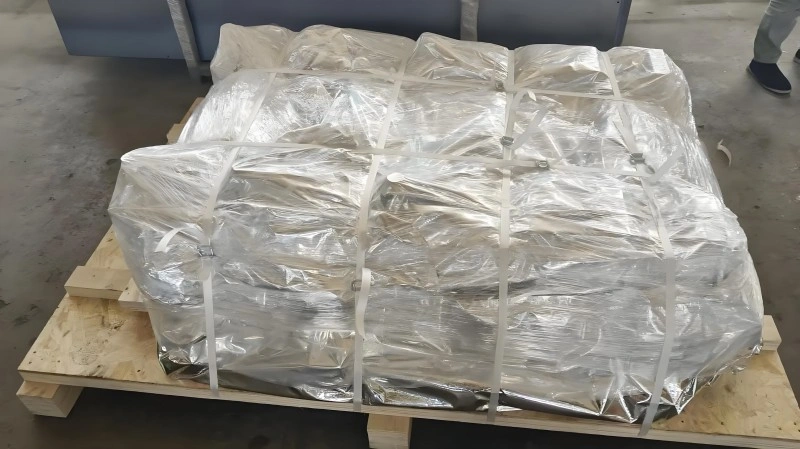
Key Materials That Improve Protection Against Temperature-Related Moisture
The best results are achieved by using the proper supporting material for the route and cargo type for vacuum packing.
The barrier films, which include aluminum composites, mathematically determined desiccants, VCI (volatile corrosion inhibitor) materials, anti-rust oil, humidity indicators, edge protectors, and strong outer crates all have great significance. Insulated covers will help to dampen quick temperature fluctuations, if necessary.
| Material | Function | When to Use It |
| Barrier film | Reduces moisture vapor and dust exposure | Most sea freight or long-term storage cargo |
| Aluminum composite film | Stronger moisture barrier | High-value machinery, molds, long storage |
| Desiccants | Absorb residual moisture | Sealed packaging exposed to humidity changes |
| VCI materials | Help prevent corrosion on metal surfaces | Molds, bearings, gears, machined parts |
| Anti-rust oil | Adds direct surface protection | Bare metal or polished surfaces |
| Humidity indicator | Shows internal moisture condition | High-value or long-storage cargo |
| Inner liner | Prevents rubbing and surface contact | Painted or precision surfaces |
| Outer cover/crate | Adds handling and weather protection | OOG, heavy, or exposed cargo |
Common Mistakes That Make Temperature-Related Damage Worse
Even the most seasoned teams can make avoidable pitfalls by not being properly prepared.
Any of the following conditions can cause greater condensation damage: packing goods while still wet; not using barrier film when packing; not putting the desiccants in; sealing moisture-prone pallets in crates; or opening packages prematurely at destination. Failure to consider the climate profile for the route or failure to conduct final seals prior to shipment is just as expensive.
| Mistake | Possible Result | Better Practice |
| Packing damp cargo | Moisture trapped inside | Dry and inspect before sealing |
| Ordinary plastic wrap | Humidity can enter or become trapped | Use suitable barrier film |
| No desiccants | Residual moisture remains active | Add desiccants based on package volume |
| Damp pallets or crates | Moisture migrates into cargo area | Use dry export-ready materials |
| Early unpacking | Cargo exposed before installation | Keep sealed until site is ready |
| Ignoring climate route | Under-protection in humid areas | Match materials to route conditions |
| No seal inspection | Air leakage and moisture entry | Inspect seams before shipment |
When Vacuum Packing Should Be Combined with Other Protection Methods
Vacuum packing is excellent for moisture control, but some shipments require multi-layer protection to combat mechanical, thermal and corrosion hazards.
Common effective combinations are: Vacuum packing and desiccants used together for sea transportation, VCI materials with metal precision parts, Anti-rust oil used on bare surfaces, Wooden crates used with heavy OOG loads, Insulated covers used for moderate temperature swings and full climate controlled transportation used when strict temperature limitations apply.
| Combined Method | Best Used For | Added Value |
| Vacuum packing + desiccants | Sea freight and humid routes | Better internal moisture control |
| Vacuum packing + VCI | Metal cargo and precision molds | Stronger corrosion prevention |
| Vacuum packing + anti-rust oil | Bare metal surfaces | Direct rust protection |
| Vacuum packing + wooden crate | Heavy or fragile machinery | Moisture plus impact protection |
| Vacuum packing + insulated cover | Cargo affected by rapid temperature shifts | Slows external temperature changes |
| Vacuum packing + shock padding | Sensitive instruments | Moisture plus vibration protection |
| Vacuum packing + climate control | Strict temperature-sensitive cargo | Moisture protection plus active temperature management |
Buyer Checklist: How to Assess Temperature and Moisture Risk
Smart buyers offer explicit path, goods, storage and timeline information prior to deciding on packaging specifications. The key to asking the right questions is to ask them early and help the packaging engineer select the best solution.
| Question to Ask | Why It Matters |
| Will the cargo move by sea freight? | Sea routes increase humidity and condensation risk |
| Will it pass through hot, cold, or tropical regions? | Climate changes affect condensation risk |
| Is the cargo made of metal or precision-machined surfaces? | Rust and staining may affect function |
| Does the cargo contain electronics or control systems? | Moisture can cause hidden electrical issues |
| How long will the cargo be stored before installation? | Longer storage increases moisture exposure |
| Will cargo wait at ports or outdoor areas? | Port humidity, rain, and salt air increase risk |
| Is the packaging expected to remain sealed after arrival? | Long-term protection requires stronger materials |
| Does the cargo need actual temperature control? | Vacuum packing alone does not regulate temperature |
| Are crates, pallets, or covers dry and export-ready? | Damp outer packaging can introduce moisture |
Conclusion — Temperature Changes Matter Because They Create Moisture Risk
Global shipping is far from a temperature-controlled environment, but with a little planning, moisture damage can be controlled. For exporters and project teams, vacuum packing is a proven and practical method for reducing humidity exposure, safeguarding sensitive surfaces and ensuring cargo quality even during sea freight and port delays, as well as in storage.
With appropriate desiccants, barrier films, anti-rust treatments and outer protection, vacuum packing can aid in the protection of industrial machine parts, precision moulds, electronic components and metal parts until they reach their final destination for installation. The important thing is to choose the packaging system that fits the real risks of the route and the type of cargo transported, not a single packaging system.
Dry cargo is prepared, materials are selected, seals are checked and packages are closed until the time of installation, which in turn helps to minimize unexpected expenses and to keep projects on track.