
During complex cargo transport operations, logistics teams can monitor the route conditions, the flow of goods, vibration, tilt, shock, temperature, humidity, location, and on-site handling with drones and oversized cargo sensors, providing the team with real-time data and visibility. This technology enables the identification of risks in the early stages and aids speedy decision-making without replacing the current proven planning and supervision techniques, for high-value industrial equipment such as transformers, turbines, pressure vessels, wind turbine blades or factory relocation projects.
There are always special concerns when transporting oversized loads: route restrictions, the possibility of loads shifting, environmental exposure, and project deadlines. Many companies think that monitoring is simply knowing where the truck is. In reality, an effective over-sized cargo inspection also gives some indication of how the cargo is coping with the trip. Drones and sensors are not the answer to a safe transport; they complement good cargo assessment, route planning, securing and experienced field supervision.
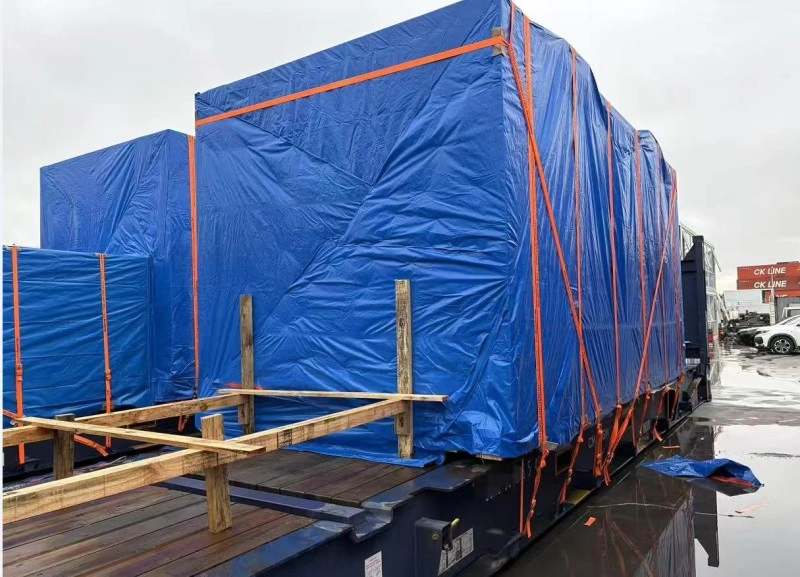
Why Oversized Cargo Needs Better Monitoring During Transit
An oversized cargo project is much more complicated than a regular project due to the size, weight, route restrictions, handling needs and project timelines.
A securing that is not tight enough can cause heavy or irregular loads to move. The vibration or tilt may be excessive for sensitive machinery. Unexpected road closures and site access is possible. Late deliveries affect the installation windows and overall project timelines. This is why more logistics teams are using layered monitoring to keep an eye on their transformers, mining equipment, steel structures, or large construction equipment.
| Monitoring Challenge | Why It Matters for Oversized Cargo |
| Limited Route Visibility | Road closures, access limits, or obstacles can delay transport |
| Cargo Movement Risk | Heavy cargo may shift if securing becomes loose or conditions change |
| Vibration and Shock | Sensitive machinery or precision equipment may be affected |
| Tilt or Leaning | High-center-of-gravity cargo may become unstable |
| Weather Exposure | Rain, humidity, heat, or salt air may affect cargo condition |
| Port and Site Handling | Cargo may face lifting, storage, or transfer risks |
| Schedule Sensitivity | Delays can affect installation windows and project milestones |
| Documentation Needs | Condition records help support inspection, insurance, and accountability |
For oversized machinery, transformers, factory equipment, and high-value project cargo, effective technology in engineering logistics helps connect route visibility, cargo condition monitoring, field updates, and risk response during transport.
How Drones Are Used in Oversized Cargo Monitoring
Drones are well suited to visual inspection, route observation and site condition review tasks which are difficult or unsafe to perform from the ground.
They are used for targeted checks, not for continuous tracking of cargoes and not for continuous monitoring but rather to offer overhead perspective and photographic evidence of checks. They are usually deployed prior to, during and after key operations when local regulations permit.
| Drone Use Case | Practical Value |
| Route Observation | Helps identify road obstacles, turning constraints, or access problems |
| Loading Site Review | Provides overhead visibility of trailer, crane, and cargo position |
| Unloading Area Check | Confirms space, ground condition, and access around the destination site |
| Cargo Condition View | Helps inspect hard-to-see cargo surfaces or securing points |
| Traffic Coordination Support | Gives a broader view of convoy movement where legally allowed |
| Port or Yard Inspection | Supports visual monitoring of storage or staging areas when permitted |
| Documentation | Creates visual records before, during, and after transport events |
How Sensors Are Used to Track Cargo Condition
Sensors provide objective data which is not possible via visual inspection, particularly in long-haul or multi-modal journeys.
Today’s IoT sensors in the vehicle cargo space gather data on a constant or real-time basis and alert the user to any conditions exceeding thresholds.
| Sensor Type | What It Tracks | Why It Matters |
| GPS Tracker | Location and movement route | Helps monitor progress and detect delays |
| Shock Sensor | Sudden impact or abnormal handling | Supports damage investigation and handling control |
| Vibration Sensor | Continuous vibration levels | Useful for precision machinery and sensitive equipment |
| Tilt Sensor | Leaning or abnormal angle changes | Helps detect instability or improper handling |
| Temperature Sensor | Heat or cold exposure | Important for temperature-sensitive components |
| Humidity Sensor | Moisture exposure | Helps prevent corrosion, condensation, or electrical damage |
| Acceleration Sensor | Sudden braking, turning, or movement | Indicates potential cargo stress events |
| Door / Seal Sensor | Unauthorized opening or access | Supports security and cargo integrity |
| Data Logger | Stores transport condition history | Useful for post-delivery inspection and records |
What Cargo Risks Can Drones and Sensors Help Detect?
The best monitoring tools are those that point to the risk indicators in advance of the escalation of small problems and/or the clear evidence following an event.
| Risk Indicator | Monitoring Method | Possible Response |
| Route Deviation | GPS tracking | Contact transport team and confirm reason |
| Sudden Impact | Shock sensor | Inspect cargo and review handling event |
| Excessive Vibration | Vibration sensor | Adjust transport speed or inspect securing |
| Cargo Tilt | Tilt sensor | Stop and verify load stability if safe to do so |
| High Humidity | Humidity sensor | Inspect packaging, desiccants, and moisture protection |
| Temperature Change | Temperature sensor | Review environmental exposure and cargo sensitivity |
| Road Obstruction | Drone or field visual check | Adjust route or transport timing |
| Unauthorized Access | Door or seal sensor | Investigate security risk |
| Loading Zone Conflict | Drone/site visual inspection | Reposition equipment or adjust sequence |
Monitoring Oversized Cargo Across Different Transport Stages
Monitoring needs change from factory to final site.
| Transport Stage | Monitoring Focus |
| Pre-Loading | Cargo condition, packaging, lifting points, and securing plan |
| Loading Operation | Crane movement, trailer position, cargo balance, and field photos |
| Road Transport | GPS location, route progress, vibration, tilt, shock, and delays |
| Port Entry | Arrival time, terminal handling, storage area, and documentation |
| Port Storage | Weather exposure, cargo condition, and security |
| Sea Transport | Humidity, vibration, shock, and condition data logging |
| Destination Arrival | Cargo condition, seal status, and delivery readiness |
| Final-Mile Delivery | Route access, site conditions, traffic control, and unloading readiness |
| Unloading | Crane operation, cargo condition, and handover inspection |
Using Monitoring Data for Risk Response and Decision-Making
Teams need to understand how to respond to data to create value.
| Monitoring Alert | Recommended Action |
| GPS Delay Alert | Check traffic, route restrictions, permit window, or driver status |
| Shock Event | Stop if appropriate, inspect cargo, and document findings |
| High Vibration | Review road condition, speed, and securing method |
| Tilt Alert | Verify load stability and trailer position |
| Humidity Alert | Inspect packaging, seals, desiccants, and waterproof covering |
| Temperature Alert | Confirm cargo sensitivity and exposure duration |
| Drone-Detected Obstruction | Adjust route, timing, or site movement plan |
| Unauthorized Access Alert | Review security and cargo integrity |
| Repeated Alert Pattern | Escalate to project manager and reassess transport plan |
Benefits of Drone and Sensor Monitoring in Engineering Logistics
These tools, when used effectively, provide tangible benefits in terms of visibility and accountability.
| Benefit | Practical Meaning |
| Real-Time Visibility | Teams know where cargo is and whether delays are developing |
| Condition Monitoring | Sensors help detect shock, vibration, tilt, humidity, or temperature issues |
| Faster Risk Response | Alerts allow teams to inspect or adjust before problems worsen |
| Better Field Coordination | Drone views and sensor data support loading, unloading, and site planning |
| Stronger Documentation | Photos, videos, and data logs support accountability |
| Improved Client Reporting | Project owners receive clearer status and risk updates |
| Insurance Support | Records can help explain when and how an incident occurred |
| Process Improvement | Post-project data helps improve future transport planning |
Limitations of Drones and Sensors in Oversized Cargo Transport
There is a clear line and technology is best used on top of it.
| Limitation | Practical Control |
| Drone Flight Restrictions | Check local rules and use approved operators where required |
| Weather Limits | Prepare alternative inspection methods during rain, wind, or poor visibility |
| Sensor Placement Errors | Install sensors at meaningful points based on cargo sensitivity |
| Poor Data Interpretation | Assign trained personnel to review alerts and reports |
| Network Coverage Gaps | Use data loggers when real-time signal is unreliable |
| Battery / Device Failure | Check device status before transport and use backups if needed |
| No Response Process | Define who acts when alerts occur |
| Weak Planning | Use monitoring as support, not as a substitute for route surveys and securing design |
How to Choose Monitoring Technology for Oversized Cargo
The best set up will vary depending on the cargo, route and project needs.
| Selection Factor | Suggested Monitoring Focus |
| High-Value Cargo | GPS, shock, tilt, condition photos, and inspection reports |
| Vibration-Sensitive Equipment | Vibration sensors, shock sensors, and speed control |
| Moisture-Sensitive Cargo | Humidity sensors, temperature sensors, and packaging checks |
| Long-Distance Road Transport | GPS tracking, route alerts, vibration, and tilt monitoring |
| Ocean Transport | Humidity, shock, vibration, and data logging |
| Final-Mile Delivery | Drone/site inspection, GPS, and field photo updates |
| High Security Risk | Seal sensors, location tracking, and controlled handover records |
| Client Reporting Needs | Dashboard, milestone updates, photo records, and data summaries |
Common Mistakes When Using Drones and Sensors for Cargo Monitoring
Highly experienced teams make occasional mistakes with the technology.
| Mistake | Better Practice |
| Using sensors without a risk plan | Match sensors to cargo risks such as shock, tilt, vibration, or humidity |
| Poor sensor placement | Install sensors where they reflect real cargo sensitivity |
| Relying only on GPS | Combine location tracking with condition monitoring when needed |
| Ignoring drone rules | Confirm local permission, safety rules, and operator requirements |
| No alert response process | Define who receives alerts and what actions follow |
| Weak securing despite monitoring | Use proper lashing, blocking, and bracing before transport |
| Not documenting condition | Take photos before loading, after securing, and after delivery |
| No post-trip review | Use monitoring data to improve future transport planning |
| Treating technology as a guarantee | Combine monitoring with planning, inspection, and supervision |
How to Choose a Logistics Partner That Uses Monitoring Technology Effectively
The end game is the provider’s ability to combine technology with know-how in oversized cargo.
| Logistics Capability | Why It Matters |
| Oversized Cargo Experience | Helps identify which risks need monitoring |
| Monitoring Plan Design | Ensures technology matches the cargo and route risks |
| Sensor Placement Knowledge | Improves data accuracy and usefulness |
| Drone Inspection Coordination | Supports visual checks of site, route, loading, and unloading conditions |
| GPS and Milestone Tracking | Improves schedule visibility |
| Condition Reporting | Helps detect shock, vibration, tilt, humidity, or temperature issues |
| Field Supervision | Connects monitoring data with real-world actions |
| Alert Response Process | Ensures warnings lead to inspection or corrective measures |
| Documentation Control | Creates reliable records for clients, insurance, and project review |
| Post-Delivery Review | Converts monitoring data into lessons for future projects |
Conclusion — Monitoring Technology Improves Visibility, Not by Itself Safety
The observation and control of oversized cargo transport is easier with the advent of drones and sensors, but drone use is not a panacea for professional planning. They can improve the visibility of logistics teams to route issues earlier, provide clear documentation of the condition of the cargo, and mitigate shock, vibration, tilt, weather, or delays risks with quicker response times when used properly. The best outcome is achieved when monitoring technology is combined with route planning, cargo securing, field inspection and experienced engineering logistics supervision.
At Bentlee we use these with site measurements, 3D load planning, specific trailers and experienced lashing, to provide a reliable end-to-end solution even for the most demanding OOG projects.