
3D load simulation is a digital planning technique which allows logistics to plan the load’s dimensions on a flat rack, before any physical load is added on. It tests key aspects such as cargo dimensions, weight distribution, center of gravity, overhang, clearance, lifting points, lashing arrangements, and more in a virtual environment. This is a simple way to make abstract measurements concrete, easily reviewable and makes shipping heavy machinery, industrial equipment or project cargo with flat rack containers much safer.
There are still a lot of shippers that believe that they can just provide the length, width, height and weight and let the flat rack planning process take over. Safe transport requires much more in practice: how the load moves in the road vehicle, port and sea, where loads are loaded and discharged, and if lashing points are in the correct alignment. Although 3D load simulation shouldn’t take the place of experienced judgment, it makes flat rack shipping safer by providing a visual, measurable, and reviewable load plan prior to actual handling.
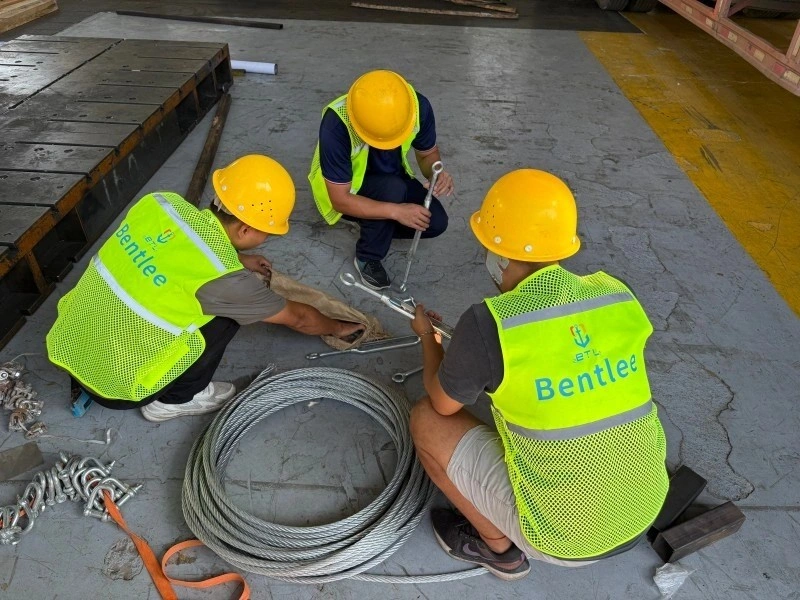
What Is 3D Load Simulation in Flat Rack Shipping?
To test in advance for fit, balance and securing options, 3D load simulation is the making of an accurate digital model of the cargo and the flat rack. Planners can rotate the load, measure clearances, simulate lifting sequences and verify lashing angles using detailed cargo data and container information without ever touching the equipment.
| Item | Explanation | Planning Method |
| Digital visualization of cargo loading on a flat rack container | Main Inputs | Cargo dimensions, weight, shape, lifting points, center of gravity |
| Container Data | Flat rack size, deck capacity, securing points, structural limits | Best Used For |
| Oversized cargo, heavy machinery, irregular equipment, project cargo | Main Purpose | Improve safety, accuracy, communication, and risk control before loading |
Its uses are numerous in Bentlee every day when dealing with OOG shipment, as it is a tool that resolves the gap between theory and practice on 20FR or 40FR flat racks.
Why 3D Load Simulation Matters for Flat Rack Shipping Safety
In addition to the above, the contents of flat rack shipments are exposed and these can have an overhang or an irregular shape of the cargo, which results in a greater inherent risk. Traditional planning methods can miss hidden problems until it is too late. flat rack container shipping safety benefits enormously when 3D simulation reveals issues early.
| Safety Challenge | How 3D Simulation Helps |
| Cargo overhang | Shows whether length or width exceeds safe limits |
| Uneven weight distribution | Helps adjust cargo placement before loading |
| High center of gravity | Identifies tipping or instability concerns |
| Limited lashing points | Helps plan realistic securing directions |
| Deck pressure concentration | Shows where support or load spreading may be needed |
| Crane access limitations | Helps confirm lifting space and loading sequence |
| Port handling uncertainty | Gives teams a clear visual reference before operations |
Key Cargo Data Needed Before 3D Load Simulation
The simulation results are only correct if the input data are correct. When the information is incomplete or estimated, the plans don’t work out when the actual cargo shows up.
| Cargo Information | Why It Matters |
| Length, width, height | Determines fit, overhang, and OOG classification |
| Gross weight | Helps check container capacity and handling method |
| Center of gravity | Supports stability and lashing design |
| Lifting points | Helps plan crane loading and unloading |
| Base frame/contact points | Shows how weight transfers to the flat rack deck |
| Technical drawings | Improves simulation accuracy |
| Cargo photos | Helps identify protrusions, fragile areas, and lashing limits |
| Surface sensitivity | Helps plan padding, edge protection, and covers |
| Lashing restrictions | Prevents damage from incorrect securing points |
Final dimensions and recent photos are always required from clients, as protruding brackets or sensitive coatings can make a huge difference in the optimal loading strategy.
How 3D Simulation Improves Load Positioning and Weight Distribution
One of the most important considerations to avoid accidents in flat rack is to position the load correctly. A well-balanced load will help to minimise stress on the deck of the container, improve the stability of the load on the truck or vessel and make the lashing more effective.
| Planning Factor | Risk If Ignored | How 3D Simulation Helps |
| Cargo position | Uneven load or handling difficulty | Shows the best cargo placement on the deck |
| Weight distribution | Deck overload or transport instability | Helps identify load concentration points |
| Overhang | Carrier rejection or safety risk | Visualizes overhang before booking |
| Contact points | Damage to cargo base or container deck | Shows where support materials may be required |
| Center of gravity | Tipping risk during handling | Supports safer lashing and lifting planning |
| Lashing angle | Weak securing force | Helps adjust anchor positions and direction |
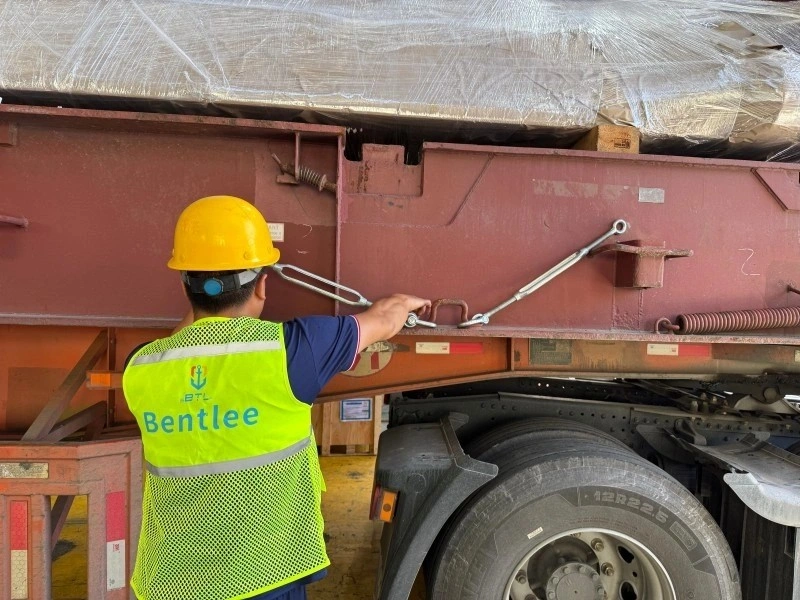
How 3D Load Simulation Supports Lashing and Securing Design
The 3D Load Simulation is beneficial when designing lashing and securing.When it comes to lashing and securing design, 3D Load Simulation comes in handy.
| Securing Element | What 3D Simulation Can Check | Practical Benefit |
| Lashing direction | Whether chains or belts can be placed at effective angles | Improves securing force |
| Anchor point position | Whether flat rack securing points align with cargo needs | Reduces weak or awkward lashing |
| Blocking and bracing | Where physical stops should be placed | Helps prevent sliding and rolling |
| Anti-slip materials | Where friction support is needed | Reduces movement under vibration |
| Edge protection | Areas where lashings may contact sharp or coated surfaces | Prevents surface damage |
| Support frames | Whether irregular cargo needs additional support | Improves stability and load transfer |
How 3D Simulation Helps Reduce Loading and Port Handling Risks
Numerous flat rack problems manifest themselves when loading or on arrival at the port, not during the ocean voyage. The 3D models give loading teams visual instructions and enable carriers to view the loading plan in advance.
| Handling Stage | Common Risk | How 3D Simulation Helps |
| Factory loading | Incorrect cargo orientation | Provides a clear loading reference |
| Crane lifting | Unsafe lifting angle or blocked lifting point | Helps review lifting access before operation |
| Inland trucking | Excessive width, height, or overhang | Supports route and clearance planning |
| Port handling | Terminal uncertainty about OOG cargo | Provides visual and dimensional details |
| Carrier acceptance | Late rejection due to cargo layout concerns | Helps submit clearer booking information |
3D Simulation vs Traditional Flat Rack Load Planning
There are many cargoes that can be shipped successfully by experienced teams, with traditional methods. For more complex, expensive or more unusual items, however, 3D simulation provides an additional level of confidence.
| Planning Method | Best For | Limitation |
| Basic 2D drawing review | Simple cargo with clear dimensions | May not reveal lashing conflicts or visual fit issues |
| Manual load planning | Experienced teams handling familiar cargo types | Depends heavily on individual judgment |
| Photo-based review | Early-stage feasibility checks | May miss exact dimensions and center-of-gravity issues |
| 3D load simulation | Oversized, irregular, high-value, or complex flat rack cargo | Requires accurate cargo data and planning time |
Cargo Types That Benefit Most from 3D Flat Rack Load Simulation
When important little details are missed, even the most experienced professionals have issues.
| Cargo Type | Why 3D Simulation Is Useful |
| Heavy machinery | Helps check load balance, deck pressure, and lashing layout |
| Injection molds | Supports precise positioning and shock/vibration risk review |
| Transformers | Helps manage concentrated weight and lifting requirements |
| Skid-mounted equipment | Shows base support and securing options |
| Wind power components | Helps visualize irregular shape and overhang |
| Solar structures | Supports long-frame placement and protective planning |
| Pumps and compressors | Helps check center of gravity and mounting points |
| Cylindrical tanks | Supports rolling prevention and bracing design |
Common Mistakes 3D Load Simulation Helps Prevent
When important little details are missed, even the most experienced professionals have issues.
| Mistake | Possible Consequence | Better Practice |
| Using estimated dimensions | Booking changes or carrier rejection | Confirm measured cargo data before simulation |
| Ignoring protrusions | Unexpected overhang or handling conflict | Include photos, drawings, and final packing details |
| Missing center-of-gravity data | Tipping or poor lashing design | Request COG information from equipment supplier |
| Poor lashing point planning | Weak securing or cargo damage | Match lashing layout to cargo structure |
| Ignoring inland transport | Road clearance or permit issues | Review full route, not only ocean transport |
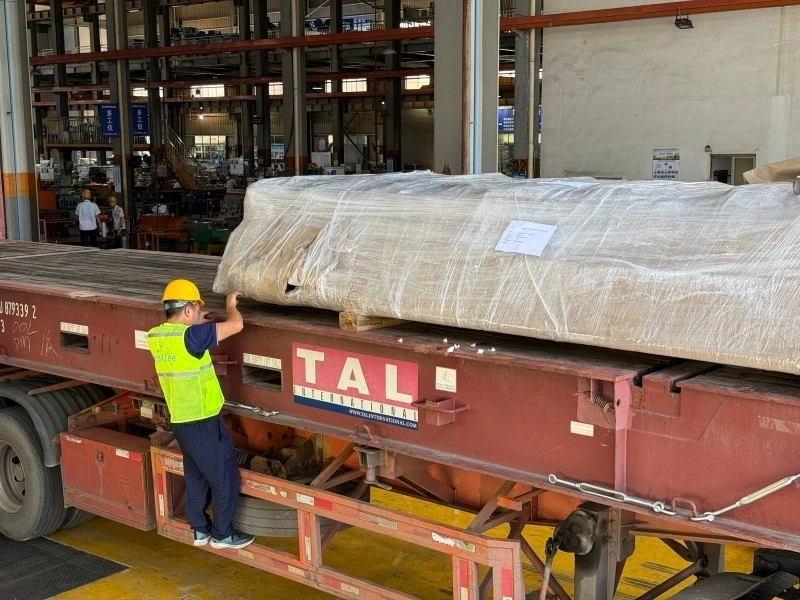
What Shippers Should Prepare Before Requesting a 3D Load Plan
Having all the information ready in advance will significantly reduce planning time and enhance the accuracy.
| Information to Prepare | Why It Helps |
| Final packed dimensions | Ensures the simulation matches real shipment condition |
| Gross weight | Confirms flat rack capacity and lifting requirements |
| Technical drawing | Supports accurate cargo shape and load modeling |
| Cargo photos | Helps identify irregular surfaces and protruding parts |
| Center of gravity | Improves stability and securing analysis |
| Lifting points | Helps plan safe loading and unloading |
| Base frame details | Shows where weight contacts the flat rack deck |
| Protection needs | Helps plan covers, padding, and edge protection |
Limitations of 3D Load Simulation Buyers Should Understand
3D simulation has become a very useful planning tool, but is only a component of a safe operation. The actual conditions, the supervision on the site and the rules of the carrier remain relevant.
| Limitation | Practical Meaning |
| Input accuracy matters | Wrong cargo data leads to unreliable simulation |
| Real-world loading may vary | On-site supervision is still necessary |
| Carrier rules differ | Final acceptance depends on carrier and route |
| Packaging may change dimensions | Load plan must be updated after packing |
| Simulation cannot control weather | Protective measures are still required |
Conclusion — 3D Load Simulation Makes Flat Rack Planning More Predictable
3D load simulation enhances the safety of flat rack shipping with real-time visualization and testing of all critical decisions before cargo hits the loading dock. It facilitates the detection of fit, overhang, weight distribution, center of gravity, lashing and handling hazards, particularly with oversized and irregular shaped and high value industrial equipment.
With accurate cargo data, professional engineering judgment and proper on-site supervision, the digital load planning lowers uncertainty and helps to ensure smoother operations from factory to final destination. At Bentlee we’ve learned from experience the benefits of early 3D simulation in preventing expensive surprises and ensuring project teams have more confidence in shipping complex cargo out of the ordinary. When you have an upcoming flat rack shipment, providing your cargo information early will ensure that we can provide you with a viable, safe to load load plan that suits your needs.