
Flat rack container shipping is frequently needed for heavy industrial pumps and compressors when they are too large, too heavy, too have a skid base, or the container excess packaging. Sensitive parts such as motors, couplings, flanges and precision surfaces are often found on these machines, which are normally used in oil & gas, mining, power generation, water treatment and chemical processing and require careful handling. Accurate measurement, center of gravity review, base support, vibration control, secure lashing and robust moisture protection during transport are key factors of safe transport.
Heavy equipment shipping with flat racks is not just a transportation service; it is a logistics process tailored to specific cargo, designed to safeguard mechanical alignment, base stability, cargo surface qualities, lifting safety and securing reliability from road to port and ocean. While many shippers consider only the total weight, there are also significant considerations of skid design, protruding parts, lashing points and exposure to the environment. For oversized pump skids, compressor packages, motor assemblies, and heavy process equipment, flat rack shipping for industrial pumps can provide the open loading access and securing flexibility needed for safe international transport.
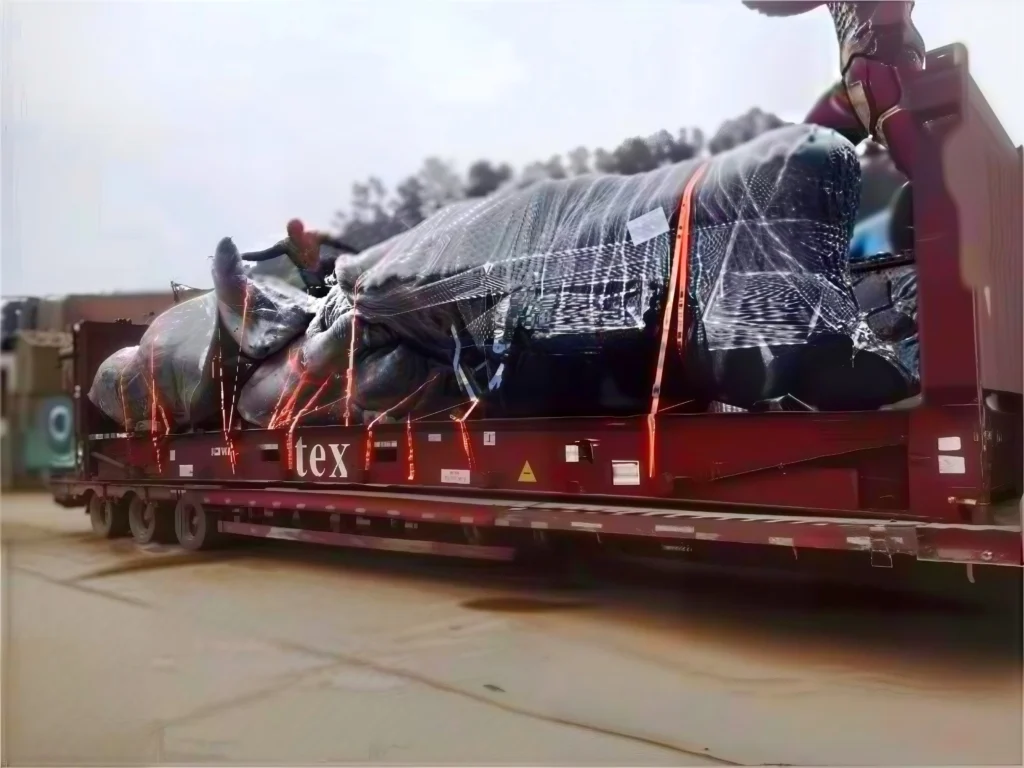
Why Industrial Pumps and Compressors Often Use Flat Rack Shipping
Frequently, the only way to safely lift and securely fasten a pump or compressor is to provide access to the unit, which can be achieved with a flat rack container, where enclosed containers are not an option. The dimensions, weight distribution and fragile parts are often outside of the norm.
| Reason for Flat Rack Use | Practical Meaning for Pumps and Compressors |
| Oversized dimensions | Equipment may exceed container door width, height, or internal space |
| Heavy skid base | Requires strong platform support and load distribution |
| Crane loading access | Allows safe top loading when forklift loading is not suitable |
| Irregular shape | Open sides help position equipment and lashing points |
| Protruding components | Valves, piping, motors, or panels may need extra clearance |
| Custom securing needs | Lashing can be arranged around structural points |
| Project cargo suitability | Supports international transport for industrial projects |
Pump and Compressor Types Commonly Shipped on Flat Racks
There are various pump and compressor models that pose different transport challenges. These differences help to make a smart loading, lashing and protection plan.
| Equipment Type | Shipping Concern | Planning Focus |
| Centrifugal pumps | Flanges, shafts, and casing protection | Support base and avoid stress on connections |
| Slurry pumps | Heavy casing and irregular weight | Load distribution and secure base restraint |
| Water pumps | Large dimensions and corrosion exposure | Weather protection and stable bedding |
| Chemical process pumps | Sensitive seals and material compatibility | Moisture control and careful handling |
| Air compressors | Motor alignment and vibration sensitivity | Shock reduction and lashing from skid points |
| Gas compressors | High value and complex assemblies | Lifting, protection, and documentation |
| Compressor skids | Heavy base and protruding components | Skid support, lashing access, and clearance |
| Packaged pump stations | Large footprint and multiple components | Route review and multi-point securing |
Key Cargo Data Required Before Booking Flat Rack Transport
Up-front information ensures that bookings are not denied, delays are not avoided, and no surprises will occur on-site. Wise logistics teams always ask for detailed information right from the start.
| Information to Prepare | Why It Matters |
| Final packed dimensions | Determines flat rack size, overhang, and OOG status |
| Gross weight | Confirms payload, crane capacity, and inland transport requirements |
| Center of gravity | Supports safe lifting, load positioning, and lashing design |
| Skid/base frame drawing | Shows where weight contacts the flat rack deck |
| Lifting points | Helps plan crane loading and unloading safely |
| Securing points | Prevents lashing on weak or sensitive components |
| Cargo photos | Helps identify protrusions, clearance needs, and protection areas |
| Packing method | Affects final dimensions and lashing access |
Load Planning for Heavy Pumps and Compressors on Flat Rack Containers
The first step in effective load planning is to consider the structure of the equipment and not just the available deck space. The aim is to achieve a stable weight distribution that is respectful of both flat rack and cargo.
| Load Planning Factor | Risk If Ignored | Practical Recommendation |
| Skid base support | Base deformation or unstable cargo | Support load-bearing frame points |
| Weight distribution | Deck overload or poor transport balance | Position heavy points over suitable deck areas |
| Center of gravity | Tipping or unstable handling | Review COG before loading |
| Overhang | Carrier rejection or cargo stress | Confirm overhang limits before booking |
| Protruding parts | Impact or lashing interference | Leave clearance and protect sensitive components |
| Deck pressure | Flat rack or cargo base damage | Use bedding, plates, or support frames |
Lifting and Loading Requirements for Pumps and Compressors
The lifting stage is one of the most critical stages, as the internal components of the pumps or compressors are frequently not precisely aligned.
| Loading Requirement | Why It Matters | Practical Control |
| Verified lifting points | Prevents frame distortion or component damage | Use manufacturer-approved lifting points |
| Crane capacity | Supports safe lifting at required radius | Match crane plan to cargo weight and site conditions |
| Level lifting | Protects alignment and avoids impact | Use proper rigging and spreader beam if needed |
| Component clearance | Prevents damage to piping, valves, and panels | Plan lifting path before operation |
| Loading supervision | Reduces miscommunication and handling errors | Assign an experienced supervisor |
Lashing, Blocking, and Bracing for Industrial Pumps and Compressors
Securing must transmit loads to the strongest components of the equipment, namely, the skid or base frame, while isolating the more sensitive parts.
| Securing Method | Best Used For | Key Caution |
| Chain lashing | Heavy skid-mounted equipment | Avoid contact with sensitive components |
| Webbing belts | Protected or lower-risk surfaces | Must be rated and correctly positioned |
| Blocking | Preventing forward/rear movement | Fix against structural base points |
| Bracing | Controlling side movement | Avoid pressure on piping or panels |
| Anti-slip mats | Smooth skid contact areas | Deck and base must be clean and dry |
Vibration and Shock Protection During Transport
Vibration can cause bolts to loosen, motor misalignment and damage to sensitive parts can occur during road, port and sea transportation if not considered.
| Vibration-Sensitive Area | Possible Damage | Preventive Measure |
| Motor alignment | Misalignment or operational issues | Secure base and reduce vibration exposure |
| Couplings and shafts | Impact or alignment shift | Protect and avoid direct lashing contact |
| Control panels | Electrical damage or moisture entry | Use covers, padding, and moisture control |
| Valves and gauges | Breakage from impact or vibration | Protect protruding parts |
Corrosion and Weather Protection for Pump and Compressor Shipments
Flat rack cargo is carried on open decks where moisture and salt-air penetration is a concern for extended ocean voyages.
| Exposure Risk | Possible Impact | Recommended Protection |
| Rain and sea spray | Rust and water entry | Waterproof covers and sealed openings |
| Humidity | Condensation and corrosion | Desiccants, VCI film, or vacuum packing |
| Machined surfaces | Rust or scratches | Anti-rust oil and protective wrapping |
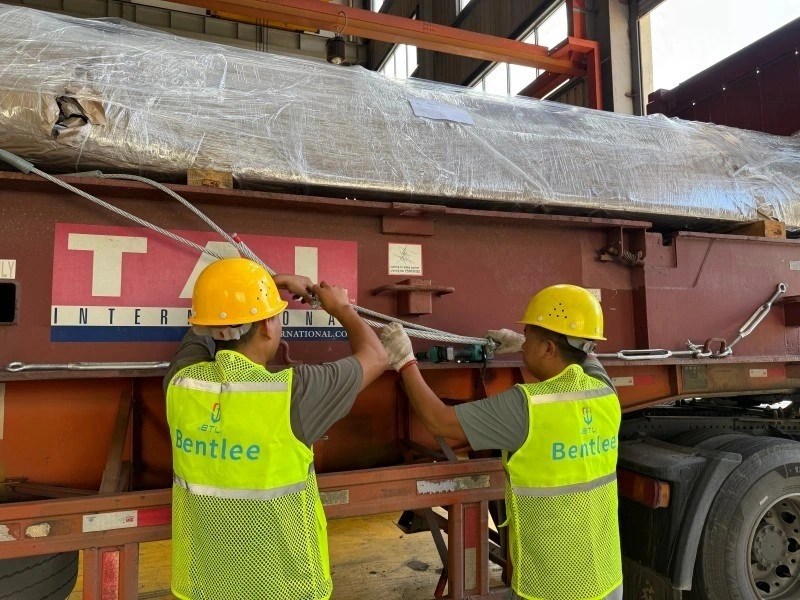
Flat Rack vs Other Transport Options for Pumps and Compressors
There are several choices for oversized pumps and compressor movements that can be compared to determine which is the most suitable alternative: flat rack shipping.
| Transport Option | Best For | Limitation |
| Flat rack container | Wide, heavy, skid-mounted, or irregular pumps and compressors | Requires lashing, weather protection, and OOG booking |
| Open top container | Tall equipment fitting within container width and length | Less side access and width flexibility |
| Lowbed trailer | Domestic or inland oversized movement | Not a complete ocean shipping solution alone |
| Breakbulk shipping | Extremely large or very heavy equipment | More handling and special vessel planning |
Cost Factors in Flat Rack Shipping for Industrial Pumps and Compressors
The total cost is not just the ocean freight rate; there are preparation/handling and protection elements that come into play.
| Cost Factor | How It Affects the Shipment |
| Dimensions | Oversized cargo may require special booking and route review |
| Weight | Heavier equipment may need stronger lifting and support |
| Lashing and support | Heavy skids may need chains, bracing, bedding, or frames |
| Weather protection | Covers, VCI, or vacuum packing add cost but reduce risk |
Pre-Shipment Checklist for Pump and Compressor Flat Rack Transport
A structured checklist helps to maintain projects on track and reduces last-minute problems.
| Checklist Item | Responsible Party | Why It Matters |
| Confirm final dimensions | Shipper / manufacturer | Prevents booking errors |
| Verify lifting points | Manufacturer / rigging team | Reduces lifting damage risk |
| Protect sensitive components | Packing team | Reduces vibration, moisture, and impact damage |
| Review route | Transport provider | Avoids road or port restrictions |
Common Mistakes to Avoid
Even veteran teams can miss things that cause issues down the road.
| Mistake | Possible Consequence | Better Practice |
| Using estimated dimensions | Booking rejection or extra cost | Measure final packed cargo |
| Lashing over components | Damage to valves, pipes, or panels | Secure from skid or structural points |
| Weak corrosion protection | Rust during ocean shipping | Use anti-rust, covers, VCI, or sealed packing |
| No final inspection | Hidden securing issues | Inspect and document after loading |
Conclusion — Industrial Pumps and Compressors Need Cargo-Specific Flat Rack Planning
Heavy industrial pumps and compressors can be sent flat rack container shipping, but each shipment is a custom engineering task. All this and more – accurate cargo data, proper skid support, verified Centre of Gravity, careful lifting, targeted lashing, vibration damping and effective corrosion protection make sure that mechanical integrity is protected from the factory to the site.
When these are managed early on in the process, manufacturers and project teams avoid unnecessary damage, maintain delivery timelines, and ensure the safety of valuable assets that are essential to operations globally. The best way to be sure of having pumps and compressors ready for installation and performance is to plan thoroughly.