
Pre-move Site Survey is a comprehensive technical examination of the source factory and the destination site, which collects a detailed inventory of equipment, access routes, lifting conditions and the readiness of the site for installation prior to any dismantling, packaging, or transportation of equipment. This survey is particularly beneficial in factory moves that call for heavy machinery, CNC machines, production lines, presses, or other equipment.
A lot of businesses are under the impression that a site survey is just a way to gauge the size of machines. In fact, a good pre-move site survey looks at so much more than center-of-gravity points, floor load capacity and utility connections, it also takes into account the readiness of the foundation at the new location. The first step in a factory relocation shouldn’t be equipment break down; it should begin by conducting a detailed site survey to convert assumptions into measurable relocation data. This first effort can cut the risks of damage, delays, and the possibility of additional costs when relocated from one location to another within the factory.
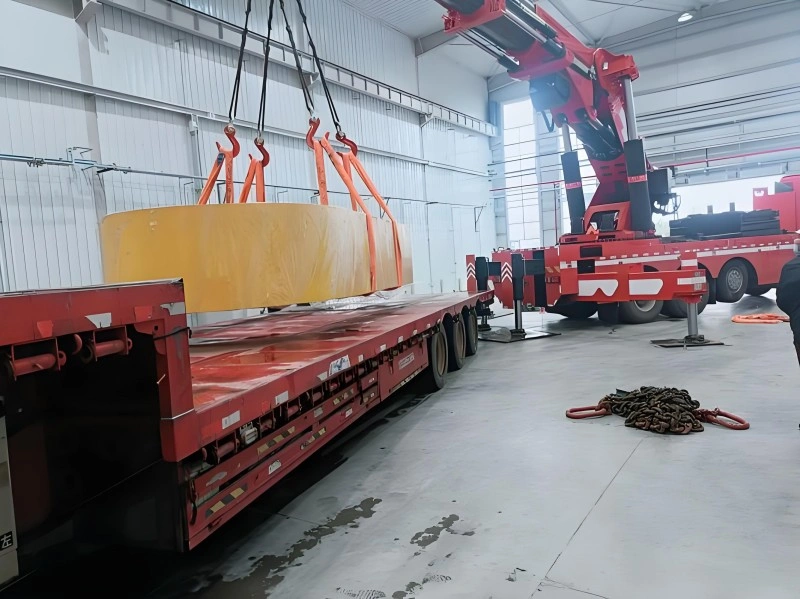
What Is a Pre-Move Site Survey in Factory Relocation?
Pre-move site survey is a structured technical survey carried out to gather all relocation data prior to the actual relocation of industrial equipment or production lines. It encompasses several aspects that have a direct impact on the development of the project.
| Survey Area | What It Checks | Why It Matters |
| Equipment Data | Size, weight, structure, lifting points, sensitivity | Determines handling and transport method |
| Origin Site Access | Doorways, aisles, ramps, floor condition, loading area | Confirms whether equipment can be removed safely |
| Lifting Conditions | Crane space, forklift access, overhead clearance | Supports safe lifting and rigging planning |
| Utility Connections | Power, air, water, gas, hydraulic lines | Prevents unsafe disconnection or damage |
| Packaging Needs | Moisture, rust, vibration, dust, impact risks | Helps select suitable protection methods |
| Transport Constraints | Trailer type, route, permits, port rules | Reduces delay and compliance risk |
| Destination Readiness | Foundation, utilities, access, installation area | Supports faster reinstallation and restart |
This holistic approach guarantees that any decision from container selection to lifting plans is based on proven data, not just estimates.
Why a Pre-Move Site Survey Is Critical Before Factory Relocation
One of the more common things that cause factory relocation projects to go over budget and calendar is not conducting a pre-move site survey. The survey eliminates uncertainty and prevents decisions based on incomplete information.
| Survey Benefit | Practical Value | Example |
| Safer Handling | Confirms lifting points and moving routes | Avoids unsafe forklift or crane use |
| Better Cost Control | Identifies special equipment and labor needs early | Reduces last-minute rental or modification costs |
| Shorter Downtime | Helps create a realistic moving sequence | Production lines can be relocated in phases |
| Damage Prevention | Identifies sensitive parts and protection needs | Control panels and precision components stay protected |
| Accurate Scheduling | Reveals site constraints before work starts | Avoids delay from blocked access or unready foundations |
| Better Documentation | Creates a clear record before relocation | Supports insurance and project handover |
It’s a point any experienced team knows, but after all, everything is going according to plan.
Origin Site Survey Checklist: What to Inspect Before Moving Equipment
The origin site survey is to determine if equipment can be safely disconnected, moved out, lifted, loaded and shipped. This inspection should occur well in advance of commencement of any dismantling works.
| Checklist Item | What to Record | Why It Matters |
| Equipment Name and ID | Machine name, model, serial number, location | Prevents confusion during dismantling and reinstallation |
| Dimensions | Length, width, height, irregular protrusions | Confirms access route and transport feasibility |
| Weight | Machine weight and accessory weight | Determines lifting equipment and trailer choice |
| Existing Condition | Photos, damage notes, leakage, wear | Supports accountability and insurance records |
| Utility Connections | Electrical, pneumatic, hydraulic, water, gas | Enables safe disconnection planning |
| Foundation and Anchors | Bolt positions, base plates, leveling points | Helps dismantling and future reinstallation |
| Surrounding Clearance | Space around machine for lifting or skates | Determines handling method |
| Internal Route | Aisles, corners, ramps, doorways, overhead clearance | Confirms whether the machine can exit safely |
| Loading Area | Crane position, trailer access, ground strength | Supports safe loading planning |
Take photos and measurements on site, and document everything.
Destination Site Survey Checklist: What to Confirm Before Equipment Arrives
The readiness of the destination site is as critical as equipment gets off the original factory floor. Inbound goods that simply end up in a landfill waste.Inbound goods that simply end up in a landfill cost.
| Checklist Item | What to Confirm | Risk If Not Ready |
| Installation Area | Space, layout, machine orientation, working clearance | Equipment cannot be positioned correctly |
| Foundation | Strength, flatness, anchor points, vibration control | Installation delay or unstable operation |
| Floor Load Capacity | Weight-bearing capacity of route and final position | Floor damage or safety risk |
| Access Route | Gates, doors, aisles, turning radius, overhead clearance | Equipment may be blocked at entrance |
| Utility Readiness | Power, air, water, gas, hydraulic connections | Machine cannot be tested after installation |
| Lifting Equipment Access | Crane, forklift, gantry, or rigging space | Unloading and positioning delays |
| Temporary Storage | Area for accessories, crates, tools, and spare parts | Parts may be misplaced or damaged |
| Testing Area | Space and conditions for trial operation | Delayed production restart |
Equipment Data Checklist: Measurements, Weight, and Technical Details
One of the most critical aspects of the site survey is the accuracy of the equipment data. The best transport plan without precise number are not going to work.
| Equipment Data | What to Document | How It Affects Relocation |
| Overall Dimensions | Full machine size before dismantling | Determines internal route and loading feasibility |
| Transport Dimensions | Size after removable parts are detached | Helps choose trailer or container type |
| Gross Weight | Total machine weight | Determines lifting and transport capacity |
| Center of Gravity | Balance point and lifting stability | Supports safe hoisting and securing |
| Lifting Points | Approved lifting locations | Prevents structural damage |
| Sensitive Components | Sensors, panels, spindles, controls | Determines protection method |
| Fluids or Batteries | Oil, coolant, lithium batteries, chemicals | Affects safety and compliance planning |
| Accessories | Fixtures, tools, guards, manuals, spare parts | Prevents missing items after relocation |
Access Route Checklist: Internal Routes, Loading Areas, and Road Conditions
If access is not checked before the move then it can be a cause of delay. Carefully take measurements of all chokes.
| Route Checkpoint | What to Measure or Inspect | Possible Problem |
| Doorways and Gates | Width, height, threshold height | Equipment cannot pass through |
| Aisles and Corners | Width, turning radius, obstacles | Machine may need partial dismantling |
| Floor Condition | Strength, slope, cracks, surface quality | Unsafe movement or floor damage |
| Overhead Clearance | Pipes, beams, cables, lights | Collision risk during movement |
| Ramps | Angle, surface, load capacity | Loss of control or access failure |
| Loading Area | Trailer access, crane position, ground bearing | Unsafe loading or schedule delay |
| External Road | Width, bridge limits, traffic restrictions | Permit or route adjustment required |
Lifting and Handling Checklist: Cranes, Forklifts, Rigging, and Skates
The equipment structure and site conditions, as well as the weight, should all be taken into account when choosing lifting and handling methods.
| Handling Item | What to Confirm | Why It Matters |
| Forklift Capacity | Rated capacity, fork length, load center | Prevents overload and unstable lifting |
| Crane Capacity | Lifting radius, boom length, working area | Ensures safe hoisting |
| Rigging Gear | Slings, shackles, chains, spreader beams | Matches load weight and lifting points |
| Machinery Skates | Load rating, wheel type, floor condition | Supports controlled indoor movement |
| Hydraulic Jacks | Capacity and synchronized lifting method | Prevents uneven lifting |
| Ground Bearing | Floor or ground strength under crane/forklift | Avoids sinking, cracking, or tipping |
| Safety Zone | Restricted area around lifting operation | Protects workers during handling |
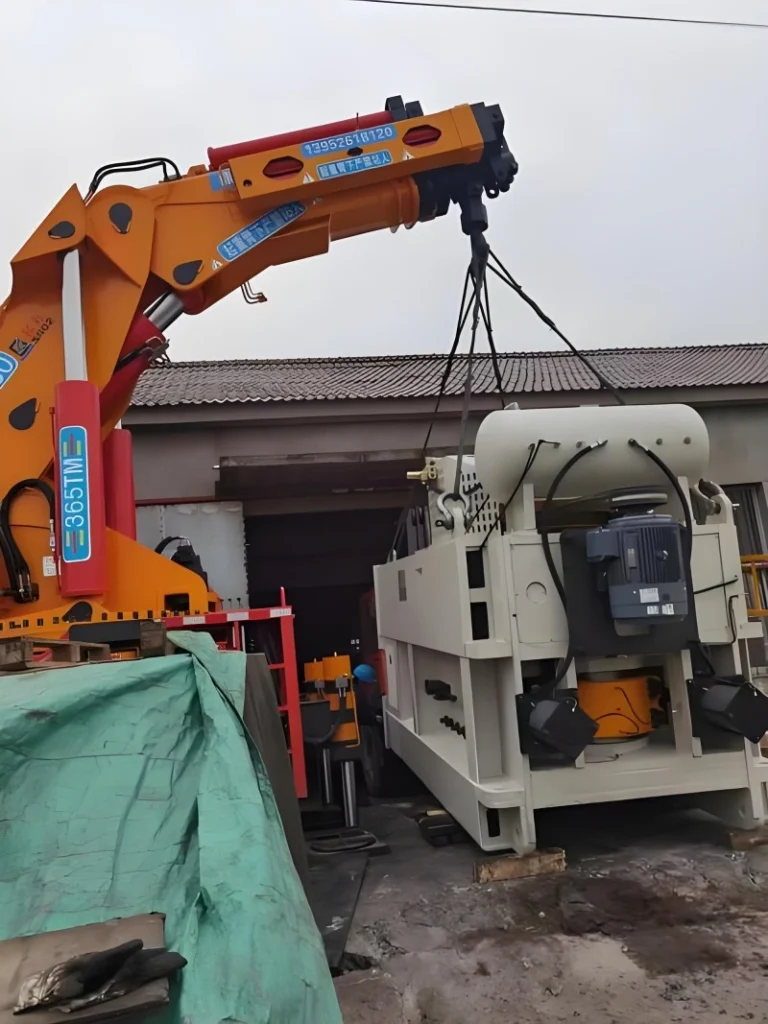
Packaging and Protection Checklist for Industrial Equipment
Protection requirements should be determined at the time of a site survey as they depend on equipment sensitivity, route length, and mode of transport.
| Protection Requirement | Recommended Use | Risk Reduced |
| Wooden Crate | Detachable parts, accessories, precision components | Impact and handling damage |
| Vacuum Sealing | Rust-sensitive machinery and metal parts | Moisture and corrosion |
| Moisture Barrier | Ocean freight or long-distance storage | Humidity exposure |
| Desiccants | Sealed packaging or crates | Condensation buildup |
| VCI Protection | Exposed metal surfaces | Rust during storage and shipping |
| Shock Pads | Precision machines or fragile components | Vibration and impact damage |
| Control Panel Wrapping | Screens, electrical cabinets, sensors | Dust, moisture, scratches |
| Handling Labels | Crates, fragile parts, lifting points | Incorrect handling |
Documentation Checklist: Photos, Reports, Labels, and Responsibility Records
Documentation helps minimise conflict, facilitates co-ordination and ensures accurate reinstallation.
| Document | Purpose | When to Prepare |
| Equipment Photo Record | Shows pre-move condition | Before dismantling |
| Survey Report | Summarizes equipment, route, and site findings | After site inspection |
| Measurement Record | Confirms dimensions, weight, and clearance data | During survey |
| Component Label List | Tracks removed parts, cables, and accessories | Before disassembly |
| Packing List | Supports transport and reinstallation | During packing |
| Lifting Plan | Defines handling method and equipment | Before moving day |
| Responsibility Matrix | Clarifies who handles each task | Before project execution |
| Handover Checklist | Records transfer between teams | At each key stage |
Common Site Survey Mistakes to Avoid
Even well-versed teams can miss the point. The following are some of the most common challenges that we encounter in factory relocation projects.
| Mistake | Why It Creates Risk | Better Practice |
| Only Measuring the Machine | Equipment may not fit through the route | Measure the full movement path |
| Ignoring Destination Site | Equipment arrives but cannot be installed | Survey both origin and destination |
| Estimating Weight | Lifting and trailer plans may be wrong | Verify weight from drawings or machine plates |
| Ignoring Center of Gravity | Load may tilt during lifting | Identify balance points before rigging |
| Forgetting Overhead Clearance | Collision during movement | Check every vertical obstacle |
| No Photo Records | Damage disputes become harder to resolve | Photograph condition before work starts |
| Poor Labeling | Reinstallation becomes confusing | Label cables, parts, and accessories clearly |
How to Turn Site Survey Findings Into a Relocation Plan
This should directly result in a practical relocation plan, rather than being left in a report folder. The findings give rise to actionable steps.
| Survey Finding | Planning Decision It Supports |
| Equipment is taller than doorway clearance | Partial dismantling or alternate exit route |
| Floor route has limited load capacity | Use lighter handling tools or reinforce route |
| Machine has sensitive control panels | Add protective wrapping and shock control |
| Cargo exceeds standard container limits | Consider flat rack, open top, or lowbed trailer |
| Destination foundation is incomplete | Delay delivery or arrange temporary storage |
| Route requires permits | Build permit approval time into schedule |
| Multiple machines must restart quickly | Create phased moving and installation sequence |
Conclusion — A Reliable Factory Relocation Starts With a Reliable Site Survey
Every decision made prior to the first machine relocation is crucial to the success of a factory move. Businesses can perform a survey of the origin and destination sites, record equipment data and access routes, determine the lifting method, and prepare installation conditions before moving industrial equipment, thereby reducing uncertainty and moving the equipment with more control.
A comprehensive pre-move site survey checklist enables operations and logistics staff to proceed with complex projects with confidence and certainty, knowing their work is being done safely and on time. If all the critical factors are documented and measured in the early stages, the whole relocation process can be more predictable, less risky, and, ultimately, more successful.