
Vacuum packing together with wooden crate provides multi-level protection of the cargo, which helps to tackle the environmental and mechanical challenges in international shipping. Vacuum packing creates a moisture, dust, corrosion, salt air and contamination barrier and wooden crates offer rigid structural strength in the face of impact, compression, stacking pressure, forklift handling and ship vibration. For exporters of high value items such as machinery, molds, electronics, precision components and oversized industrial equipment, this is often the most practical way to protect the cargo on a long sea voyage or multi-modal shipment.
A lot of buyers take the assumption that a solid wood crate is enough for export. In fact, crates are excellent at physical protection, but offer minimal protection from humidity, condensation or corrosion within the shipping container. Vacuum packing and custom crates are not “double packaging”, but a conscious layered protection approach that is able to distinguish between environmental control and physical protection. Planning both layers together prior to loading will have positive effects on sea freight, OOG transport and long term storage.
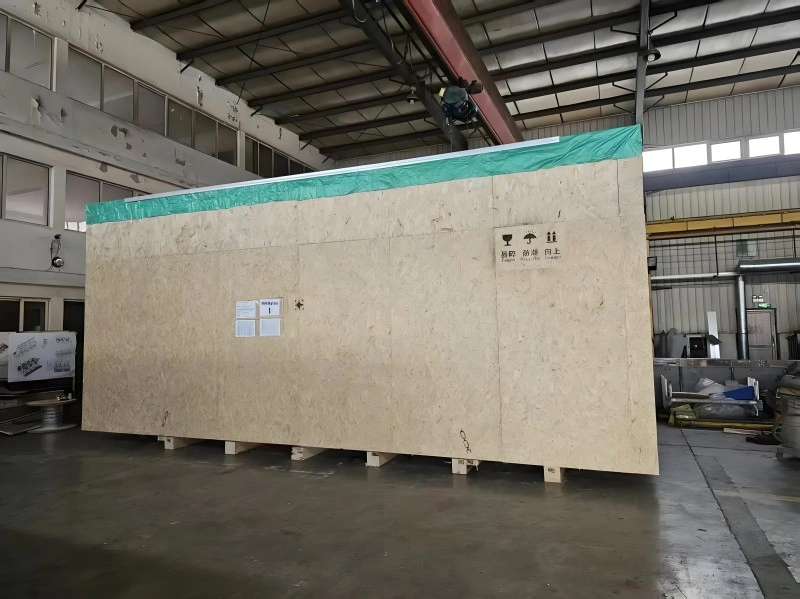
Why Vacuum Packing and Wooden Crates Work Better Together
That’s why each method addresses different problems, making them wonderful to work together in real world export situations. Vacuum packing controls the unseen elements – moisture, corrosion and dust; while wooden crates deal with the visible mechanical stress when loading, shipping and transporting across the sea.
For machinery, molds, electronics, and precision parts exposed to sea freight humidity and heavy handling, vacuum packing combined with custom crates helps address both environmental and physical cargo protection needs.
| Protection Need | Vacuum Packing Role | Wooden Crate Role |
| Moisture protection | Creates a sealed barrier against humid air | Limited unless lined or combined with moisture control |
| Corrosion prevention | Supports desiccants, VCI, and anti-rust | Protects from direct physical contact but not humidity alone |
| Dust control | Keeps cargo sealed and clean | Reduces dust exposure but may have gaps |
| Impact protection | Limited unless combined with padding | Provides rigid structural protection |
| Forklift handling | Does not provide load-bearing support | Supports safer handling when properly designed |
| Stacking pressure | Not designed for compression | Provides structural load resistance |
| Long-term storage | Helps maintain internal cargo condition | Helps protect against handling and external contact |
What Vacuum Packing Protects Against
Vacuum packing is used mainly to provide environmental protection. It removes the air, sealing the cargo inside the barrier film, thus forming a stable micro-climate that significantly decreases the chance of any moisture damage to the cargo on long trips.
| Risk | How Vacuum Packing Helps | Cargo Examples |
| Moisture and humidity | Reduces exposure to humid air and water vapor | Machinery, molds, metal parts |
| Corrosion | Supports use of desiccants, VCI, or anti-rust oil | Bearings, gears, shafts, tooling |
| Dust contamination | Keeps components sealed during storage and transport | Electronics, control panels, precision parts |
| Salt air | Adds a barrier during port and sea freight exposure | Heavy equipment and metal structures |
| Condensation | Helps control moisture inside the package | Sea freight cargo |
| Long storage | Maintains cleaner, drier internal conditions | Spare parts and equipment awaiting installation |
What Wooden Crates Protect Against
Vacuum packing provides the mechanical strength, but the wooden crates provide it in conjunction with the vacuum. They absorb shocks, distribute weight, and enable safe handling, but are not entirely humidity-proof unless they are protected by an appropriate inner protection.
| Risk | How Wooden Crates Help | Important Limitation |
| Impact | Rigid structure absorbs external contact | Internal cushioning may still be required |
| Forklift handling | Base and crate design support movement | Poor forklift entry design may cause damage |
| Stacking pressure | Strong crate frame supports load | Must be engineered for cargo weight |
| Vibration | Can reduce movement when combined with supports | Does not replace internal shock protection |
| Abrasion | Keeps cargo away from direct external contact | Cargo must be secured inside |
| Weather exposure | Offers partial external shielding | Does not fully block humidity or condensation |
| Transport handling | Improves handling control | Crate design must match lifting method |
When Should Exporters Combine Vacuum Packing with Wooden Crates?
The two methods are optimal for use if there are environmental and mechanical risk factors. While not all shipments require this amount of protection, some do.
| Cargo or Situation | Why Combined Protection Makes Sense |
| Industrial machinery | Needs moisture control plus impact protection |
| Precision molds | Polished surfaces need corrosion and contact protection |
| Electronics | Requires dust, moisture, and handling protection |
| CNC machined parts | Protects against rust, scratches, and stacking pressure |
| Bearings and gears | Reduces corrosion and mechanical contamination |
| Fragile instruments | Needs sealed protection plus cushioning and crate support |
| Long-term storage | Vacuum packing controls moisture; crate protects against handling |
| OOG cargo | Exposed transport increases environmental and physical risk |
| High-value cargo | Damage consequences justify stronger layered packaging |
Vacuum Packing + Wooden Crates vs Single Packaging Methods
Layered protection can be useful when there are multiple threats present, but single methods are valuable for lower risk shipments.
| Packaging Method | Moisture Protection | Physical Protection | Best Used For | Limitation |
| Vacuum packing only | High | Low to medium | Metal parts, machinery stored indoors | Does not provide strong impact protection |
| Wooden crate only | Low to medium | High | Heavy cargo needing handling protection | Does not fully control humidity |
| Pallet wrapping | Low | Low to medium | Standard palletized goods | Limited corrosion protection |
| Shrink wrapping | Medium | Low | Dust and light weather protection | Not suitable for high-risk cargo alone |
| Vacuum packing + wooden crate | High | High | High-value, moisture-sensitive, fragile, or long-haul export cargo | Higher upfront preparation cost |
Step-by-Step Process for Combining Vacuum Packing with Wooden Crates
A perfect arrangement must be established for the layering of the packaging, in order to ensure the perfect contact between the inner vacuum layer and the outer crate.
| Step | What Happens | Why It Matters |
| Cargo assessment | Check dimensions, weight, sensitivity, and handling points | Determines both packing and crate design |
| Cleaning and drying | Remove moisture, dust, and contaminants | Prevents sealing problems |
| Anti-rust preparation | Apply VCI, oil, or corrosion control | Protects exposed metal surfaces |
| Desiccant placement | Add moisture absorbers inside the sealed area | Supports long-term moisture control |
| Edge protection | Cover sharp corners and protrusions | Prevents vacuum film puncture |
| Vacuum sealing | Seal cargo inside barrier material | Creates environmental protection |
| Seal inspection | Check seams and film surface | Confirms vacuum layer integrity |
| Crate assembly | Build outer structure around protected cargo | Adds physical protection |
| Final marking | Add lifting, handling, and unpacking labels | Reduces operational mistakes |
Key Design Considerations for Wooden Crates Used with Vacuum Packing
The vacuum in the crate should not be damaged, but maintained. Good internal clearance, cushioning and bracing should be provided.
| Crate Design Factor | Why It Matters |
| Internal clearance | Prevents the crate from rubbing or crushing the vacuum layer |
| Base strength | Supports cargo weight during forklift or crane handling |
| Cushioning space | Helps reduce vibration and impact |
| Blocking and bracing | Prevents movement inside the crate |
| Forklift entry | Supports safer warehouse and port handling |
| Lifting marks | Reduces mishandling during loading |
| ISPM 15 requirement | Important for international wooden packaging compliance |
| Unpacking access | Helps destination team open the crate without damaging the vacuum layer |
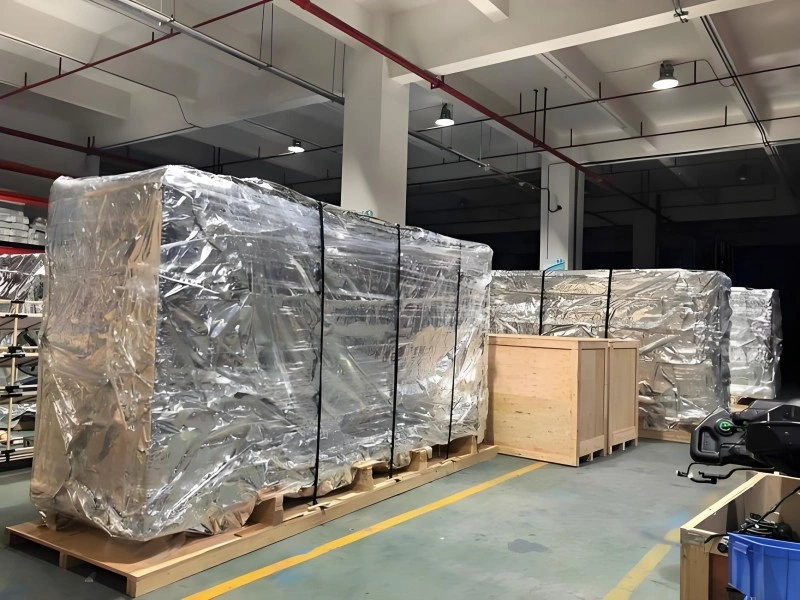
Common Mistakes When Combining Vacuum Packing and Wooden Crates
Even a veteran team can get into trouble when two layers are not synchronized.
| Mistake | Possible Result | Better Practice |
| Packing damp cargo | Moisture trapped inside | Dry and inspect cargo before sealing |
| Damp wooden crate | Moisture may affect cargo environment | Use dry, export-ready crate materials |
| No edge protection | Film puncture and seal failure | Protect sharp points before vacuum packing |
| Crate too tight | Vacuum layer may tear or compress | Allow proper internal clearance |
| No desiccants | Humidity remains active | Add desiccants based on volume and storage duration |
| Internal cargo movement | Impact damage inside crate | Use blocking, bracing, or cushioning |
| No final inspection | Hidden damage to vacuum layer | Inspect after crating and before loading |
How Combined Packaging Supports Sea Freight and Long-Term Storage
Multiple risks exist during long sea voyages, port delays and long storage periods, all of which layered packaging is capable of addressing.
| Shipping or Storage Condition | Risk | How Combined Packaging Helps |
| Long sea freight | Humidity and condensation | Vacuum layer controls moisture; crate protects structure |
| Port storage | Rain, dust, salt air, handling | Sealed cargo plus rigid outer protection |
| Warehouse storage | Dust and forklift handling | Crate protects externally; vacuum layer keeps cargo clean |
| Delayed installation | Longer packed period | Desiccants and barrier film support storage protection |
| Multi-modal transport | Repeated handling | Crate supports handling; vacuum packing protects cargo condition |
| OOG transport | Open exposure and securing risk | Combined protection reduces environmental and handling damage |
Buyer Checklist Before Choosing Vacuum Packing and Wooden Crates
Creating clear information in advance empowers packaging specialists to create the best packaging solution for your cargo and route.
| Information to Prepare | Why It Helps |
| Cargo dimensions and weight | Determines vacuum bag size and crate structure |
| Cargo photos or drawings | Identifies sharp edges, protrusions, and sensitive areas |
| Surface material and finish | Guides anti-rust, VCI, and inner protection |
| Moisture sensitivity | Helps decide barrier film and desiccant requirements |
| Fragility or calibration sensitivity | Determines cushioning and crate design |
| Shipping route | Helps assess humidity, sea freight, and port exposure |
| Storage duration | Affects moisture-control planning |
| Loading method | Determines forklift, crane, or lifting design |
| Container type | Affects crate dimensions and cargo handling |
| Destination unpacking conditions | Helps prevent damage during opening and installation |
Conclusion — Layered Packaging Provides Stronger Export Cargo Protection
The two types of cargo protection, vacuum packing and wooden crates, are complementary technologies. Vacuum packs are used to control moisture, corrosion, dust, salt air and contamination, while wooden crates are used to control impact, handling, stacking, vibration and external contact. This multi-layered strategy minimizes the risks of environmental and physical damage to high-value, sensitive, heavy, fragile and long-haul export goods – particularly machinery, molds, electronics, precision parts and OOG items – during storage and handling and international transport.
Planning both layers in conjunction with the correct cleaning, drying, desiccants, VCI materials, edge protection, crate design and final inspection gives the best results. If vacuum packing is used in conjunction with wooden crates, an exporter will have confidence that valuable equipment reaches his destination ready to install if done properly.