
Container shipments with open tops often involve other collection of surcharge that dry van boxes do not carry-on, such as think OOG projections, crane handling requirements, port special equipment costs and complicated lashing demands. They can increase the total freight bill to 20 to 50 percent of similar standard containers, with respect to route and projection severity.
Most shippers believe that the cost of open top container shipping is very fixed and imminent once the type of cargo has been let go. As a matter of fact, however, a big percentage is due to avoidable circumstances: overprojection leading to higher levels of surcharge, weight mis-distribution resulting in inland axle penalties, incompletion of documentation resulting in reclassification charges and demurrage.
Sharp contamination of measurement and well-organized engineering, accurate measure of cargo, and logistic planning can decrease the costs of open top container shipping. It is not about reducing the cost of shipping open top containers by cutting corners, but rather the achievement of efficiency in the logistics and the planning of the logistics through proper declaration. Premature consideration of these areas will provide quantifiable open top shipping cost efficiency and oversized cargo cost containment with no augmentation in transportation risk.
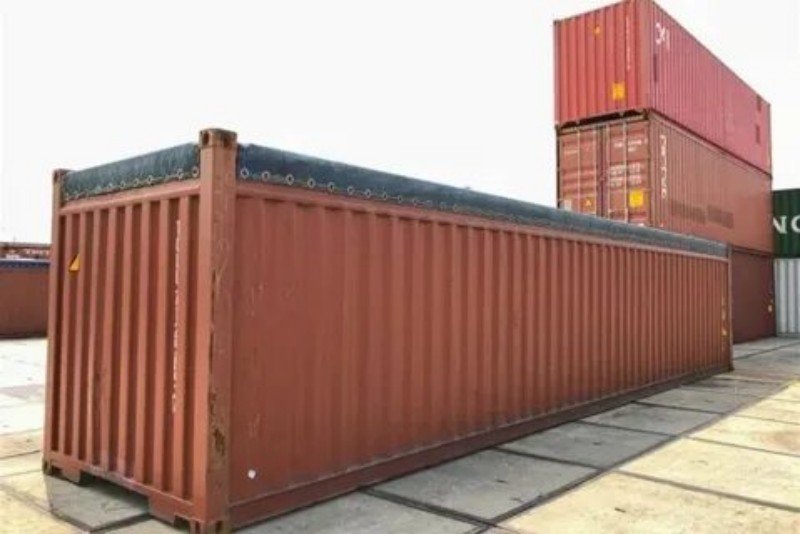
Understand What Drives Open Top Shipping Costs
The very basis of any serious cost-cutting program is to be aware, in who and in what ways, the money is will be spent.
Open top shipments are a cost structure that is layered. The base ocean freight is the base but the add-ons with the out of the gauge (OOG) nature of the cargo make the difference to create variability and opportunity.
The following table is an explicit fragmentation of the key cost elements:
| Cost Component | Controllable? | Notes |
| Base freight | Limited | Market-driven; influenced by route, carrier, season, and equipment availability |
| OOG surcharge | Partially | Depends on projection (over-height, over-width); tiered by carrier — small reductions in dimensions can drop tiers |
| Crane handling fees | Yes | Loading strategy, lift repetitions, and pre-rigging directly affect terminal labor time and charges |
| Securing materials | Yes | Overuse of chains/lashing vs engineering-optimized plans wastes budget |
| Port special handling charges | Partially | Route-dependent; varies by port capacity for OOG and congestion levels |
| Insurance premium adjustment | Partially | Higher for poorly protected or undocumented cargo; prevention lowers exposure |
The first and possibly the most commonly ignored step of open top freight savings strategies is to understand these cost drivers. Editing blindly on what can be negotiated and what cannot, the initiatives are dispersed and became fruitless.
The proper cost management starts with the open top container transport planning, which should be optimized; it should be based on dimensional analysis, engineering of distributed weights, and coordination of the carrier at the beginning.
Optimize Cargo Dimensions to Reduce OOG Surcharges
Modest adjustments to cargo profile tend to produce disproportionately high decrease in the OOG surcharge ranks one of the biggest variable adder on the vast majority of open top moves.
Carriers charge extra depending on the length of the cargo that exceeds the ordinary container envelopes (also 2.35m width by 2.39m height of 40′ open top). Any additional centimeter either in height or breadth may push you up the band, even to doubling the adder.
Practical Dimensional Optimization Methods
This checklist can be used to methodically reduce projection:
- Separate upper parts — On a lot of machines, there are removable booms, guards, or extensions; by removing them, you can reduce by a huge percentage the height surcharge.
- Install special skids or low bases — Raise nothing that ought not to be raised; a few inches economized at the bottom work their way up.
- Reposition attachments – Shift them inwards/ downwards when doing engineering before shipment.
- Avoid avoidable over-projection — Reconsider whether or not it is worth jumping the tier to say just a bit over.
- Proper measuring early – Laser or 3D scanning eliminates post-terminal reclassification shock.
Although small changes, such as the reduction of height by one-third to less than 2.9m, can make the difference between a high and a medium OOG band on most carriers, and offer significant OOG surcharge reduction.
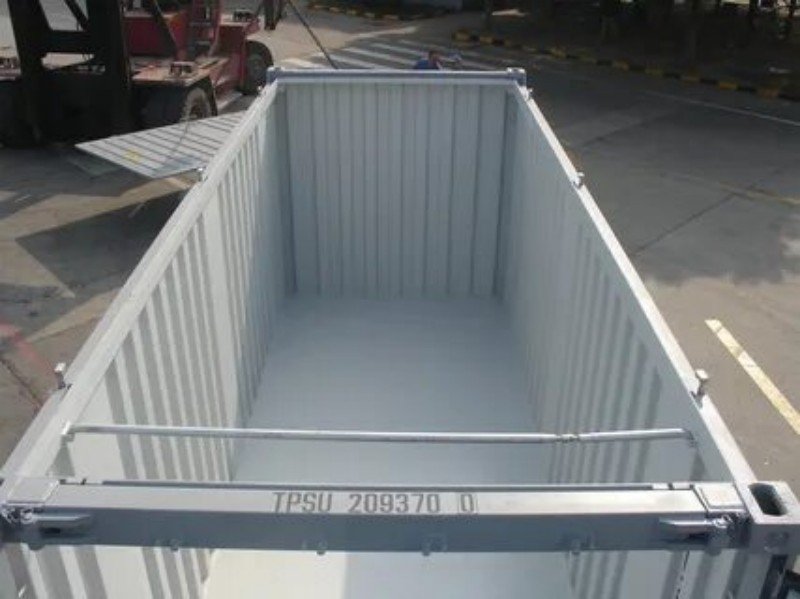
Improve Weight Distribution to Avoid Structural Penalties
The lack of a proper balance of weight does not only threaten to damage cargo; it makes the inland trucking surcharges, terminal floor stress charges, as well as carrier rejections bloat silently.
Often they are open top containers with labeled floor load capacities (usually 47 tons/running meter, depending on the type). Even concentrated loads or rear-heavy configurations cause loads on trailers with low beds to exceed the limits of the axles, or cause overweight penalties, or compel expensive load-spreading retrofitting.
Key Risks and Prevention Steps
| Risk Factor | Financial Impact | Prevention Strategy |
| Uneven weight distribution | Equipment damage fees or repair costs | Balanced placement across cross members |
| Excess axle load | Inland surcharge or route restrictions | Early route planning with axle calculations |
| Concentrated floor stress | Structural repair cost or denial | Use load-spreading beams or dunnage mats |
Personally, I have observed imbalances in the rear, which cause thousands in axle penalties on legs traveling in Europe, alone. Having weight centered and evenly distributed at an earlier age prevents these undercover expenses altogether.
Reduce Crane and Handling Costs Through Loading Strategy
Crane time is very costly, terminals may be billed by lifts or time and duplicated sequences compound repetitions and manpower.
Strategies to Minimize Handling Expenses
- Arrange with the terminal the time to have the terminal on the crane to avoid peak windows.
- Reduce the number of repetitions of lifts by logical loading (heavy base first).
- Install lifting points or slings, which are pre-fitted before arrival to hurry up hooks.
- Arrange efficient tanks patternary – the last loaded should be the highest things in case tarping is required.
Weak management is very easy to waste hours in crane standby or addition of extra shifts and this is a direct blow to your crane handling charges and port special handling charges.
Control Securing Material Expenses Without Compromising Safety
This is because over-securing is secure but expensive and under-security is expensive and subject to claims. The engineering based lashing is calculated to actual forces to the sweet spot.
Cost-Effective Securing Practices
- Calculate Lashing Correctly according to CTU Code or carrier guidelines.
- Use of chain materials should also be avoided as much as possible make use of ratchet lashings or webbing in places where the forces permitting this have been met.
- Use certifiable securing components in more than one project.
- Depend on the engineering-based securing plans instead of more is better assumption.
Excessive security may raise material expenditure 30 -50 percent without a corresponding increase in safety. Accurate plans reduce the costs of logistics with the open top to less than the compliance.
Prevent Documentation Errors That Lead to Financial Penalties
Documentation errors are among the most expensive and avoidable – cost leakage of open top deliveries.
Common Errors and Their Consequences
| Documentation Error | Financial Consequence |
| Underreported height | Reclassification fee + surcharge uplift |
| Late declaration | Booking cancellation or rolling |
| Incorrect weight | Port rejection or overweight penalties |
| Missing approval/sketches | Demurrage while awaiting corrections |
These are all prevented in accurate OOG declaration, correct weight reporting, submissions of cargo sketches and drawings in time, and avoiding last minute changes in booking. Check twice before cutoff – it is a pain, but much less expensive than the other options.
Select the Right Trade Route and Port
Not every port operates OOG just as effectively. Others have overloaded heavy-lift cranes and wider access lanes; still others charge high-prices or extended dwell.
Route and Port Considerations
- Assess the oversized capacity in the port handling.
- Equipment of check trade lanes – there are routes with endemic open tops shortages.
- Consider seasonal fluctuations in the surcharge and congestion.
- Determine risk on transshipment – additional lifts increase handling expenses.
Considerable route structure reduces the overall landed cost with appropriate bypass of high-priced location.
Insurance and Risk Management to Avoid Costly Claims
Competent preparation minimizes claims probability – and the upsurge in premiums trailing shaggy cargo.
Preventive Measures
- Make sure good cargo security (reinforced tarpaulin systems, side protectors).
- Pre-load surveys and photos of documents.
- Prevent conflicts by tallying packing with proclaimed risk.
Prevention in this case is much more effective than combating claims in future due to the unexpected financial exposure cut.
Conclusion — Cost Reduction Requires Engineering Discipline
Hardcore engineering and forward-looking planning are the last-resort to the reduction of the open top content shipping costs. Dimensional optimization reduces OOG surcharges, balanced weight distribution eliminates inland penalties, efficient loading sequences reduces handling fees and airtight documentation does not impose unnecessary penalties.
There is no impact of this on safety or compliance, on the contrary. Formal preparation reduces the twists and turns related to operations and makes the overall landed costs predictable and competitive. Distinguishing a budget overrun versus a significant open top shipping cost optimization is often one of the factors that can be accomplished in advance and significantly.