
In order to ship construction equipment to an overseas country, its logistics planning needs to be done properly, with the correct equipment and in accordance with global transport regulations. Construction equipment is very big, heavy, and not in a regular shape thus making it more complex to transport internationally compared to normal freight transport. Movement of machinery like excavators, cranes, bulldozers, etc. usually involves different logistics planning, to accommodate the different dimensions that are beyond the normal standards and the weights that require a reinforced handling.
The most popular myth is that construction equipment can be transported in regular containers, whereas in a large number of situations, special transport options are necessary, e.g. flat rack containers, open top containers, or roll-on/roll-off vessels because of the size and shape of the equipment. Effective export transportation of construction machinery needs to be properly packaged, best modes of transport and effective logistical coordination to reduce hazards such as damage or delays on transit or at the customs offices.
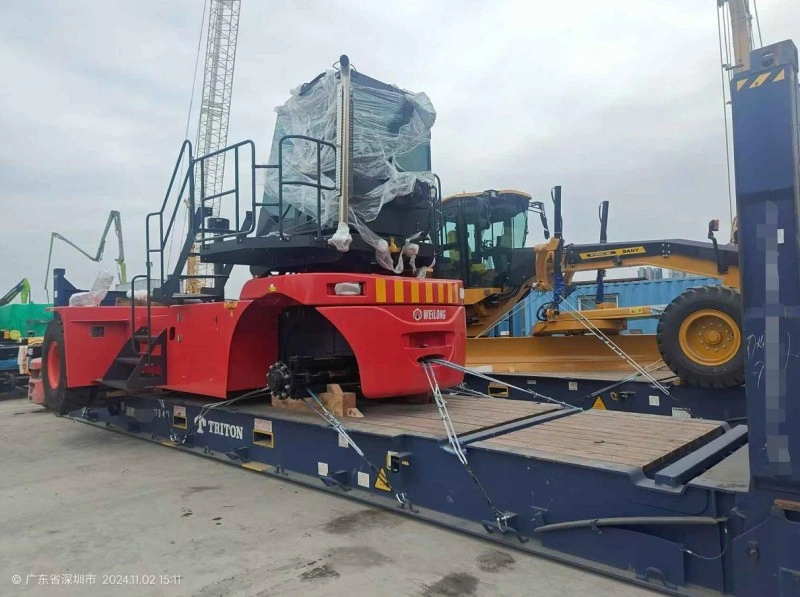
Common Types of Construction Equipment Shipped Internationally
The first step in planning international shipments is to determine the type of construction equipment since this determines the mode of transport to use as well as regulatory requirements. The size and weight of these machines are diverse in nature and may require special methods of freight handling than the general practices.
| Equipment Type | Typical Weight |
| Excavators | 10–90 tons |
| Bulldozers | 20–100 tons |
| Mobile cranes | 30–200 tons |
| Wheel loaders | 10–40 tons |
| Road rollers | 8–20 tons |
These machines are frequently intended to be shipped by special means due to their size with long extension of booms on cranes or broad tracks on bulldozers do not conform to the sizes of 20 or 40 foot containers. An example is that the height of a mobile crane can be over the container limits and thus open configurations are required. In my case, when dealing with heavy equipment shipping abroad, neglecting these details at the early stage may lead to expensive re-work measures, such as taking things apart at the dock.
Cargo transportation of oversize professional services are frequently necessary when the equipment used in the construction process is larger than the standard container size, making sure that it does not violate the carrier restrictions and that the load is stable.
Transport Methods for Shipping Construction Equipment
The choice of a suitable means of transport is an essential factor that ensures successful international shipping of construction equipment because it directly affects the cost, schedule, and safety. I have worked on years of managing shipments on infrastructure projects and noticed that incompatible practices cause unneeded problems, including equipment damage due to being loaded improperly.
| Shipping Method | Best Use Case |
| Flat rack containers | Wide or heavy machinery |
| Open top containers | Tall equipment |
| Roll-on/roll-off (RoRo) vessels | Wheeled equipment |
| Breakbulk shipping | Extremely large machinery |
Flat rack containers suit wide or heavy machineries since they do not have side walls, thus overhangs may be involved, and it will be secured with lashing points. Open top containers are suitable to tall tools such as cranes, in which there is no roof to make overhead loading easier. RoRo vessels are effective when it comes to wheeled equipment including wheel loaders, with drive-on/drive-off operations that save on handling time. Breakbulk shipping is restarted at very large machinery which is impracticable to containerize and stowed directly on the deck. All the methods will be to be assessed based on the mobility of the equipment, port facilities, and route constraints as a way of ensuring ease of transport of construction machinery.
Preparing Construction Equipment for International Shipping
Preparation should be properly done to avoid destruction and regulatory compliance when shipping heavy construction machinery internationally. Based on my experience during field work, failure to follow even the slightest procedures may develop into huge consequences, such as the leakage of fluids, which is against the law.
| Preparation Step | Purpose |
| Equipment cleaning | Customs compliance |
| Fluid drainage | Safety requirements |
| Component removal | Reduce dimensions |
| Protective covering | Weather protection |
Cleaning the equipment is done to eliminate dirt and residues to reach the biosecurity standards at the ports of destination. Drainage Fluid drainage like emptying fuel tanks and hydraulic systems are a solution to safety needs as they reduce fire risks. Removal of components-removal of booms or attachments- This assists in reduction of dimensions to enable more convenient fitting into transport units. Tarps or shrink wraps offer weather protection against saltwater corrosion when the ship is traveling on the ocean. This preparation helps in mitigating the risks of transporting by balancing the load and eliminating penalties which eventually facilitates smoother transportation of construction equipment in foreign locations.
Container and Transport Equipment Selection
One of the initial decisions which determine the whole logistics chain of the shipping of construction equipment abroad is the preferred choice of the container or transport equipment. Practically, I have discovered that wrong choices are usually due to the insufficient estimation of equipment specifications resulting in schedules or extra costs.
| Equipment Type | Recommended Transport |
| Small machinery | Standard container |
| Medium equipment | Flat rack container |
| Tall equipment | Open top container |
| Ultra-heavy machinery | Breakbulk vessel |
Container choice is important in that it has impact on loading efficiency, cost structures and adherence to carrier weight limits. A compact road roller is not very large and therefore a regular container will be adequate should the size be suitable. Flat racks are used in medium equipment to deal with width overages. High equipment must have open tops to have vertical clearance. Massive bulldozers, and other ultra-heavy machines, cannot be handled in containers but are handled directly by breakbulk vessels. Such a decision affects logistics planning as it decides the necessary equipment, such as cranes to load or use the routes according to the availability of the vessels.
Permits and Documentation for International Shipping
Acquirement of the required permits and documentations is an indispensable element of shipping heavy equipment abroad because half-baked paper work can stop the deliveries forever. Based on my experience of project timelines, information on project timelines should be proactively collected to avoid delays at the borders.
| Document | Purpose |
| Bill of lading | Transport contract |
| Export declaration | Customs clearance |
| Equipment ownership documents | Legal verification |
| Oversized transport permits | Regulatory compliance |
Bill of lading is a transport contract, which establishes terms of shipment. Export forms help in clearance through the declaration of value and the place of origin. To avoid any disputes, equipment ownership documents are legally verified. Huge permits allow compliance with regulations concerning loads which are bigger than standard. To follow the regulations of the foreign territory, to ensure that trade regulations are followed, and to facilitate tracking, documentation is required and is crucial to the way of how to transport construction equipment to the foreign country without delays.
Cargo Securing and Safety Procedures
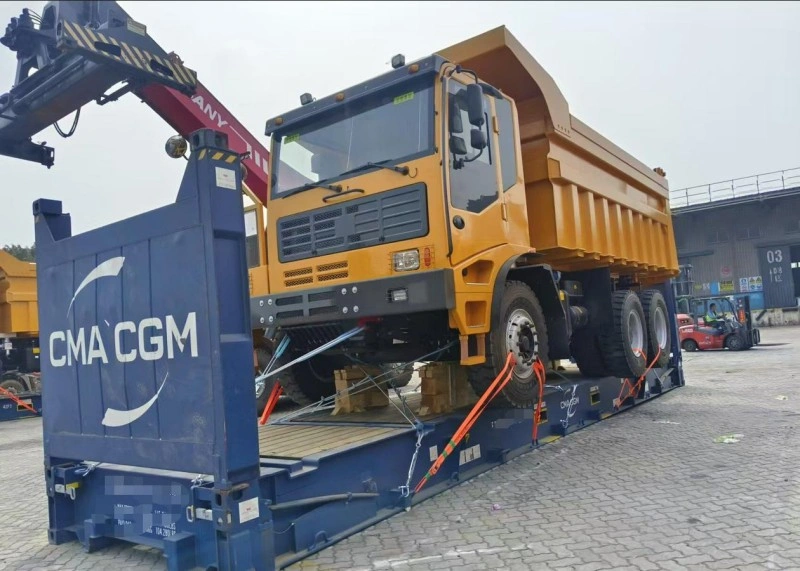
In transportation of construction machinery, it is important to establish strong measures of cargo securing and safety measures to ensure stability during the trip. According to reviews of incidences that I have conducted, poor securing is major cause of in-transit damage.
| Securing Method | Purpose |
| Chain lashing | Heavy equipment stability |
| Wheel chocking | Prevent rolling |
| Steel wire ropes | High tension securing |
| Wooden blocking | Cargo stabilization |
Chain lashing offers stability to heavy equipment scattering the forces over many points. Wheel chocking is used to stop rolling on the RoRo vessels. Steel wire ropes are used in providing high tension against dynamic loads. Wooden blocking aids in stabilization of cargo by filling up the gaps. These techniques stop the flow of cargo by resisting the forces of waves, vibration, and acceleration, thereby being able to deliver the equipment in good condition.
Challenges in Shipping Construction Equipment Internationally
The solution to successful international shipping of construction equipment is to deal with challenges in advance, since unexpected problems may upset the project schedules. I have also observed in my consulting practice that poor foresight in planning leads to many problems.
- Large cargo size: This may constrain the vessel or port choices that have to be made.
- Port handling capabilities: Crane capabilities of heavy lifts are not available in all the facilities, and it requires specialized ports.
- Delay in permit approval: The bureaucracy in some countries takes more time.
- Increased transport costs: Due to the specialization, high costs come at the price of budget optimization.
- Infrastructure constraints: Multimodal shifts may be caused by road or rail constraints along the path.
- These are dealt with through logistics planning by undertaking site survey, getting permits early and modelling the costs in order to determine efficiencies.
These are dealt with through logistics planning by undertaking site survey, getting permits early and modelling the costs in order to determine efficiencies.
Industries That Frequently Ship Construction Equipment Overseas
Some of the industries are habitual international shipping of heavy construction machinery owing to international projects need. As it relates to liaising with sector experts, it is evident that equipment mobility contributes to broad scale activities.
| Industry | Typical Equipment |
| Construction | Excavators and cranes |
| Mining | Heavy drilling equipment |
| Infrastructure | Bridge construction machinery |
| Energy | Power plant equipment |
These sectors depend on the cross border equipment transportation since projects in those sectors may take up continents, thus necessitating the transportation of equipment to the efficient level. As an example, the mining business sends drills to isolated areas, whereas energy companies deliver turbines to construct plants.
Conclusion — International Shipping of Construction Equipment Requires Specialized Logistics
To conclude, the transportation of construction equipment is complicated in terms of logistics planning. The choice of the transport method, the preparation of the cargo, adherence to the regulations and the appropriate securing measures are crucial to shipping the construction equipment with minimal loss of safety when it goes overseas. When these factors are targeted, shipments may be performed with the lowest amount of disruptions that will facilitate the implementation of projects worldwide.