
The large size of cargo transported needs extensive route planning since the size of cargo can be larger than the normal transportation infrastructure. When compared to the normal freight transport, oversized freight should take into account such issues like bridge clearance, tunnels height, roadway width, and weight restriction by infrastructure. A lot of companies presuppose that oversized cargo may go along the same paths with conventional freight trucks, but, in fact, the specifics of the route analysis are demanded to eliminate the conflicts between infrastructure and the violation of regulations. Planning of routes carefully will help in transportation of oversized cargo in a safe manner without causing delays, safety hazards, and regulatory hassles.
The process of route planning can be considered one of the most imperative steps in the process of oversized cargo transportation due to the fact that the size of the cargo, the nature of infrastructure, and regulatory restrictions allow determining whether a certain transport route is viable. Being a person who has planned the route of the heavy equipment traveling across continents, I have observed myself how this stage causes expensive rerouting or even project stoppage. We will subdivide the fundamentals of the oversized cargo route planning, including the inspection of the infrastructure and regulatory obstacles, with the help of the experience in the field of logistics.
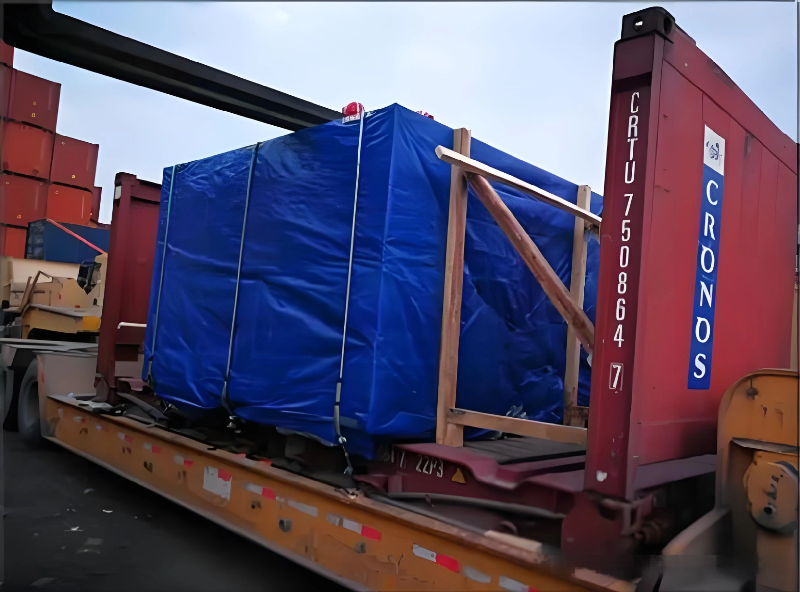
Why Route Planning Is Essential for Oversized Cargo Transport
The key to any successful operation of oversized cargo is route planning because it directly responds to the challenges that are caused by peculiarities of standard shipment that are not commonly faced. In its absence, even the strongest transport equipment might be brought down by insurmountable obstacles and operational failures might occur as a result.
During the time I was dealing with project cargo, I have discovered that the success rate of route planning depends on a number of factors. The following is a breakdown in table form:
| Planning Factor | Importance |
| Infrastructure compatibility | Prevent transport obstruction |
| Regulatory compliance | Ensure legal transport |
| Transport safety | Protect cargo and equipment |
| Operational efficiency | Reduce delays |
Early assessment of these factors would allow logistics teams to eliminate such risks as building damage or fines. An example of this would be ignoring a low bridge, which would not only harm the cargo, but it would also put the team at risk of liability. Planning of routes minimizes transport risks because it is possible to identify possible hazards beforehand and make changes that will not delay the shipment and keep it within the budget. Professional oversize cargo transportation are usually associated with the help of thorough analysis of routes to provide compatibility with the infrastructure and make sure that all the rules are followed to sustain the stable course of actions.
Key Infrastructure Factors Affecting Route Planning
The main factor that defines the viable routes in the oversized cargo logistics is infrastructure limitations that frequently determine whether a route is passable at all. On small country highways to city over crossings, all these have to be examined to prevent surprises along the way.
Take into account this table with the key infrastructure components and their effects:
| Infrastructure Element | Impact |
| Bridge height | Determines vertical clearance |
| Tunnel clearance | Limits cargo height |
| Road width | Affects maneuverability |
| Weight limits | Protects road infrastructure |
The infrastructure analysis is essential in that overloaded loads as in the case of wind turbine blades or industrial boilers may easily cross such limits. In one of the projects I was coordinating, faulty estimation of the road width on one of the mountainous routes had to result in a 200 mile deviation to underscore the importance of having accurate surveys. This is a procedure during the oversized transport route planning as it entails an on-site verification and database verification to verify that it is feasible in that the route corresponds to the size and weight of the cargo.
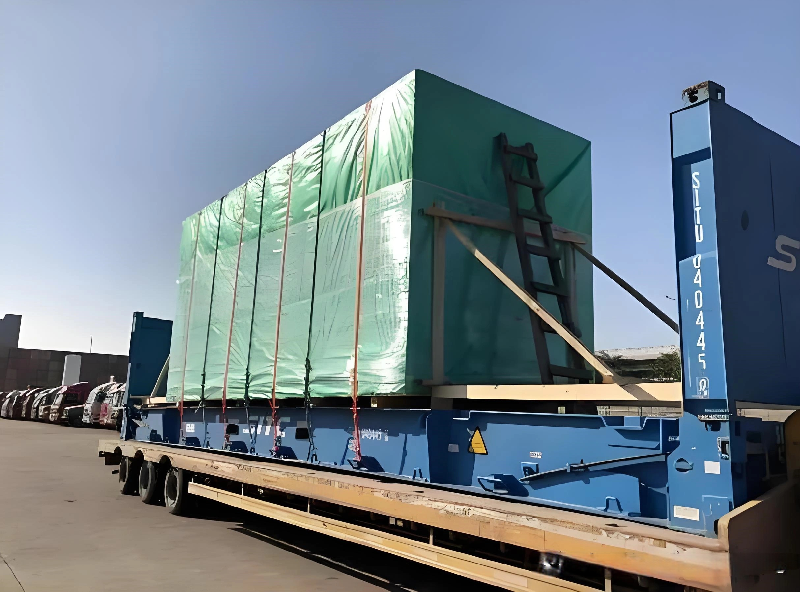
Conducting Infrastructure Surveys
To go more in-depth, surveys usually begin with aerial shots or city government information, and then proceed to physical examination. This aids in identifying problems such as sharp turns which may pose a challenge to the articulation of trailers, factoring in long-tail factors such as the approach to route planning when transporting over-sized cargo in isolated locations.
Permits and Regulatory Requirements
The acquisition of appropriate permits cannot be negotiable when it comes to the planning of oversized cargo routes because different jurisdictions have different regulations that may put a stop to the entire process unless it is handled at the very beginning. These conditions make sure that the transportation does not pose a threat of safety to the population and does not impair the local legislation.
The following is a table that describes some of the common types of permits and their uses:
| Permit Type | Purpose |
| Oversized load permit | Legal transport approval |
| Route approval permit | Authorized transport route |
| Escort vehicle permit | Traffic safety |
| Temporary infrastructure permit | Bridge or road clearance |
Planning on regulation should be integrated within the route planning, since more time can be wasted within some approvals which can be as long as weeks. An illustration is that interstate movement in the U.S may need the sign-offs of various agencies whilst international relocations entail customs harmonization. When dealing with oversized cargo logistics routing, these needs are expected in advance to avoid the last minute rush and compliance based on experience in the organisation of multi-jurisdictional haul.
Vehicle and Trailer Selection for Route Feasibility
The vehicle and trailer selection has a significant impact on the options of route choice since not all the equipment can follow all possible paths because of their size, weight distribution, or turning radius. The right setup should be selected at an early stage of planning to prevent any mismatch.
Types of trailers and applications can be seen in this table:
| Trailer Type | Application |
| Lowboy trailer | Heavy construction equipment |
| Extendable trailer | Long cargo |
| Multi-axle trailer | Heavy industrial cargo |
| Hydraulic modular trailer | Extremely large cargo |
Transport devices can influence the choice of a route; they may impede or increase the paths available; the example is a hydraulic modular trailer that could need wider roads to be stable. My fieldwork has helped me choose trailers according to cargo requirements to ensure that routes do not have significant changes in elevation, including oversized transport route services, such as the axle load distribution, to meet the weight limit.
Safety Considerations in Oversized Cargo Route Planning
The safety consideration should be considered in all ways when it comes to designing routes of oversized cargo, given the fact that the weight of such cargo attributes increases the possible risks to drivers, cargo, and people. Ignoring safety may cause accidents that may endanger whole projects.
This table points out the most important safety factors and their causes:
| Safety Factor | Reason |
| Traffic density | Avoid congestion |
| Road surface conditions | Maintain vehicle stability |
| Weather conditions | Ensure cargo safety |
| Emergency access | Prepare contingency plans |
Planning of safety is required since oversized loads travel slowly and occupy more space that makes them more vulnerable in unfavorable conditions. In the transporting of heavy equipment over the routes, this involves reconnoitering the routes to have shoulders to stop breakdowns or scheduling escorts in areas with traffic, depending on real world experience such as weather variations triggering a need to change the route.
Technologies Used in Modern Route Planning
The modern route planning process uses digital tools to increase the accuracy and efficiency of its process, as manual maps are replaced with the data-driven solutions that are able to anticipate problems before they occur. These technologies have reshaped the way the logistics groups think about oversized transportation.
Research this table: technologies and their applications:
| Technology | Purpose |
| GPS mapping | Identify suitable routes |
| 3D cargo modeling | Analyze clearance |
| Infrastructure databases | Detect restrictions |
| Logistics planning software | Optimize routes |
Digital tools enhance accuracy of the route by modeling the journey; a 3D representation can be used to visualize a load that moves under a bridge, reducing the mistakes in the planning of oversized cargo routes. In mine, the combination of the two has reduced the planning time by 50 percent and increased reliability.
Industries That Require Advanced Route Planning
The complexity of some industries is such that the size and complexity of the cargo require a more complex route planning than would be provided by regular logistics. These industries are also dependent on it to keep the schedules of projects and security.
The following table contains the list of industries and common cargo:
| Industry | Typical Cargo |
| Construction | Excavators and cranes |
| Renewable energy | Wind turbine blades |
| Oil & Gas | Drilling equipment |
| Manufacturing | Industrial machinery |
| Infrastructure | Steel bridge structures |
The reason behind the reliance of these industries on the planning of routes is that often their cargo is either of irregular shape or extremely heavy and, therefore, requires tailor-made routes. In renewable energy projects, such as the passing of turbine blades past windy areas, planning causes the minimum impact.
Common Challenges in Oversized Cargo Route Planning
Transportation of oversized cargo is fraught with challenges that can even ruin the well-planned operations, so it is necessary to take the initiative to overcome the challenges. It is significant to address them at its initial stage.
Common challenges include:
- There are infrastructure constraints e.g. clearance uncertainties causing reroutes.
- Allow time wastage, through the bureaucracy that blows way out of schedule.
- Wrong measurements of cargo, which results in non-conformity with scheduled routes.
- The problem of targeting the urban traffic, which makes navigation in densely populated areas difficult.
- Alteration of roads, such as construction, or seasonal weather conditions.
These problems have implications on transport planning in terms of causing uncertainties; an example is that a delay caused by a permit may have externalities to an increased cost. Contingency buffers and frequent updates are part of the mitigation of them, based on the experience of logistics efforts in the past.
Conclusion — Effective Route Planning Ensures Safe Oversized Cargo Transport
Drawing a conclusion, transportation of oversized cargo relies much on route planning to overcome the difficulties of large scale transportation. The regulatory compliance, the choice of a vehicle, and safety all are crucial in effective oversized cargo route planning in infrastructure analysis. The problem in this case lies in the process of addressing these in systematic ways so that logistics teams can have a reliable result and use practical experience to respond to the challenges posed by heavy equipment and project cargo effectively.