
Oversized freight transportation involves freight that has a tendency to exceed normal container sizes and weight limits, heavy machinery, or large structural elements. The materials can either stick out at the sides of containers or can require specific handling equipment, so strong lashing and fixing are essential to prevent the movement of the materials. There also needs to be proper cargo lashing and securing procedures to ensure that freight is stable, as well as safe when transporting oversized freight.
One of the common mistakes in this industry is that because heavy cargo is heavy, it will automatically stay there. Practically, even large machines can be transported by the rolls of the vessels caused by the waves, sudden vehicle halting, or uneven roads, causing possible risks. The methods of lashing and securing cargo are important to stabilize it and avoid any damage to the cargo and its safety during transportation.
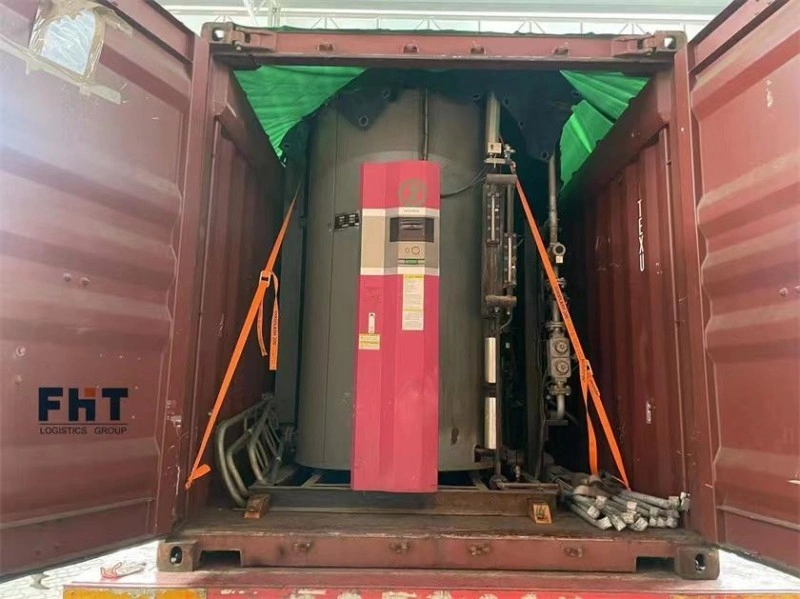
Why Cargo Lashing Is Critical for Oversized Freight
Poor lashing poses a direct increase in the risk of displaced cargo and other related accidents in the situation of oversized freight operations. Lack of secure fastening may cause the loads to slide or fall and invalidate the whole shipment.
The dangers of unsecured cargo include both short-term dangers during transportation and chronic problems of the cargo in transit. An example is that when on the ocean, unsecured property can hit on the walls of the containers, and on the streets, they may create instability on the roads.
| Risk | Impact |
| Cargo shifting | Equipment damage |
| Structural instability | Container stress |
| Transport accidents | Safety hazards |
| Cargo loss | Financial losses |
The efficient lashing goes against it by distributing forces uniformly and securing cargo. It takes shocks due to acceleration, deceleration, and other environmental forces, maintaining the freight and transport infrastructure. When professional oversize cargo transportation services are to be offered, lashing and securing plans of the cargo are well-developed to make the shipment stable during the cruise.
Common Cargo Lashing Equipment Used in Oversized Freight
The right choice of lashing tools is the key to the successful holding of oversized items because they help to meet the particular tension and durability requirements. The decision on the systems to prevent movement under stress is determined by different cargo profiles (bulky, irregular, and heavy).
Chains such as those are better in high load situations because of their power whereas straps are flexible with less rigid objects. The knowledge of such tools helps the handlers to align them with the characteristics of the cargo so that they can adhere to international standards such as the IMO standards or road transport regulations.
| Lashing Equipment | Function |
| Chains | Heavy cargo securing |
| Steel wire ropes | High tension stability |
| Polyester straps | Lightweight cargo |
| Turnbuckles | Adjustable tension control |
In the case of irregularly shaped oversized freight, the combination of equipment types is an ordinary practice. Depending on the geometry and mode of transportation of the cargo, heavy excavators may be fitted with chains as primary hold and straps as secondary hold. This method in the lashing process of freight reduces wear as a result of vibration and ensures alignment.
Matching Equipment to Cargo Types
Practically, cargo securing of oversized freight is different depending on material and form. The delicate parts, such as the wind turbine blades, can use non-abrasive straps to prevent surface damage, but steel beams can use the unyielding hold of wire ropes. The outcome of mismatch may be slackening with time, which is why pre-transport evaluations are necessary.
Blocking and Bracing Techniques
The bases of the stability of oversized cargo securing techniques are blocking and bracing which are used to prevent subsequent lateral and vertical movements. Such techniques cannot be neglected in those cases when cargo geometry does not match domain of containers.
The wooden blocks are strategically placed to offer friction points of resistance to the sliding and steel elements can offer rigid support. In road haulage, e.g. wheel chocks ensure that rolling stock will not roll during slopes.
| Method | Purpose |
| Wooden blocking | Prevent cargo movement |
| Steel brackets | Structural support |
| Wheel chocking | Stabilize rolling equipment |
| Base frame supports | Improve weight distribution |
Blocking minimizes the load of lashing by immobilizing cargo at several points. When there are swells such as during ocean transit, g-forces are distributed which helps to avoid cumulative shifts that can potentially break down the whole set up.
Implementing Blocking in Multi-Modal Transport
In any case of shipments that are of sea, rail and road legs, the bracing has to consider the different forces. Rail vibrations require more dense blocking whereas sea routes are focused on anti-roll. The correct implementation of the oversized cargo lashing methods guarantees the delivery of the cargo intact irrespective of the modal changes.
Load Distribution and Stability Planning
Even distribution of loads is the major way of preventing structural failures in transport vehicles or in containers holding oversized freights. Inequal distribution of weight may result in tipping or overloading in certain parts.
Planning entails determining center of gravity and placing cargo in such a manner that it is in the areas that the transport base is most powerful. This is one of the actions of how to secure oversized cargo during transportation to reduce the risks such as buckling of containers or unsteadiness of trailers.
| Factor | Importance |
| Center of gravity | Prevent tipping |
| Weight distribution | Protect container structure |
| Cargo positioning | Maintain stability |
| Structural support | Reduce stress on equipment |
Poor distribution increases risks, e.g. when making sharp turns, unbalanced loads change the momentum in an unpredictable manner. In the case of project cargo, extensive stability mapping (with software or hand calculations) has helped to avoid a lot of accidents by predicting the areas of vulnerability.
Tools for Stability Assessment
To predict the load behaviors at various conditions, handlers usually make use of 3D modeling. This active planning is combined with the process of cargo lashing to develop a unified securing plan that is necessary in long-term global transportation.
Environmental Protection for Oversized Cargo
Vulnerable overweight freight requires weather and contaminant protection as unchecked exposure can deteriorate materials during prolonged transits. Examples of this include salt spray on the ocean routes, which increases corrosion in the metal components.
Tarpaulins are used to cover precipitation and specialized wraps are used to cover dust in dry areas. These safeguards supplement lashing by maintaining cargo integrity, in addition to physical stability.
| Protection Method | Purpose |
| Tarpaulin covers | Rain protection |
| Shrink wrapping | Dust protection |
| Waterproof sealing | Marine environment protection |
| Anti-corrosion coating | Long-term cargo protection |
The environmental conditions such as humidity or UV rays may destroy unsecured elements resulting in failures during transit. Advancing protection at the initial stage of securing will also guarantee that the cargo can withstand different weather conditions without sacrificing the safety.
Adapting Protection to Transport Routes
In worldwide deliveries, route based evaluations are applied to protection decisions. The trans-pacific sailing may be more interested in waterproofing and the overland haul in dust protection, as both are in line with general cargo securing of oversized freight.
Inspection Procedures Before Transport
Strict pre-transport checks ensure all the securing factors are within the operational limits, and the problems that can arise in transit are identified before they can escalate. This is a condition that can never be compromised in professional logistics in order to adhere to the safety measures.
Checks monitor tension levels in lashings and status of the blocking materials and that all is in place as per the expected stresses.
| Inspection Item | Purpose |
| Lashing tension check | Ensure stability |
| Blocking integrity | Prevent movement |
| Container structure check | Safety compliance |
| Documentation review | Regulatory compliance |
The reason why inspections are needed is that the tiniest of omissions such as loose turnbuckles can lead to huge issues. Based on the experience in the field, systematic checklists have become priceless when it comes to preventing delays and claims.
Industries That Require Advanced Cargo Securing
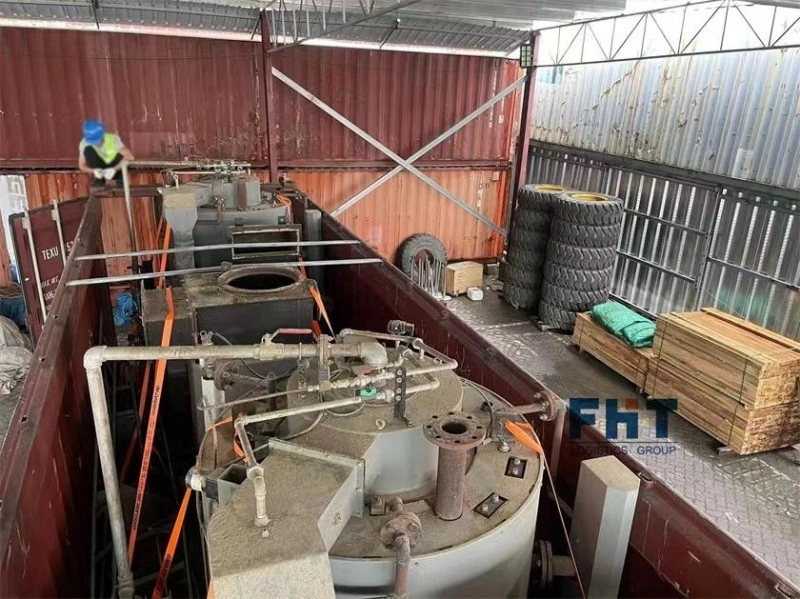
There are industries that are regularly exposed to overweight freight that requires advanced securing to address the special load profiles and uncertainties. One is construction which is related to dynamic equipment that is likely to experience shifts.
The advantages of such industries are customized solutions to the particular vulnerabilities of their cargo, whether it is the vibration sensitivity of a cargo or its dimensions at their outer limits.
| Industry | Typical Cargo |
| Construction | Excavators and cranes |
| Renewable energy | Wind turbine components |
| Oil & Gas | Drilling equipment |
| Manufacturing | Industrial machinery |
| Infrastructure | Steel bridge sections |
The magnitude of such shipments can be multi-modal logistics as high-level securing helps to eliminate disruptions in supply chains.
Common Cargo Securing Mistakes
Even the experienced teams are able to miss details that will compromise the achievement of efficacy, thus incurring unnecessary complications in overweight freight handling. Being aware of such pitfalls enables one to prepare better.
- A lack of tension in the lashing: This allows slow motion, particularly with the presence of repetitive loads such as the road bumps.
- Poor weight distribution: Localized loads exert on weak areas, and there is a possibility of structural failure.
- Poor blocking materials: The poor quality of wood or bracket fails early and it moves.
- Disregard of the environmental protection: The exposure will accelerate the degradation, which will add physical risks.
- Omission of final inspection: Flaws that arise during transit are not detected and increase the hazards.
Such flaws increase the risk of transport by providing loopholes to which outside influences exploit causing both expensive repairs or accidents.
Conclusion — Proper Cargo Securing Is Essential for Oversized Freight Transport
Overall, the transportation of oversized cargo requires careful lashing, blocking, allocation of loads, and checking to prevent the challenges that are inherent in the process. The efficient use of these procedures makes freight stable and safeguarded, reduces damages and enforces safety requirements. Considering these basics, the handlers will be able to overcome the complexity in the transportation of large-scale loads.