
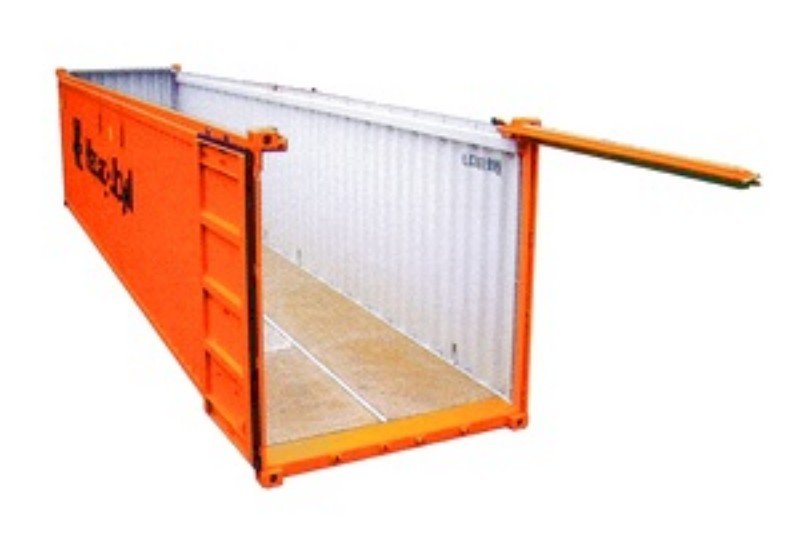
Open top containers expose their cargo to the elements in ways never experienced when using standard dry boxes for instance no fixed roof exposes cargo to direct contact with rain, sea spray, wind, and changing deck conditions. Combine with the complications of OOG (Out-of-Gauge) classification over-height, over-width, or over-length projections and stability issues are doubled. Marine insurers treat such deliveries with some variation, as they usually demand risk analysis, accurate declaration and evidence of strong securities before full terms are given.
Most shippers are still overburdened by the misconception that open top loads can be automatically covered under generic cargo policy as it does on containerized freight. The truth of the matter is that underwriters will often subject such processes to greater scrutiny, add extra exclusions, or change premiums once weather exposure, incorrect lashing or un-declared overhangs are involved.
Open top shipment needs proper cargo declaration, documented securing practices, and selection of risk-based coverage in order to have a successful marine insurance. Based on the experience of analysing project cargo claim over years, almost every small settlement and protracted disagreement can be traced to preparation way before issuing a bill of lading.
For structured approaches that support stronger underwriting outcomes, refer to our overview of insured open top container shipping solutions.
Why Open Top Shipments Carry Higher Insurance Risk
The frequency and severity of claims on open top shipments are regularly higher than that of a typical container move and is primarily due to a number of layers of risk interacting with each other concurrently.
The weather is the most influencing factor as the ingress of water, wind, and a long stay on the deck on the ocean passages make the structural damage more likely to occur as a result of water. The projections of OOG increase the stability risk, and the lashing failure will be more significant in terms of consequences in case of cargo movement. These shipments involve high value industry equipment that generates a greater financial impact in the case of damages. Prolonged transit time intensifies each exposure interval.
| Risk Category | Insurance Impact |
| Weather exposure | Higher claim probability |
| OOG projection | Additional underwriting review |
| Improper securing | Claim denial risk |
| Long transit routes | Increased exposure duration |
Underwriters charge and word policies based on this, usually requiring additional evidences of risk control.
Understanding Institute Cargo Clauses (A, B, C)
Most of the marine cargo policies are based on the Institute Cargo Clauses, which in the case of an open top placement is drastically unsuitable.
Clause A covers the widest scope, and it is the All Risks coverage that means that there is a coverage to unexpected and sudden losses (excluding typical exceptions). Only the named perils are provided under Clause B as fire, stranding, collision, and some brief list of others but Clause C will only provide narrower coverage, usually restricted to significant casualties.
| Clause Type | Coverage Scope | Suitability for Open Top |
| Clause A | All risks (subject to exclusions) | Recommended |
| Clause B | Limited named risks | Conditional |
| Clause C | Minimal coverage | Not recommended for OOG |
Even Clause A is not entirely open-ended, there are still exceptions to inadequate packing, inherent Vice and willful misconduct. Clause A often gives a good starting point in the case of high value or weather sensitive open top cargo.
Common Insurance Exclusions for Open Top Cargo
Some of these exclusions have become common in the open top claim denials, and they are usually the subject due to the increasing exposure profile of the cargo.
Lack or want of securing tops the list,–insurers who recognize the lashings which fail under circumstances which they know about put them in the category of negligence. Unclaimed OOG dimensions will terminate the coverage in case the overhang was one of the causes of the loss. The natural deterioration (inherent vice), natural leakage/seepage and existing damage are not under protection. Wilful misconduct on the part of either party also does away with claims.
- Poor securing- Generally adjudged owner/shipper negligence.
- Misdeclaration Policy void or restricted coverage.
- Wrongful packing- Direct liability transfers to be assured.
- Preexisting damage Meaning Not a covered peril
The hurdles to these may also often be overcome through hard documentation that shows due diligence.
Documentation Required for Insurance Validation
Insurers and surveyors turn to modern day records as a source of information in estimating whether a reasonable care was used.
The Bill of Lading ascertains the contract of carriage and condition at load port. Content and Value are checked in Commercial Invoice and Packing List. In case the pre-shipment survey had been done, the report is an independent evidence of quality assurance. The photographs of the completed lashing, which are taken in several positions prior to the departure of the vessel, are important in claims.
| Document | Insurance Purpose |
| Bill of Lading | Proof of carriage and condition |
| Packing list | Cargo verification and description |
| Survey report | Independent damage / securing assessment |
| Securing photos | Risk mitigation evidence |
Photos of tarpaulin systems, turnbuckles, and blocking/bracing are mostly clear and timed to show that they have altered the scale to approval.
How OOG Classification Affects Insurance Premium
The announcement of cargo being OOG causes certain rating changes due to increased exposure by underwriters.
Large products tend to be loaded on the deck (thus, they are exposed to the weather instead of being well-covered in holds), leading to load-outs being over-height or over-breadth. This is enhancing the likelihood and intensity of weather claims. Not designed by professionals, complex securing to maintain stability can be perceived as risky. The financial interest is further increased by the highly valued machinery.
Premiums are indicative of these factors – sometimes considerably – and any special terms or deductibles, as applied to OOG status.
Risk Mitigation Strategies to Reduce Insurance Disputes
Planning and execution can have direct effects on the rates of claims being successful because of proactive steps to be taken.
Be consistent in stating precise dimensions and OOG status during the very beginning. Linch engineered lashing schemes, which are drawn up by competent people. Use the reinforced tarpaulin systems, which are well tensioned and drained. Have in place pre-shipment checks, preferably a survey carried out by an independent person. Keep all supporting records.
- Real OOG reporting -Prevents policy invalidity.
- Engineered securing -Minimizes the likelihood of damaging.
- Pre-departure inspection- Catches problems prematurely.
- Survey documentation – Strengthens claims.
The measures show the underwriters and adjusters that risks were reasonably controlled.
Common Mistakes in Insuring Open Top Shipments
The choice of Clause C to protect high value or weather exposed cargo creates huge coverage gaps. Lack of declaration of over-height projections is an avoidance of policy. The failure to capture or store securing photos undermines evidence. Ignoring policy exclusions when an individual makes the placement will give them a false sense of security. The assumption that cargo loss will be insured with the liability of the freight forwarder will be gambling.
The results may be either complete rejection or partial recovery where it takes long before it is recovered, also leaving the shipper to incur a lot of uninsured losses.
Conclusion — Insurance Is a Risk Strategy, Not a Formality
The marine insurance of open top container shipment should be based on the distinctive environmental and structural risks of OOG cargo. Precise reporting, designed collateralization, filthy paperwork, and conscious selection of protection provisions greatly lessens the chances of conflicts, and restricts the financial risk.
Making insurance a part and parcel of project logistics, coordinated at the earliest between the operations, procurement and the insurance teams, brings insurance out of paperwork to actual risk transfer. When the unexpected occurs, good planning will make a difference between recoverable losses and anguished write-offs.