
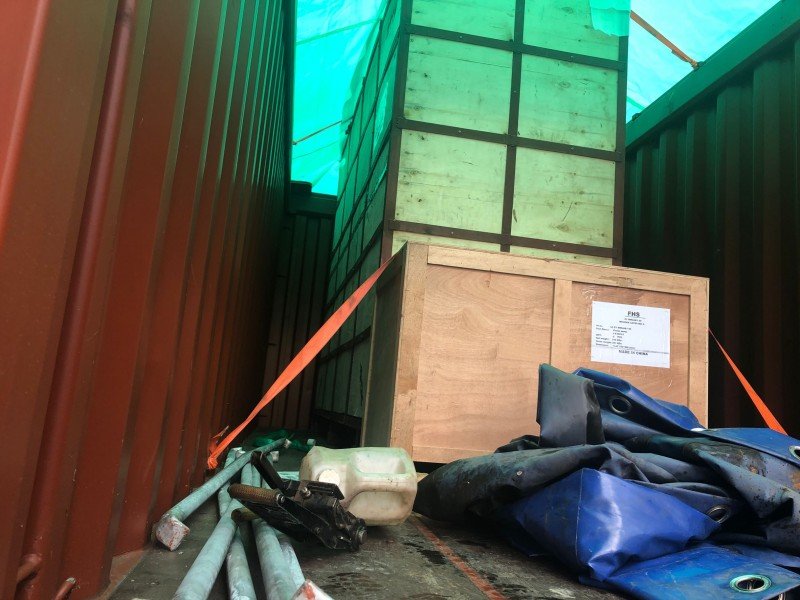
Open top container refers to a shipping container specially designed to carry cargo that is either too high to fit into regular containers or requires overhead loading using crane. As opposed to the regular dry container which has a fixed steel roof, an open top has a removable tarpaulin top with roof bows that can be easily removed to come up vertical and find an opening with a strong base frame and side walls. The first one to pick it has to do with the fact that it can make accommodations to the loads that can absolutely not be manoeuvred into the small door openings of standard containers think overweight machinery or long objects that should be placed in the top-down position.A vast number of exporters commit the error of thinking that open top containers are the full solution to any tall one. As a matter of fact, this ignores such important variables as loading methodology, lifting gear available, overhead clearances and compliance with out-of-gauge (OOG) guidelines. The decision of open top container should not be a workaround in challenges but rather an engineering choice grounded on dimensions of cargo, lifting, and and favored route provisions.
What Is an Open Top Container?
Having managed to control cargo deliveries to projects for many years, I have observed that knowledge of structural peculiarities of an open top container is the initial stage of preventing expensive errors. Open top usually consists in a base frame and floor which is the standard ISO, except that heavier roofs have been substituted by a tarpaulin top which is flexible and covers the removable roof bows. This structure allows separation of the bows, thus allowing cargo to be loaded at the top by cranes or forklifts. Door openings resemble that of dry containers, which are usually approximately 2.28m in height and 2.34m in width, although the true benefit of the open top is the ability to go around such high and width limits to enter the building vertically.
In order to explain its position contrary to alternatives, the essential differences can be noted:
| Feature | Standard Container | Open Top Container | Flat Rack |
| Roof | Fixed steel roof | Removable tarpaulin | No roof |
| Side walls | Yes | Yes | No (or minimal) |
| Top loading | No | Yes | Yes |
| OOG height flexibility | Limited | Moderate | Maximum |
Enclosed and weather-protected deliveries can be made using a normal dry container; however, this does not work when it comes to high-and-wide cargo that needs to be reached overhead. An open top bridges to close that gap by providing a partial enclosure-side walls guarding against lateral movement- and flat racks only available to extreme over-width or over-height load which requires full openness. Practically, improper classification of cargo in this case may result in failure of the structure in the process of transportation because the tarpol Singh attached to the open top is not designed to carry completely exposed and protruding cargo.
When Should You Use an Open Top Container?
During my experience of assessing millions of OOG cargo movements, the choice of the use of an open top container depends on the presence of the constraints of the load regarding its design benefits, without subjecting them to a force against the design-potentiation at the expense of security. It fits well where the cargo is beyond the internal height capacity but can still be fit inside the sidewalls, requires the use of a crane to load on top or cannot fit inside the door frame because of its non-uniform shapes. This design allows the flexibility in the overhead without loss of sidewall stability, which is important where there may be loads that move due to acceleration or in the rough seas.
The following decision table will be used to make evaluations:
| Cargo Scenario | Open Top Suitable? | Why |
| Tall machinery slightly above height limit | Yes | Allows top loading without dismantling side walls |
| Extremely wide cargo | No | In cases, flat rack is used where lateral access is needed unrestrictedly. |
| Heavy transformer requiring crane lift | Yes | Vertical lift needed, side walls help in securing. |
| Over-width steel beams | No | Protrusion walls required Flat rack. |
The above scenarios drive the point home that open top container shipping is not a one size fits all scenario, it is designed to address instances where the major OOG factor is height, whereas the other elements are kept within reach (viz. width and length). As an example, in the export of industrial equipment, I have recommended against the use of open tops in the broad-base machines which are vulnerable to crushing the structures against the walls to the flat racks to reduce suit of transit damages.
Understanding Height Limits and OOG Classification
Height limits in container shipping are not on the negotiable tables and when these standards are disobeyed, this will invite regulatory attention and delays in operations – which in my experience have killed projects on multiple occasions. The open top container with either a 20 feet or 40 feet normal size has an internal height of approximately 2.35 meters, and the door height is slightly lower at 2.28 meters. There is, however, the need to consider the external height bearing in mind the tarpaulin and any protrusions which may turn the overall dimensions into OOG when cargo overrides these internals.
The OOG classification of cargo comes into effect when any of the dimensions (height, width and length) exceed the ISO standards, and they need special declarations to carriers. In the case of over-height loads, this will need to elude the precise measurements and get approvals because ports have constraints on crane capacity and stack heights. Typical max OOG heights vary:
| Container Type | Internal Height | Door Height | Typical Max OOG Height |
| 20’ Open Top | Approx. 2.35m | Approx. 2.28m | Depends on carrier |
| 40’ Open Top | Approx. 2.35m | Approx. 2.28m | Case-by-case approval |
Mistaken announcements in this respect do not only represent administrative shortcomings, they elicit fines, booking rejections or even a cargo impoundment. In a mining equipment delivery that I handled, an extra height was undeclared resulting into an over-denial in a port, which underscores the importance of ensuring specific open top container dimensions during the initial stages.
Engineering Considerations Before Choosing Open Top
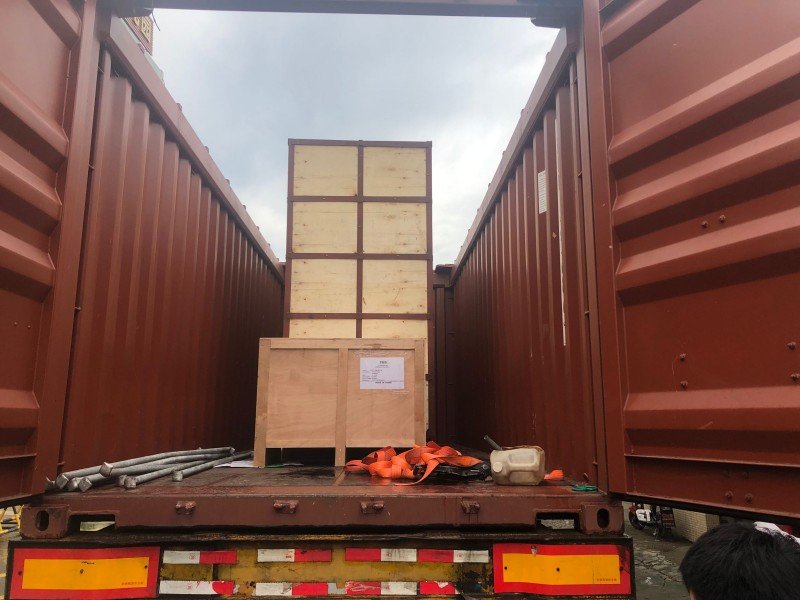
Any choice of containers should also be evaluated by engineers since the risks in transit can be increased due to not taking into account the property of structural dynamics because it took place during the work on high-stakes factory relocation. The most important of them is center of gravity analysis: Open top with the tall cargo requires a balanced weight distribution that prevents the tipping of the cargo, particularly when the vessel moves. Lashing points are to be laid on to base and walls to hold the loads to an allowable force of 2g under certain conditions in the sea.
The angles of cranes lifting and the clearance of the spreader beam are also of paramount importance; the design of the reef necessitates enough overhead space to allow safe insertion which frequently demands bespoke rigging. Viability is also further affected by route limitations, such as bridge clearances and road access, urban transits can limit their height to 4.5 meters, which makes some OOG setups impractical. For cargo that requires structured engineering review, a professional open top container transportation service evaluates lifting methods, lashing design, and route feasibility before confirming container selection.
Weight Distribution and Lashing Strategies
Practically, the concentration of uneven weights may overload the container floor causing deforms. I have suggested 3D modeling tools which can be used to model the distributions, as no one point should contain more than 5 tons per square meter in the regular units.
Common Mistakes When Selecting an Open Top Container
Exporters have a tendency to use open top containers and have made shallow evaluations but in practice, there are real dangers that arise as a result of these evaluations – on the basis of experience auditing of operations.
- Making the choice of open top due to tall cargo without considering whether it would required sidewall or having a flat rack would be more stable against protrusions.
- Failing to consider weight concentration that may result in buckling of the floors during lifts or voyages.
- Poor weather exposure; the tarpaulin provides minimal weather coverage, and when it starts falling long enough it may leak through unless tightened up.
- Since extra surcharges on OOG handling tends to level costs with an assumption that open top is less expensive than flat rack.
- Failure to verify the port restrictions, including crane height restriction which differs by terminal.
These inefficiencies multiply in the unreasonable choice of cargo container sizes, transforming simple errors to the scope of violation of compliance or even claims of damage.
Cost Considerations: Is Open Top More Expensive?
The prices in OOG cargo transportation increase predictively with complexity, yet the open tops do not have to be more expensive when properly matched, according to estimations of many engineering undertakings. The base freight of an open top may match dry containers, though OOGs charges will be added to any unused height, an average is 20-50% increase based on the carrier. The charges in crane handling and lashing and tarpaulin sealing may be placed at an additional sum of $500-1,500 and 200-400 per lift.
In relative terms, open and top vs flat rack costs are more favourable to the former where width is not a constraint; open designs of a flat rack cost more in premium than the open design of the tin, normally they are by 30 per cent owing to the specialized stacking. At the point of revelation: Open top is cost-effective in height-only OOG, which is not true in fully open counterparts.
Conclusion — Open Top Containers Are an Engineering Solution, Not a Shortcut
Finally, open top containers are the most effective in a situation when the size of cargo exceeds the height limit but enjoys the protection of sidewalls and controlled enclosure. This option requires stringent dimensional checks, sound lifting plan and route planning as a technique to maintain safety and compliance. Unnecessary risks that are welcomed through improvisation cannot be done here, but a more serious engineering-based method creates reliability on a shipment to shipment basis. Ultimately, the consideration of container selection as technical assessment and not convenience should be observed as both a cargo and operation schedule protection.