
Heavy cargo transport optimization can be done safely with simulation software, which enables logistics teams to calculate the feasibility of a route, positioning of the cargo, lifting systems, cargo stability and risks involved in the operation before the heavy load is moved. For oversized machinery, high-value industrial equipment, and complex project cargo moves, engineering logistics simulation helps teams evaluate route feasibility, load positioning, lifting methods, and cargo stability before execution.
Heavy cargo transport presents a number of challenges with regard to weight, size, center of gravity, clearance, trailer choice, lifting techniques, load distribution and securing design. While software of this kind can be very helpful for experienced planners in discovering technical problems early, it is best used in conjunction with accurate cargo data, careful site surveys, engineering judgement and supervision on-site. Many companies believe that once they have digital tools, they remove the risk, but in practice, it’s only as good as the data being used for the simulations and the professionals interpreting the results.
What Is Heavy Cargo Transport Simulation?
Heavy cargo transport simulation is the virtual representation of actual transport situation prior to any actual movement. It is not just a drawing; it can create it a virtual environment where all critical variables can be tested.
| Simulation Area | What It Evaluates | Why It Matters |
| Cargo Modeling | Dimensions, weight, shape, and center of gravity | Builds the technical basis for planning |
| Load Positioning | Cargo placement on trailer, flat rack, or container | Improves stability and load distribution |
| Route Simulation | Road width, turning radius, bridge limits, and clearance | Confirms whether the route is practical |
| Trailer Movement | Vehicle turning, maneuvering, and access limitations | Reduces risk of route failure or site blockage |
| Lifting Simulation | Crane position, radius, load path, and lifting balance | Supports safer loading and unloading |
| Axle Load Analysis | Load distribution across trailer axles | Helps avoid overload and permit issues |
| Cargo Securing Review | Lashing direction, support points, and movement risk | Supports safer transport conditions |
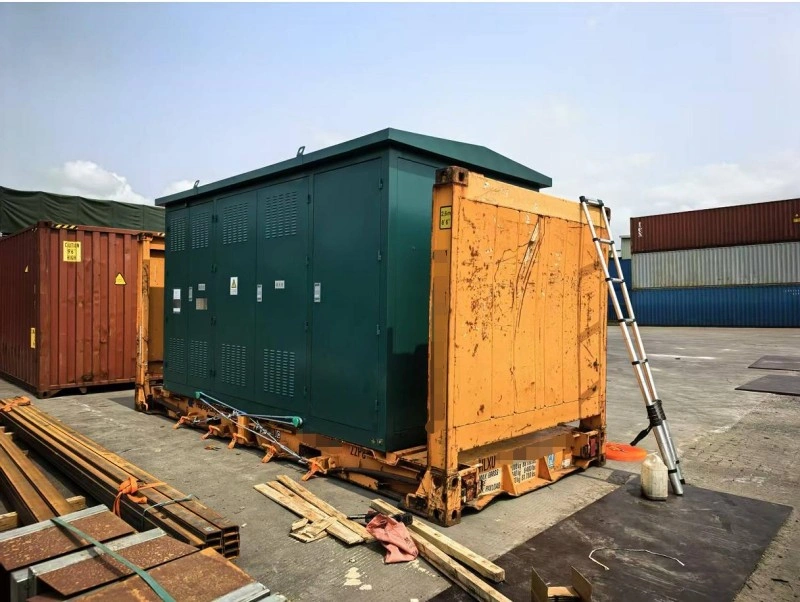
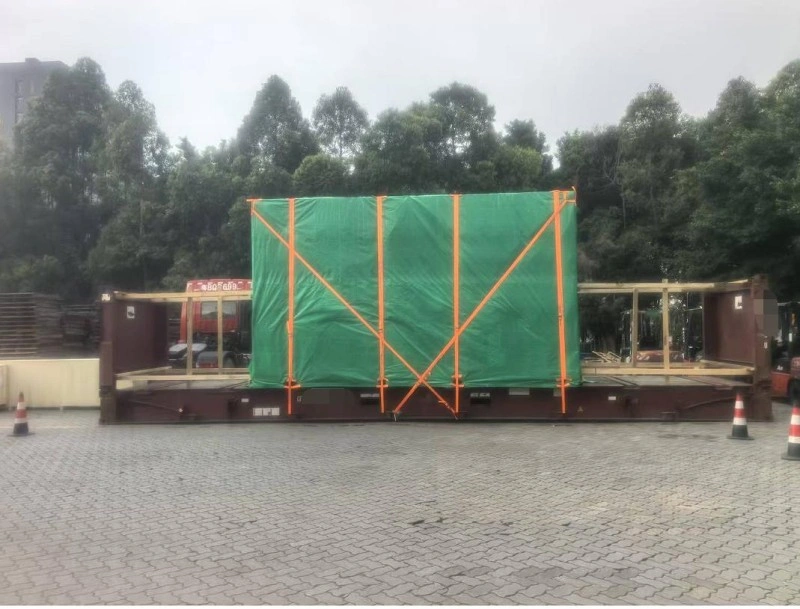
These models are used frequently at Bentlee during the planning of Open Top container shipments, Flat Rack moves and full factory relocations.
Why Simulation Software Matters for Heavy Cargo Transport Safety
The reason simulation software is important for heavy cargo transport safety is that many potential dangers are cheaper and easier to fix when the cargo is still in the planning phase than when it’s already out of the factory gate.
| Safety Benefit | Practical Meaning |
| Early Risk Detection | Problems can be corrected before cargo reaches the road or port |
| Better Load Stability | Cargo placement can be reviewed before loading starts |
| Safer Lifting Operations | Crane position, lifting path, and balance can be checked in advance |
| Route Feasibility | Turning radius, road width, and clearance risks can be identified |
| Reduced Rework | Teams avoid last-minute changes to trailers, cranes, or routes |
| Better Contractor Coordination | Visual plans help trucking, crane, lashing, and site teams align |
| Improved Permit Support | Simulation outputs can support route and load planning documents |
| Stronger Safety Control | Planning decisions are based on technical review rather than assumptions |
Key Heavy Cargo Risks Simulation Can Help Identify
Drawing and photo are important but simulation has its importance in revealing risks which cannot be obtained from drawings or photographs.
| Risk Identified by Simulation | Possible Consequence If Ignored |
| Incorrect Cargo Position | Poor load distribution, instability, or axle overload |
| High Center of Gravity | Increased rollover or lifting imbalance risk |
| Uneven Axle Load | Permit rejection, road damage risk, or unsafe transport |
| Turning Radius Conflict | Trailer may be unable to pass safely |
| Low Clearance | Collision with bridges, wires, signs, or gates |
| Limited Site Maneuvering Space | Loading or unloading may fail at factory or destination |
| Unsafe Crane Radius | Crane may not have enough capacity at the required reach |
| Weak Support Points | Cargo may deform or shift during transport |
| Securing Conflict | Lashing may interfere with fragile or critical cargo areas |
Simulation for Route Planning and Turning Radius Analysis
When transporting long, wide, high or heavy loads in urban, industrial, ports and construction environments with limited space, route simulation is required.
| Route Element | What Simulation Helps Check | Planning Decision Supported |
| Intersections | Whether long cargo or trailer combinations can turn safely | Route approval or alternative route selection |
| Roundabouts | Turning space and lane occupation | Escort planning and traffic control |
| Narrow Roads | Vehicle clearance and side obstruction risks | Road suitability review |
| Bridges | Load limits and approach conditions | Permit planning and route adjustment |
| Overhead Clearance | Height conflicts with wires, signs, or structures | Cargo height control and route correction |
| Port Gate Access | Entry and maneuvering limitations | Terminal coordination |
| Factory Access | Pickup feasibility and loading position | Site preparation |
| Destination Site Roads | Final-mile delivery feasibility | Unloading and access planning |
Simulation for Load Positioning and Axle Load Distribution
The location of the cargo is crucial to safe transport, as much as the overall weight, when using a trailer, Flat Rack, or platform.
| Load Planning Factor | Why It Matters |
| Cargo Position | Affects trailer balance, axle load, and turning behavior |
| Center of Gravity | Influences stability during lifting and road transport |
| Axle Load Distribution | Helps avoid overload and permit issues |
| Support Points | Prevents cargo deformation or frame stress |
| Trailer Capacity | Confirms equipment is suitable for the cargo |
| Flat Rack Load Limit | Prevents unsafe container loading |
| Weight Concentration | Identifies areas requiring reinforcement or support |
| Transport Height | Helps manage road clearance and route selection |
Simulation for Crane Lifting and Loading Safety
The benefits of lifting simulation are that they can be used to help prevent the risk associated with loading and unloading tasks by visualising the crane position, working radius, lifting path and cargo balance before the lift.
| Lifting Factor | What Simulation Can Show | Safety Value |
| Crane Position | Whether the crane can reach the cargo and trailer safely | Reduces setup errors |
| Working Radius | Actual load capacity at the required reach | Prevents overload |
| Lifting Path | Movement path from ground to trailer or container | Reduces collision risk |
| Cargo Balance | Whether the load may tilt or swing | Supports rigging design |
| Trailer Position | Best loading alignment | Reduces unnecessary handling |
| Ground Space | Whether there is enough room for crane setup | Supports site preparation |
| Obstruction Risk | Nearby structures, equipment, or overhead objects | Helps avoid impact during lifting |
Simulation for Flat Rack, Open Top, and Multi-Modal Heavy Cargo Planning
For OOG movements, simulation can be used to ensure safe loading, securing and transfer between transport modes.
| Transport Mode / Equipment | Simulation Use |
| Flat Rack Container | Check cargo footprint, over-width, load position, and securing feasibility |
| Open Top Container | Review lifting clearance, cargo height, and top-loading requirements |
| Lowbed Trailer | Evaluate transport height, axle load, and route movement |
| Modular Trailer | Model load distribution and maneuvering for very heavy cargo |
| Breakbulk Shipping | Review lifting, support, and vessel loading requirements |
| Port Handling | Check transfer steps, crane access, and cargo staging limitations |
| Multi-Modal Transport | Identify interface risks between road, port, sea, and destination delivery |
What Data Is Needed for Accurate Heavy Cargo Simulation?
Whether the simulation is accurate or not, depends entirely on the accuracy of the input data. Bad information translates to erroneous conclusions and false security.
| Data Required | Why It Is Important |
| Cargo Dimensions | Defines physical space, route clearance, and loading feasibility |
| Gross Weight | Supports trailer, crane, and axle load analysis |
| Center of Gravity | Affects stability, lifting balance, and load positioning |
| 2D / 3D Drawings | Improves model accuracy and support point planning |
| Lifting Points | Supports safe crane simulation and rigging planning |
| Tie-Down Points | Helps review lashing and securing feasibility |
| Support Points | Prevents deformation or uneven stress |
| Trailer Specifications | Required for axle load and maneuvering analysis |
| Crane Specifications | Required for lifting radius and capacity review |
| Route Survey Data | Supports accurate turning and clearance simulation |
| Site Access Data | Confirms factory, port, and destination feasibility |
Simulation vs Field Survey: Why Both Are Needed
While simulation is strong, it can’t beat real site conditions.
| Planning Method | Strengths | Limitations |
| Simulation Software | Tests route movement, load placement, lifting paths, and spatial conflicts before execution | Depends on accurate input data and may miss real-world site changes |
| Field Survey | Confirms actual road, bridge, gate, site, and access conditions | Requires time, local expertise, and physical inspection |
| Cargo Survey | Verifies actual weight, dimensions, lifting points, and condition | Must be done before simulation for reliable results |
| Engineering Review | Interprets risks and decides practical controls | Requires experienced logistics and technical judgment |
| On-Site Supervision | Ensures execution follows the approved plan | Cannot correct poor planning after major constraints are discovered |
When it comes to safety, these projects always incorporate digital modeling in addition to comprehensive field surveys and experienced engineering logistics judgement.
Common Mistakes When Using Simulation Software in Heavy Cargo Projects
Even highly experienced groups can fall prey to such pitfalls when using simulation.
| Mistake | Better Practice |
| Using estimated cargo data | Verify dimensions, weight, center of gravity, and lifting points first |
| Ignoring center of gravity | Include COG data in load and lifting analysis |
| No field verification | Combine simulation with route and site surveys |
| Treating simulation as a guarantee | Use simulation as a planning tool, not a replacement for judgment |
| Not updating changes | Revise simulation when cargo, route, equipment, or schedule changes |
| Only simulating the road route | Also review loading, lifting, securing, and site delivery |
| Poor contractor communication | Share approved simulation outputs with crane, trucking, and lashing teams |
| No execution supervision | Confirm the actual operation follows the simulated plan |
How to Choose a Logistics Partner That Uses Simulation Effectively
Partner with someone who has experience with actual heavy cargo and has the strength to complete the entire project.
| Logistics Capability | Why It Matters |
| Heavy Cargo Experience | Helps interpret simulation results realistically |
| Cargo Survey Capability | Ensures input data is accurate |
| Route Survey Support | Confirms simulation assumptions in the real world |
| 3D Load Planning | Improves cargo placement and securing decisions |
| Trailer and Crane Knowledge | Connects digital planning to actual equipment limits |
| Lashing and Securing Expertise | Ensures simulation supports safe cargo movement |
| Field Supervision | Confirms execution follows the approved plan |
| Contractor Coordination | Helps crane, trucking, port, and site teams use the same plan |
| Contingency Planning | Prepares alternatives if simulation reveals constraints |
Conclusion — Simulation Improves Safety When Combined with Real Logistics Expertise
Heavy cargo logistics teams now have the ability to use simulation software to have a clearer picture of possible issues before cargo moves. It can identify turning restrictions, clearance problems, load distribution problems, lifting limitations, and even site access problems that would not otherwise be known until the equipment was on site.
But simulation is as good as the data and experience it is based on. A safe way to handle complex heavy cargo projects with Open Top containers, Flat Rack shipments, ultra-low flatbeds and full factory relocations is to use a digital simulation and detailed field survey, technical cargo review and disciplined on-site execution. In this context, simulation can be a valuable practical tool to minimize unnecessary delays, damage, and safety incidents, and provide more predictable project results.