
Booking a truck, container or vessel is not enough to plan the initial shipment of OOG. It is necessary to verify cargo dimensions, weight information, route feasibility, selecting the best transportation method, load planning, securing cargo, preparing documentation, coordinating customs, arranging insurance and preparing for delivery. When the shipment is a first time transport for someone with oversized industrial goods such as machinery, transformers or construction equipment, it can end up costing them more than it should, being delayed, or even cause damage to the goods being shipped.
The key to the transport booking is simple: don’t book transport before you have been assured that the cargo size, weight, lifting points, route feasibility and loading requirements are known. Many first-time shippers think of OOG shipping as just larger container shipping, but there is a lot more engineering to consider when it comes to this type of shipping: from the time the cargo is picked up at the factory, all the way to inland transport, ocean shipping, customs and delivery at the site. Correct preparation will ensure safety, compliance and reliability.
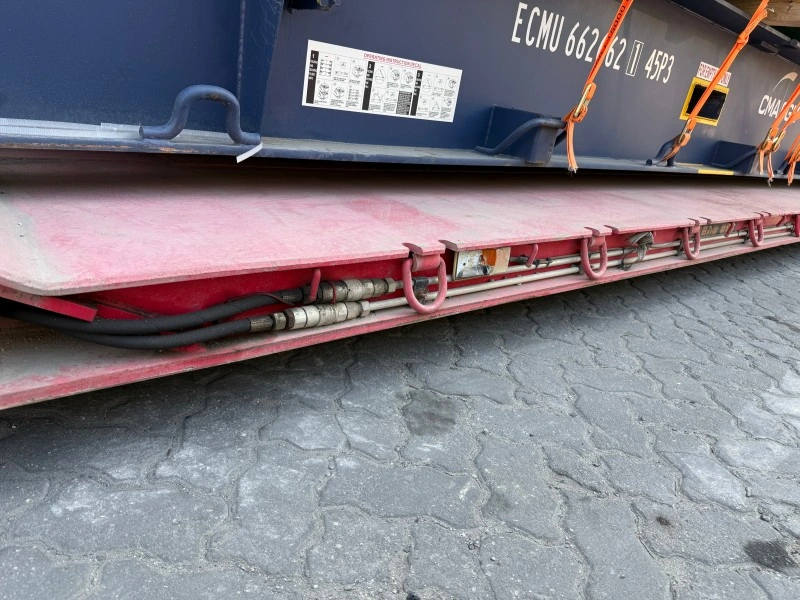
What Is an OOG Shipment?
Out-of-gauge shipment (OOG) is a shipment with cargo exceeding normal handling limits and/or dimensions. It could be too tall, too wide, too long, too heavy or too unusual to fit into standard containers or transport options. Typical examples include heavy machinery, generators, pressure vessels, steel structures and project cargo.
Specialized equipment like flat or open top containers, lowbeds or even breakbulk and RoRo shipping may be necessary for OOG shipping. Knowing these fundamentals is the beginning of good OOG shipment planning.
| OOG Cargo Feature | What It Means for Shipping |
| Over-Height | Cargo may require open top, flat rack, lowbed trailer, or special route clearance |
| Over-Width | Cargo may need flat rack, breakbulk, permits, or escort vehicles |
| Over-Length | Cargo may require extendable trailers, breakbulk, or special stowage |
| Heavy Weight | Cargo affects trailer capacity, crane selection, axle load, and permits |
| Irregular Shape | Cargo needs customized support, lifting, and lashing planning |
| High Value | Cargo may require stronger protection, insurance, and monitoring |
Step 1: Collect Accurate Cargo Information
The key component to any successful OOG shipment plan is accurate cargo information. Even expert logistics teams are not able to quote accurately, or offer viable transport options, without accurate data. Gathering this information early on, will save many down stream problems for first time shippers.
First, gather information about the cargo’s name and its purpose, actual length, width, and height dimensions (including any extensions), end-of-packing dimensions after crating and/or protection, gross and net weights, center of gravity, lifting points, support points, technical drawings, high quality photos and videos, fragile or sensitive parts, surface protection requirements, hazardous materials (if applicable), point of origin, destination, and preferred delivery schedule.
For first-time shippers who need to compare flat rack, open top, lowbed, breakbulk, or heavy lift options, an OOG logistics planning guide should start with verified cargo data and a feasibility review before booking.
| Cargo Information | Why It Matters |
| Verified Dimensions | Determines transport method, route feasibility, and carrier acceptance |
| Final Packed Size | Prevents mismatch between booking and actual cargo |
| Gross Weight | Affects trailer, crane, container, vessel, and permit planning |
| Center of Gravity | Supports safe lifting, load positioning, and cargo stability |
| Lifting Points | Helps plan crane loading and unloading safely |
| Support Points | Prevents cargo deformation during transport or storage |
| Photos and Drawings | Help identify protrusions, weak points, and handling requirements |
| Hazardous Components | Supports declaration, documentation, and carrier approval |
| Origin / Destination | Enables route planning, port selection, and final delivery review |
Step 2: Confirm Whether the Cargo Needs Special Packaging or Protection
When deciding on a transport method, consideration and planning must be given to the protection of the cargo. The packaging of cargo is an important component of the planning of OOG cargo that is often subject to long-distance travel and various environmental stresses.
Look at products that include vacuum sealing, moisture barriers, anti-rust coatings, VCI film or paper, shock protection materials, edge guards, sealing for electrical components, steel frame protection, and even wooden crate packaging, or tarpaulin covering. Photographs of the packaged cargo and inspection documents also can be useful in the future. For extreme conditions, specialized services in lashing, cargo securing and protective packaging ensure cargo stability.
| Protection Need | Common Solution |
| Rust or Corrosion Risk | Anti-rust coating, VCI materials, moisture barriers, desiccants |
| Rain or Sea Exposure | Tarpaulin, waterproof covering, drainage planning |
| Moisture-Sensitive Equipment | Vacuum sealing, moisture barrier bags, humidity indicators |
| Fragile Components | Padding, shock protection, wooden crate, or steel frame |
| Painted or Finished Surfaces | Edge protection, non-abrasive wrapping, contact padding |
| Electrical Systems | Sealed cabinets, moisture control, and covered connectors |
| High-Value Cargo | Inspection photos, insurance support, tracking, and secure storage |
Step 3: Choose the Right OOG Transport Method
The choice of transport mode should not be purely on price, rather on the characteristics of the cargo, transport conditions and the project needs. Various methods are appropriate for different kinds of oversized loads.
These can include dedicated road transport (lowbed trailers, ultra low flatbeds), container transport (flat rack and open top), or ocean transport (breakbulk, RoRo and heavy lift). For international shipments, the combination of modes of transport is often used.
| Transport Method | Best Used For | Key Planning Point |
| Lowbed Trailer | Tall or heavy cargo for inland transport | Route clearance and axle load |
| Ultra-Low Flatbed | Over-height cargo with bridge or gate restrictions | Total loaded height and stability |
| Extendable Trailer | Long machinery, steel structures, or pressure vessels | Support points and turning radius |
| Modular Trailer | Extremely heavy, wide, or complex cargo | Axle configuration and route survey |
| Flat Rack Container | Over-width, over-height, or irregular cargo within carrier limits | Lashing, weather protection, and carrier approval |
| Open Top Container | Over-height cargo that fits within container walls | Top loading and cover protection |
| Breakbulk Shipping | Cargo too large for containerized OOG transport | Port handling and vessel stowage |
| RoRo Shipping | Rollable equipment or machinery on wheels | Ramp access and cargo condition |
| Heavy Lift Vessel | Extremely heavy or complex project cargo | Heavy lift planning and port capability |
Step 4: Review Route Feasibility and Permit Requirements
One of the major distinctions between standard freight shipment planning and OOG shipment planning is route planning. When a cargo is oversized, it has to deal with physical limitations that a normal shipment does not come across.
Some of the factors to consider are road widths, bridge clearances, tunnel restrictions, overhead cables, turning radii, axle load limits, road surface, escort vehicles required, movement time windows, oversize/overweight permits, port gate access, and destination site accessibility. Knowing what to expect as a result of early route surveys can prevent costly issues.
| Route Planning Factor | Why It Matters |
| Road Width | Determines whether wide cargo can pass safely |
| Bridge Clearance | Prevents over-height cargo from being blocked |
| Turning Radius | Critical for long cargo and specialized trailers |
| Axle Load Limits | Affects permits, trailer selection, and bridge approval |
| Overhead Obstacles | Cables, signs, and gates may require route adjustment |
| Movement Time Windows | Some areas restrict oversized cargo movement by time or day |
| Escort Requirements | Helps manage traffic safety and legal compliance |
| Port Gate Access | Confirms cargo can enter terminal facilities |
| Final Site Access | Ensures cargo can reach the delivery location |
Step 5: Plan Loading, Lifting, and Crane Requirements
The loading phase is among the most critical phases of any OOG shipment, and it is best to plan in detail well in advance of arrival at the loading location. Correct crane selection and rigging is key to safety.
Some factors to consider are the capacity of the crane, gross weight (including rigging), center of gravity, designated lifting points, sling angles, spreader beams (if necessary), positioning of the trailer or container, ground bearing capacity at the site, access to the site, weather conditions and supervision on site.
| Loading Factor | Why It Matters |
| Crane Capacity | Must match actual lifting weight and working radius |
| Rigging Weight | Must be included in total lifting load |
| Center of Gravity | Affects balance and lifting stability |
| Lifting Points | Prevents structural damage or unsafe lifting |
| Sling Angle | Affects force on cargo and lifting gear |
| Site Space | Determines crane position and trailer/container access |
| Ground Bearing Capacity | Ensures crane outriggers and trailer can operate safely |
| Weather Conditions | Wind or rain may delay lifting |
| On-Site Supervision | Helps ensure loading follows the approved plan |
Step 6: Design Lashing, Blocking, and Bracing
Cargo securing is important because of the considerable forces that OOG cargo is subjected to during ocean transportation from road vibration, braking, turning and sea conditions. A professional lashing plan is a must.
This includes selecting the correct chain or strap for the load, creating blocking to stop the load from slipping, bracing for odd shaped loads, applying anti-slip surfaces, timber or steel supports, edge protection and checking lashing point strength. Always provide post loading inspection/re-check after initial movement.
| Securing Method | Purpose | Key Consideration |
| Lashing | Restrains cargo during road and ocean movement | Must match cargo weight and movement forces |
| Blocking | Prevents sliding during braking or vessel motion | Should contact structurally strong areas |
| Bracing | Supports irregular or unstable cargo | Must avoid damaging sensitive components |
| Anti-Slip Material | Increases friction between cargo and support surface | Helps reduce movement under vibration |
| Timber / Steel Supports | Distributes weight and protects contact points | Must align with cargo support points |
| Edge Protection | Protects cargo surfaces and lashing materials | Important for painted or sharp-edged cargo |
| Post-Loading Check | Confirms cargo position and securing quality | Should be documented with photos |
Step 7: Prepare Export Documents and Customs Information
The documentation should accurately represent the contents of the cargo and the selected transport plan. At customs or carrier delay may occur due to inconsistencies.
Essential documents usually cover the commercial invoice, detailed packing list, bill of lading, HS codes, certificate of origin, export declaration forms, permits that may be required for importation, technical specifications, photos and drawings of the cargo, dangerous goods documents (where applicable), insurance certificate and clear consignee and customs broker information. It is important that all the documentation is consistent.
| Document | Why It Matters |
| Commercial Invoice | Supports customs value and transaction details |
| Packing List | Confirms package count, dimensions, weight, and packing method |
| Bill of Lading | Acts as transport document and cargo receipt |
| HS Code | Determines customs classification and duty requirements |
| Certificate of Origin | Supports origin verification or trade preference claims |
| Export Declaration | Supports legal export clearance |
| Technical Specifications | Helps customs and carriers understand the cargo |
| Cargo Photos / Drawings | Support OOG approval, handling review, and customs questions |
| DG Documents | Required if cargo contains regulated hazardous components |
| Insurance Certificate | Supports risk coverage and claim preparation |
Step 8: Confirm Carrier, Port, and Terminal Approval
OOG cargoes frequently need special approvals from the carrier, port and terminal even after they have accepted a quotation. The more detailed information you provide, the less likely it is to be rejected at the last minute.
These include the cargo measurements and gross weight, detailed load plans, lashing plans, crane handling needs, confirmation of access to gates at port, terminal storage facility, vessel stowage plans and compliance with cut-off times.
| Approval Item | Why It Matters |
| Cargo Dimensions | Allows carrier and port to check feasibility |
| Gross Weight | Supports lifting, stowage, and container/trailer review |
| Load Plan | Shows how cargo will be positioned |
| Lashing Plan | Confirms cargo can be secured safely |
| Container / Vessel Approval | Ensures flat rack, open top, breakbulk, or heavy lift method is accepted |
| Port Gate Access | Confirms cargo can physically enter the terminal |
| Crane Capacity | Ensures cargo can be handled at origin and destination |
| Storage Space | Determines whether oversized cargo can wait safely |
| Cut-Off Time | Prevents missed vessel schedules |
Step 9: Review Insurance, Tracking, and Risk Controls
Risk management should be part of your OOG shipment process; especially if you are shipping valuable or time-sensitive industrial cargo. Once you have comprehensive insurance and monitoring, you are sure to have peace of mind.
Think about cargo insurance, the right declared value, pre-shipment photos, loading and lashing records, handover records, GPS tracking, route deviation alerts, secure storage, monitoring weather conditions, and keeping emergency contacts on hand.
| Risk Control Item | Why It Helps |
| Cargo Insurance | Helps manage financial exposure for covered incidents |
| Declared Value | Supports accurate insurance and customs documents |
| Pre-Shipment Photos | Documents cargo condition before transport |
| Loading and Lashing Photos | Shows how cargo was handled and secured |
| Handover Records | Clarifies responsibility between parties |
| GPS Tracking | Provides visibility during inland movement |
| Secure Storage | Reduces theft, weather, and unauthorized access risk |
| Weather Monitoring | Helps adjust timing for road, port, or crane operations |
| Emergency Contacts | Speeds response if delays or incidents occur |
Step 10: Coordinate Final Delivery and Unloading
OOG shipment planning is not complete until the cargo reaches their destination safely and is unloaded and accepted. The ocean leg can be as much a coordination as this stage.
Arrangements for discharge at the port of destination, customs clearance, final route permits to inland leg from the port to the site, width and height of roads/vestibules at site, gate clearances, storage areas, unloading facilities (cranes or forklifts), ground conditions, delivery appointments, supervision of the works, and final inspection at site on arrival.
| Final Delivery Item | Why It Matters |
| Destination Customs Clearance | Prevents cargo hold and port storage charges |
| Final Route Permit | Allows oversized cargo to move legally from port to site |
| Site Access | Confirms roads, gates, and turns can handle the cargo |
| Unloading Equipment | Ensures crane or lifting equipment is ready on arrival |
| Ground Conditions | Supports safe crane setup and cargo placement |
| Storage Backup | Provides a safe option if the site is not ready |
| Delivery Appointment | Reduces waiting time and coordination problems |
| Arrival Inspection | Confirms cargo condition before acceptance |
Beginner Checklist for Planning Your First OOG Shipment
Use this detailed checklist to help you plan your first OOG shipment. It includes the key components that savvy shippers check before proceeding.
| Planning Stage | What to Confirm |
| Cargo Data | Dimensions, weight, final packed size, center of gravity, lifting points |
| Protection | Packaging, anti-rust, moisture control, surface protection |
| Transport Method | Lowbed, flat rack, open top, breakbulk, RoRo, or heavy lift |
| Route | Road clearance, permits, escorts, port access, site access |
| Loading | Crane, rigging, support points, loading plan, supervision |
| Securing | Lashing, blocking, bracing, anti-slip materials, inspection |
| Documents | Invoice, packing list, HS code, bill of lading, certificates, DG documents |
| Approval | Carrier, port, terminal, vessel, and destination handling |
| Risk Control | Insurance, tracking, secure storage, weather monitoring |
| Delivery | Customs clearance, final route, unloading equipment, arrival inspection |
Common Mistakes First-Time OOG Shippers Should Avoid
Even well-prepared companies can run into problems if they don’t pay attention to some of the essentials of planning the first OOG shipment. Some common mistakes are as follows:
| Mistake | Possible Consequence |
| No Verified Cargo Data | Wrong quotation, equipment mismatch, or booking rejection |
| Ignoring Packed Dimensions | Cargo may exceed planned transport limits |
| Choosing by Price Only | Higher risk of damage, delay, or re-handling |
| No Route Review | Bridge, road, or permit problems may stop transport |
| No Lashing Plan | Cargo may shift or fail carrier approval |
| Late Documentation | Customs or port delays may occur |
| No Cargo Protection | Rust, moisture, scratches, or vibration damage may happen |
| No Final Delivery Plan | Cargo may arrive at port but fail to reach the site |
Common Misunderstandings About First-Time OOG Shipping
There are a few incorrect assumptions that can make the process of transporting cargo over OOG difficult for novices. To establish expectations realistically, it helps to clarify these:
- OOG shipping is not simply OOG shipping with bigger shipping loads— it necessitates specific engineering review through various stages.
- Without full and accurate cargo information, a freight quote is not to be trusted.
- The lowest-priced may not be the lowest-cost in the long run.
- The actual pack size and not the machine’s size, is what matters here.
- The approval of a carrier does not mean that you are certain of smooth port handling or that the ship will make it to the port as scheduled.
- Planning for cargo protection should take place before, not in response to, issues arise.
- Successful OOG shipments require high coordination between a number of parties such as suppliers, carriers, ports, customs brokers and the receiver.
Conclusion — Your First OOG Shipment Should Start with Data and Feasibility
Knowing what to expect, you should start with data and feasibility in your first shipment of OOG products.
When you list your first OOG shipment as these sequential steps, it’s much easier to handle. Accurate cargo data, comprehensive route and feasibility reviews, protection, transport method selection, loading and lashing, complete documentation, required approvals, risk control, and end-to-end delivery coordination are important elements for first-time shippers to mitigate risks and ensure the successful delivery.
It is not simply to transport the goods—it is to transport them safely, effectively and according to all requirements. Early access to accurate data and advice from experienced partners in the OOG logistics planning process is critical to oversized cargo transport.