
When it comes to loading and securing cylindrical loads on flat racks, it’s more than just tie-downs. Round loads are more apt to roll, tall or top-heavy loads more likely to tip over due to dynamic forces such as road vibration, crane lifting, sea swells, and acceleration. Without side walls to contain these movements, the risks of engineered support, center of gravity analysis, blocking, bracing, and precise lashing are critical to the safety of flattop container shipping.
While many shippers think that weight alone is enough to make their goods stable, experience indicates that shape, surface friction and load distribution are often the most difficult factors to deal with. Securing heavy cargo on flat rack containers for tanks, pressure vessels, reels, silos and other unstable loads demands careful consideration of the number, angle, and placement of securing points, blocking, and controlling the center of gravity. All of these factors help to minimize risks of shifting, protect valuable equipment, and ensure that shipments can pass port and carrier inspections without hassle.
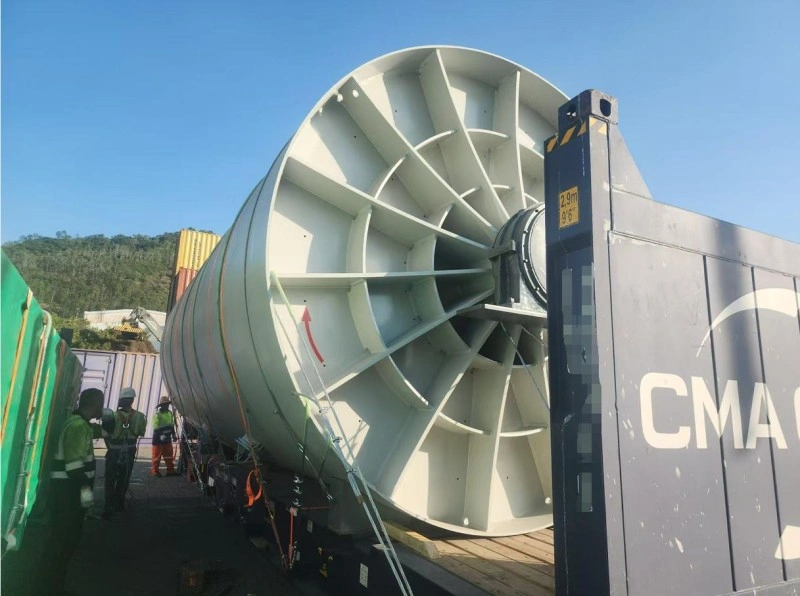
Why Cylindrical and High-Center-of-Gravity Cargo Needs Special Securing
The shape and weight distribution of cylindrical and high-center-of-gravity cargo makes it difficult to secure on flat racks and creates stability issues. If they are not planned properly, these loads could roll, slide or tip over during multi-modal transport that includes both truck and port transportation as well as ocean transport.
There are no enclosed sides on a flat rack, and all restraint is from systems outside the flat rack. High centres of gravity increase turning, lifting and rolling moments while high friction on metal surfaces reduces them. Measuring cargo accurately and planning a load in 3D are essential parts of OOG cargo securing.
| Cargo Characteristic | Main Risk on Flat Racks | Practical Securing Focus |
| Cylindrical shape | Rolling or lateral movement | Saddles, chocks, blocking, and bracing |
| High center of gravity | Tipping during handling or transport | COG review and wider support base |
| Smooth metal surface | Reduced friction | Anti-slip mats and secure contact points |
| Offset weight | Uneven lashing force or instability | Accurate weight and COG information |
| Heavy compact load | Deck pressure concentration | Load spreading and reinforced support |
| Tall structure | Wind and dynamic movement risk | Proper lashing angle and bracing |
Common Cargo Types That Require Special Flat Rack Securing
The geometry and internal weight distribution of items can make them unpredictable on flat racks, especially in industrial shipments. When these features are identified early, the project cargo logistics team will be able to create specific securing plans.
| Cargo Type | Securing Challenge | Recommended Planning Focus |
| Pressure vessels | Rolling and surface protection | Saddles, soft padding, and chain lashing |
| Steel tanks | Cylindrical shape and corrosion risk | Blocking, bracing, waterproof protection |
| Cable reels | Rolling and edge damage | Chocks, side blocking, and restraint straps |
| Silos | High center of gravity | Wider base support and tipping control |
| Boilers | Heavy weight and irregular shape | Load spreading and engineered lashing |
| Heat exchangers | Fragile fins or surfaces | Support frames and protective padding |
| Tall machinery | Tipping and vibration | COG review and multi-directional securing |
| Skid-mounted units | Elevated equipment weight | Base frame support and lashing from structural points |
Center-of-Gravity Analysis Before Loading
One of the most important part of the process for preparing high-center-of-gravity cargo for flat rack transport is center-of-gravity analysis. In cases of equipment with heavier internal parts or unequal mass distribution the actual COG is not necessarily the same as the geometric center.
The vertical, Longitudinal and Lateral COG will aid in identifying safe lifting points, support placement and geometry of the lashing. Wider bases or bracing might be required in port operations or on sea voyages to prevent tipping forces resulting from high COG loads. Shippers should ask manufacturers for detailed drawings or verified information long before placing an order.
| COG Factor | Why It Matters | Practical Action |
| Vertical COG height | Determines tipping tendency | Use lower positioning and wider support where possible |
| Longitudinal COG | Affects front/rear load balance | Place cargo to distribute weight across the deck |
| Lateral COG | Affects side stability | Adjust support and lashing direction |
| Offset internal weight | May create unexpected imbalance | Request drawings or COG data from manufacturer |
| COG during lifting | Affects crane safety | Match lifting plan to verified lifting points |
| COG during transport | Affects movement under vibration and vessel motion | Use blocking, bracing, and calculated lashing angles |
Support Design: Saddles, Chocks, Blocking, and Load Spreading
Movement is prevented from occurring before lashing even begins by proper support design. Custom saddles, chocks and load spreading planks match the shape and weight distribution of the cargo to protect the flat rack deck and cargo from damage due to point loading.
Heavy loads are distributed by timber bedding or steel frames and anti-slip materials provide more grip on smooth surfaces. They are combined with blocking and bracing to provide a stable foundation for transport of cylindrical cargo.
Lashing Methods for Cylindrical and Top-Heavy Cargo
Lashing should not only hold up the load, but should also hold it in all directions, longitudinal, lateral and vertical. Chain lashing is used for heavy industrial products and webbing belts are used for coated or finished surfaces. A correct angle (usually 45-60 degrees) will provide the most holding ability while avoiding overloading attachment points.
Always use rated equipment, avoid sharp edges and re-ensure tension after the cargo is settled. For rolling or top-heavy loads, direct lashing to structural strong points will perform better than tie-downs in general.
| Lashing Method | Best Used For | Key Caution |
| Chain lashing | Heavy tanks, machinery, steel equipment | Avoid direct contact with fragile or coated surfaces |
| Webbing belts | Finished or sensitive cargo surfaces | Must be properly rated for cargo weight |
| Direct lashing | Cargo with structural lashing points | Anchor only to approved strong points |
| Tie-down lashing | Increasing friction on stable cargo | Not enough by itself for rolling cargo |
| Cross lashing | Lateral and diagonal movement control | Must maintain correct angles |
| Edge protection | Sharp edges or coated surfaces | Prevents lashing damage and cargo abrasion |
Blocking and Bracing to Prevent Rolling, Sliding, and Tipping
Blocking and bracing provides physical barriers to movement, particularly for cylindrical loads which may roll under moderate forces. In well-designed systems, the forces are passed through structural areas instead of delicate panels so they are carried safely to the flat rack.
| Movement Risk | Recommended Control | Practical Note |
| Rolling | Saddles, chocks, and side blocking | Essential for cylindrical cargo |
| Sliding forward | End blocking and direct lashing | Important during braking and handling |
| Sliding sideways | Side bracing and cross lashing | Important during vessel rolling motion |
| Tipping | Wider support, COG review, and diagonal lashing | Critical for high-center-of-gravity cargo |
| Vibration movement | Anti-slip mats and tension checks | Helps during road and sea transport |
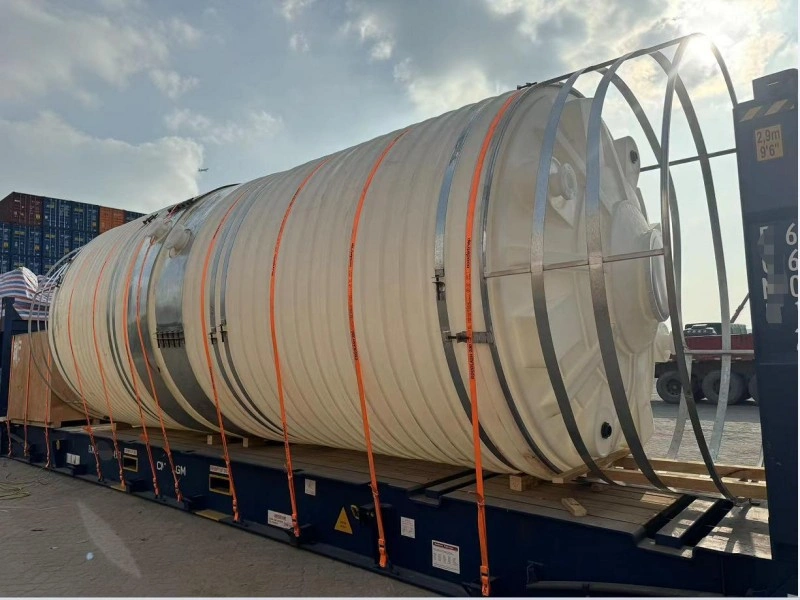
Protecting Cargo Surfaces During Securing
Cargo securing for flat rack cannot harm the load it secures. Restraint integrity and the prevention of scratches, dents or coating failure is achieved through padding, edge protectors and soft contact materials. Do not use lashing on ocean-exposed valves, gauges, or machined surfaces, and apply anti-rust treatments to valves, gauges, and other surfaces.
Flat Rack Load Positioning for Unstable Cargo
Strategic positioning enhances stability, lashing efficiency and safety in handling. Where possible, center loads, do not exceed overhangs, and attach heavy loads to reinforced areas of the deck. Correct positioning also allows crane access and lashing points to be reached when loading.
Inspection Checklist Before Flat Rack Departure
A detailed pre-departure inspection identifies problems before any travels take place. Loading supervisors to check dimensions, COG data, support installation, lashing condition, weather protection. Take photos of all documents for carrier and insurance.
| Inspection Item | Responsible Party | Why It Matters |
| Cargo dimensions confirmed | Shipper / logistics planner | Prevents booking and route errors |
| COG verified | Manufacturer / engineer | Supports stability and securing plan |
| Saddles or chocks installed | Loading team | Prevents rolling movement |
| Blocking and bracing checked | Securing team | Controls sliding and lateral movement |
| Lashing equipment inspected | Securing supervisor | Ensures restraints are rated and safe |
| Lashing angles reviewed | Cargo securing specialist | Improves restraint effectiveness |
Common Mistakes to Avoid When Securing Cylindrical Cargo
Even veteran teams find themselves putting too much trust in friction or taking for granted dynamic forces. Typical mistakes are neglecting to use tie-downs for rolling cargo, failing to consider verified COG information, and using lashings at weak points. With careful planning and supervision, these issues and their resulting expensive problems can be avoided.
When to Use Professional Cargo Securing Supervision
Expert supervision is beneficial for complex shipments, particularly high value, high center-of-gravity or multi-modal OOG moves. Professional supervision assures compliance with international standards and detailed loading records that aid in smooth port operation and insurance needs.
Conclusion — Safe Flat Rack Securing Starts Before the Cargo Is Loaded
When the securing plan takes into account the actual shape, weight distribution and travel of a cargo, then cylindrical and high-center-of-gravity cargo can travel safely on flat racks. A combination of accurate Centre of Gravity analysis, custom supports, blocking and bracing, calculated lashing, surface protection and final inspection provides an effective system for controlling the risk of rolling, tipping and shifting.
Preparation is the key to successful project cargo logistics, even before the first chain is tightened. In treating flat rack cargo securing as an engineered process, rather than a routine task, logistics managers and exporters safeguard the cargo and project timelines.