
Vacuum packing delivers powerful protection for export cargo by removing air and creating a tight barrier against moisture, dust, and contaminants. Yet this protection only works if the vacuum packing seals remain intact from the moment the package leaves the workshop until it reaches the final destination. A small puncture, weak seam, or abrasion during handling can let humid air or salt-laden sea air inside, quickly undermining corrosion prevention and turning a well-packed shipment into a source of claims.
Many exporters assume vacuum packing is “finished” once the heat sealer stops. In reality, vacuum packing maintenance tips focus on treating every seal as a critical protection point throughout warehouse movement, container loading, sea freight, port storage, and final delivery. For machinery, molds, metal parts, electronics, and precision components, consistent seal care prevents hidden damage that outer crates may hide but cannot stop.
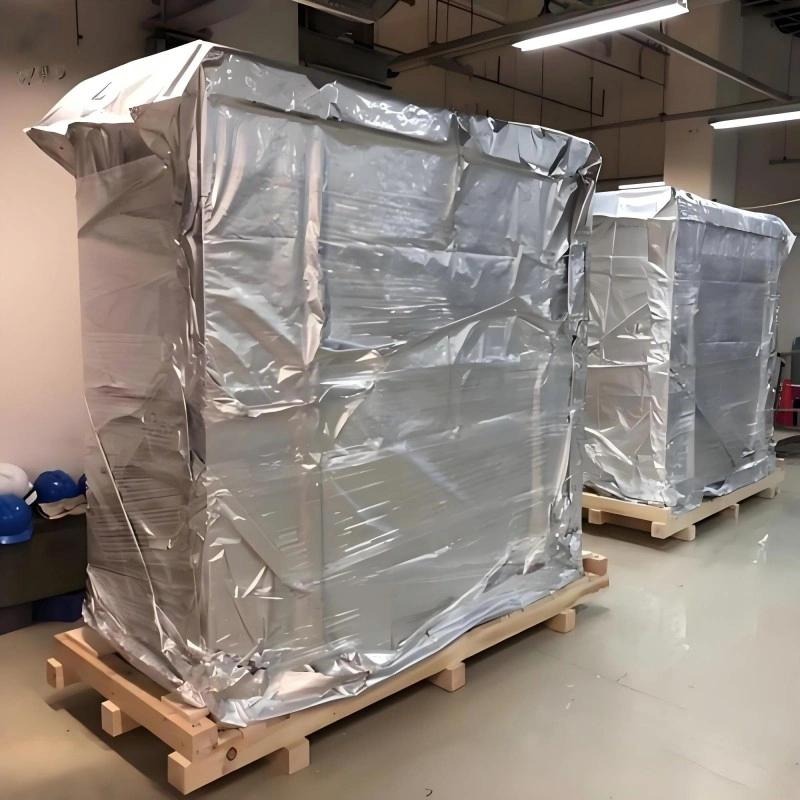
Why Vacuum Packing Seal Integrity Matters
A vacuum packing seal is the single element that maintains the controlled low-oxygen, low-humidity environment inside the package. When the seal stays intact, desiccants work efficiently, VCI films or papers provide lasting corrosion prevention, and the cargo arrives in the same condition it left the factory.
| Seal Function | Why It Matters | Risk If Seal Fails |
| Moisture barrier | Keeps humid air outside | Rust, corrosion, mold on metal surfaces |
| Dust protection | Prevents particles from settling | Contamination of precision components |
| Desiccant performance | Allows desiccants to control internal RH | Desiccants saturate quickly |
| Corrosion control | Supports VCI or anti-rust layers | Oxidized or pitted metal parts |
| Storage protection | Maintains condition during long delays | Long-term deterioration |
| Shipping reliability | Protects across multiple transport stages | Unplanned inspection, repacking, claims |
For companies shipping industrial goods, maintaining vacuum packing seals for export cargo is essential to preserve moisture protection from packing through final delivery.
Common Causes of Vacuum Seal Failure During Export Shipping
Seal failure rarely happens because of poor film quality alone. Most failures trace back to handling stress, sharp cargo geometry, or insufficient preparation before the package even leaves the warehouse.
| Failure Cause | How It Damages the Seal | Prevention Method |
| Sharp edges | Punctures or tears the film | Add edge and corner protectors |
| Weak heat seal | Allows air leakage at seams | Use controlled sealing + inspect seams |
| Dirty seal area | Prevents proper bonding | Clean and dry surfaces before sealing |
| Excessive tension | Stretches film around corners | Choose correct bag size and proper folds |
| Forklift contact | Cuts or compresses packaging | Use pallets, skids, or crates |
| Lashing abrasion | Straps or chains rub through film | Add protective pads at contact points |
| Poor stacking | Compresses seams and corners | Follow clear handling and stacking limits |
| Dragging cargo | Abrades bottom edges | Lift instead of dragging |
Pre-Shipment Seal Inspection Checklist
Perform a thorough seal inspection before the cargo leaves the packing area — never after problems appear at the port.
| Inspection Item | What to Check | Why It Matters |
| Seal line | Continuous, clean, fully bonded | Prevents air and moisture leakage |
| Corners and edges | No punctures or sharp pressure points | Protects the weakest areas |
| Film tension | No overstretched or thin spots | Reduces tearing risk |
| Surface condition | No dust, oil, or moisture at seal area | Improves seal strength |
| Desiccants | Correct quantity and placement | Supports moisture control |
| Labels and marks | Handling instructions remain visible | Reduces mishandling |
| Photo record | Images taken before loading | Supports traceability |
How to Protect Vacuum Seals During Warehouse Handling
The majority of seal damage occurs during internal warehouse movements before the cargo even reaches the container.
| Warehouse Handling Practice | Why It Helps |
| Lift instead of dragging | Prevents abrasion on bottom seams |
| Use skids or pallets | Keeps seals away from floor damage |
| Avoid sharp contact | Reduces puncture risk |
| Keep away from wet floors | Prevents moisture exposure and weakening |
| Do not stack on seal lines | Prevents compression damage |
| Use clear handling labels | Helps teams avoid mistakes |
| Inspect after movement | Detects damage early |
How to Protect Seals During Container Loading and Lashing
Loading and lashing introduce heavy forces that can crush or abrade vacuum film if not coordinated with the packaging design.
| Loading or Lashing Risk | Possible Seal Damage | Better Practice |
| Strap over seal line | Seam abrasion or compression | Use pads and avoid direct seam contact |
| Chain contact | Puncture or tearing | Add reinforcement and edge guards |
| Blocking against film | Crushed or displaced seal area | Block against structural support areas |
| Forklift impact | Cuts or dents packaging | Use skids and clear handling marks |
| Container floor abrasion | Bottom seam wear | Use pallets or protective base |
Seal Maintenance During Storage and Transit
Export shipments often spend weeks or months in storage and transit. Schedule quick visual checks at every major handover.
| Checkpoint | What to Inspect | Recommended Action |
| After packing | Seal lines, corners, desiccants | Document with photos |
| Before loading | Punctures, tears, loose seams | Repair or repack if needed |
| After truck movement | Abrasion or compression marks | Inspect contact points |
| At port handover | Weather or handling damage | Record condition |
| After lashing | Strap and chain contact areas | Check for film damage |
| Destination arrival | Seal condition and package integrity | Confirm before storage or unpacking |
What to Do If a Vacuum Seal Is Damaged
Act quickly when damage is discovered. Small issues can escalate if ignored.
| Damage Type | Risk Level | Suggested Response |
| Small surface scratch | Low | Monitor and add extra protection |
| Small puncture | Medium | Patch if suitable and document |
| Open seam | High | Reseal or repack |
| Large tear | High | Repack with new barrier protection |
| Wet packaging area | High | Inspect cargo and replace desiccants |
Common Maintenance Mistakes That Lead to Seal Failure
Most seal failures are preventable when teams follow simple rules based on real-world export experience.
| Mistake | Possible Consequence | Better Practice |
| Dragging cargo | Bottom seam abrasion | Lift with proper equipment |
| Storing on wet floors | Moisture exposure | Use pallets or skids |
| Ignoring small punctures | Humid air enters | Inspect and repair promptly |
| Strap contact without pads | Film tearing | Use lashing protection |
| No post-loading inspection | Hidden seal failure | Check after loading and securing |
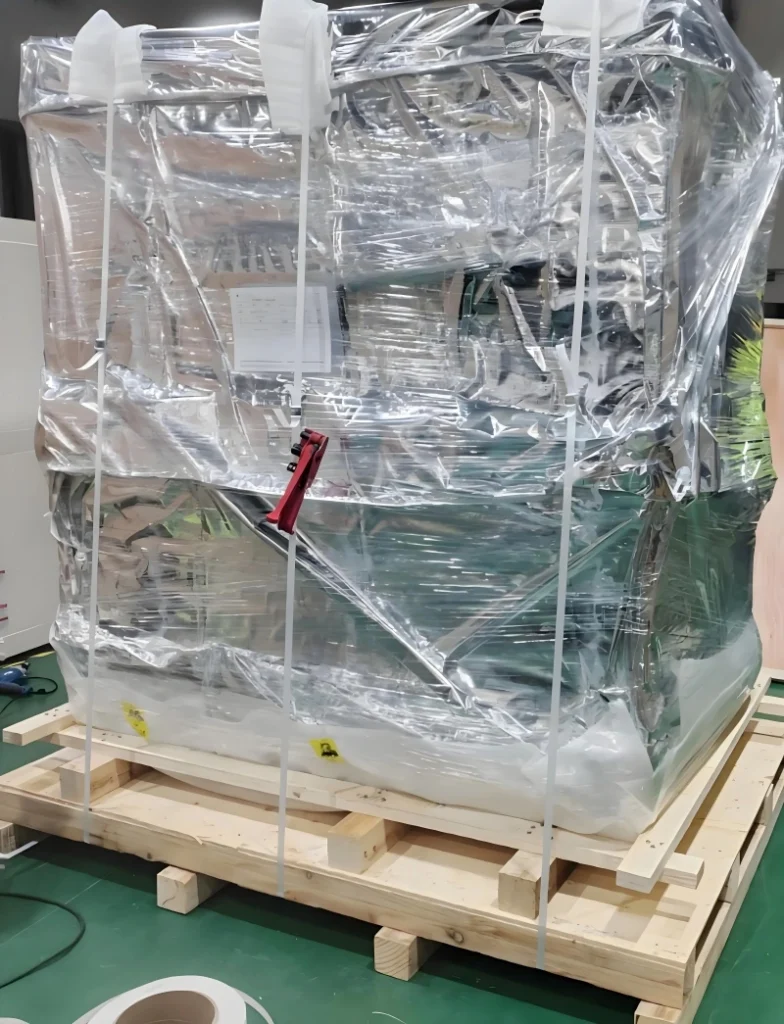
How Packaging Design Helps Seals Stay Intact
Good seal maintenance actually begins at the design stage.
| Design Factor | How It Protects the Seal |
| Correct bag sizing | Prevents excessive tension and weak folds |
| Industrial-grade barrier film | Reduces tearing and puncture risk |
| Reinforced seams | Supports large or irregular cargo |
| Edge and corner protection | Prevents sharp corners from cutting film |
| Proper seal placement | Keeps seams away from high-pressure areas |
| Skid or crate support | Protects bottom seams during handling |
Buyer Checklist for Maintaining Vacuum Packing Seals Until Delivery
Procurement and quality teams can significantly reduce risk by including these points in specifications and inspections.
| Checklist Item | Why It Matters |
| Are cargo edges protected before sealing? | Prevents punctures from sharp corners |
| Is the seal line continuous and clean? | Reduces air and moisture leakage |
| Are desiccants confirmed before sealing? | Supports moisture control |
| Are lifting and lashing points marked? | Prevents handling damage |
| Is the cargo supported by skids/pallets? | Protects bottom seals |
| Are handling labels visible? | Guides warehouse and port teams |
| Are photos taken after packing? | Supports traceability |
| Is seal condition checked after loading? | Detects damage before transport continues |
Conclusion — Seal Maintenance Protects the Value of Vacuum Packing
A well-made vacuum package can lose its entire protective value if the seal is compromised during storage, loading, lashing, or delivery. By applying these vacuum packing maintenance tips — from proper design and pre-shipment inspection to careful handling and checkpoint monitoring — exporters and logistics teams can keep seals intact and deliver machinery, molds, metal parts, and precision equipment in optimal condition.
Treating vacuum packing as a complete protection system rather than a one-time sealing operation helps reduce moisture-related claims and strengthens supply-chain reliability across every stage of export logistics.