
For flat rack and open top containers, vacuum packaging ensures a compact, well sealed protection layer around oversized loads, thereby simplifying the loading process by eliminating loose film, defining the final shape and providing access to important loading and lashing surfaces. Vacuum packaging guarantees a controlled cargo envelope, allowing for a faster and safer loading process – particularly for machinery, molds or other industrial equipment that is vulnerable to moisture and handling damage in sea freight.
This approach can help optimize space usage, minimize on-site adjustments, and enhance overall load security when coordinated with cargo measurement and container selection. Packaging can be considered as a protection process, but in flat rack and open top operations, it plays a direct role in cargo handling, whether it be lifting, securing or loading without delays or rework. Vacuum packing increases the efficiency of loading cargo only if it is planned alongside the measurement of the cargo, the selection of containers, lifting points, lashing access and final inspection.
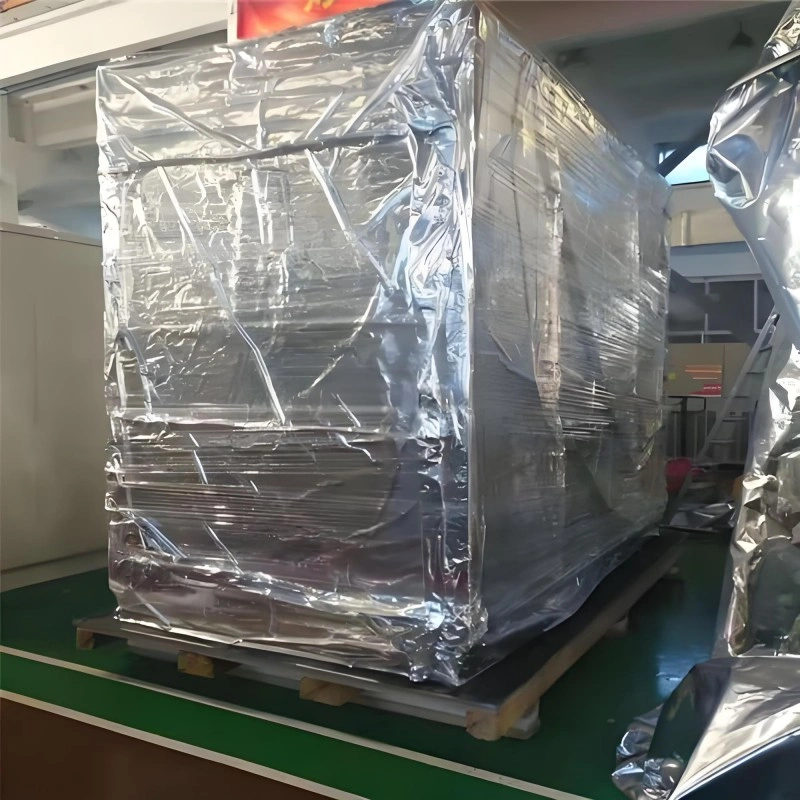
Why Packaging Affects Flat Rack and Open Top Loading Efficiency
The choice of packaging can either help to facilitate smooth operations or cause unanticipated delays, especially for out of gauge (OOG) cargo which is already straining container capacities. The ease of the cargo fitting, its safe movement and ability to be lashed is determined by the final shape and thickness of the product as well as its material properties during handling by crane or forklift.
| Loading Factor | How Packaging Affects It | Why It Matters |
| Final dimensions | Packaging adds thickness or changes cargo envelope | Affects flat rack or open top suitability |
| Lifting access | Packaging may cover lifting lugs or forklift pockets | Can delay or complicate loading |
| Lashing points | Poor wrapping may hide securing points | Makes cargo harder to secure safely |
| Cargo surface protection | Packaging must survive straps, chains, and handling | Prevents damage during loading |
| Shape control | Loose covers may shift or flap | Increases handling difficulty |
| Inspection visibility | Labels and marks must remain readable | Reduces loading mistakes |
| Container clearance | Extra packaging may affect height or width | Prevents last-minute loading failure |
When experienced OOG teams know that even cargo that “fits” on paper can be problematic if there are protrusions in the package or if the package conceals important points.
How Vacuum Packaging Supports More Controlled Cargo Loading
Oversized machinery moving by flatrack or open top containers can benefit from vacuum packing to optimise the loading of the container, to match the protection afforded with the measurement, lifting and lashing operations, and then the final loading. Vacuum packaging eliminates most loose folds and excess material that is often in the way for cranes, slings and securing gear by removing the air and creating a tight skin around the item.
| Vacuum Packaging Benefit | Loading Efficiency Impact |
| Controlled cargo surface | Reduces loose film interference during lifting |
| Reduced moisture exposure | Protects cargo during port waiting and loading |
| Clearer final dimensions | Supports more accurate loading and space planning |
| Cleaner cargo condition | Reduces last-minute cleaning or rewrapping |
| Better seal inspection | Helps identify packaging problems before loading |
| Custom fit for irregular cargo | Reduces excess material around protrusions |
| Label and mark placement | Helps loading teams identify handling points |
This yields a more uniform package which loading crews can count on from the time it reaches the terminal.
Flat Rack vs Open Top Containers: Different Loading Challenges
While both flat rack and open top containers are used for oversized cargo, there are certain realities of packaging and handling these different types of containers. Flat racks are used to lay cargo open both on top and on all sides, which requires high levels of resistance to weather and wear. Open tops can be used to load cranes vertically, but must be managed for height and top clearance.
| Container Type | Loading Challenge | Vacuum Packaging Consideration |
| Flat rack container | Cargo is exposed on sides and top | Strong barrier film, edge protection, and lashing coordination |
| Open top container | Cargo is loaded from above | Packaging must support crane loading and top clearance |
| Flat rack with wide cargo | Lashing access is critical | Packaging should not block securing points |
| Open top with tall cargo | Height clearance and top protection matter | Final packed height must be measured accurately |
| Flat rack sea freight | Salt air and weather exposure risk | Moisture and corrosion protection are important |
| Open top port handling | Rain or dust may enter before covering | Sealed packaging helps protect cargo condition |
The vacuum design is matched to the container type to prevent some of the typical surprises when it comes to actual loading.
Vacuum Packaging vs Loose Covers for Container Loading
Loose cover are quick to apply and can be more work loading. However, when appropriately specified, vacuum packaging can offer a tighter, more durable alternative.
| Packaging Method | Loading Efficiency | Protection Level | Main Limitation |
| Vacuum packaging | High when planned properly | High moisture and dust protection | Requires proper sealing and cargo preparation |
| Tarpaulin cover | Medium | Low to medium | May flap, shift, or leave gaps |
| Stretch film | Medium | Low | Can tear and offers limited moisture control |
| Shrink cover | Medium to high | Medium | May not provide full corrosion protection |
| Wooden crate | Medium | High physical protection | Adds size and weight |
| Basic plastic wrapping | Low to medium | Low | Loose folds can interfere with loading |
How Vacuum Packaging Affects Final Cargo Dimensions
Correct post-packaging measurement is critical for the booking of containers and route planning. Usually, very little thickness is added to the package, but edge reinforcements, desiccants, and outer reinforcement do affect the final package.
| Dimension Element | Possible Effect | Planning Recommendation |
| Barrier film | Slight increase in cargo envelope | Include in final measurement |
| Edge protection | May add width or height at corners | Measure after installation |
| Desiccants and inner liners | Usually minor but still part of package | Plan space for placement |
| Cushioning layer | Can increase size around sensitive surfaces | Confirm before container booking |
| Custom bag folds | May create protruding areas if poorly planned | Keep folds controlled and secured |
| Outer crate or skid | Can significantly change size and weight | Calculate before transport planning |
| Final packed dimensions | Determines loading feasibility | Remeasure before final booking confirmation |
Coordinating Vacuum Packaging with Lifting and Lashing Points
Packaging must protect and not hinder safe handling to ensure successful loading. Lifting lugs, forklift pockets and lashing rings must be considered when planning the use of a vacuum film.
| Access Point | Packaging Requirement | Risk If Ignored |
| Lifting lugs | Keep accessible or clearly marked | Loading delays or unsafe lifting |
| Forklift pockets | Avoid blocking entry points | Forklift damage or handling difficulty |
| Lashing points | Keep visible and usable | Cargo cannot be secured correctly |
| Sling contact areas | Add protection against abrasion | Film tearing or cargo surface damage |
| Chain contact points | Use reinforcement or guards | Punctures and seal failure |
| Inspection areas | Keep labels and marks readable | Mistakes during loading or unpacking |
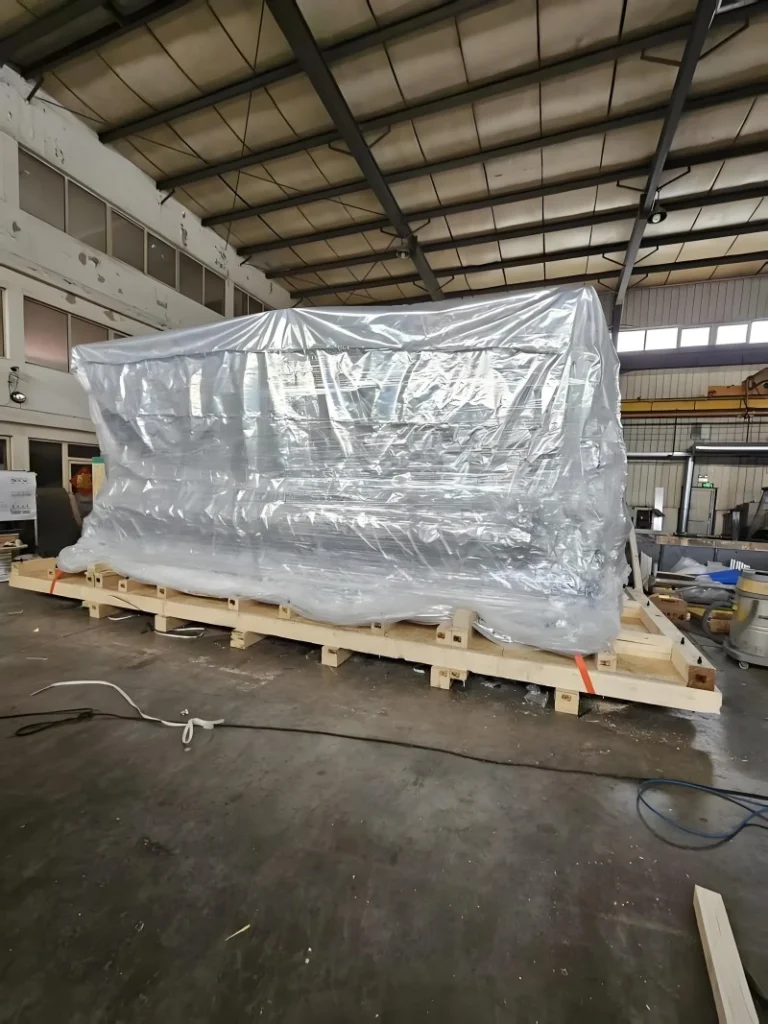
How Vacuum Packaging Helps Reduce Loading Delays
Most delays in loading are caused by lack of dimensions, missing securing points, or needing to make last minute packaging changes. These problems are minimized in a well designed vacuum system.
| Common Loading Delay | How Vacuum Packaging Helps |
| Loose covers needing adjustment | Creates a controlled fitted protection layer |
| Hidden lashing points | Packaging can be planned around securing areas |
| Unclear packed dimensions | Final package can be measured before loading |
| Moisture protection added at port | Packing is completed before cargo arrives |
| Packaging damage during lifting | Reinforcement and edge protection can be planned |
| Cargo inspection confusion | Labels and photos improve communication |
| Last-minute repacking | Proper seal inspection reduces rework risk |
Which Cargo Types Benefit Most from Vacuum Packaging in Flat Rack and Open Top Shipments?
Vacuum packaging really does stand out with products that feature odd shapes, delicate surfaces and sea exposure.
| Cargo Type | Loading Challenge | Why Vacuum Packaging Helps |
| Industrial machinery | Irregular shape and exposed surfaces | Reduces moisture and dust exposure |
| Precision molds | Heavy weight and polished surfaces | Helps prevent corrosion and contamination |
| CNC machines | Sensitive surfaces and control parts | Supports cleaner, safer transport protection |
| Electrical cabinets | Moisture-sensitive components | Helps reduce humidity and dust exposure |
| Motors and generators | Heavy handling and moisture risk | Protects housings and exposed parts |
| Metal parts | Rust risk during sea freight | Supports corrosion prevention |
| Oversized equipment | Open exposure and lashing needs | Protects surfaces while allowing transport planning |
| Factory relocation cargo | Delayed installation and multiple transfers | Helps maintain condition during storage and movement |
Common Mistakes That Reduce Loading Efficiency
Even in the hands of a good team, there are times when packaging and loading plans are not in sync.
| Mistake | Possible Result | Better Practice |
| No final measurement | Cargo may not fit container plan | Remeasure after packaging |
| Covered lifting points | Loading delays or unsafe handling | Mark and protect access points |
| Covered lashing points | Securing becomes difficult | Plan packaging around lashing access |
| Weak film selection | Tears during flat rack handling | Use industrial-grade barrier material |
| No edge protection | Film punctures on sharp corners | Add corner and edge guards |
| Loose folds | Packaging catches during lifting | Control folds and reinforce seams |
| No post-loading inspection | Hidden seal damage | Inspect after lifting and lashing |
Buyer Checklist Before Vacuum Packaging Flat Rack or Open Top Cargo
When they have all the facts from the beginning, packaging specialists can design a solution that really helps to optimize loading.
| Information to Prepare | Why It Helps |
| Cargo dimensions before packing | Establishes original cargo size |
| Expected container type | Determines packaging exposure and access needs |
| Final packed dimension requirements | Supports space booking and loading planning |
| Cargo photos and drawings | Identifies protrusions, sharp edges, and sensitive areas |
| Gross weight and center of gravity | Helps lifting and lashing planning |
| Lifting points | Ensures packaging does not block safe handling |
| Lashing points | Helps keep securing access visible |
| Shipping route and port conditions | Determines humidity and weather exposure risk |
| Storage duration before loading | Affects desiccant and barrier film selection |
| Outer protection needs | Helps decide whether covers, skids, or crates are required |
Best Practices for Using Vacuum Packaging in Container Loading Plans
Based on past OOG project experience, the following practices are generally found to be beneficial in achieving improved outcomes:
- Weigh goods before and after packaging
- Plan packaging before container booking!
- Maintain access to lifting/lashed points.
- Have edge protection on sharp corners.
- Handled film according to exposure level selection
- Sea freight – add desiccants.
- Always use labels and handling marks.
- Check seals prior to and after loading.
- Clean the packaging, adding photos.
- Work with loading staff to coordinate packaging.
| Best Practice | Practical Reason |
| Measure after packaging | Confirms final cargo envelope |
| Plan before booking | Avoids container mismatch |
| Keep access points visible | Supports safe lifting and securing |
| Protect corners and protrusions | Reduces puncture risk |
| Choose suitable barrier film | Improves durability during handling |
| Add desiccants | Supports moisture control during sea freight |
| Label handling points | Reduces operational mistakes |
| Inspect after loading | Confirms packaging was not damaged |
| Document with photos | Supports communication and traceability |
Conclusion — Loading Efficiency Depends on Packaging and Transport Planning Together
Vacuum packaging enhances the loading efficiency on flat racks and open top containers and provides a moisture-proof, clean, compact and protective package to handle faster and easier. When implemented early in the overall loading plan, along with dimension checks, easily accessible lifting/lashed points, and proper edge protection, it eliminates guesswork and contributes to ensuring the safe protection of precious industrial contents during the trip.
The package cannot be a substitute for proper load engineering, blocking and bracing or professional stevedoring. Best results are achieved when vacuum packaging is considered as a single integrated part of the overall OOG logistics solution.