
For export cargoes that are sensitive to moisture, humidity, corrosion, dust, salt air or long-term storage hazards, the packing generally offers more protection than does pallet wrapping. Pallet wrapping can help secure and hold products on pallets, but cannot be used to provide a moisture-control environment.
The main purpose of vacuum packing is to create a sealed barrier around the cargo to minimize exposure to moisture, dust, air, salt air and contamination, while pallet wrapping primarily is used to secure cargo inside a pallet and offers a basic surface cover and dust protection. Vacuum packing can be more effective for export cargo that is exposed to sea freight humidity, stored in port, has a long transit or is delayed in installation. If the carton is of low risk or for short-distance, palletized products, wrapping the pallets may suffice. Obviously the best option is always the one which is most suitable when it comes to cargo sensitivity, transport route, storage time, and handling risk. A large number of buyers think that if a pallet is wrapped tightly with plastic film, it is sufficient to protect it from export. In practice, pallet wrapping is not the most effective way to consistently keep sensitive industrial goods dry, rust-free and completely protected. The vacuum packing is a cargo protection method and the pallet wrapping is a load stabilization method. In some cases, they may be used together, yet they are intended to address various logistics issues.
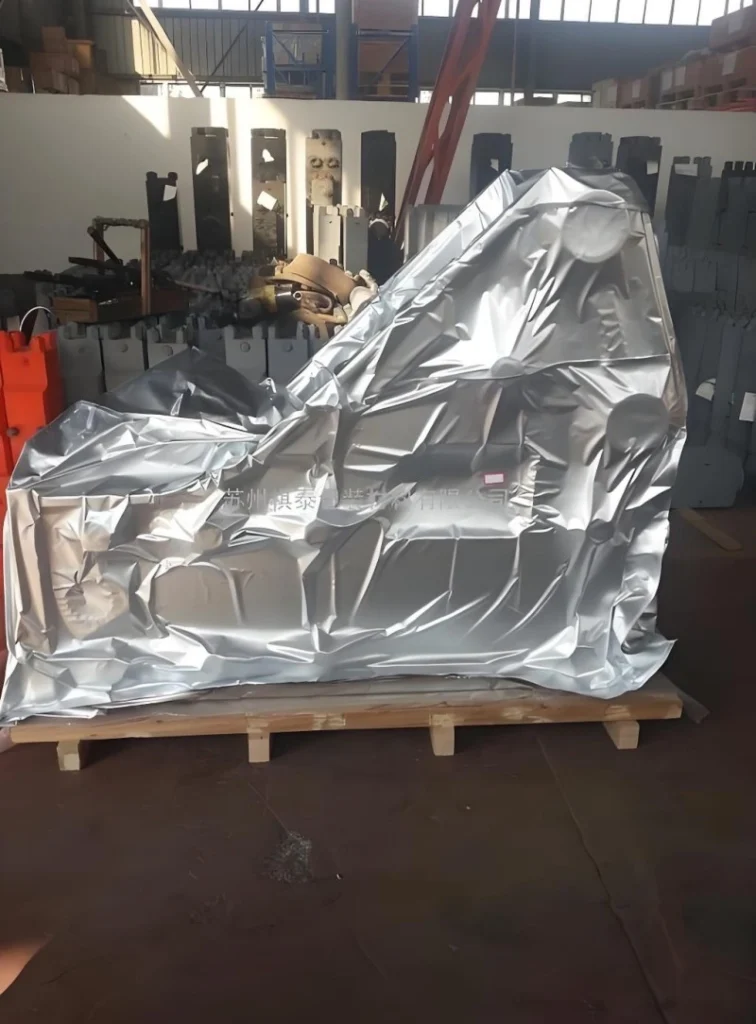
What Is Vacuum Packing in Export Cargo Protection?
Vacuum packing involves sealing cargo inside a barrier film or bag, and removing air from the inside to seal it off from moisture, oxygen, and dust. This method is more than just covering; it is a method that involves the control of the internal atmosphere around the goods.
If you are shipping export cargo from metal or precision materials, electronics or machinery, and the cargo needs to be protected from moisture and corrosion, the best way to do this is to use export cargo protection in the form of vacuum packing, which can offer more moisture and corrosion protection than simply wrapping the cargo with a plastic pallet.
| Feature | Vacuum Packing Explanation | Why It Matters |
| Barrier material | Cargo is enclosed in moisture-resistant film or bag | Helps reduce humidity and dust exposure |
| Air reduction | Excess air is removed or controlled | Limits oxygen and moisture around cargo |
| Desiccants | Moisture absorbers may be added inside | Supports longer storage and sea freight protection |
| Seal quality | Edges are sealed to maintain protection | Weak seals allow air and moisture entry |
| Corrosion support | VCI or anti-rust materials may be used | Helps protect metal surfaces |
| Cargo suitability | Useful for sensitive or high-value export cargo | Reduces risk during long-distance transport |
What Is Pallet Wrapping and What Does It Actually Do?
Pallet wrapping is not intended to be a protective barrier but instead is used to ensure the stability of loads wrapped in pallets. It includes wrapping stretch film around cartons, boxes or other equipment loaded on a pallet.
| Feature | Pallet Wrapping Explanation | Practical Limitation |
| Load stability | Holds cartons or boxes together on a pallet | Does not prevent all cargo movement if palletizing is poor |
| Dust coverage | Reduces light dust exposure | Edges and gaps may remain exposed |
| Handling support | Helps forklift and warehouse movement | Film can tear during rough handling |
| Cost | Usually low-cost and fast to apply | Protection level is limited |
| Moisture protection | Provides only basic surface coverage | Not reliable for long-term humidity control |
| Best use | Standard cartons and palletized goods | Not ideal for sensitive machinery or metal cargo |
Key Differences Between Vacuum Packing and Pallet Wrapping
The two methods have two essential differences in terms of their intent, level of protection, material role, and appropriate cargo types. It is important to be aware of these differences to prevent exporters from making expensive errors.
| Comparison Point | Vacuum Packing | Pallet Wrapping |
| Main purpose | Moisture, dust, corrosion, and contamination protection | Load stabilization and basic surface coverage |
| Moisture control | High when properly sealed with desiccants | Low to limited |
| Corrosion prevention | Stronger for metal cargo when combined with VCI | Limited |
| Load stabilization | Limited unless combined with pallet or crate | Good for palletized cartons |
| Best cargo type | Machinery, molds, electronics, precision parts | Cartons, boxes, standard palletized goods |
| Storage suitability | Better for long-term storage | Better for short-term handling |
| Sea freight suitability | Good for humidity-sensitive cargo | Limited without extra protection |
| Cost | Higher upfront | Lower upfront |
| Risk reduction | Higher for sensitive cargo | Suitable for low-risk cargo |
Which Method Is Better for Moisture and Corrosion Protection?
For moisture-sensitive and corrosion-sensitive cargo—where a sealed environment is preferable to the inside than can be achieved by pallet wrapping—vacuum packing is generally a better option.
| Moisture or Corrosion Risk | Better Method | Reason |
| Sea freight humidity | Vacuum packing | Creates a sealed moisture barrier |
| Container condensation | Vacuum packing | Reduces exposure to humid air |
| Salt air near ports | Vacuum packing | Helps isolate cargo from marine environment |
| Short warehouse handling | Pallet wrapping | Risk is limited if cargo is not sensitive |
| Metal parts storage | Vacuum packing | Helps reduce rust and oxidation |
| Cartons of low-risk goods | Pallet wrapping | Mainly need load stability |
| Precision equipment | Vacuum packing | Better protects sensitive surfaces and components |
Which Method Is Better for Handling and Load Stability?
Pallet wrapping is not only better used for the stability of boxes or cartons on the pallets, but also concentrates on the protection of the environment.
| Handling Requirement | Better Method | Why |
| Keeping cartons together | Pallet wrapping | Holds boxes on the pallet |
| Reducing warehouse movement | Pallet wrapping | Improves pallet handling stability |
| Protecting machinery from humidity | Vacuum packing | Provides sealed moisture protection |
| Protecting heavy equipment during lifting | Neither alone | Requires skid, crate, lifting plan, or lashing |
| Stabilizing vacuum-packed cargo on pallet | Combination | Vacuum packing protects cargo; pallet wrapping stabilizes load |
| Preventing forklift impact | Neither alone | Requires proper pallet, crate, or handling control |
When Vacuum Packing Is the Better Choice
Vacuum packing is recommended for cargo damage caused primarily by the environment and/or corrosion.
| Cargo or Situation | Why Vacuum Packing Is Better |
| Industrial machinery | Reduces moisture, dust, and corrosion exposure |
| Precision molds | Protects polished cavity surfaces from rust |
| Electronics | Helps reduce humidity and dust when paired with ESD packaging |
| Metal components | Lowers oxidation and surface staining risk |
| Long-term storage | Maintains a sealed protective environment |
| Sea freight shipments | Better protection against humidity and salt air |
| High-value cargo | Reduces financial risk of damage |
| Delayed installation | Keeps cargo protected until ready for use |
When Pallet Wrapping Is Enough
For low-risk cargo where moisture is not a concern, pallet wrapping may be acceptable.
| Cargo or Situation | Why Pallet Wrapping May Be Enough |
| Cartons on pallets | Main need is load stability |
| Short domestic movement | Limited environmental exposure |
| Indoor warehouse handling | Dust and moisture risk is lower |
| Goods with strong inner packaging | Outer wrap only stabilizes the pallet |
| Low-value non-sensitive goods | Damage consequence is lower |
| Short storage period | Long-term moisture control may not be required |
| Standard palletized freight | Stretch film supports easier handling |
When to Combine Vacuum Packing and Pallet Wrapping
They complement each other when the cargo is required to be both protected and stable when handling.
| Combined Method | Best Used For | Important Consideration |
| Vacuum packing + pallet wrapping | Vacuum-packed parts on pallets | Do not crush or puncture the vacuum layer |
| Vacuum packing + pallet base | Heavy components or machinery | Ensure stable load support |
| Vacuum packing + desiccants + pallet wrap | Moisture-sensitive spare parts | Confirm seal and desiccant quantity |
| Vacuum packing + corner protection | Irregular or sharp-edged cargo | Prevent film punctures |
| Vacuum packing + labels | Export cargo requiring traceability | Keep markings visible after wrapping |
| Vacuum packing + outer carton | Smaller sensitive components | Adds handling and stacking protection |

Cost Comparison: Vacuum Packing vs Pallet Wrapping
Up front, the cost of pallet wrapping is less expensive, but for sensitive materials, the total risk and possible claims with vacuum packing can be reduced.
| Cost Factor | Vacuum Packing | Pallet Wrapping |
| Upfront material cost | Higher | Lower |
| Labor time | Higher due to preparation and sealing | Lower and faster |
| Moisture protection value | High | Low |
| Corrosion risk reduction | High for metal cargo | Limited |
| Repacking risk | Lower when properly applied | Higher for sensitive cargo |
| Best cost value | High-value or sensitive export cargo | Low-risk palletized goods |
| Hidden damage cost | Lower for moisture-sensitive cargo | Potentially higher if cargo corrodes |
Common Mistakes Buyers Make When Choosing Between Both Methods
A lot of times packaging is done poorly because buyers are not interested in the risk of the package or the product, but just in the price or the look of the package.
| Mistake | Possible Result | Better Practice |
| Treating pallet wrap as moisture-proof | Rust or corrosion during transit | Use vacuum packing for moisture-sensitive cargo |
| Choosing only by price | Higher hidden damage cost | Evaluate cargo value and risk |
| No desiccants in vacuum package | Moisture remains inside | Add desiccants based on volume and duration |
| Over-tight pallet wrap | Seal or film damage | Wrap carefully with corner protection |
| No pallet or crate support | Handling damage | Combine with suitable base or outer packaging |
| Ignoring storage time | Packaging fails to protect long enough | Match protection to storage duration |
| Labels covered by wrapping | Handling or compliance confusion | Keep labels visible and readable |
Buyer Checklist: How to Choose the Right Method
Packaging should be chosen by being based on the risk of the goods, not on habit or the lowest initial price.
| Question to Ask | If Yes, Consider |
| Is the cargo sensitive to moisture or corrosion? | Vacuum packing |
| Is the cargo mostly cartons or boxed goods? | Pallet wrapping |
| Will the shipment move by sea freight? | Vacuum packing for sensitive cargo |
| Will the cargo be stored for weeks or months? | Vacuum packing with desiccants |
| Does the cargo need pallet stability? | Pallet wrapping or strapping |
| Is the cargo high-value or hard to replace? | Vacuum packing or combined protection |
| Are there exposed metal surfaces? | Vacuum packing with VCI or anti-rust protection |
| Is the main risk warehouse handling? | Pallet wrapping may be enough |
| Does the cargo need both moisture protection and load stability? | Combine vacuum packing and pallet wrapping |
Conclusion — Choose Based on Cargo Risk, Not Packaging Habit
Vacuum packing and pallet wrapping are used for different purposes in export logistics. Vacuum packing provides the best moisture, corrosion, dust and contamination protection for sensitive shipments while pallet wrapping is best suited to load stabilization of standard palletized products.
Vacuum packaging is typically the more robust option for packaging machinery, metal components, electronics, molds or any items with significant humidity, storage time, or impact effects where sea freight is the shipping method. Pallet wrapping can be an excellent solution for low-risk cartons on short routes. In most practical applications, it makes sense to use a judicious mix of both techniques, depending on the type of cargo, route and time schedule.
But if you understand your real risks early, you will make better decisions, have fewer claims and run smoother deliveries – just what established exporters are looking for each and every time.