
The performance of the vacuum packaging materials will have a significant impact on the protection and security of export cargo when shipped by sea freight, long storage period and multi-modal transport. These materials are used a lot more than just plastic wraps in industrial applications. Careful selection of high barrier films for moisture barrier, desiccants for humidity removal, VCI materials for metal corrosion protection, shrink covers for outer protection, and effective sealing techniques to ensure a vacuum.
In cases such as machinery, molds, electronics, precision parts, or large equipment, the decision to select a material is not just a buyer’s decision, but a risk control decision for the exporter. Thicker films are not necessarily better; performance is determined by barrier properties, puncture resistance, seal integrity, edge protection, and the cargo and route to be served as well as storage time. This mixture is correct to avoid having to rework, argue, or have equipment been broken on arrival.
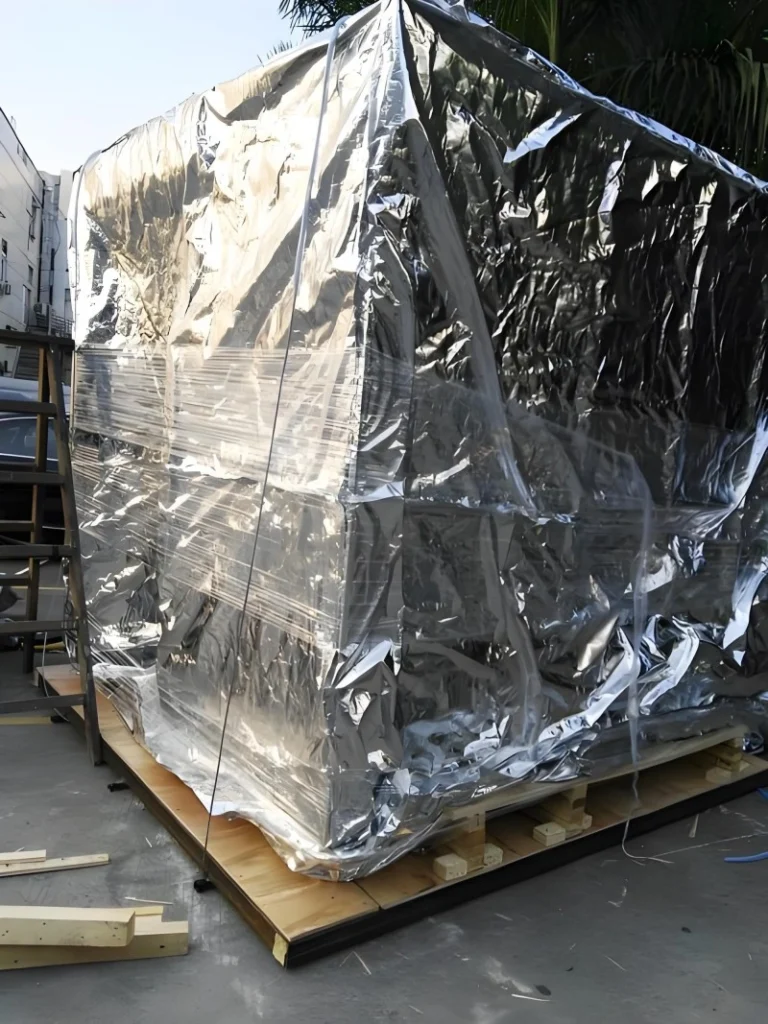
Why Vacuum Packaging Materials Matter for Export Cargo
Moisture control, corrosion prevention, dust protection, storage time and handling durability are all closely linked to the choice of vacuum-packaging materials and can be the difference between a successful and unsuccessful international shipment.
Sea freight means the goods are in high humidity, fluctuating temperature and salty air for weeks or months. The wrong material is used for the package, metal surfaces rust, or sensitive electronics are contaminated by condensation within the package.
| Material Requirement | Why It Matters for Export Cargo | Risk If Ignored |
| Moisture resistance | Helps reduce humidity exposure | Rust, corrosion, mold, contamination |
| Puncture resistance | Protects against sharp edges and handling | Film tears and air leakage |
| Seal strength | Maintains the closed packaging environment | Moisture enters through weak seams |
| Flexibility | Fits irregular cargo shapes | Stress points and poor coverage |
| Surface compatibility | Prevents scratches or chemical interaction | Surface damage or staining |
| Storage durability | Supports long-term protection | Packaging fails before delivery |
| Handling resistance | Withstands lifting, loading, and movement | Damage during transport or storage |
Barrier Films: The Main Moisture-Control Layer
The heart of any successful industrial vacuum system is a barrier film. These are special purpose multilayer films designed to resist the passage of moisture vapour, oxygen and dust and are also good sealers and mechanically strong.
The selection of barrier film can often determine whether machinery, metal parts, molds or electronic equipment arrives ready for installation or requires hours of cleaning and repair.
For export cargo that faces humidity, sea freight exposure, or long-term storage, understanding vacuum packaging materials and sealing options helps buyers choose a protection method that matches the actual cargo risk.
| Barrier Film Type | Main Feature | Suitable Cargo | Limitation |
| Multilayer PE barrier film | Flexible and sealable | General industrial equipment and components | May need reinforcement for sharp edges |
| Aluminum composite barrier film | Strong moisture and oxygen barrier | High-value machinery, molds, long-term storage cargo | Less flexible and may cost more |
| Heavy-duty vacuum film | Better puncture resistance | Large machinery and irregular cargo | Still requires edge protection |
| Transparent barrier film | Allows visual inspection | Cargo requiring condition checks | May offer lower barrier performance than foil-based films |
| Anti-static barrier material | Moisture plus ESD consideration | Electronics and sensitive components | Must be matched to ESD requirements |
Shrink Covers and Outer Protective Layers
Shrink covers can be used as a secondary moisture barrier but are not a complete moisture barrier. They offer protection from dust, light weather and abrasion when handling and loading.
Shrink covers are an additional security layer over vacuum-sealed packages, crates or pallets when they are used over oversized, OOG cargo, which can be on a flat rack or be subjected to port transfers.
| Packaging Layer | Main Purpose | Best Used For | Important Limitation |
| Shrink cover | Dust, light weather, and abrasion protection | Pallets, crates, machinery outer covers | Not always a full moisture barrier |
| Barrier film | Moisture vapor and dust protection | Sealed vacuum packaging | Requires good sealing and edge protection |
| Tarpaulin cover | Temporary outdoor protection | Short-term storage or road movement | Gaps may allow humid air entry |
| Wooden crate | Physical impact protection | Heavy or fragile cargo | Does not control humidity by itself |
| Stretch film | Load stabilization and light dust protection | Palletized cargo | Limited corrosion protection |
Desiccants, VCI Materials, and Moisture-Control Accessories
The best barrier films are even better when they are matched with the other accessories that assist them. Desiccants draw moisture out of the container after sealing and VCI (Volatile Corrosion Inhibitor) materials give off vapors that protect bare metal surfaces.
These parts make the simple vacuum package a strong, cargo protection system.
| Accessory Material | Function | Best Used For | Key Consideration |
| Desiccants | Absorb residual moisture | Machinery, electronics, metal parts | Quantity should match volume and storage time |
| VCI material | Helps prevent corrosion | Molds, machined parts, bearings, tools | Must be compatible with cargo material |
| Humidity indicator | Shows internal humidity condition | High-value or long-storage cargo | Should be visible when possible |
| Inner liner | Separates cargo from film or crate | Painted or polished surfaces | Prevents rubbing and contamination |
| Surface separator | Prevents part-to-part contact | Precision components | Helps avoid scratches |
| Anti-rust oil | Adds surface corrosion protection | Bare metal surfaces | May need cleaning before installation |
Sealing Options: Heat Sealing, Taping, and Reinforcement
The quality of sealing may be the most critical part of the whole vacuum packaging process. Even the best barrier films can be jeopardized over time by the penetration of humid air through weak seals.
Heat sealing should be done on clean dry surfaces to achieve good, consistent bond. Double sealing or reinforced seams are added for high-value and/or long duration shipments.
| Sealing Method | Best Used For | Strength | Limitation |
| Heat sealing | Most industrial vacuum packaging | High | Requires proper temperature and clean surfaces |
| Double heat sealing | Long-term storage or high-value cargo | Very high | Takes more time and quality control |
| Reinforced seam sealing | Large or irregular cargo | High | Must be planned during bag design |
| Industrial sealing tape | Temporary support or secondary sealing | Medium | Not ideal as the main seal for long storage |
| Mechanical closure | Temporary covers or non-vacuum layers | Low to medium | May allow air and moisture leakage |
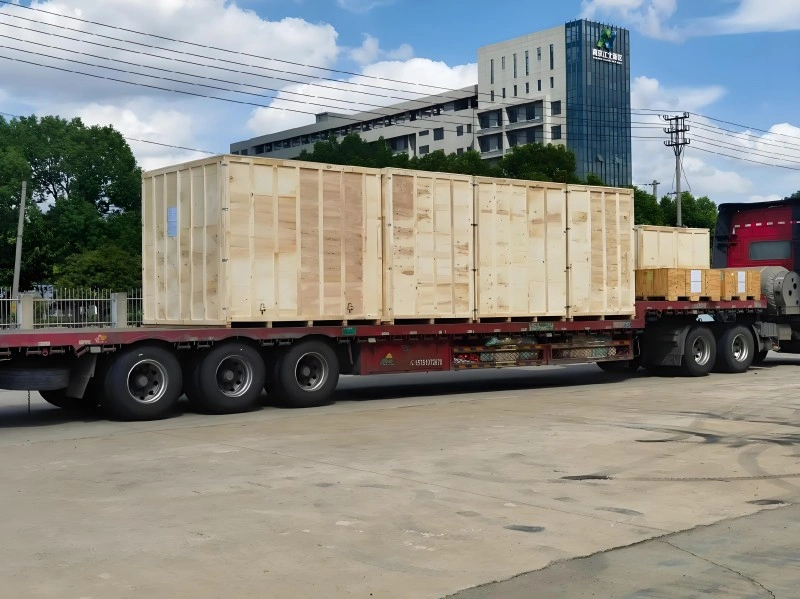
How to Choose the Right Vacuum Packaging Material
The initial consideration for material selection always needs to be cargo risk, not unit price.
Skilled exporters consider several factors when making final specifications to ensure proper packaging during the entire shipping process.
| Selection Factor | Question to Ask | Material Implication |
| Cargo material | Is it metal, electronic, painted, or precision-machined? | Determines need for VCI, ESD, liners, or anti-rust oil |
| Storage duration | Will it be stored for weeks or months? | Affects barrier film and desiccant requirements |
| Shipping route | Will it move through humid or coastal regions? | Requires stronger moisture protection |
| Cargo shape | Are there sharp edges or protrusions? | Requires reinforced film and edge protection |
| Cargo value | Is failure costly or difficult to replace? | Justifies stronger materials and inspection |
| Handling method | Crane, forklift, flat rack, or container? | Affects puncture resistance and outer protection |
| Surface finish | Is the surface polished, painted, or machined? | Requires separators or soft inner liners |
Material Recommendations by Cargo Type
Various types of cargo have specific combinations of materials necessary for them to be vacuum packaged to protect them from damage.
| Cargo Type | Recommended Material Combination | Why |
| Industrial machinery | Barrier film + desiccants + edge protection | Reduces moisture and handling risks |
| Electronics | Anti-static inner packaging + desiccants + barrier film | Controls moisture and ESD risk |
| Precision parts | Barrier film + VCI + separators | Reduces corrosion and surface damage |
| Injection molds | Aluminum barrier film + VCI + crate | Protects polished metal surfaces |
| Bearings and gears | VCI + anti-rust oil + vacuum packaging | Helps prevent rust and contamination |
| Oversized equipment | Custom barrier film + reinforced seams + edge protection | Fits large and irregular cargo |
| Spare parts | Barrier film + desiccants + labels | Supports storage and traceability |
Common Material Selection Mistakes
Even advanced teams will sometimes make decisions that result in less protection. The failures in packaging are not due to the vacuum process but are due to a mismatch in the materials.
| Mistake | Possible Result | Better Practice |
| Choosing by thickness only | Material may still have poor moisture resistance | Evaluate barrier performance and sealability |
| Using ordinary plastic film | Humidity may enter over time | Use industrial barrier film |
| Too few desiccants | Moisture remains active inside package | Calculate by volume and storage duration |
| No edge protection | Film puncture and air leakage | Protect corners before sealing |
| Weak sealing method | Package loses protection | Use controlled heat sealing |
| Shrink cover only | Limited corrosion prevention | Use barrier film for moisture-sensitive cargo |
| Packing damp cargo | Moisture is trapped inside | Clean and dry cargo before sealing |
How Material Choice Affects Cost and Risk
Lower cost materials might lower initial price, but can also involve substantial project risk, particularly for high dollar or time sensitive export cargo.
| Cost Factor | Lower-Cost Material Choice | Higher-Protection Material Choice |
| Upfront packaging cost | Lower | Higher |
| Moisture protection | Limited | Stronger |
| Risk of corrosion | Higher for sensitive cargo | Lower when properly applied |
| Storage suitability | Shorter duration | Better for long-term storage |
| Handling durability | May tear or puncture more easily | Better resistance with proper reinforcement |
| Overall risk | Higher if cargo value is high | Lower for sensitive or expensive cargo |
Buyer Checklist Before Selecting Vacuum Packaging Materials
Smart procurement begins with your package partner knowing about your cargo and transport details. It is possible to make a precise recommendation for material and not the generic one.
| Information to Prepare | Why It Helps |
| Cargo dimensions and weight | Determines material size and strength |
| Cargo material | Guides VCI, anti-rust, or ESD requirements |
| Surface finish | Helps decide inner liners and separators |
| Photos of cargo | Identifies sharp edges and protrusions |
| Storage duration | Determines barrier level and desiccant amount |
| Shipping route | Helps assess humidity and sea freight exposure |
| Transport mode | Affects puncture resistance and outer protection |
| Loading method | Ensures packaging does not interfere with lifting |
| Destination conditions | Helps plan unpacking and storage protection |
| Outer packaging requirement | Coordinates crates, pallets, or skid bases |
Conclusion — The Right Material Combination Determines Protection Quality
The key to successful vacuum packaging for export cargo lies in the whole system, not in any one component. Each type of barrier film, desiccant, VCI material, shrink cover, edge protection and quality sealing has a unique function that complements the others.
These vacuum packaging materials also can be matched to the type of cargo, route conditions, storage requirements, and handling procedures to minimize risk and ensure that the equipment arrives in optimal condition. From safeguarding precision electronics to large industrial equipment, thoughtful material selection provides reliability that generic methods can’t match.