
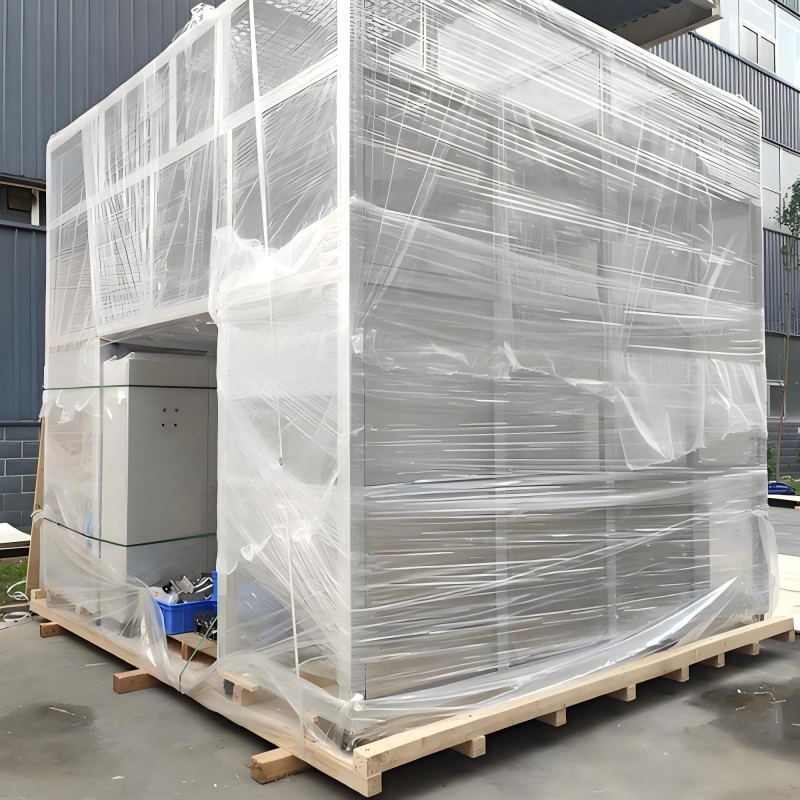
When there is oversized, irregular or high-dollar industrial equipment to be transported safely, custom vacuum bags for oversized industrial equipment are designed to fit these loads. They build a water-tight barrier around the equipment and are able to match the exact size, lift, storage time and shipping route of the cargo. These engineered solutions are ideal for exporters, project cargo teams and machinery manufacturers to ward off rust, dust, salt-air corrosion and contamination during long sea voyages or extended storage.
When buying a bag, many people think that the larger the bag, the better, but it isn’t; a large bag can have sharp edges, protruding parts, uneven surfaces, exposed metal, and complex lifting points that require careful design. The custom vacuum bag is not just a larger plastic cover — it is engineered to form a moisture-protection layer optimized for the geometry & material sensitivity of the equipment, handling risks and the complete export logistics plan. If executed correctly, it fits perfectly into wooden crates, skid bases, flat rack securing or open top container loading.
Why Oversized Industrial Equipment Needs Custom Vacuum Bags
Packaging problems with oversized cargo are not easily solved with off-the-shelf vacuum bags. When dimensions are greater than the standard bags, shapes are not round or rectangular, or equipment needs to be transported on lowbed trailers to sea, port and road for weeks, the standard solutions often fail.
| Oversized Cargo Challenge | Packaging Risk | Why Custom Vacuum Bags Help |
| Large dimensions | Standard bags may not fit | Bag size can be made to cargo dimensions |
| Irregular shape | Loose folds and weak sealing points | Custom design improves fit and coverage |
| Sharp edges | Film puncture or tearing | Reinforcement and edge protection can be planned |
| Exposed metal | Rust and corrosion risk | Moisture-control materials can be added |
| Protruding parts | Stress points during sealing | Extra space and protection can be designed |
| Long sea freight | Humidity and salt air exposure | Barrier materials help reduce moisture contact |
| OOG loading | Packaging may be damaged during handling | Bag design can align with lifting and securing plan |
In the case of heavy machinery, molds, generators, production lines or work units destined for international projects, the investment in appropriate packaging is trivial when compared with the cost of corrosion or the start-up delay.
What Makes a Vacuum Bag “Custom” for Industrial Equipment?
It’s not just the size that makes it a true custom vacuum bag, but also the fit, the design, the material and the compatibility of reinforcement and handling. In the case of machinery with unusual dimensions, exposed metal surfaces, or long sea freight routes, custom vacuum packing solutions help align moisture protection with the cargo’s actual size, handling method, and export conditions.
| Custom Feature | What It Means | Why It Matters |
| Custom dimensions | Bag is sized to actual cargo measurements | Reduces excess film and weak folds |
| Seam layout | Seal lines are planned around cargo shape | Improves sealing reliability |
| Film thickness | Material strength matches handling risk | Reduces puncture and tearing |
| Reinforced corners | Extra protection at stress points | Protects against film damage |
| Edge protection | Covers sharp surfaces before sealing | Prevents punctures |
| Desiccant compatibility | Space and placement are planned | Supports moisture control |
| Lifting-point planning | Bag does not block handling points | Improves loading safety |
| Inspection labels | Markings show handling and unpacking needs | Reduces logistics mistakes |
Key Factors in Designing Custom Vacuum Bags
The working performance of any custom vacuum bag will rely on the degree of fidelity of the design to actual cargo and transport conditions. The teams with experience first start with the measurements and a comprehensive risk assessment are made inside the site and not generic specifications.
| Design Factor | What to Evaluate | Impact on Bag Design |
| Cargo dimensions | Exact L × W × H measurements | Determines bag size and seam position |
| Cargo shape | Irregular surfaces, protrusions, brackets | Affects fit, folds, and stress points |
| Surface sensitivity | Painted, machined, polished, or coated areas | Requires separators or inner protection |
| Metal exposure | Bare steel, cast iron, machined parts | May require VCI or anti-rust treatment |
| Storage duration | Short-term or long-term protection | Affects desiccant and film selection |
| Transport route | Humid, tropical, or sea freight route | Determines moisture barrier requirements |
| Handling method | Crane, forklift, lowbed, flat rack | Affects reinforcement and lifting access |
| Outer protection | Crate, skid, pallet, or open transport | Determines how the bag must be protected |
Materials Used for Custom Vacuum Bags
The balance of moisture resistance, puncture resistance, sealability, flexibility and handling strength are all considered when selecting materials. Barrier films that are used in industry will outperform those used by consumers when dealing with the stresses of oversized equipment movement.
| Material | Main Function | Best Used For |
| Barrier film | Blocks moisture vapor and dust | Sea freight and long-term storage |
| Multilayer vacuum film | Provides flexibility and sealability | Large or irregular equipment |
| Aluminum composite film | Higher moisture barrier performance | High-value or long-storage cargo |
| Desiccants | Absorb residual moisture | Sealed packaging for export cargo |
| VCI materials | Help reduce corrosion on metal surfaces | Molds, machined parts, heavy machinery |
| Inner liner | Prevents direct contact and rubbing | Painted or precision surfaces |
| Edge protectors | Prevent punctures at corners | Sharp or protruding equipment |
| Humidity indicator | Monitors internal moisture condition | Long-term or high-value shipments |
Step-by-Step Process for Making and Applying Custom Vacuum Bags
Vacuum bagging is a systematic process which begins with precise measurement and concludes with careful inspection.
| Step | What Happens | Why It Matters |
| Cargo measurement | Record dimensions, shape, and protrusions | Ensures correct bag sizing |
| Risk assessment | Identify moisture, corrosion, and puncture risks | Guides material and protection choices |
| Material selection | Choose film, desiccants, VCI, and liners | Matches protection to cargo needs |
| Bag fabrication | Cut and prepare bag according to cargo size | Improves fit and sealing reliability |
| Cargo preparation | Clean, dry, and protect sensitive surfaces | Prevents trapped moisture and contamination |
| Bag fitting | Position bag around equipment carefully | Avoids stress points and weak folds |
| Vacuum sealing | Remove air and seal all openings | Creates the protective internal environment |
| Final inspection | Check seals, punctures, labels, and photos | Confirms readiness for shipping or storage |
Custom Vacuum Bags vs Standard Vacuum Packaging
For general items, normal size packaging by vacuum pack is possible, but for oversized items, a flexible and engineered approach is required.
| Comparison Point | Custom Vacuum Bags | Standard Vacuum Packaging |
| Size flexibility | Designed to actual cargo dimensions | Limited to available bag sizes |
| Irregular shapes | Can be adapted with custom seams and reinforcement | May create excessive folds or weak points |
| Puncture protection | Edge and corner protection can be integrated | Often requires separate adjustment |
| Moisture control | Can be designed for long-term storage and sea freight | May be suitable only for simpler cargo |
| Handling compatibility | Can consider lifting and securing needs | May interfere with handling points |
| Cost | Higher upfront preparation | Lower initial cost |
| Risk control | Better for high-value or oversized equipment | Less suitable for complex cargo |
Common Mistakes When Using Vacuum Bags for Oversized Equipment
Details can cause trouble even for the well-experienced teams.
| Mistake | Possible Result | Better Practice |
| Poor measurement | Bag does not fit correctly | Measure cargo on-site before design |
| Thin film selection | Tears during handling | Use industrial-grade barrier material |
| No edge protection | Punctures and air leakage | Cover corners and protrusions before sealing |
| No desiccants | Moisture remains inside package | Add desiccants based on volume and storage time |
| Blocked lifting points | Unsafe handling or packaging damage | Plan bag layout around lifting access |
| Damp cargo before sealing | Trapped moisture and corrosion | Clean and dry cargo first |
| No final inspection | Hidden seal failure | Check seams and film surface after sealing |
When Custom Vacuum Bags Should Be Combined with Outer Protection
While vacuum bags are very effective in controlling moisture and contamination, oversized industrial equipment must also be protected against physical impact, vibration and stacking forces.
| Combined Protection Method | Best For | Added Protection |
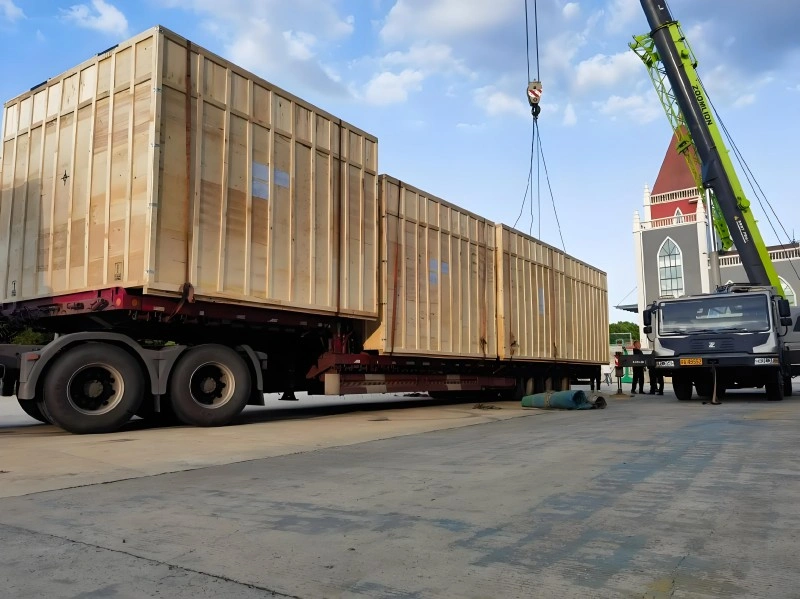
| Custom vacuum bag + wooden crate | High-value machinery and sensitive equipment | Moisture plus impact protection |
| Custom vacuum bag + skid base | Heavy equipment | Stable lifting and load support |
| Custom vacuum bag + shock padding | Precision machinery | Vibration and impact reduction |
| Custom vacuum bag + flat rack securing | OOG cargo | Moisture protection plus transport stability |
| Custom vacuum bag + open top loading plan | Tall equipment | Moisture protection with container loading flexibility |
| Custom vacuum bag + protective cover | Outdoor or port-side storage | Added weather resistance |
Buyer Checklist Before Ordering Custom Vacuum Bags
Comprehensive technical data enables the packaging expert to develop a more secure, appropriate packaging solution.
| Information to Prepare | Why It Helps |
| Cargo dimensions | Determines bag size and material usage |
| Gross weight | Helps evaluate handling and support needs |
| Cargo photos | Shows shape, protrusions, and sensitive areas |
| Drawings or packing sketch | Improves bag design accuracy |
| Surface material | Guides corrosion and scratch protection |
| Exposed metal areas | Helps plan VCI or anti-rust treatment |
| Storage duration | Determines desiccant quantity and barrier needs |
| Shipping route | Helps assess humidity and sea freight exposure |
| Loading method | Ensures packaging does not block lifting points |
| Outer packaging plan | Helps coordinate crate, skid, or flat rack protection |
How Custom Vacuum Bags Support OOG and Project Cargo Logistics
Over-sized industrial equipment is often shipped OOG or as project cargo. Packaging should thus be integrated with the entire logistics system and should not be a stand-alone.
| Logistics Requirement | Packaging Consideration |
| Flat rack loading | Bag must not interfere with lashing points |
| Open top loading | Packaging should handle crane lifting exposure |
| Lowbed trailer transport | Bag must withstand road vibration and handling |
| Port handling | Extra protection may be needed against weather and abrasion |
| 3D load planning | Bag dimensions affect final cargo envelope |
| Lashing and securing | Packaging must not hide critical securing points |
| Pre-shipment inspection | Seal condition should be documented before loading |
Conclusion — Custom Vacuum Bags Should Be Designed Around the Cargo
In many cases, oversized industrial equipment requires custom vacuum bags because standard bags might not fit or provide the necessary protection. It is important that the cargo is correctly measured, the appropriate material is chosen, corro-sion is prevented, desiccants are employed, edge protection is used, sealing is good and handling plans are carefully considered.
Custom vacuum bags can be essential in an effective export packaging program when packaged with outer crates, skid bases, flat rack lashing and/or open top containers. This level of care helps minimize risks when storing large, high-value, irregular-shaped, and moisture sensitive machinery, as well as facilitates successful project completion, especially when it comes to international shipping.
The best results are achieved by early cooperation between machinery producers, exporters and knowledgeable OOG logistics providers and companies that make packaging a component of the transport plan, rather than a separate issue.