
Vacuum packing can be used to protect export goods from humidity and moisture in the following ways: sealing the goods in moisture-resistant barrier materials, removing air and creating a low-humidified environment to prevent the formation of moisture and humidity, which significantly reduce the possibility of rust, corrosion, mold, and contamination. This is now the most viable way to protect valuable goods like machinery, metal parts, electronics, and precision parts during long sea voyages, port storage, and multi-modal shipments for those who export.
Many shippers still don’t realize how quickly the invisible humidity can have a negative impact on cargo even if there is no direct water contact. For OOG and industrial logistics applications we’ve experienced the following: When done correctly, vacuum packing, combined with the correct materials and preparation, provides reliable moisture protection for a given shipping environment.
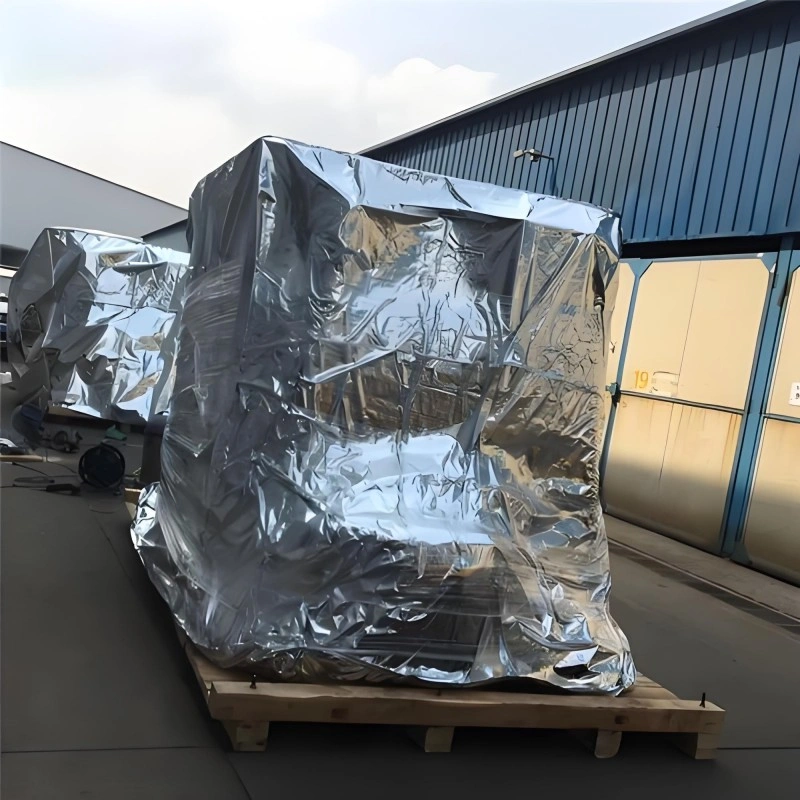
Why Moisture and Humidity Are Serious Risks for Export Cargo
Moisture damage is one of the most widespread, but often concealed causes of export cargo claims. It is often only identified at the end of the delivery when the packages are unpacked, causing expensive rework, delays or shipment rejection.
The high humidity levels during ocean transport, fluctuating temperatures within containers, and salt-contaminated air near ports, are all conducive to issues arising. Condensation readily occurs when warm moist air comes into contact with the cooler surfaces of cargo or when there are day and night temperature differences between the surfaces of the container and the cargo, which results in “container sweat” and “cargo sweat.”
| Moisture Source | How It Affects Export Cargo | Common Result |
| Container condensation | Water vapor collects on interior surfaces | Rust, staining, mold |
| High humidity | Cargo absorbs moisture over time | Corrosion, material degradation |
| Salt air | Accelerates oxidation on metal surfaces | Surface rust and corrosion |
| Rain during handling | Water may enter packaging gaps | Wet packaging and cargo damage |
| Long-term storage | Extended exposure increases risk | Mold, oxidation, contamination |
| Temperature changes | Causes condensation inside packaging | Hidden moisture damage |
Logistics teams can better understand these risks, which will help them to take steps beyond simple wrapping and towards more effective moisture control.
How Vacuum Packing Creates Moisture Protection
Vacuum packing works by actively reducing the air and moisture inside the package while surrounding the cargo with high-performance barrier materials. This creates a sealed system that limits oxygen and water vapor exposure far better than standard methods.
The process typically starts with thorough surface cleaning and drying, followed by placement inside specialized barrier film or vacuum bags. Air is then extracted, desiccants are added to capture any residual moisture, and the package is heat-sealed. For added security in industrial applications, outer protection such as crates or pallets is often used.
For machinery, electronics, and precision components moving through humid routes, industrial vacuum packing solutions help create a sealed moisture-control environment before cargo enters storage or international transport.
| Protection Element | Function | Why It Matters |
| Barrier film | Blocks moisture vapor and dust | Creates the first protective layer |
| Vacuum sealing | Reduces air inside the package | Limits oxygen and humidity exposure |
| Desiccants | Absorb remaining moisture | Helps maintain a dry internal environment |
| Surface cleaning | Removes dirt, oil, and moisture | Prevents contamination before sealing |
| Seal inspection | Confirms packaging integrity | Reduces risk of leakage during transport |
| Outer protection | Adds impact and handling protection | Supports safer loading and storage |
Vacuum Packing vs Ordinary Moisture Protection Methods
Standard export packaging techniques tend to concentrate on physical protection and not on controlling humidity and vapor transmission. This is what vacuum packing is designed to overcome: it is not just a covering of moisture but a seal.
| Packaging Method | Moisture Protection Level | Best Used For | Limitation |
| Vacuum packing | High | Machinery, metal parts, electronics | Requires proper sealing and material selection |
| Wooden crate only | Low to medium | Physical protection and stacking | Does not fully block humidity |
| Pallet wrapping | Low | Short-distance or warehouse handling | Not suitable for long-term moisture control |
| Shrink film | Medium | Dust and light surface protection | May not prevent vapor penetration |
| Tarpaulin cover | Low to medium | Temporary outdoor protection | Gaps and handling damage may expose cargo |
| Vacuum packing + crate | Very high | High-value export machinery | Higher upfront preparation cost |
This comparison provides a good illustration of why many long-time exporters are now not considering vacuum packing to be an add-on to moisture management but an essential part of it.
Which Types of Cargo Need Moisture-Proof Vacuum Packing?
Generally, not all items should be vacuum packed, but for some items, it makes a huge difference because even slight amounts of corrosion or contamination can cause them to not function as they should or that they would look bad.
The most common items include industrial machinery, precision metal parts, injection molds, electrical cabinets, motors and generators, bearings, and sensitive electronics. They typically feature a polished surface, close tolerances, or electrical parts that aren’t good with water.
| Cargo Type | Moisture Risk | Why Vacuum Packing Helps |
| Industrial machinery | Rust, dust, internal corrosion | Protects surfaces and components during long transit |
| Metal parts | Oxidation and staining | Reduces moisture and air exposure |
| Precision molds | Corrosion on polished surfaces | Preserves machining accuracy and surface finish |
| Electronics | Short circuits, corrosion, contamination | Keeps humidity and dust away from sensitive parts |
| Motors and generators | Moisture inside windings or housings | Reduces humidity exposure during shipping |
| Bearings and gears | Rust and lubrication contamination | Helps maintain surface condition |
| Spare parts | Long storage risk | Supports safer inventory storage before use |
Why Sea Freight Increases Moisture and Humidity Risk
With sea freight come some unique challenges which exacerbate moisture issues. The long transit times, exposure to ocean humidity and large temperature swings within steel containers allow condensation to occur over and over.
| Sea Freight Condition | Moisture Risk | Preventive Measure |
| Long transit time | Extended humidity exposure | Use barrier film and desiccants |
| Day-night temperature changes | Container condensation | Control internal packaging moisture |
| Port storage | Rain and humid air exposure | Use sealed packaging and outer protection |
| Salt air | Faster metal corrosion | Vacuum pack and protect exposed surfaces |
| Delayed customs clearance | Longer storage period | Inspect packaging before shipment |
| Tropical routes | High humidity throughout transit | Use stronger moisture-proof materials |
The Role of Desiccants, Barrier Films, and Seal Quality
The whole system must function in order to achieve a successful vacuum pack. The barrier films must be of high quality, and have a low moisture vapor transmission rate; this is why they are essential. Any remaining moisture is absorbed by the correct amount of desiccant. There should be no gaps in heat seals and they should be firm; sharp edges should also be protected from punctures.
| Packaging Factor | What to Check | Risk If Ignored |
| Barrier film thickness | Suitable for cargo size and handling risk | Film tearing or vapor penetration |
| Desiccant amount | Matched to cargo volume and storage time | Moisture remains inside package |
| Seal strength | Continuous, clean, and properly heated | Air leakage during transport |
| Corner protection | Covers sharp edges and contact points | Punctures and seal failure |
| Surface condition | Dry, clean, and free from loose contaminants | Trapped moisture or dirt |
| Handling labels | Clear instructions for lifting and unpacking | Accidental damage during handling |
Common Mistakes That Reduce Moisture Protection
With good materials, execution errors can compromise results. The most common problems we encounter are cargo packages with moisture left inside, inadequate or poor quality barrier film, not using any desiccants or not protecting corners and edges.
| Mistake | Possible Consequence | Better Practice |
| Packing damp cargo | Moisture trapped inside | Dry and inspect cargo before sealing |
| Too little desiccant | Humidity remains active | Calculate based on cargo size and storage duration |
| Weak seal | Air leakage | Perform seal inspection before shipment |
| Sharp edges exposed | Bag puncture | Add corner and edge protection |
| Wrong film material | Poor moisture resistance | Choose industrial-grade barrier film |
| Damp outer packaging | Moisture migration risk | Use dry crates, pallets, and liners |
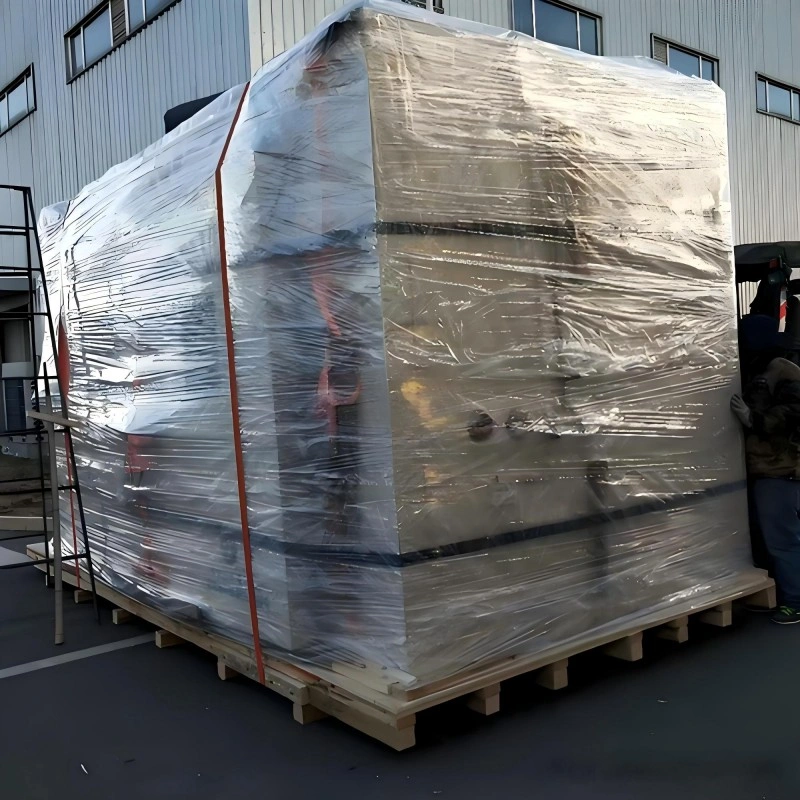
When Vacuum Packing Should Be Combined with Other Packaging
With its ability to deal with moisture and contamination issues, vacuum packing is usually not used by itself for heavy or fragile export loads. When used with wooden crates, shock absorbing materials, anti-rust coatings or other desiccants used in the container, it offers total protection from environmental and physical damage.
| Combined Method | Best For | Added Protection |
| Vacuum packing + wooden crate | Precision machinery and high-value parts | Moisture + impact protection |
| Vacuum packing + pallet | Smaller export components | Easier handling and storage |
| Vacuum packing + anti-rust oil | Bare metal components | Extra corrosion resistance |
| Vacuum packing + shock padding | Sensitive instruments | Vibration and impact reduction |
| Vacuum packing + container desiccants | Long sea freight routes | Additional humidity control |
| Vacuum packing + flat rack securing | Oversized cargo | Moisture protection plus transport stability |
How Buyers Should Evaluate Moisture Protection Needs
Smart procurement teams assess packaging requirements in a systematic manner and not just on one basis, which is price. Some questions to consider are: what will the cargo be made from, what is the transportation method, what are the climate zones, how long will it be expected to be stored for, what is the sensitivity of the surface and what is the potential cost of failure.
| Question to Ask | Why It Matters |
| Is the cargo made of metal or sensitive electrical parts? | These materials are more vulnerable to humidity |
| Will the cargo move by sea freight? | Ocean transport increases moisture exposure |
| Will the cargo pass through tropical or rainy regions? | Climate affects corrosion and mold risk |
| How long will the cargo be stored before installation? | Longer storage requires stronger protection |
| Is the surface precision-machined or polished? | Surface corrosion may affect function or appearance |
| What is the replacement cost if damaged? | Higher-value cargo justifies better packaging |
| Will the cargo be inspected immediately after arrival? | Delayed unpacking increases hidden moisture risk |
Conclusion — Moisture Protection Should Be Planned Before Shipment
Even if water contact is not observed, moisture and humidity damage may still occur which is why proactive planning is crucial to successful export shipments. Although it is beneficial for export cargo to prevent contact with air and to ensure that the goods are encased in a moisture resistant system, the effectiveness of this method of protection depends to a large extent in the way in which the cargo is packed, the type of barrier materials that are used, the correct use of the desiccant, the seals and the outside protection.
Considering the complete shipping route, cargo sensitivity, storage time, and handling conditions can greatly minimize the potential of cargo corrosion and help preserve cargo condition throughout the shipping process if done during the initial stages of the process. This considered approach benefits machinery, electronics, precision parts and metal components, while helping to deliver to overseas destinations in a safer manner and with no unwelcome surprises.