
When shipping to overseas destinations, it is crucial to protect high-value and sensitive goods from shock and vibration in export crates. They happen at every step: from forklift operation, to truck loading and unloading, crane work, port operations, to ocean freight, possibly causing misalignment, loose parts, damage, or unknown problems in the interior. Protection extends beyond padding to a comprehensive scheme, which involves careful cargo assessment, correct load distribution, internal protection by blocking and bracing, suitable cushioning, rigid crated base design and load reinforcement.
When dealing with machinery or precision equipment, exporters and logistics personnel can use these methods to avoid expensive damage claims and project delays. Many shippers think that additional foam is sufficient, but if not designed in, the cargo can still shift, resonate, or be impacted within the contained, even if robust, wooden crate.
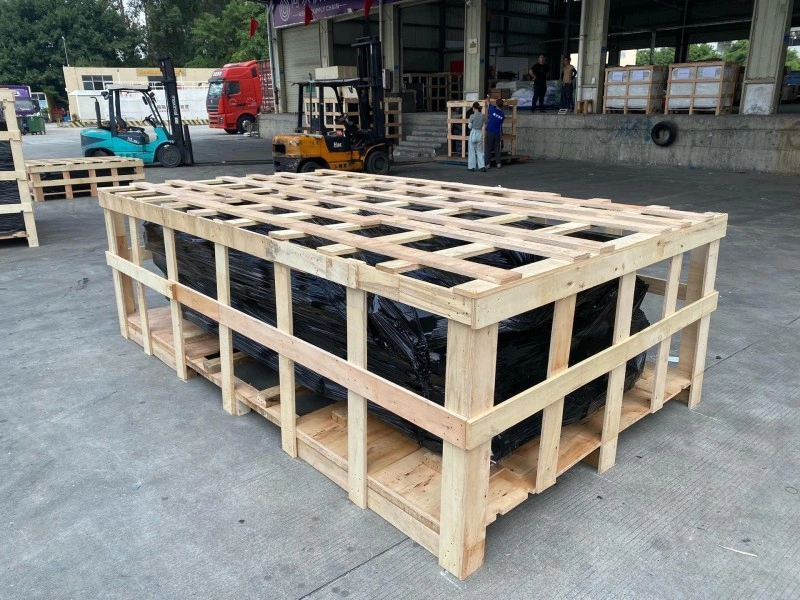
Why Shock and Vibration Are Serious Risks in Export Crate Shipping
Shock and vibration is not just in an accident, it is when performing routine handling and transport. Every leg of the voyage involves various stresses which can negatively affect the integrity of the cargo unless the export crate is designed to withstand them.
Forklift movements can cause abrupt forces on corners or bases of crates. Vibrations that are continuous and have a low frequency are transmitted through a truck over long distances. Vertical shocks can occur from road bumps and uneven loading can result from crane lifting and swinging. Port operations involve repeated movements and ocean freight adds the additional pressure of rolling motion. Unsecured loads can shift when the vehicle is suddenly accelerated or decelerated.
| Risk Source | How It Can Affect Cargo |
| Forklift handling | Sudden impact may damage crate corners or shift cargo |
| Truck vibration | Continuous vibration may loosen components or fasteners |
| Road bumps | Vertical shock can stress machine bases and sensitive parts |
| Crane lifting | Swinging or uneven lifting may affect cargo stability |
| Port handling | Repeated movement increases impact and vibration exposure |
| Ocean freight | Vessel motion can create long-duration vibration and shifting risk |
| Container loading | Tight handling spaces may cause crate impact |
| Sudden braking | Cargo may move if blocking and bracing are insufficient |
Wooden crate packing methods that will minimize shock and vibration can assist in coordinating the design of the crate, bracing inside the crate, cushioning and handling requirements prior to shipment for high value machinery.
Cargo Types Most Vulnerable to Shock and Vibration
There are many factors that affect how much protection a cargo requires, such as sensitivity, not just value. Calibrated parts are especially vulnerable in precision equipment and assemblies as it can impact performance if they move too much.
Items that are common targets include CNC machines, electronic control systems, electrical cabinets, medical devices and laboratory equipment, industrial molds and top-heavy machinery. These loads can experience misalignment, component fatigue, or surface markings that cause them to be rejected at arrival.
| Cargo Type | Main Risk | Protection Priority |
| Precision machinery | Alignment shift or calibration loss | Cushioning, rigid support, vibration control |
| Electronic equipment | Internal component damage | Shock absorption and moisture control |
| Electrical cabinets | Panel deformation or circuit damage | Internal bracing and stable support |
| Industrial molds | Surface impact or structural stress | Base support and corrosion protection |
| Measuring instruments | Accuracy loss from vibration | Isolation materials and careful handling |
| Top-heavy machinery | Tilting or lateral movement | Center-of-gravity control and side bracing |
| Fragile assemblies | Cracking or component separation | Custom cushioning and contact protection |
Shock vs Vibration: What Is the Difference?
Even if shock and vibration are related, they demand different mitigation measures. Shock is a high impact event, such as a drop or collision, while vibration is a lower impact event that occurs over time.
Tolerant to some vibration but intolerant to sharp impacts, heavy cargo. On the other hand, sensitive electronics may suffer fatigue damage from long duration of vibration even if there are no external indications. Good export crate design, then, takes both into account.
| Factor | Shock | Vibration |
| Nature of Force | Sudden impact or abrupt movement | Repeated movement over time |
| Common Cause | Drop, collision, rough handling, sudden braking | Road transport, vessel motion, engine vibration |
| Typical Damage | Cracks, dents, deformation, broken mounts | Loosened parts, calibration drift, fatigue damage |
| Protection Focus | Impact absorption and secure restraint | Isolation, damping, and movement control |
| Suitable Methods | Cushioning pads, reinforced corners, blocking | Vibration-damping materials, base isolation, tight bracing |
Key Principles of Shock and Vibration Mitigation in Export Crates
Engineering the complete packing system is essential for successful mitigation, not any one material. The initial step is a comprehensive cargo evaluation, then followed by all the design decisions.
This includes weight and center of gravity analysis, planning contact points, load distribution, internal blocking, side bracing, selection of the right cushion, vibration damping, crate rigidity, and clear handling instructions. These combined make the crate to be a protective transportation solution.
| Principle | Practical Purpose |
| Cargo assessment | Identifies fragile parts, weight points, and handling risks |
| Center-of-gravity planning | Reduces tipping and uneven loading |
| Load distribution | Prevents concentrated stress on cargo or crate base |
| Internal blocking | Stops cargo from moving inside the crate |
| Bracing | Controls lateral and vertical movement |
| Cushioning | Absorbs shock at selected contact points |
| Vibration damping | Reduces repeated movement during transport |
| Reinforced base | Supports weight during lifting, stacking, and forklift handling |
| Handling instructions | Helps reduce rough handling and orientation errors |
Cushioning Materials and How to Select Them
The cushioning needs to be equal to the weight, sensitivity and forces the cargo will experience. If the material is too soft it will drop through under loading, or if the material is too hard it will pass the impact directly through the material to the equipment.
Foam pads are used with lighter items, EVA or EPE foams for stable support, rubber pads for vibration isolation and custom shock-absorbing blocks for heavy machinery. Further upgraded with corner protectors and anti-slip pads.
| Cushioning Material | Main Function | Best Used For |
| Foam pads | Absorb light-to-medium impact | Sensitive surfaces and small equipment |
| EVA foam | Provides stable cushioning and shape support | Precision equipment and delicate parts |
| EPE foam | Lightweight cushioning and surface protection | General export crate packing |
| Rubber pads | Reduce vibration and sliding | Machine bases and contact points |
| Shock-absorbing blocks | Control higher impact loads | Heavy machinery or valuable components |
| Corner protectors | Protect edges from impact | Cabinets, panels, and boxed components |
| Anti-slip pads | Reduce sliding inside the crate | Cargo with smooth bases or metal surfaces |
Blocking and Bracing: Preventing Cargo Movement Inside the Crate
The best cushioning is a waste of effort if there is space for the cargo to move around in the crate. Blocking and bracing provides a safe, fit environment with no free space, and restricts movement in all directions.
Base blocking helps to stop floor level sliding, side and cross bracing control lateral forces and top restraints control vertical forces when required. Supports have to conform to the shape of the cargo and spare the fragile parts, which, in many cases, is achieved by soft contact layers on painted or finished surfaces.
| Method | Function | Practical Example |
| Base blocking | Prevents sliding at floor level | Machinery base fixed against wooden blocks |
| Side bracing | Controls lateral movement | Tall equipment stabilized against side supports |
| Cross bracing | Improves crate rigidity | Large crates used for long-haul shipping |
| Top restraint | Controls vertical movement | Equipment held in place during lifting or vibration |
| Custom support blocks | Match irregular cargo shapes | Curved or uneven machine structures |
| Soft contact protection | Prevents surface damage | Padding between support and painted surfaces |
Base Design and Load Distribution for Heavy Equipment
The base of the crate is the most important for design and has to support the entry of forklift, lifting by crane, loading and unloading with a stacker and road transport. Reinforced skids and load-bearing beams share weight evenly and supports directly under machine feet to prevent bending and/or deformation.
Risks of handling are also reduced by the careful design of pockets on forklifts and anti-slip surfaces. The equipment is anchored safely with the base to keep it stable on the trip.
| Base Design Element | Why It Matters |
| Reinforced skids | Support cargo weight during forklift handling |
| Load-bearing beams | Distribute weight across the crate base |
| Support under machine feet | Prevents bending, tipping, or base deformation |
| Forklift pocket design | Reduces impact and handling damage |
| Crane lifting points | Helps maintain balance during lifting |
| Anti-slip surface | Reduces movement during transport |
| Base anchoring | Helps secure heavy machinery to the crate structure |
How Crate Rigidity Helps Reduce Vibration Damage
A hard-sided crate won’t bend, which reduces the tendency to increase vibration and/or joints to work loose. Overall stability is achieved through good framing, adequate panel thickness, good fasteners, reinforced corners, cross-members and metal brackets.
A balance of rigidity and cushioning is necessary: an excessively rigid product can pass vibration, an excessively flexible product can have decreased protective qualities.
| Crate Rigidity Feature | Protection Benefit |
| Strong frame structure | Reduces crate deformation during handling |
| Proper panel thickness | Improves resistance to impact and flexing |
| Reinforced corners | Protects high-impact areas |
| Quality fasteners | Prevents loosening under vibration |
| Cross members | Improve stability for larger crates |
| Metal brackets | Strengthen critical connection points |
| External straps | Add stability during long-distance transport |
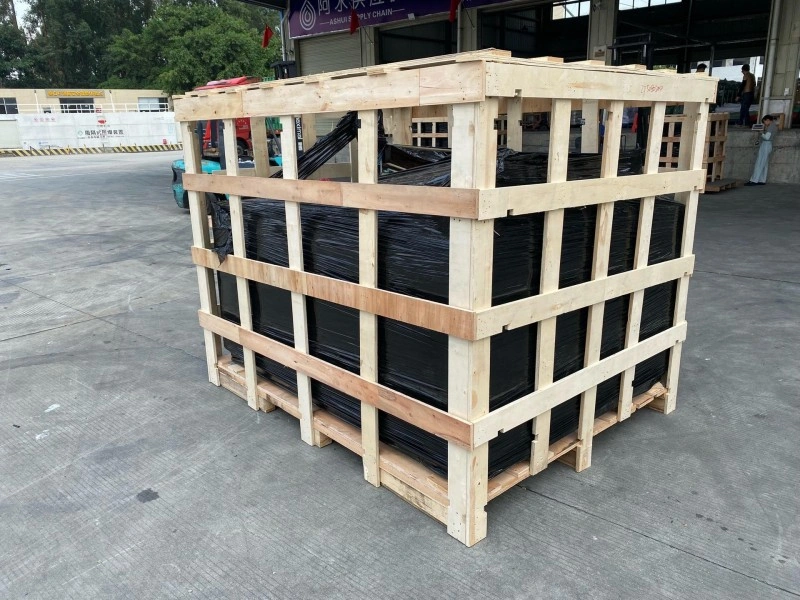
Common Mistakes in Shock and Vibration Protection
The same mistakes are made by veteran packing crews over and over again. When padding is not used properly for blocking, it will cause cargo to move. If placed under a heavy load, soft foam becomes ineffective. Open space in the crate allows for movement on vibration or impact.
Other common problems are omitting to include center of gravity information, bracing against fragile parts, insufficient base strength, and not providing handling marks and/or pre-shipment photographs.
| Common Mistake | Possible Consequence |
| Padding without blocking | Cargo may still shift inside the crate |
| Too-soft cushioning | Material may compress and lose protection |
| Empty space inside the crate | Cargo may move during vibration or impact |
| Ignoring center of gravity | Higher risk of tipping or uneven load stress |
| Weak base design | Heavy cargo may deform or break the crate base |
| Bracing against fragile parts | Sensitive components may crack or deform |
| Poor fastener selection | Crate joints may loosen during transport |
| No handling marks | Forklift or crane teams may handle the crate incorrectly |
| No packing photos | Harder to verify protection if damage occurs |
What Buyers Should Provide Before Shock-Resistant Crate Design
Good information enables the packing engineer to choose the best solution from the beginning. Provide dimensions, gross weight, center of gravity (if known), lifting points, details of fragile components, machine base structure, surface sensitivity, intended transport modes, route conditions, and transit duration.
The photographs or technical drawings of the equipment are very useful.
| Information to Provide | Why It Helps |
| Cargo dimensions | Determines crate size, spacing, and support layout |
| Cargo weight | Guides base reinforcement and cushioning selection |
| Center of gravity | Helps prevent tipping and uneven load stress |
| Fragile parts | Prevents bracing against sensitive components |
| Lifting points | Helps plan crane and forklift handling |
| Machine base structure | Determines where load-bearing supports should be placed |
| Transport route | Helps assess road, port, and ocean vibration risks |
| Transit time | Longer routes may require stronger vibration control |
| Surface sensitivity | Guides padding and contact protection choices |
| Indicator requirements | Helps monitor shock, tilt, or handling events |
When to Use Shock, Tilt, or Vibration Indicators
Indicators are not a substitute or replacement for good crate design, but are important for monitoring and accountability. Shock indicators will register sudden impacts, tilt indicators will alert to excessive leaning and vibration loggers will alert to repeated movement. High value shipments are further visible with humidity and GPS enabled devices.
They are best applied in conjunction with engineered packing, not alone.
| Indicator Type | What It Helps Monitor | Best Used For |
| Shock indicator | Sudden impact or rough handling | Fragile machinery and precision equipment |
| Tilt indicator | Excessive tilting during handling | Top-heavy or orientation-sensitive cargo |
| Vibration logger | Repeated vibration over time | Sensitive instruments and high-value equipment |
| Humidity indicator | Moisture condition inside packing | Electronics and corrosion-sensitive cargo |
| GPS tracker with sensor data | Location and handling events | High-value international shipments |
Conclusion — Shock and Vibration Protection Requires Engineered Packing
More than just padding materials around cargo is needed for less shock and vibration damage in export crates. A good packing plan begins with knowing the cargo’s weight, fragility, form and conditions of the road, and incorporates good crate design, interior support, packing material, and handling control. These elements combine to make the crate more than just a wooden container: it becomes a protective transportation system.
Exporters and project teams can greatly reduce the potential for transit damage, ensure equipment performance, and keep projects on schedule by systematically addressing risks and communicating comprehensive cargo information early on in a project. Carefully designed with knowledge of practical shipping scenarios, this approach can provide the assurance that will make for a successful international shipment.