
The moisture-proofing of wooden crates for long-haul shipping is, however, far from a simple process, and involves several factors to be taken into account: The kind of wood used, the method of sealing, the humidity, the protection against corrosion, the sensitivity of the cargo, the shipping route, the storage period, and the handling conditions. In multi modal transport and sea freight, wooden crates are subjected to constant exposure to humidity, condensation, rain, sea air and temperature changes. All of these factors can quickly wreak havoc not only on the crate, but on high dollar items that are inside the crate, particularly machinery, electrical systems, metal molds, and precision instruments.
Many shippers think that a good wooden crate is sufficient protection, however, it is not until the interior of the crate is protected with a moisture control system that the container offers protection from moisture and condensation or will not provide protection from the condensation and corrosion inside. Moisture-proofing should be built into the packing plan, not tacked on. For exporters preparing machinery for sea freight or multi-modal delivery, it is important to learn how to protect wooden crates during long-distance transport before final packing begins, especially when moisture, condensation, and corrosion risks are involved.
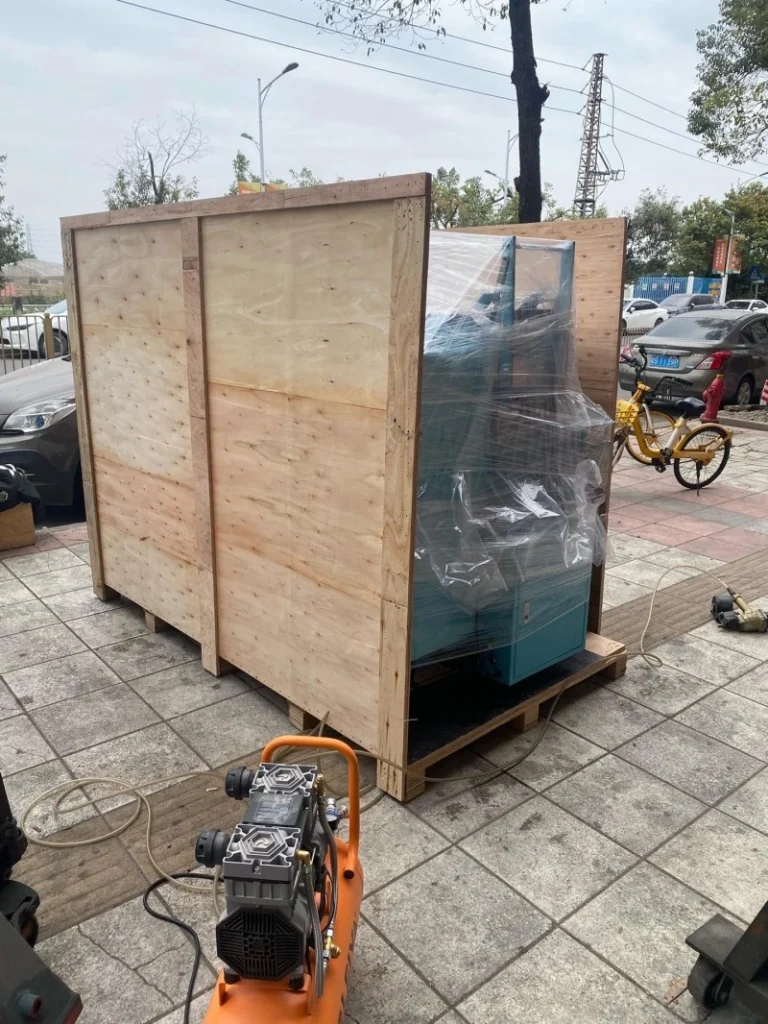
Why Moisture Is a Major Risk in Long-Haul Wooden Crate Shipping
Rain is not the only factor in moisture in long-haul shipping. It is frequently caused by unseen dangers that take place over a number of weeks or months at sea or in storage.
Condensation due to high humidity within shipping containers, temperature fluctuations, rain on loading and unloading, salty sea air, and extended port storage are all issues. Wood can absorb and release moisture causing it to swell, weaken, or get moldy. In the case of metal freight, this translates to rust; for electronic equipment, to circuit failures; and for precision components, to dimensional changes or calibration loss.
| Moisture Source | How It Affects Wooden Crates and Cargo |
| High humidity | Increases risk of rust, mold, swelling, and packaging deterioration |
| Condensation | Can form water droplets inside containers or sealed packaging |
| Rain during handling | May wet external crate surfaces and exposed cargo areas |
| Sea air | Can accelerate corrosion on metal surfaces |
| Port storage | Long waiting time may expose crates to changing weather conditions |
| Wood moisture absorption | Wooden components may absorb and release moisture during transit |
| Temperature changes | Can create condensation inside poorly planned packaging systems |
If logistics teams are aware of these risks, it helps them to select the correct mix of materials and methods.
What Types of Cargo Need Moisture-Proof Wooden Crates?
Not all shipments need identical moisture-proof wooden crates; however, some types of cargo are particularly susceptible to damage and require careful consideration of their moisture protection needs.
Heavy-duty solutions are used for industrial machinery, CNC machines, electrical cabinets and control panels, precision instruments, metal molds, machined parts and similar high-value goods destined for long-term storage or sea freight.
| Cargo Type | Main Moisture Risk | Recommended Protection Focus |
| Industrial machinery | Rust on exposed metal surfaces | Anti-rust coating, barrier wrapping, desiccants |
| Electrical cabinets | Condensation and circuit damage | Sealed barrier protection and humidity control |
| Precision instruments | Corrosion and calibration issues | Shock and moisture control together |
| Metal molds and tooling | Surface rust and dimensional issues | VCI film, anti-rust oil, sealed packing |
| Machined components | Oxidation and staining | Moisture barrier and corrosion inhibitor |
| Long-term stored equipment | Slow moisture accumulation | Desiccants, humidity indicators, sealed packaging |
| Sea freight cargo | Salt air and container condensation | Multi-layer moisture protection system |
The correct protection level corresponds to the sensitivity of the cargo and the risk of the route to avoid both protection according to the route and unnecessary cost.
Common Moisture-Proofing Methods for Wooden Crates
Typically, moisture protection is achieved through a combination of materials rather than by a single layer of material. Crate packing and construction, internal barriers, humidity absorbers, and corrosion inhibitors are all incorporated in the packing for experienced export packers.
| Moisture-Proofing Method | Main Function | Best Used For |
| Moisture-resistant panels | Reduce moisture absorption by crate materials | Export crates exposed to humidity |
| Plastic sheet lining | Adds a basic internal moisture barrier | General machinery packing |
| Barrier bags | Isolate cargo from humid air | Sensitive equipment and long-haul shipping |
| Aluminum foil vacuum barrier | Provides stronger vapor protection | High-value machinery and precision parts |
| Desiccants | Absorb moisture inside sealed spaces | Sea freight and long storage periods |
| VCI film or bags | Help reduce corrosion risk on metal surfaces | Molds, tools, and machined metal parts |
| Anti-rust oil | Protects exposed metal surfaces | Heavy machinery and steel components |
| Waterproof cover | Protects external crate surfaces during handling | Outdoor loading, port handling, and rain exposure |
| Humidity indicator | Helps monitor internal moisture levels | Sensitive or high-value shipments |
These methods are best suited when chosen and used appropriately to the project.
Sealing vs Ventilation: Which Is Better?
There is a difference between fully sealed and ventilated packing, and it could be the difference between moisture protection and not. Both methods are useful but when the wrong one is used, it will lead to new issues.
For high value machinery and electrical equipment, fully sealed barrier packing suits are recommended, with the desiccants properly calculated. Ventilated designs are beneficial if the load can’t be completely enclosed or if there is a need for ventilation. Medium-risk items: provide partial sealing for some protection.
| Approach | Best For | Risk If Poorly Planned |
| Fully sealed barrier packing | High-value machinery, electrical equipment, precision cargo | Trapped moisture may cause condensation if desiccants are insufficient |
| Ventilated crate design | Cargo that cannot be fully sealed or needs airflow | Humid air may still enter during long transit |
| Partial sealing | Medium-risk cargo needing basic protection | May not control humidity enough for sensitive cargo |
| Vacuum barrier packing | High-risk sea freight or long storage | Requires proper sealing and moisture calculation |
| Waterproof external cover | Rain and splash protection during handling | Does not replace internal humidity control |
Take care of the condition of the cargo before packing – never put items in that are wet or warm without the proper drying and preparation.
How Desiccants Help Control Humidity Inside Wooden Crates
When used properly, desiccants are very effective and not a one-shot remedy. Their effectiveness relies on accurate calculation based on sealed volume, transit duration, anticipated humidity and packaging quality.
Store desiccants in areas where moisture is likely to collect, and always use with humidity indicator cards for verification when receiving.
| Desiccant Consideration | Why It Matters |
| Crate or barrier volume | Larger sealed spaces need more moisture absorption capacity |
| Transit duration | Longer shipping time increases moisture exposure risk |
| Route humidity | Tropical or ocean routes may require stronger protection |
| Packaging seal quality | Poor sealing reduces desiccant effectiveness |
| Placement location | Desiccants should be distributed where moisture may accumulate |
| Cargo sensitivity | Electrical and precision equipment may require stricter humidity control |
| Humidity indicator | Helps confirm whether internal moisture stayed within acceptable limits |
VCI Protection and Anti-Rust Measures for Metal Machinery
Moisture-proofing and corrosion prevention go hand in hand for metal cargo. VCI (Volatile Corrosion Inhibitor) materials generate vapors that create a molecular barrier on the surface of metal.
| Protection Method | Main Purpose | Suitable Cargo |
| VCI film | Helps reduce corrosion inside enclosed packaging | Metal parts, molds, tools, machinery components |
| VCI paper | Protects specific metal contact surfaces | Machined parts and spare components |
| Anti-rust oil | Forms protective layer on exposed metal | Machinery surfaces, shafts, molds, steel parts |
| Barrier bag | Reduces contact with humid air | High-value machinery and precision equipment |
| Desiccants | Absorb internal moisture | Sea freight and long-haul shipments |
| Surface cleaning before packing | Removes contaminants that accelerate corrosion | Precision parts and finished metal surfaces |
VCI works best in combination with barrier films and desiccants for multi-layer protection.
How Wooden Crate Design Affects Moisture Protection
One of the biggest factors in moisture control is crate engineering. Good design will prevent water from entering and eliminate pockets of moisture.
| Crate Design Feature | Moisture Protection Benefit |
| Raised skid base | Reduces direct contact with wet ground |
| Reinforced top cover | Helps resist rain exposure during handling |
| Protected seams | Reduces water entry through crate joints |
| Internal spacing | Allows barrier film and cushioning to work properly |
| Moisture-resistant panels | Helps reduce water absorption by crate walls |
| Proper cargo support | Prevents moisture from being trapped at contact points |
| External waterproof cover | Adds temporary protection during outdoor movement |
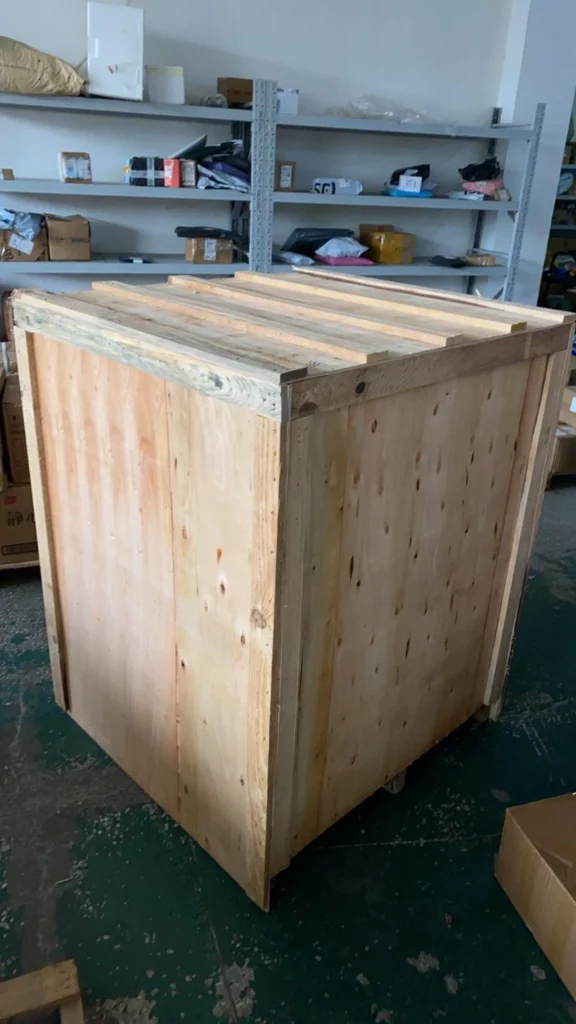
Common Mistakes in Moisture-Proof Wooden Crate Packing
Even experienced teams can miss things which could result in claims or loss of cargo.
| Common Mistake | Possible Consequence |
| Using only a standard wooden crate | Cargo may still suffer humidity or condensation damage |
| Sealing wet cargo or wet packing materials | Moisture becomes trapped inside the packaging |
| Insufficient desiccants | Humidity may remain high during transit |
| No corrosion protection for metal surfaces | Rust may appear before cargo reaches destination |
| Ignoring sea freight condensation | Water droplets may form inside containers |
| No waterproof handling cover | Rain exposure may damage crate and cargo protection layers |
| Poor seal quality | Barrier protection may fail during transit |
| No packing photos | Harder to verify packing condition if damage occurs |
Buyer Checklist Before Choosing Moisture-Proof Wooden Crate Packing
Giving all the facts at the beginning will assist packing specialists in designing the ideal solution.
| Information to Prepare | Why It Helps |
| Cargo material | Determines corrosion and moisture sensitivity |
| Cargo dimensions and weight | Helps plan crate size and protection layers |
| Exposed metal surfaces | Guides anti-rust and VCI protection |
| Electrical components | Indicates need for stricter humidity control |
| Shipping route | Helps assess climate and sea freight moisture risk |
| Transit time | Determines desiccant quantity and barrier requirements |
| Storage duration | Increases need for long-term humidity control |
| Destination climate | Helps plan moisture-proofing level |
| Handling conditions | Determines whether external waterproof covers are needed |
| Protection standard required | Helps align packing method with buyer expectations |
Conclusion — Moisture-Proofing Should Be Planned Before Packing
When it comes to moisture-proofing wooden crates for transporting goods over long distances, there is no such thing as a one-size-fits-all solution. Since moisture is a primary concern, it’s essential to consider the cargo, the route and the risks. Exporters minimize the risk of costly disputes, condensation damage, mold, and rust when planning crate design, barrier materials, desiccants and handling measures together.
Consider moisture control as part of the initial engineering process, not an afterthought. Reliable results are achieved with careful preparation, the appropriate mix of methods and clear documentation, not only when transported by sea but also with multi-modal and long haul storage.